 A John Deere Publication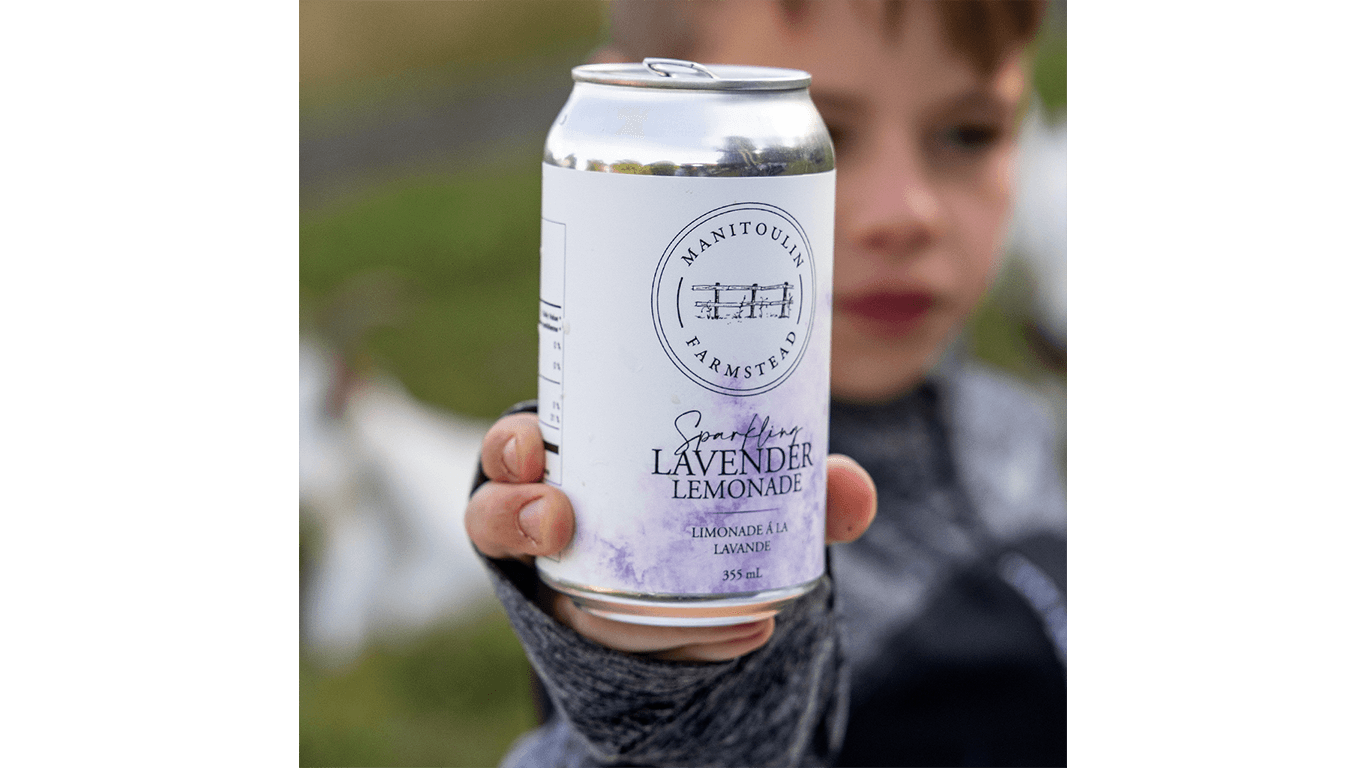
Manitoulin Farmstead's Sparkling Lavender Lemonade was popular at the farmers' market, but Edward and Simard were astonished how quickly it sold in cans.
Agriculture, Specialty/Niche June 01, 2026
A Refreshing Twist
Sparkling lavender lemonade opens pathway to success.
Story and Photos by Lorne McClinton
Few things are more thirst quenching on a hot summer day than an ice-cold glass of lemonade. Customers at the Kagawong Farmers' Market on Manitoulin Island in Ontario were the first to be able to sample a special one, Manitoulin Farmstead Sparkling Lavender Lemonade in 2024. Shoppers loved it because as Manitoulin Farmstead's owners Louis Simard and Natalie Edward say on their website, 'it's softly tart and subtly sweet.'
Lavender lemonade has a long history. It was very popular in Victorian England. But Edward, drawing on Simard's long experience in the food industry, came up with their own unique twist to showcase their lavender and to complement Chef Louis's weekly food offerings at the market.
She steeped dried lavender buds in their lemonade recipe. After much experimentation she found that adding purple pea flower extract, a natural purple food coloring, gave her the exact shade of violet they were looking for. The last step was carbonating it for mouthfeel. The result is a delicious, colorful, and very refreshing drink.
In the early days Edward and Simard hand poured every glass, and carbonated them at their booth using a Sodastream. This made for a unique in-person experience for their customers, but it has limited growth potential.
"Over the winter, we found a co-packer that would be willing to work with us to package it in cans," Simard said. "Their minimum order was 100 cases, 2,400 cans. We went back and forth with samples but eventually our co-packer nailed the exact look, taste, and mouthfeel we were looking for. We were shocked when our first 50 cases sold in the first week. So, we called the co-packer and asked, 'can you get us another batch?'"
Their co-packer's production schedule was booked but Simard worked with them to find a way to squeeze in a 270-case production run that month. But this created problems. Simard and Edward needed 6.5 kilograms of dried lavender buds, in a hurry. Since it takes three to four weeks for lavender buds to air dry, and they were only at the start of the harvesting season, they reached out to a nearby specialty mushroom producer who agreed to let them use their dehydrators.
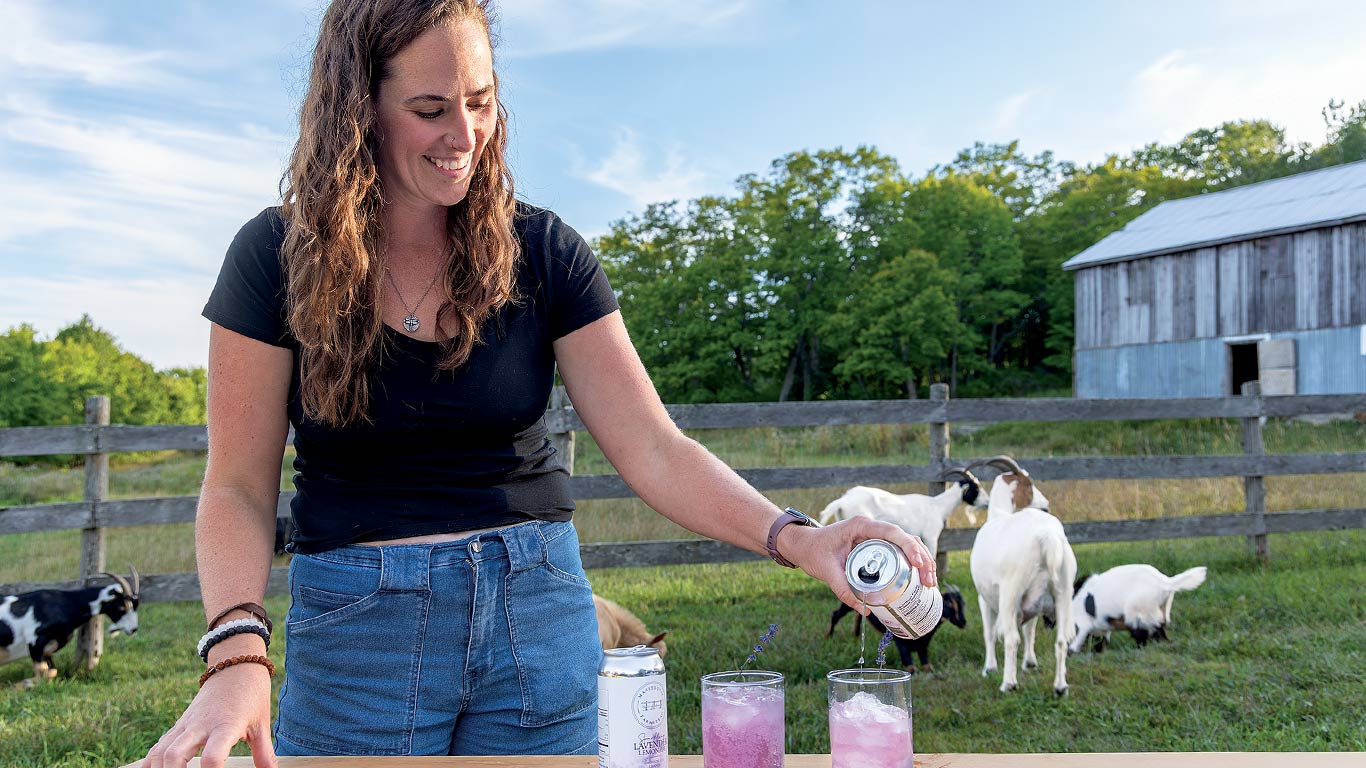
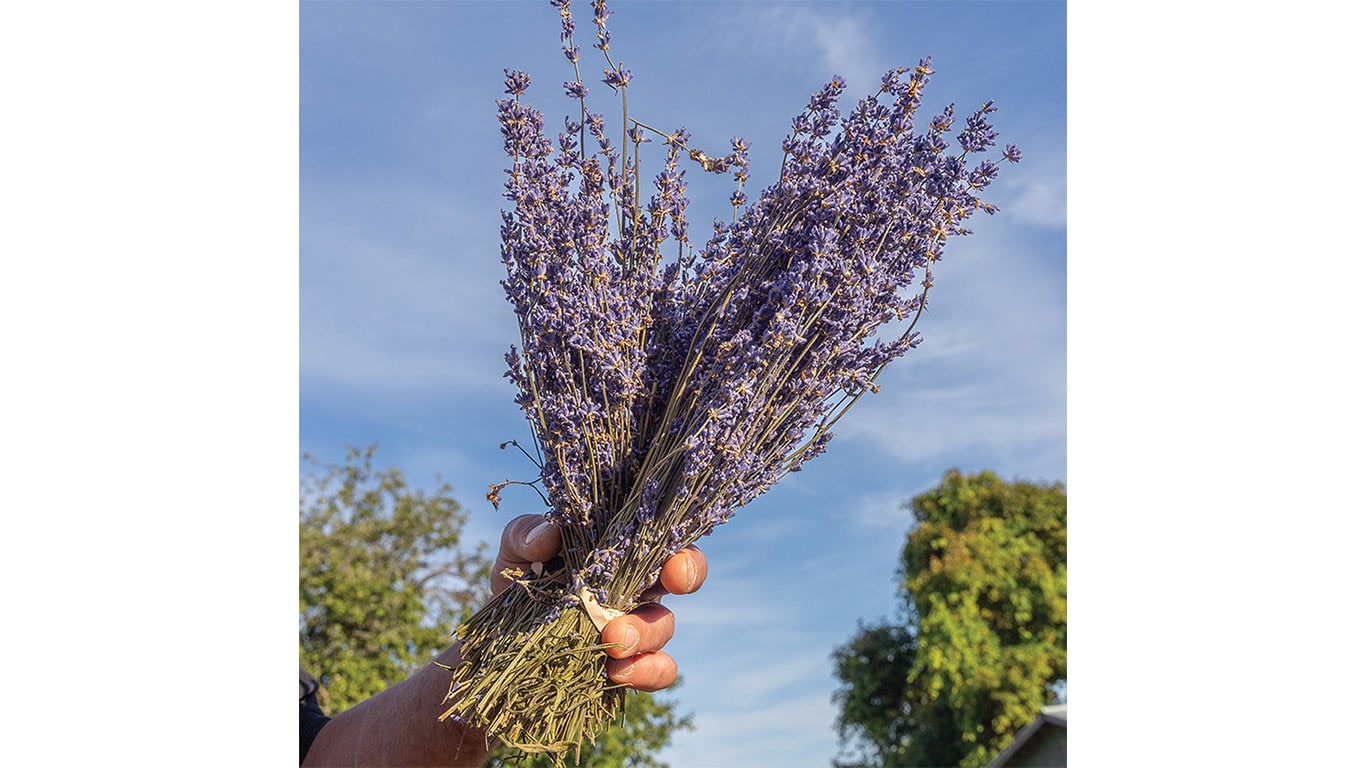
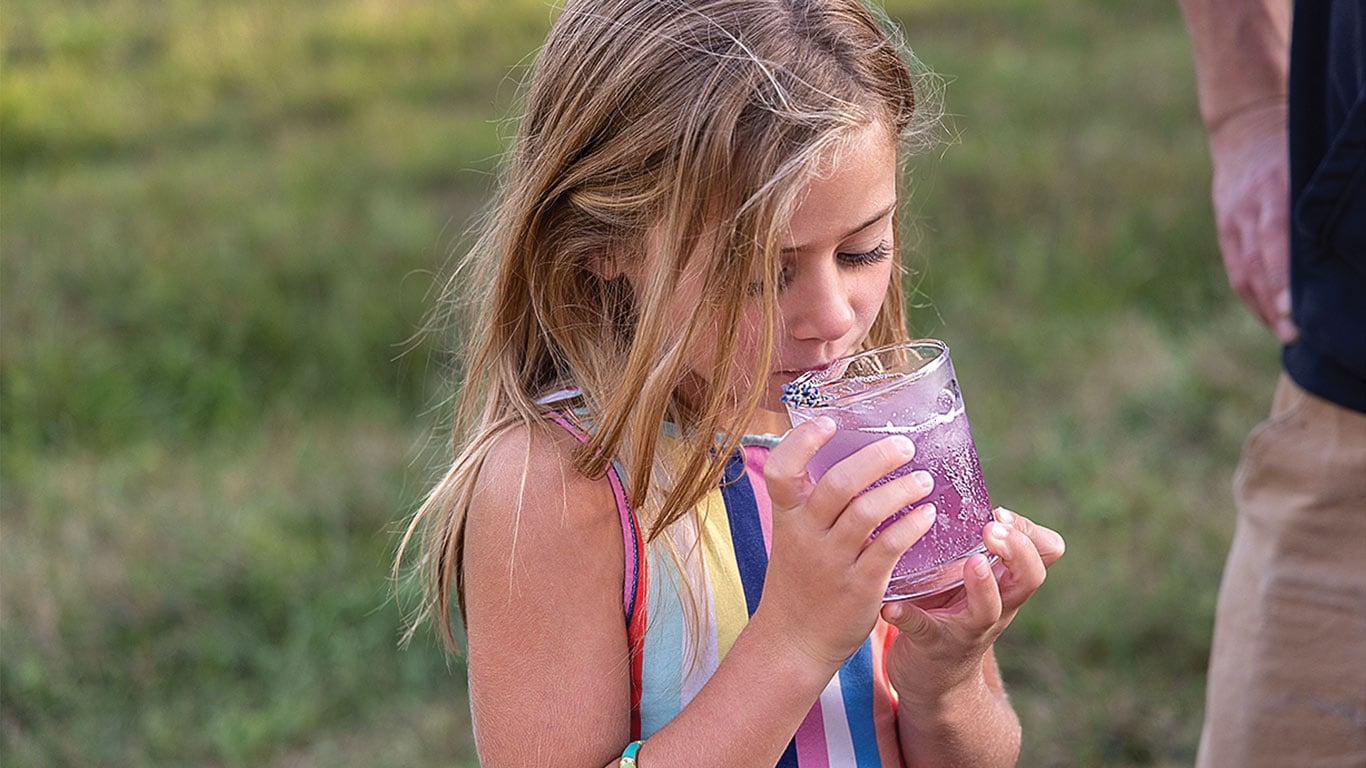
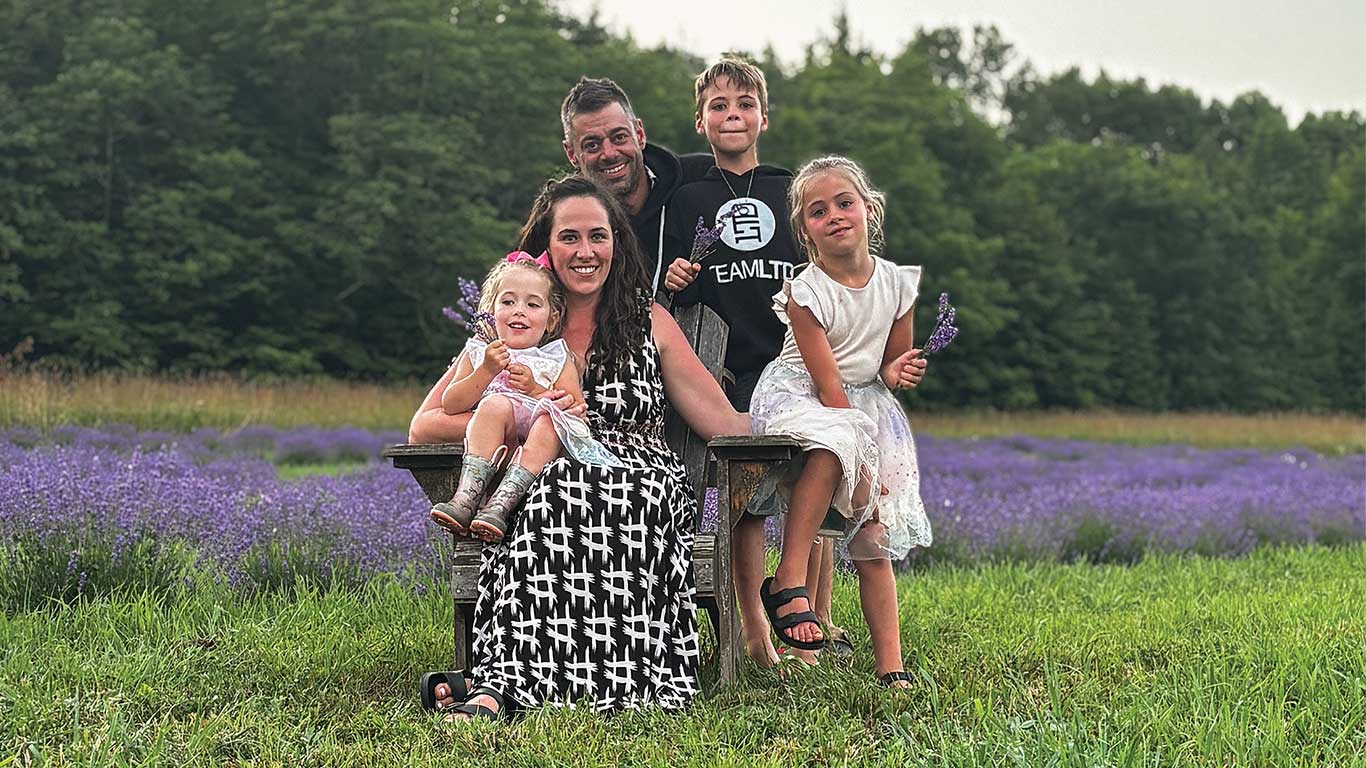
Above. Edward worked hard to get the color just right. It takes 8 kilograms of dried lavender buds to make 270 cases of lavender lemonade. They still work long hours but at Manitoulin Farmstead they aren't sacrificing time with their children, Henry, Coralie, and Teagan, to do so.
Those 270 cases sold almost as fast as the first. But they did manage to expand their distribution channel beyond their farmers' market stall to several retail outlets, too. It went so well they're now expanding their distribution network across Northern Ontario.
Simard and Edward's success can be traced back to a life-changing choice they made in 2021. Back then the couple was living a great life in Ottawa, Ontario.
However, Simard's hectic job as the executive chef at Ottawa's Fairmount Chateau Laurier often meant sacrificing precious family time. One evening, while washing dishes at home, he had an epiphany.
"My son Henry, three at the time, was sitting on his little bike calling, 'Dad! Dad!'" Simard said. "'What's going on buddy?' I asked. He said, 'I want to go for a bike ride.' We lived in central Ottawa. So, I said, 'you can go back and forth in the driveway.' The look on his face hit me! I didn't grow up like that. What kind of childhood am I offering my kids?"
The couple looked for an acreage in the Ottawa area. They couldn't find a place that suited them so they turned to Manitoulin Island where they often vacationed in the summer months at Edward's family's property. The island, the largest freshwater island in the world, separates Georgian Bay from Lake Huron. It's beautiful, but remote.
"We saw the listing for this property, a 200-acre former cattle farm that was being used as a hunting camp," Simard says. It was love at first sight. They made the decision to buy it even though it meant giving up their professional careers and finding a new way to earn a living. But finding ways to make their small farm financially viable wasn't easy.
Eventually they settled on growing lavender because it thrives in the rocky, well-drained soil on their farm. They started with 1,250 Folgate (Lavandula angustifolia 'Folgate') plants the first year and expanded every year since. They process it into a variety of non-perishable products including their lemonade.
"We took a little bit of a chance moving here but we knew we would be able to figure out a way to make it," Simard says. "I'm still working fulltime and I also do caterings on weekends. It's very busy, but we didn't come here to sit down and relax. But we're now getting to that stage where we can see the light. Some of our business ventures look like they may work out." ‡
More articles related to:
Read More of The Furrow
AGRICULTURE, SPECIALTY/NICHE
Art of Neighboring
Connections and consideration bridge gap with non-farm neighbors.
AGRICULTURE, EDUCATION
From the Ancient World to Local Farms
Young farmer finds inspiration in ancient grains.