 A John Deere Publication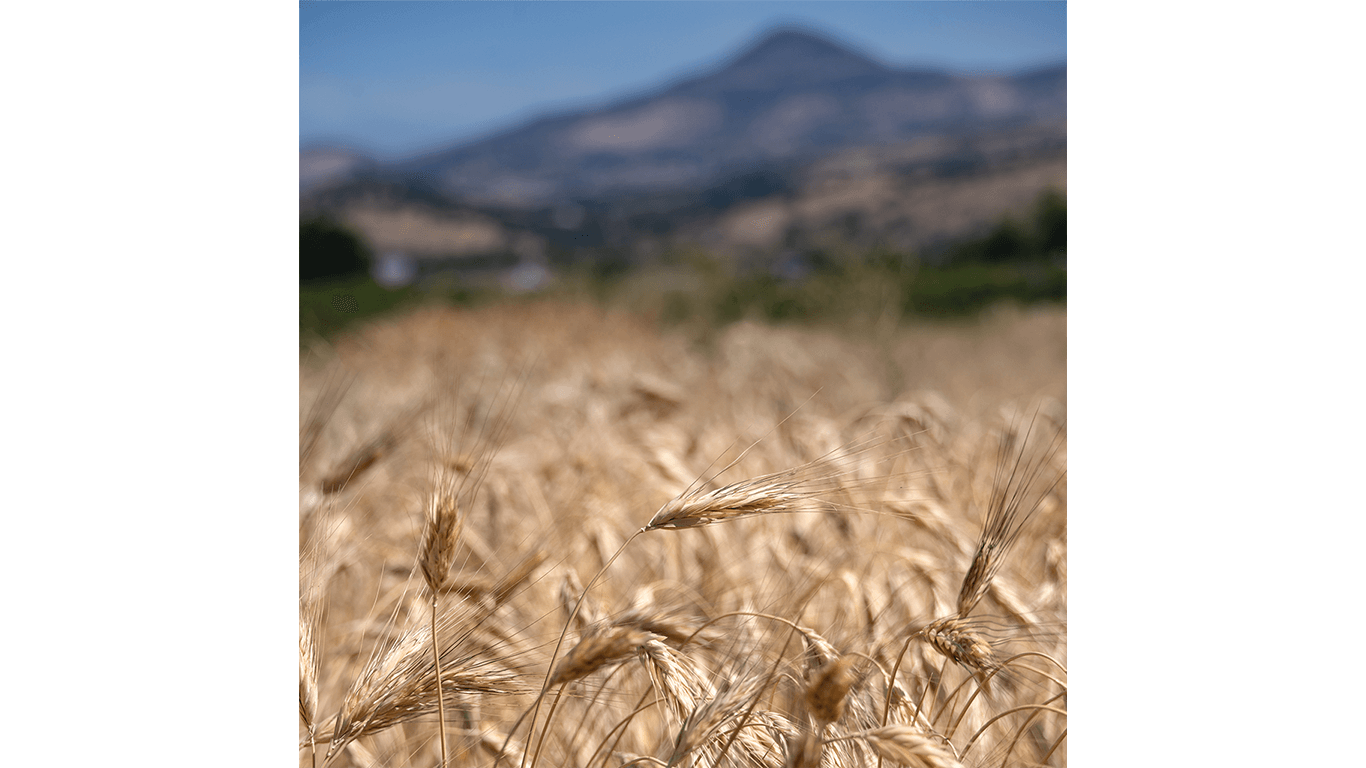
Triticum timopheevii is an ancient precursor of modern wheats.
Agriculture, Education June 01, 2026
From the Ancient World to Local Farms
Young farmer finds inspiration in ancient grains.
Story and Photos by Steve Werblow
"If you're talking about local food, you should be asking where the seed is coming from," says Chris Hardy, founder of the Rogue Valley Heritage Grain Project. "It's really about locally adapted seeds."
On a skinny, 4-acre parcel of gravelly loam outside of Ashland, Oregon, Hardy conducts a tour of agricultural history through seed plots that are a living museum of food cultivation. There's durum wheat from Iraq. Timopheevii, an ancient ancestor of wheat, from the Republic of Georgia. Lentils from Ladakh, a piece of Kashmir known as "Little Tibet." Then there's spelt, emmer, einkorn, chickpeas—a world of ancient varieties that thrive in the same kind of low-rainfall conditions as southwest Oregon's Rogue Valley.
Hardy, who also established Hardy Seed, isn't just a history fan. He is tapping into ancient grains and varieties to adapt seed for his piece of Oregon, a Mediterranean climate with about 20 inches of precipitation per year—almost none of it in the summer.
Crops from the Middle East and western Asia have thrived in those conditions for thousands of years, Hardy points out. Winter grains take advantage of cold-season rain and snow, making them ideal for dry-farming techniques. Landrace crops (wild crops locally adapted by farmers) and heritage varieties (bred and cultivated more deliberately) were forged by drought and low fertility, and are well-adapted to no-till or low-tillage management. Larger in stature than today's semi-dwarf cereals, landrace and heritage varieties capture more carbon and leave more residue. They also tend to be flavorful and nutritious, Hardy says.
Ultimately, he notes, farmers succeeded for thousands of years by matching crops to conditions.
Ecology. "The ecology tells you what you can grow," Hardy says.
Since 2019, he has been listening carefully to the local ecology of his adopted home in Oregon and closely watching how his seed collection performs there.
"We're putting our seed through the rigors year after year," Hardy says. "We're selecting the best dry-farmed varieties and mixing them into a composite. We're choosing the best of the best for the intensity of climate we have here in the Rogue Valley."
Hardy has recruited other local farmers to help test, adapt, and multiply the seed of promising varieties through the Rogue Valley Heritage Grain Project and Southern Oregon Seed Growers Association. Each grower can choose among more than 30 varieties of wheat, barley, rye, oats, emmer, and spelt to plant in the fall. At harvest, each returns 15% of the yield to Hardy to feed back into the system.
He hopes people around the country—or around the world—will do the same in their regions.
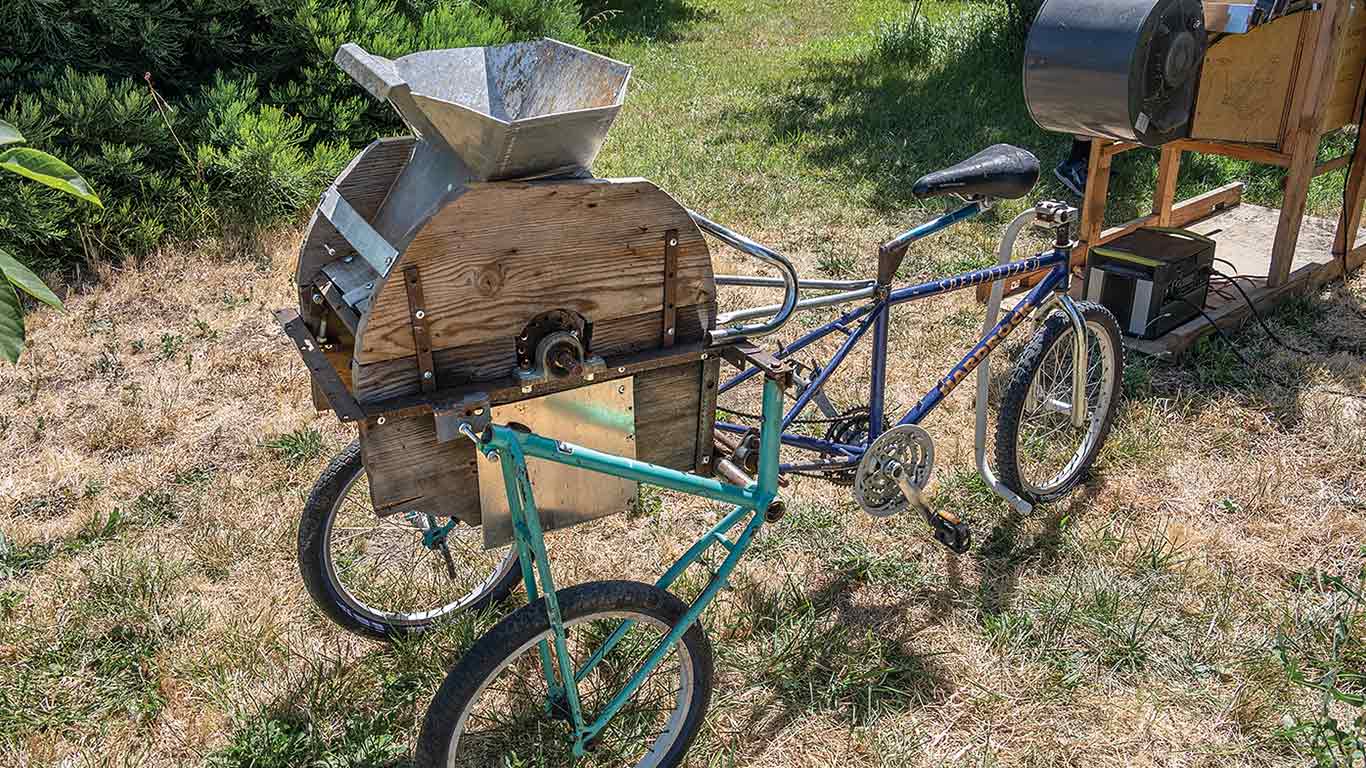
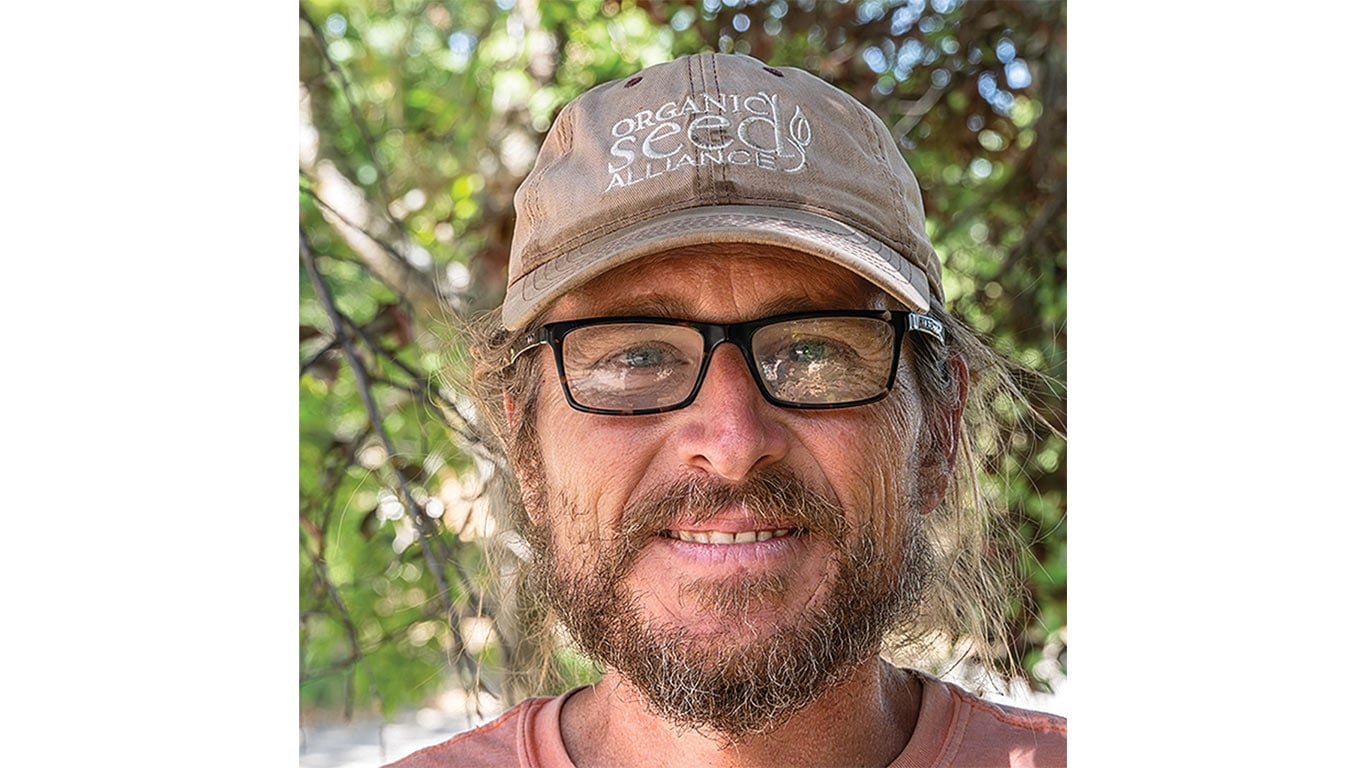
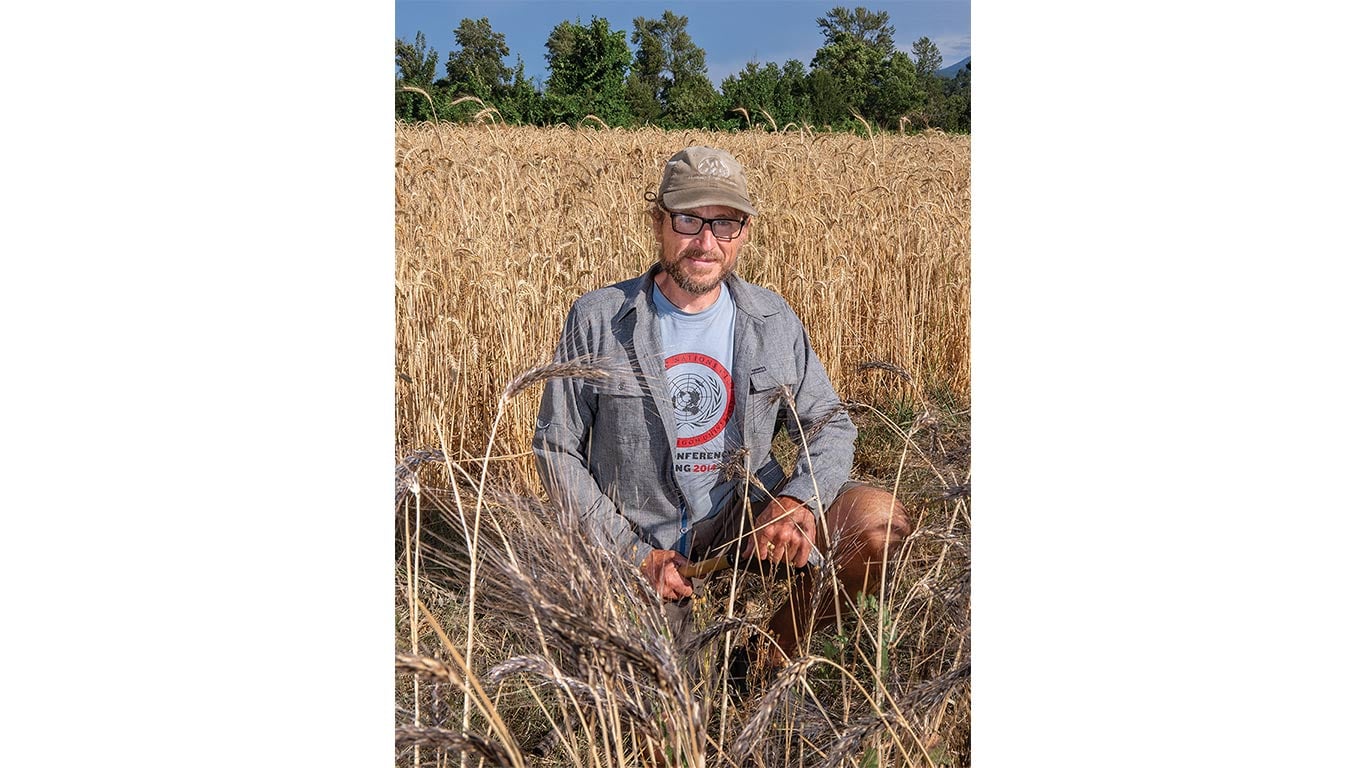
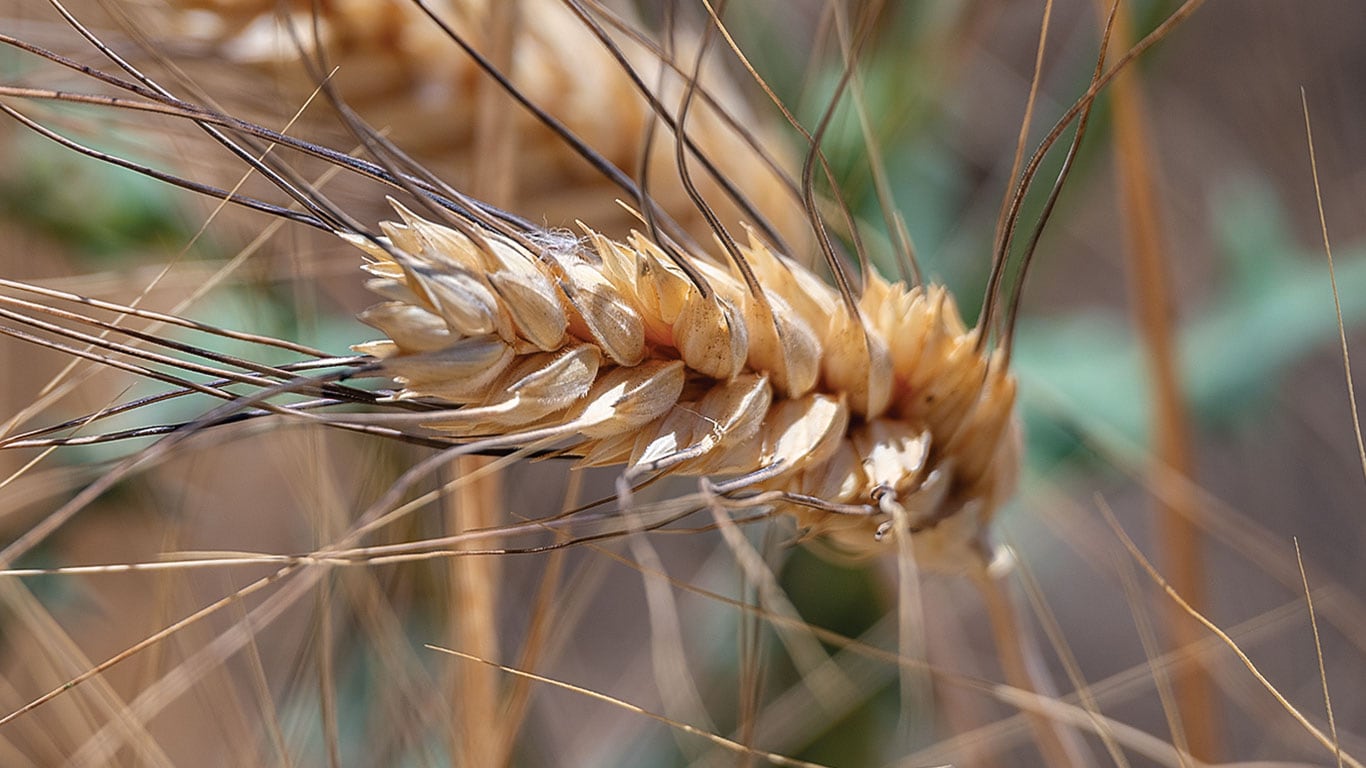
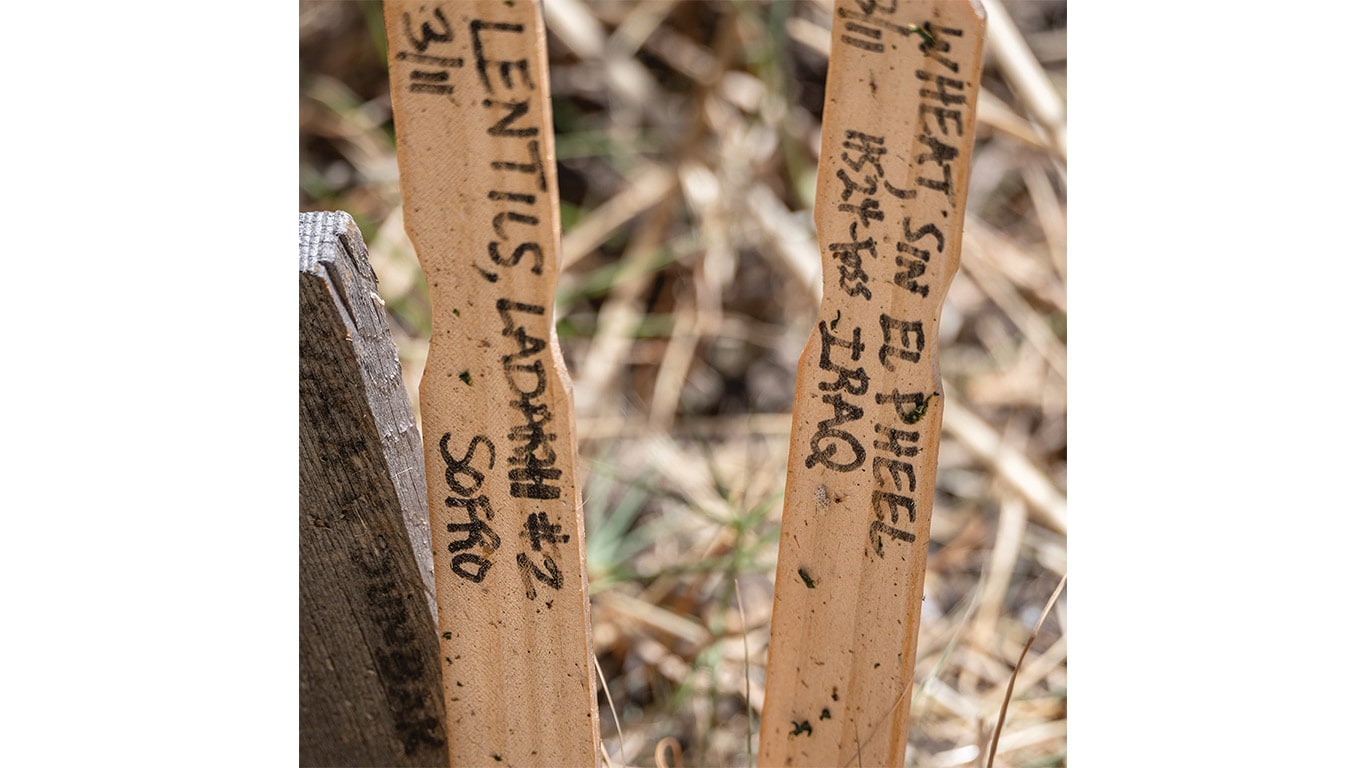
Above. This pedal-powered thresher provided vital processing for the Rogue Valley Heritage Grain Project, dedicated to adapting ancient cereals to southwest Oregon. Chris Hardy founded the project, and Hardy Seed, to create community around locally adapted seed. A 5th-generation farmer, Hardy studied heritage crops in more than 50 countries. Abu Samra wheat from the Palestine Heirloom Seed Library thrives in heat. Many of Hardy's rare variety plantings start with a teaspoon of seed.
One teaspoon. Hardy has trialed about 2,000 varieties of wheat from gene banks around the world, starting in some cases with just a teaspoon of seed. He has made selections among 50 varieties of lentils, 30 varieties of chickpeas, and scores of barley, flax, and ancient cereal varieties.
He harvests with an experimental plot combine and threshes seed with a pedal-powered thresher built by Tom Hitchcock and a new Winnow Wizard belt thresher funded by grants from USDA's Sustainable Agriculture Research and Extension (SARE) program and AgWest Credit Union. Another USDA grant helped fund a de-huller and a flour mill that doesn't build up heat.
"Every grower who wants to grow and save seed needs to have totes, a fan, a scalping screen, and a belt thresher," he says.
Inspired. Hardy says he was inspired by the Iowa farm of his childhood, where his grandfather grew grain, alfalfa, peas, oats, and rye, regularly saving seed adapted to the area.
"It was a very diversified operation that got very deep in my brain," Hardy explains.
During his 6 years in the Navy and years of hiking and traveling that followed, Hardy visited more than 50 countries. Everywhere he went, he brought the eye of a 5th-generation farmer, the analytical mind of a seed breeder, and the appetite of an adventurer.
He studied local crops across the Middle East, the Himalayas, Africa, western and central Asia, and in traditional communities here in the U.S. He read books like The One-Straw Revolution by Masanobu Fukuoka, who advocated a minimalist approach to crop production. Hardy has put Fukuoka's philosophy to work turning ancient varieties into modern-day staples for local food systems—seed that thrives in local conditions and nourishes local communities.
"We are doing that out here, seed by seed," he declares. ‡
More articles related to:
Read More of The Furrow
AGRICULTURE, SPECIALTY/NICHE
A Refreshing Twist
Sparkling lavender lemonade opens pathway to success.
AGRICULTURE, SPECIALTY/NICHE
Corn Truffle Is This Man's Treasure
Huitlacoche gets its due as a gourmet treat.