 A John Deere Publication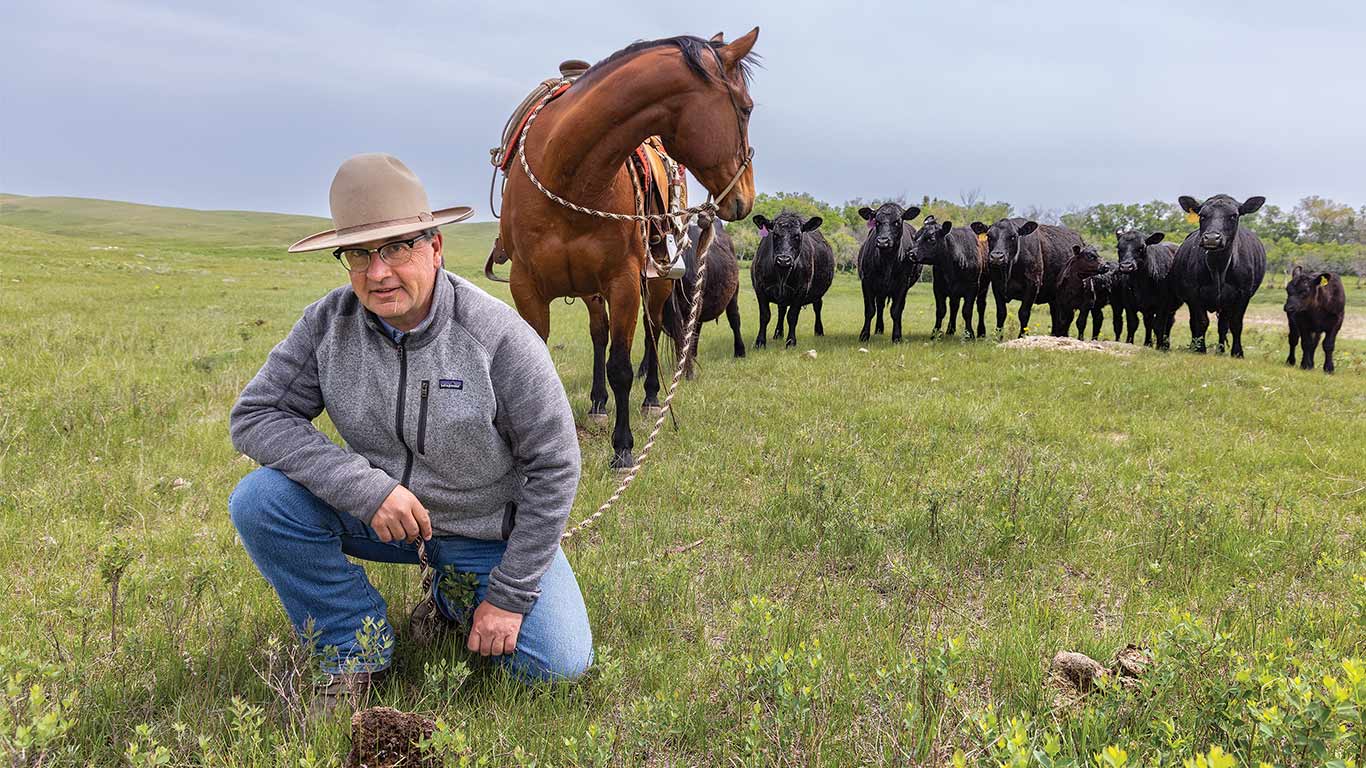
Ross MacDonald has built his ranching operation on rangeland management principles that integrate native plant species, wildlife, songbirds, and livestock production. It helped him increase resiliency and expand his operation./p>
Agriculture, Livestock/Poultry June 01, 2026
An Integrated Approach
Combining conservation with traditional cattle management provides rancher with a path to success.
Story and Photos by Lorne McClinton
Cattle producers often get a bad rap from environmentalists but you'd be hard-pressed to find anyone more committed to nurturing the Canadian Prairies' grassland ecosystem than Lake Alma, Saskatchewan rancher, Ross MacDonald. He has built his entire ranching operation around rangeland management principles that integrate native plant species, wildlife, songbirds, and livestock production. His efforts have not only made his pastures more resilient in the face of wildly ricocheting weather patterns, they've also allowed him to steadily expand his cattle operation by opening up new markets.
MacDonald didn't come from a farm background and wasn't flush with cash when he returned to his hometown of Radville, Saskatchewan, in the early 2000s. He'd just finished grad school at the University of Montana, and the 25-year-old had a burning desire to own a ranch of his own. Fortunately, a friend gave him a lead on a place near Lake Alma, just north of the Canada/USA border.
"His brother's neighbor, a bachelor farmer in his late 70s, was just done and wanted to retire," MacDonald says. "I drove down and introduced myself. After a few conversations, I thought this is going to be a fit. I didn't have a clue what I was getting into, but I really wanted to do it."
Part of the reason MacDonald was able to swing the purchase was by forming an early partnership with the Nature Conservancy of Canada. They placed a conservation easement on the land to help finance the deal. The easement lowered his upfront costs, protected the native prairie, and anchored the ranch's future in long-term stewardship.
It also fit in well with his belief that maintaining a healthy grassland would anchor his production system. If stocking rates threatened long-term resilience, the cows would go before the grass suffered. He focused on rest periods, plant diversity, soil cover, and water infiltration. Fostering native species, like green needle grass, was important. In time this created a resilient rangeland which in turn lead to expansion. First he combined seasonal custom grazing with off-farm employment, then later as his finances solidified, he started building a Hereford-based cow herd.
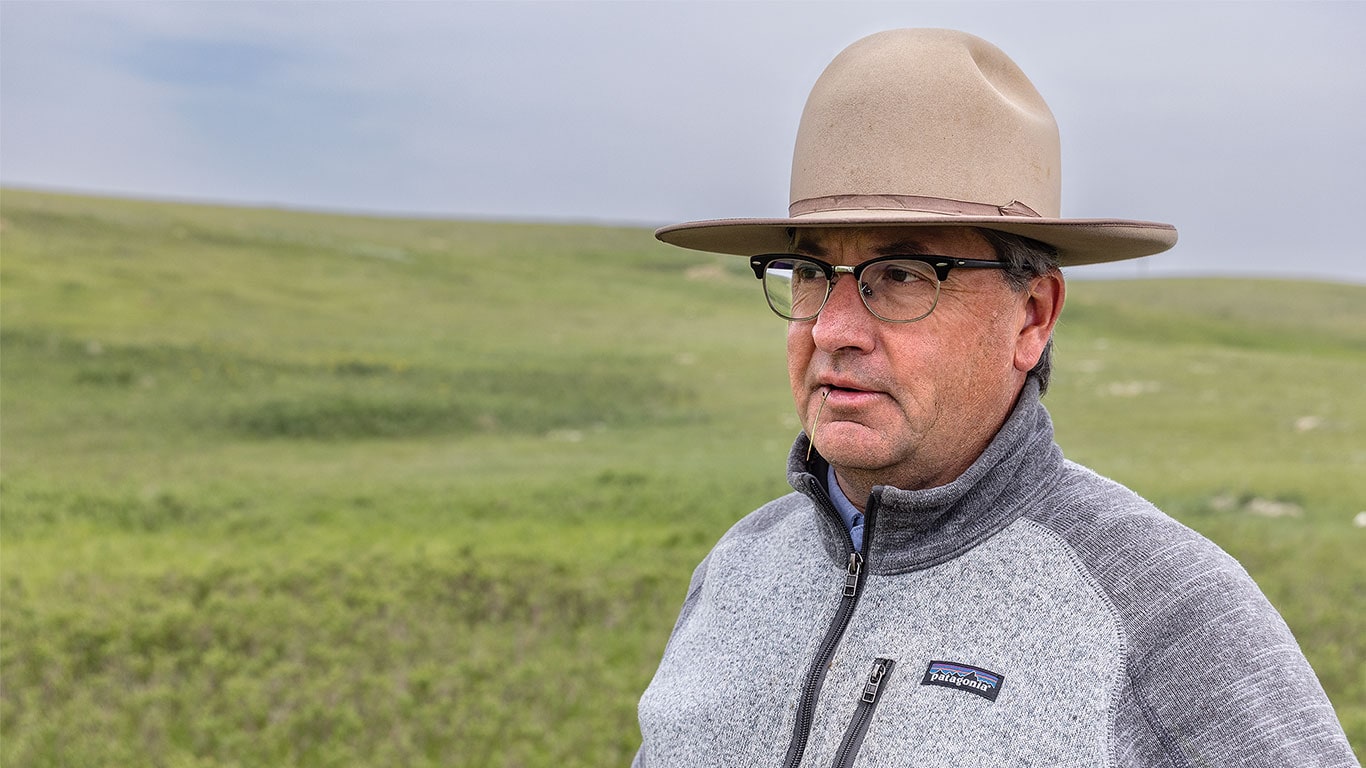
Above. MacDonald believes that grasslands come first, if stocking rates start to threaten long term resiliency the cows would go before the grass suffered. He focuses on rest periods, plant diversity, soil cover, and water infiltration.
"Building our own herd gave us the chance to test the theories I had discovered when I was in the U.S.," MacDonald says. "We bred for low input, easy calving, and moderate frame size animals that thrived on a grass-based diet."
This led to new marketing opportunities. Despite his herd's small size, he joined Spring Creek Ranch's British-breed natural feeder cattle program in Vegreville, Alberta. The feedlot data he gained gave him the feedback he needed to finetune his genetics. It also boosted his confidence and he started engaging with buyers down the supply chain.
Parts of the cattle industry reacted very negatively when the A&W Hamburger chains announced their 'raised without steroids and hormones' program. But MacDonald saw it as an opportunity. He introduced himself and built a direct relationship with company executives. Over time, he became part of their supply chain conversation.
But he refused to simplify his message. When the company sent a film crew out to spotlight his beef production, MacDonald insisted the story start with prairie ecology.
"I kept talking about the bigger picture, the ecology, the grassland, songbird habitat, plant diversity, watershed health and resiliency," MacDonald says. "I could tell the director was getting irritated with me. But when they got the feedback from those videos back, they found they resonated the most with the public."
Today MacDonald is more confident than ever that his focus on grassland ecosystems has been the right approach. Not only does he have healthier grassland and more diverse wildlife and songbird populations, but he's convinced he has a more profitable and resilient cattle operation, too.
More articles related to:
Read More of The Furrow
AGRICULTURE, SPECIALTY/NICHE
Corn Truffle Is This Man's Treasure
Huitlacoche gets its due as a gourmet treat.
AGRICULTURE, SUSTAINABILITY
Farmers Shape Port's Future
The Tulsa Port of Catoosa is adding rail, thanks to farmers' input.