 A John Deere Publication
Luis Muñoz grew up in Mexico City, moved to Oregon, and became a citizen...and a farmer. Fascinated by mushrooms, he focused on cultivating huitlacoche, also called Mexican truffle, prized since the days of the Aztecs.
Agriculture, Specialty/Niche June 01, 2026
Corn Truffle Is This Man's Treasure
Huitlacoche gets its due as a gourmet treat.
Story and Photos by Steve Werblow
Say the words "corn smut" and watch farmers' faces wrinkle as they imagine the twisting tendrils of fungus bursting out of an unraveling corn husk. But say "huitlacoche" (pronounced "WHEAT-la-choch-eh") to a lover of traditional Mexican food and watch the smile grow at memories of rich, earthy, slightly bitter chunks of "Mexican truffle." Here's the funny part. Corn smut is huitlacoche, and Luis Muñoz-Ramirez of Irie Farms has learned to cultivate it on his homestead outside of Gresham, Oregon.
The fungus may feel like a random accident to many farmers, but to Muñoz, it's worth $25 to $35 per pound. And it means even more to him than the money.
"It's a beautiful thing because, culturally, I feel at home with it," he says. "I feel really happy to be able to offer people the experience of huitlacoche, from people who are trying it for the first time to Hispanics that have been out of their country for a really long time to get that taste again and be able to cook with it. I think it's a beautiful thing to bring that culture back into the States."
Focus. Muñoz bought the 2.5-acre property—formerly a weedy horse pasture—in 2020, during the Covid pandemic. He wanted to farm, to create something sustainable and feed his family. He started with Japanese maples, then switched to mushrooms. A mycologist friend helped him and his brother get started, and Muñoz volunteered at mushroom farms in British Columbia to learn the trade.
The fungus business mushroomed, and Irie Farms brought as many as 15 species to Portland's famous Saturday Market. Muñoz and his brother learned to dry mushrooms to help manage inventory and extend shelf life, and developed a line of tinctures and mushroom powder capsules to add value to their products.
He also made the rounds with chefs in a wide variety of Portland-area restaurants. It was a game of persistence, he notes—weekly visits to drop off samples and wait for inspiration to strike.
"I think part of mushrooms is letting the person actually have experience with them," he says.
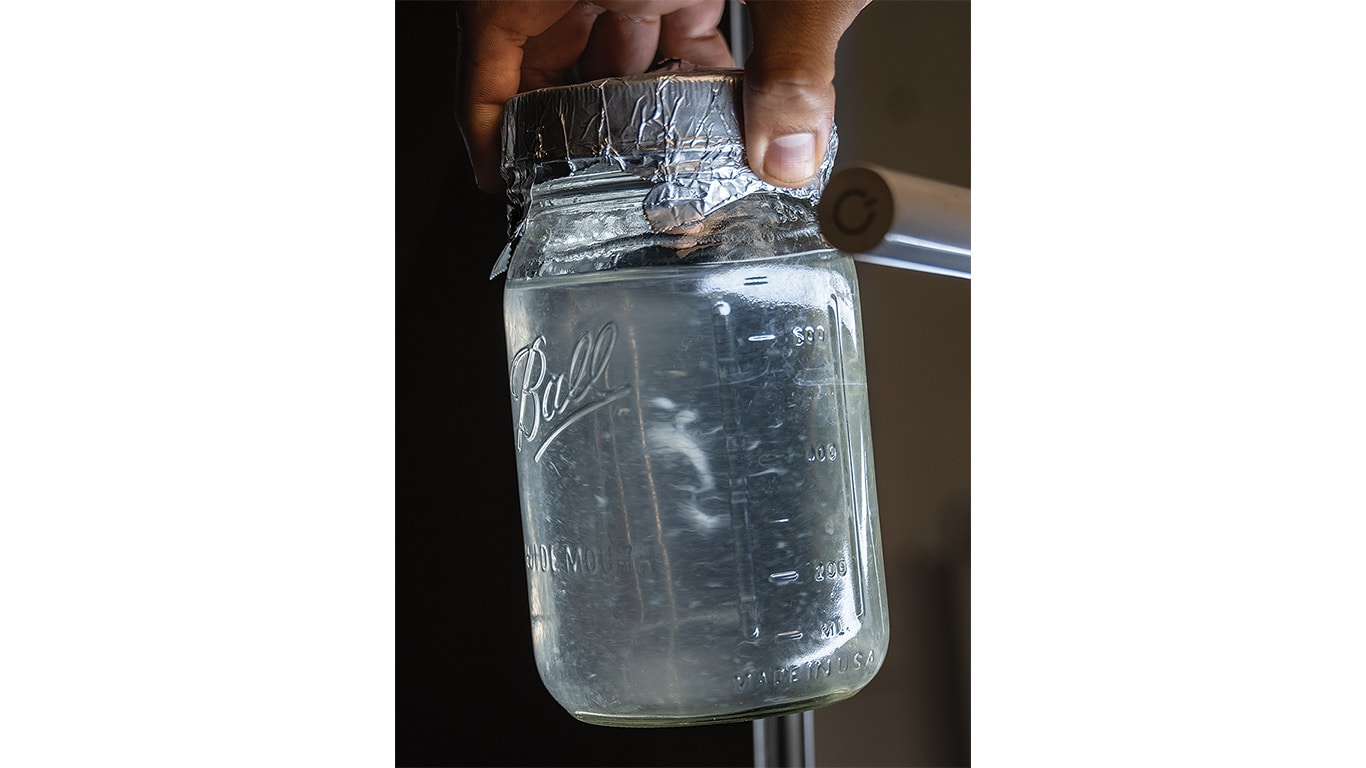
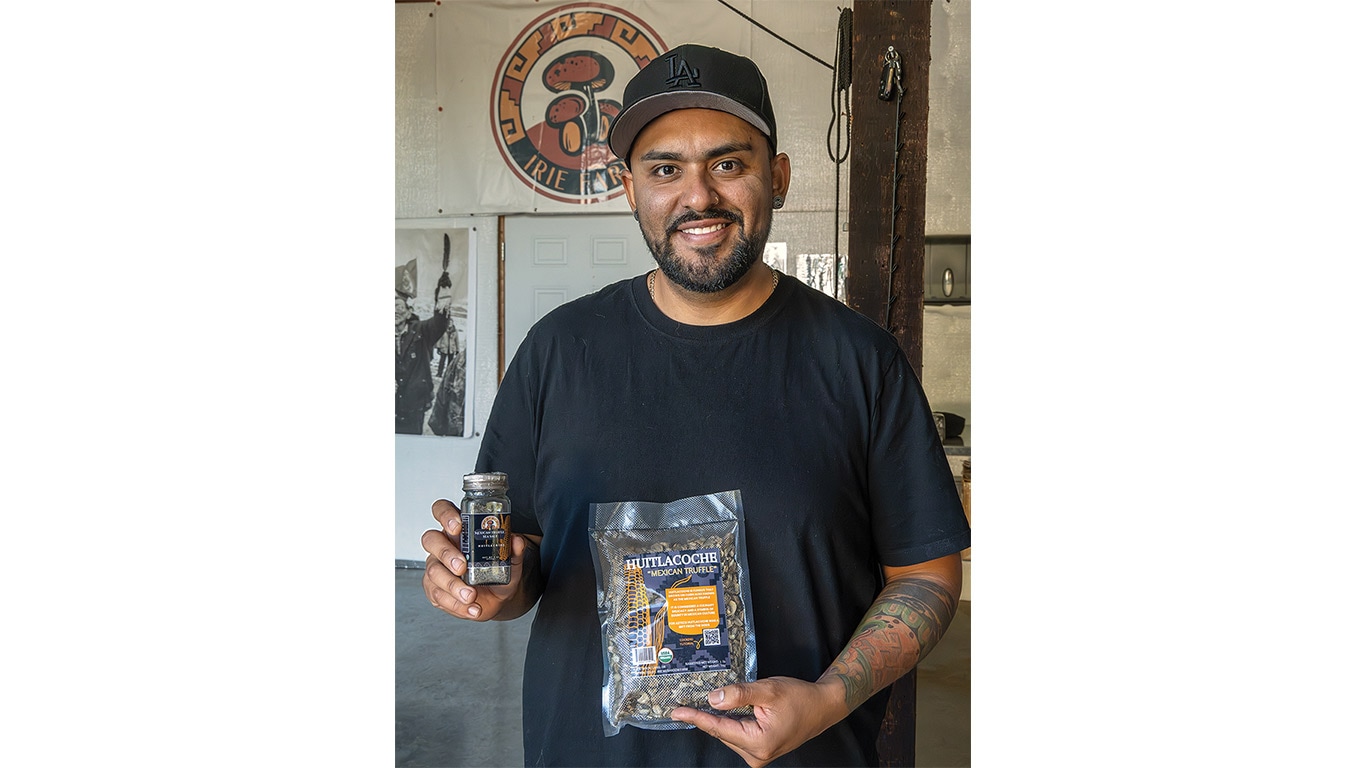
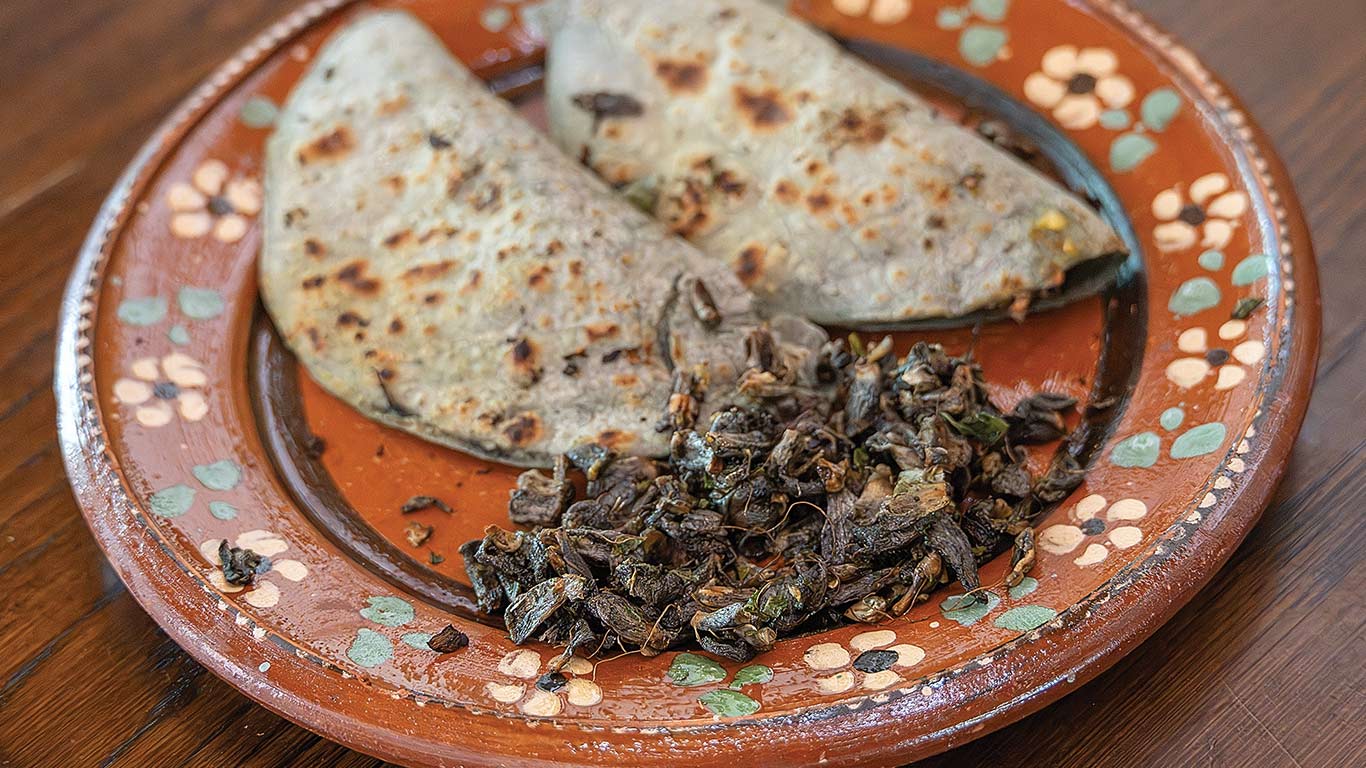
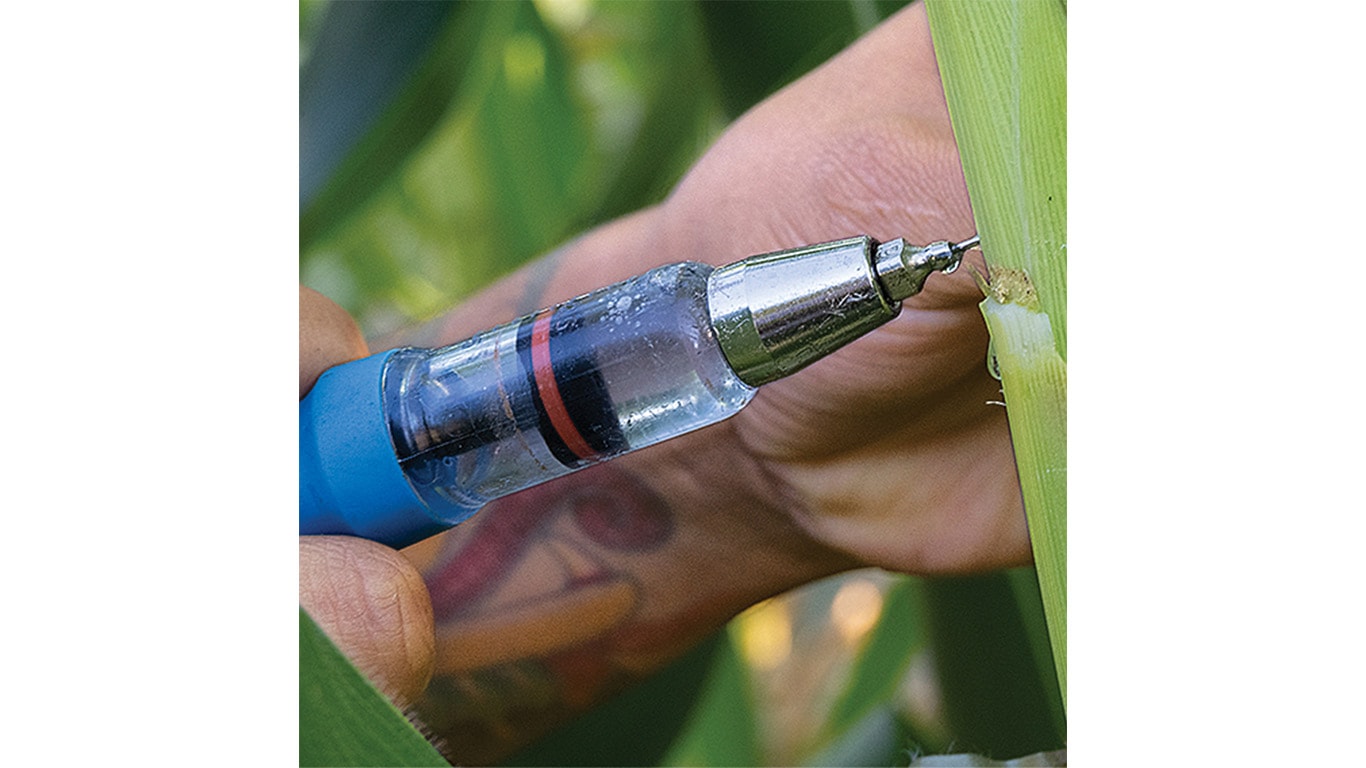
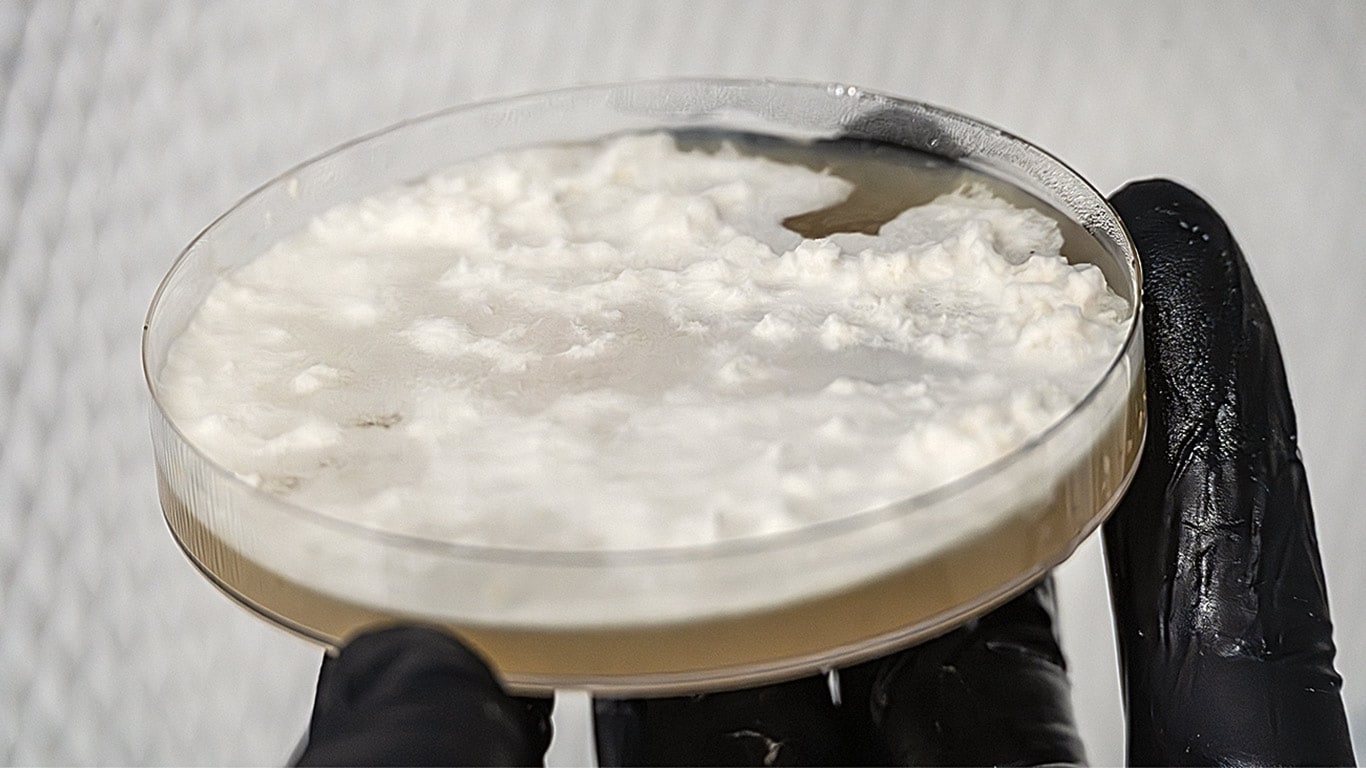
Above. Muñoz prepares a spore solution in a canning jar. He sells dehydrated huitlacoche and huitlacoche sea salt on Irie Mushroom Farm's website and direct to chefs; he has also contracted with a wholesaler for sales around the West. Huitlacoche is rich, nutty, and a little bitter, making it a perfect complement to cheese in these quesadillas. Muñoz injects every ear of corn with a spore solution. Huitlacoche mycelium grows in Muñoz's on-farm lab.
Connection. Last year, Muñoz pivoted Irie Mushroom Farm to focus on huitlacoche.
"I feel as a farmer, when you're growing whatever, you have to have a really deep knowledge and it has to be really meaningful to you to be able to produce really beautiful things," he explains.
"It has been a really beautiful journey with mushrooms and the people and everything that mushrooms bring," Muñoz adds. "But culturally, I don't feel tied to lion's mane, chestnut, oyster. Huitlacoche is something that most definitely ties into my heritage."
But passion and practicality collided. Hard. Huitlacoche is surprisingly difficult to tame.
"It has to be this perfect dance where the mushroom opens up, drops the spores in the air when the corn silks are barely starting to show, then the spores bind to the silk and hijack the corn," Muñoz explains.
Muñoz experimented and studied. He found YouTube videos of a farmer in the Mexican state of Puebla—where huitlacoche is prized by cooks—who harvested 2.5 acres of the fungus per week. Muñoz traveled to the grower's town and talked his way into another apprenticeship to learn how to grow the delicacy.
He returned to Oregon, switched corn varieties to a heritage line that is especially susceptible to the fungus, and practiced cultivating and isolating the spores in his lab. He now injects each ear with a spore solution before letting nature take the wheel.
Most of the huitlacoche is sold dehydrated on iriefarmoregon.com, in groceries, and direct to chefs.
A wide range of creative cooks—from Mexican and French chefs to beer brewers—have embraced huitlacoche with even more enthusiasm than they did more familiar mushrooms.
"With huitlacoche, there's some excitement for them to actually have it, like, ‘I need to make something special with this,'" Muñoz says. "Any artist wants to try something new, and in a saturated market for restaurants and food, you have to think of what new thing you're going to present to your diners that they're going to be excited about."
That keeps Muñoz excited, too.
"I'm just doing what my heart tells me to do," he says. ‡
More articles related to:
Read More of The Furrow
AGRICULTURE, EDUCATION
From the Ancient World to Local Farms
Young farmer finds inspiration in ancient grains.
AGRICULTURE, LIVESTOCK/POULTRY
An Integrated Approach
Combining conservation with traditional cattle management provides rancher with a path to success.