 A John Deere Publication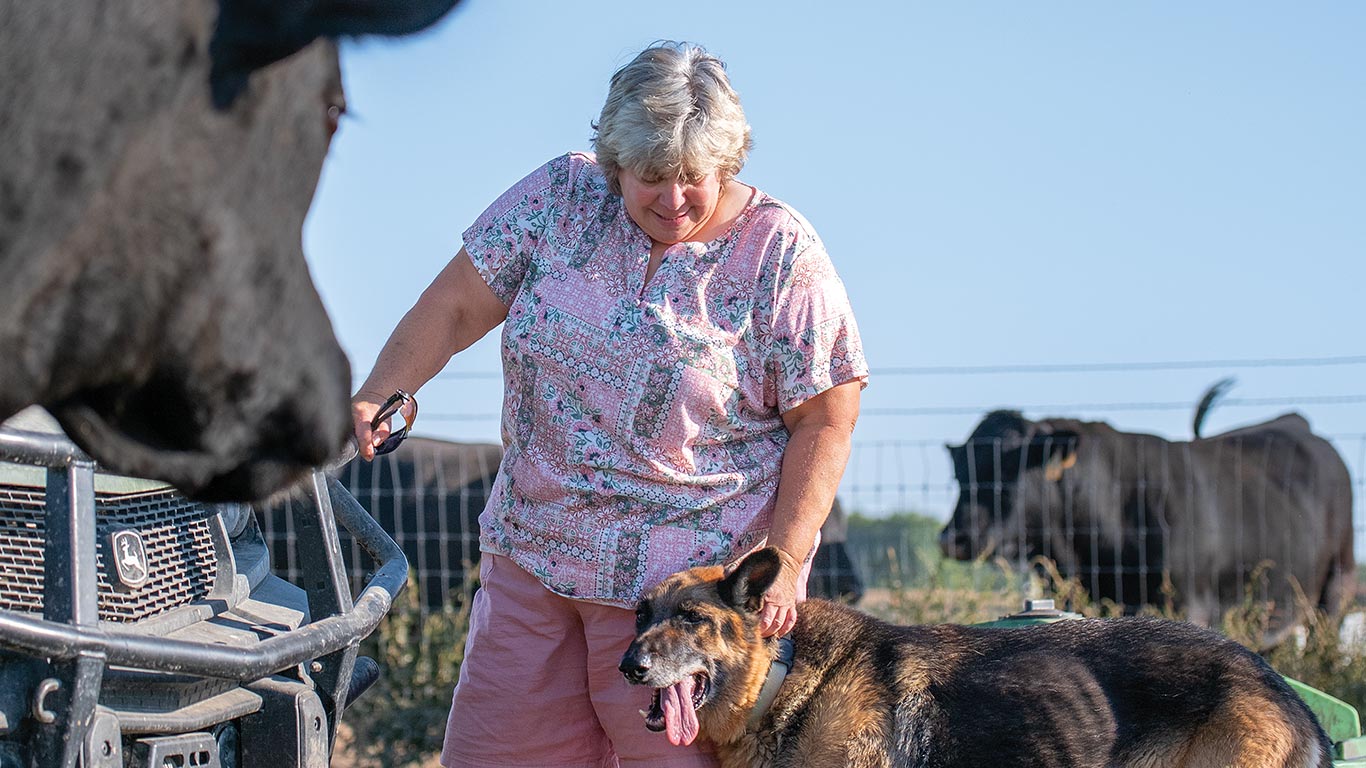
Laurie Glenn checks the cattle pen closest to the barnyard. One of her dogs is always by her side.
Agriculture, Farm Operation June 01, 2026
Growing Her Own Way
2026 is the Year of the Woman Farmer, but she's been doing it in Illinois since 1986.
Story and Photos by Katie Knapp
One of Laurie Glenn's most vivid childhood memories is the smell of silage.
"My grandpa would pick me up and set me on top of a pretty quiet steer while it ate," she says. "Oh, that silage. It smelled so good."
She was two when her mother was killed and she and her father moved in with her grandparents outside Magnolia, Ill. From then on, all she wanted was to help feed the steers or go play with her cousin's toy tractors in the dirt under the bushes.
"By junior high, I knew I wanted to be a farmer," she says. "My grandparents weren't convinced and said I'd change my mind 100 times."
They pushed college, and she pushed back until they reached a compromise—one year at Black Hawk College where she could also join the livestock judging team.
"I loved it," she says. "It wasn't just how to judge livestock, it was how to speak, how to learn."
Much to her surprise and her family's delight, she was so hooked she went back the second year and then transferred to the University of Illinois to earn her bachelor's degree.
"There's one thing about having a college degree—no matter what happened the rest of my life, nobody could take that away from me," she says proudly.
She graduated in 1986 with a lot of ambition, some fear, and not much else.
Going for broke. "I was scared to death," she says in her signature, frank manner. Her grandfather let her use one of his fields for a pasture for the few head of cattle she had acquired and raise corn on one of his other fields.
"I had never actually planted corn before. Sure, I'd ridden in the tractor, but never set the controls or managed the fertilizer," she recalls. "It was pretty stressful."
She worked day and night, got a loan, smoked too much, and asked everyone for help. She was determined to succeed.
"I probably drove my uncle and the neighbors nuts with all the questions I'd ask them. And then I got my first tractor for $8,000. I was so damn proud of that," she says as if it were made out of pure gold.
Then 1988 brought severe drought. It was only her third year of building up her own operation. She didn't raise enough corn to meet her contracts and had no reserves. The stress ate at her. Her family was worried and urged her to take one of the seed or chemical companies' offers to be a sales rep.
But she didn't quit. Four decades later, she can laugh about it. "I'll tell you what. I don't do that anymore. I cover myself with hedges now."
On her own terms. By her mid-30s, Laurie had built a stable, 1,200-acre operation, but she had not built a family.
"Any guy worth anything around here was already taken," she says, also admitting she was not the easiest person to date. "I was very happy, but I knew I really would like to have children."
A friend of a friend mentioned artificial insemination to her one evening over dinner.
"I said, 'Oh! I've been doing that to cattle for the last 20 years,'" Laurie remembers.
After discussing her plan with family and close friends because she knew she would need all their help, she picked out a donor the same way she'd pick a bull—the best genetics.
"When I told everyone my plan, they were all ecstatic," she says. This could have easily been another thing they tried to talk her out of.
"I remember when I introduced Michael to Sam Barr from the ranch I used to work at during college. He told me it was the greatest thing I've ever done."
Shortly after Michael was born, Laurie's farm had reached the size she couldn't manage on her own. After a few failed help-wanted ad attempts, she started partnering with another farmer in the same predicament.
"I think it works because we were both used to doing things the way we want it done," she explains. "We don't own anything together so if one of us decides we don't like the way it is or we don't want to do it anymore, we don't have to worry about anything. Basically, I pay him for planting on my ground, and he pays me for harvesting."
The system she and Karl Ziegler worked out nearly 30 years ago is still working for them, even as Laurie added a cow-calf herd to her operation when her son was reaching prime showing age.
Michael didn't have the desire to farm that Laurie had as a child, but she wanted him to know how the farm worked and be in FFA. "I've kept adding to the herd, even though he's off doing his own thing now. I tell him it's my midlife crisis, and I've replaced him with cows," she chuckles.
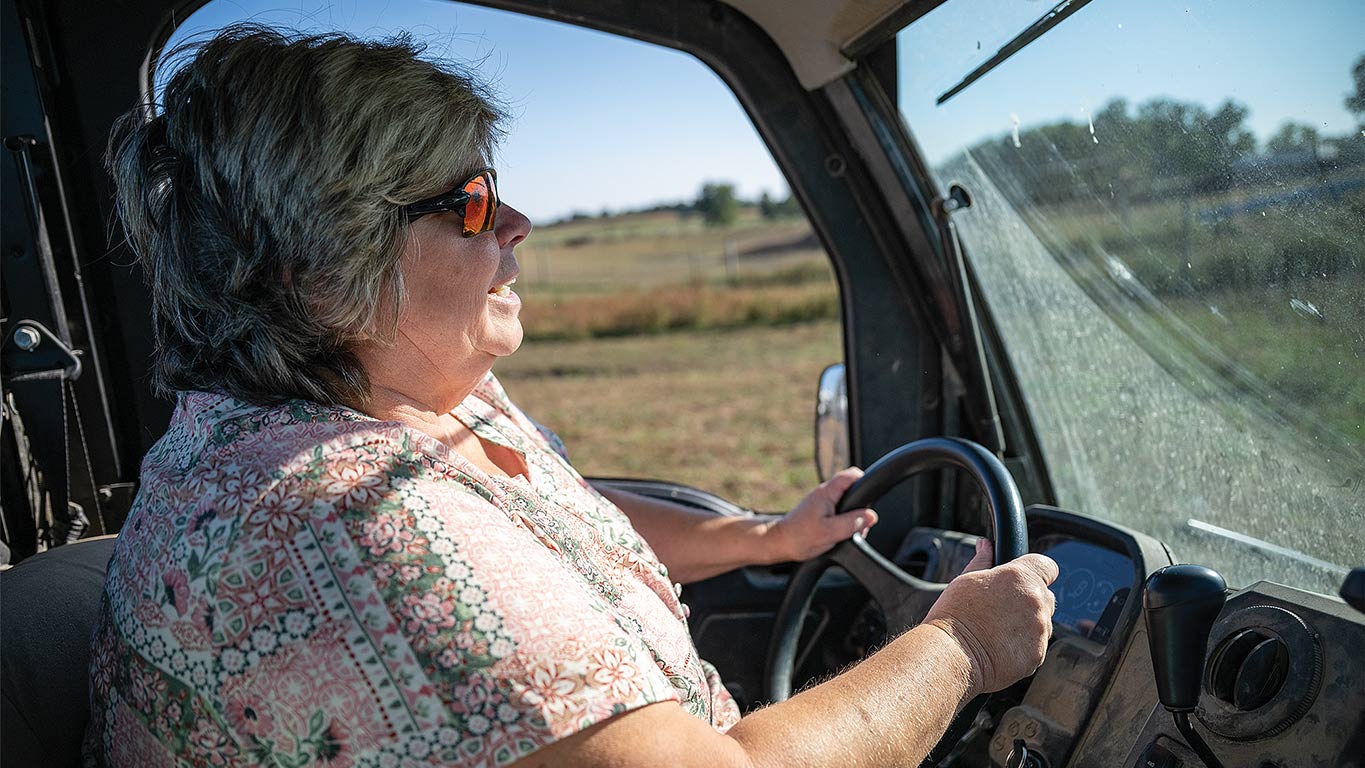
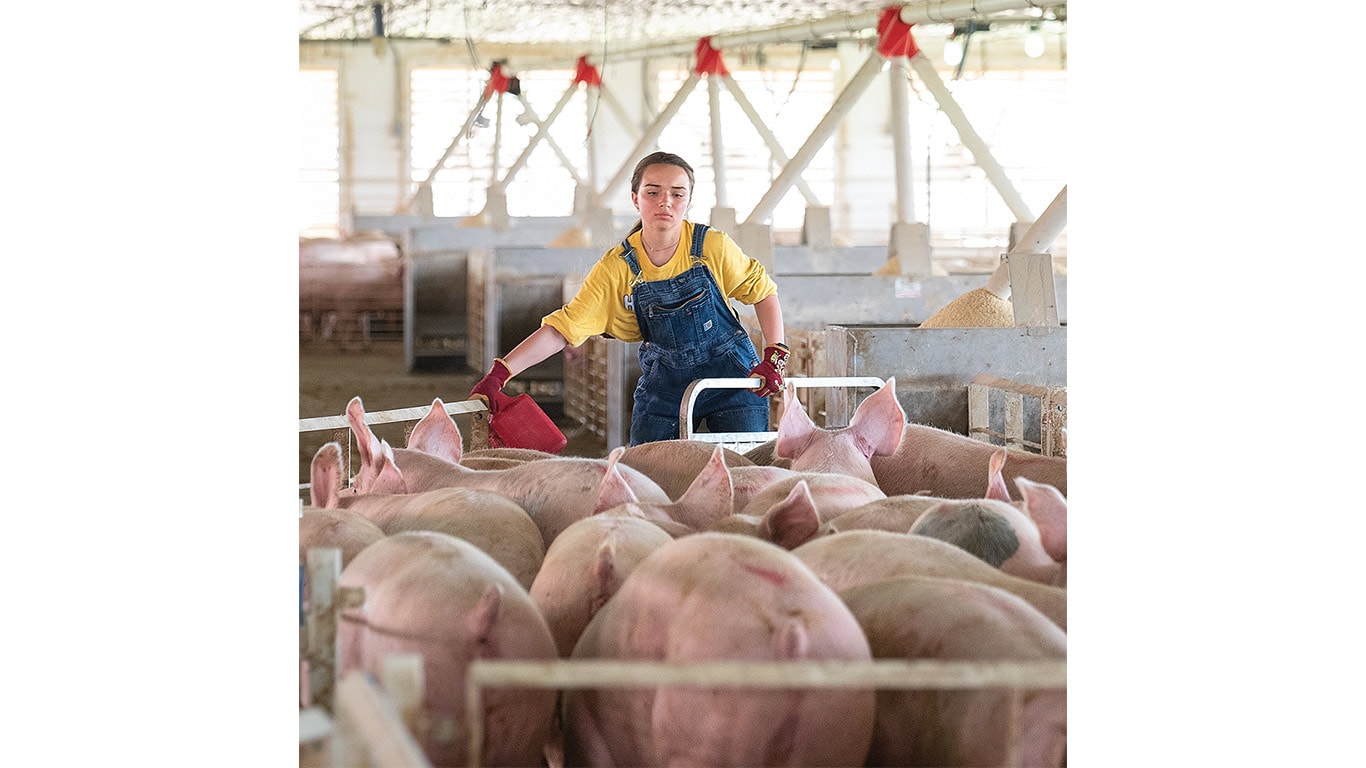
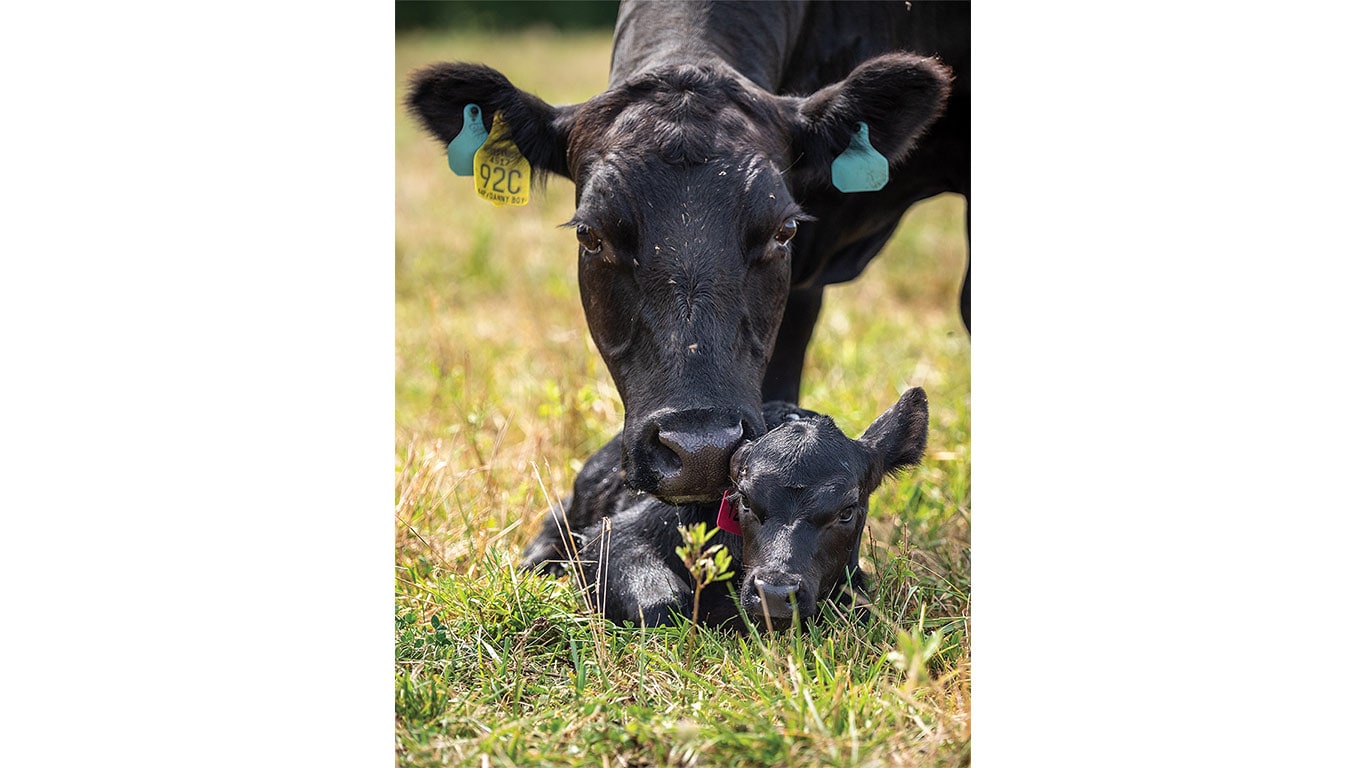
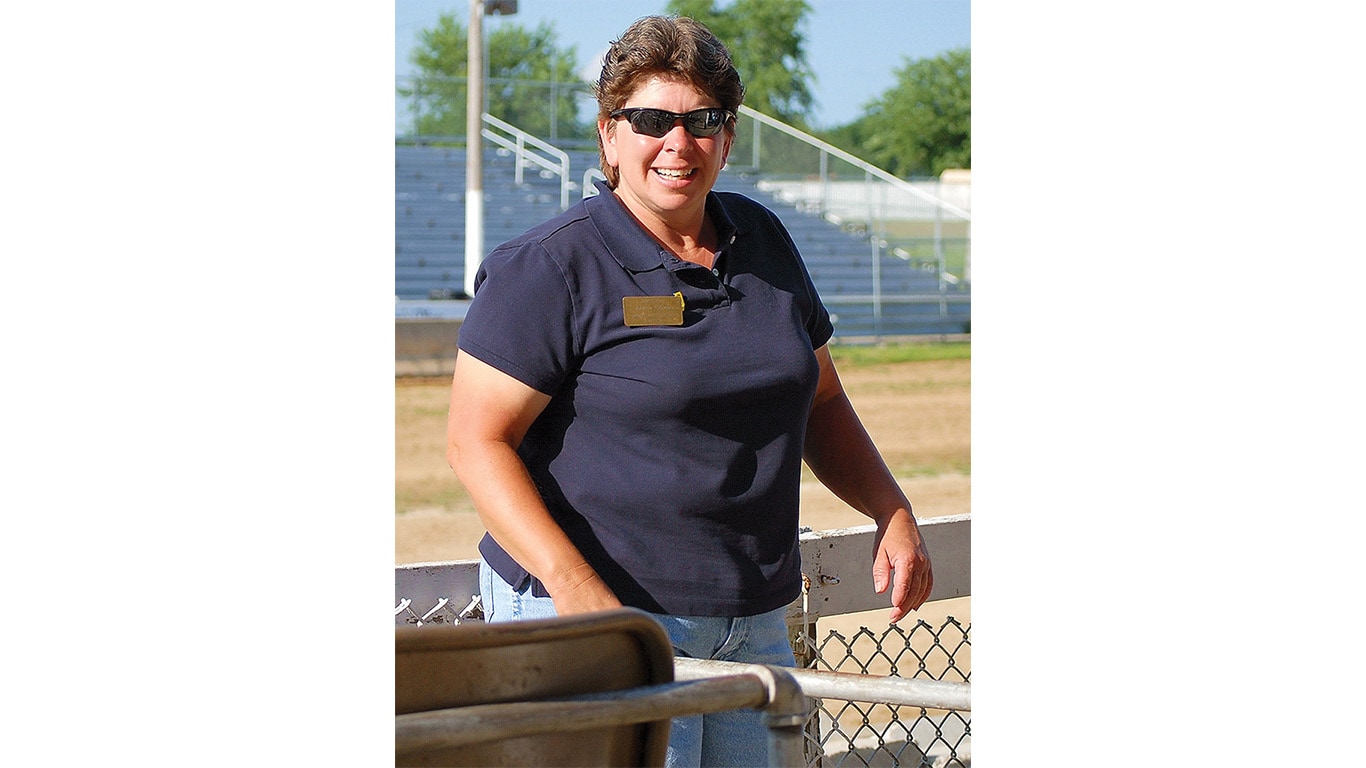
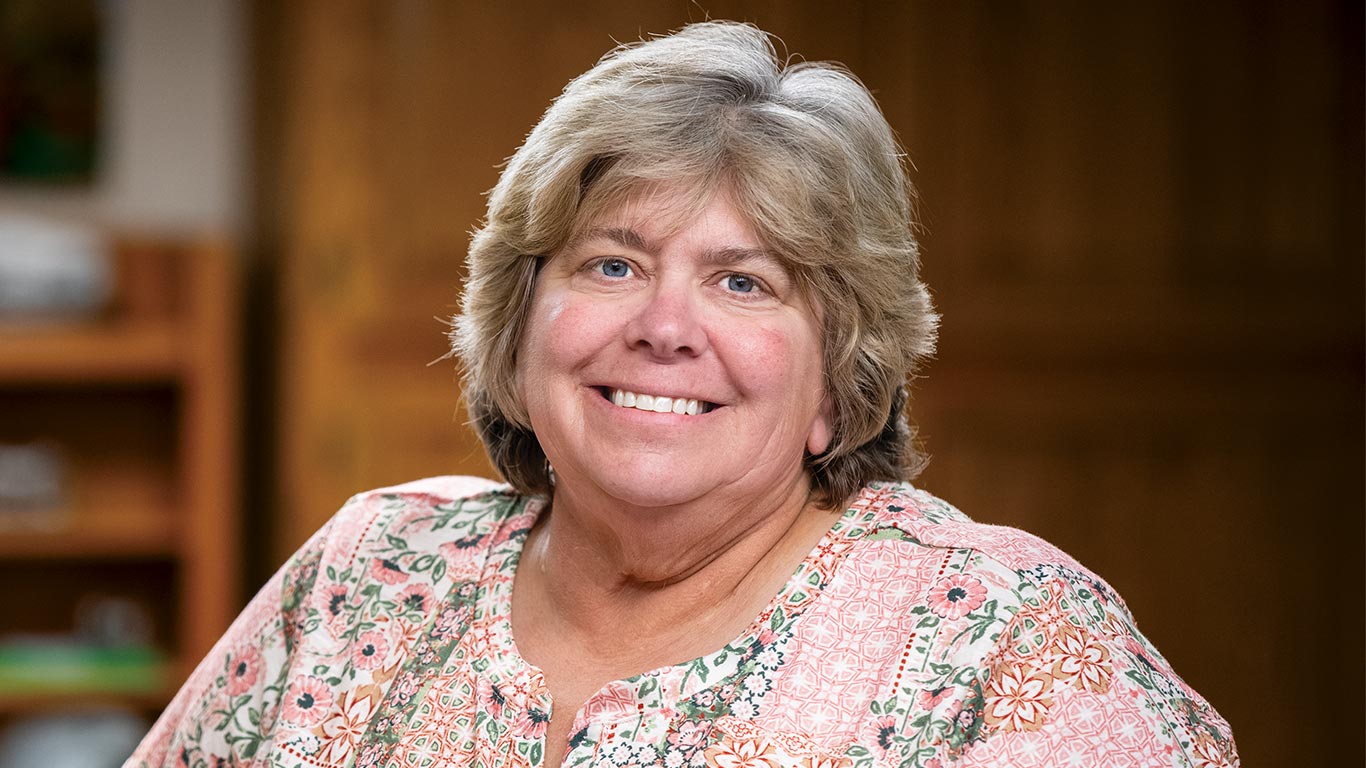
Above. After farming in Central Illinois for forty years, she says what surprises her most is the technology advances, price increase of equipment and inputs, and how many other women are now farming. Sophia Brown Poignant, one of Laurie's neighbors, is one of those young women now farming and raising livestock alongside Laurie. Laurie has been very active in community leadership including serving on the Marshall-Putnam Farm Bureau board, school board, and county fair board (as seen here setting up the grandstand chairs in 2008). Her cattle herd is now large enough that she can sell freezer beef locally and the rest to Tyson Foods. Laurie's basement office in the house her great-grandfather built for his hired man is decorated with service recognitions and awards, showcasing she never changed her mind like her grandmother thought, or hoped, she would.
The only girl. While she was building up her operation and then family, Laurie never noticed she was an anomaly.
"Sure, I was one of the only girls in my FFA chapter and then at the Farm Bureau meetings and equipment clinics and such, but no one treated me any differently," she recalls. "Except for renting ground. I'd hear from others that some guys wouldn't rent to me because of being a woman. That changed once they saw I was the one changing the bearings and loading the planter myself."
The other farmers and community leaders say the same thing—gender really never came up.
Tiffany Moodie, the Marshall-Putnam Farm Bureau manager, has worked alongside Laurie for years and saw her become the first woman to serve on the board of directors in 2002.
"I honestly don't think about Laurie any differently than my other farmers," Moodie says. "She treats everybody the very same. It doesn't matter your station in life. She's just kind and always willing to help."
But the truth is, Laurie is an anomaly.
According to USDA data, only 6.3% of U.S. farms were operated by women in 1987. That number has grown significantly but still has only reached about 14%. And Illinois currently ranks 50th in the percentage of farms operated by women, below other states also heavy with large-scale, row-crop farms.
This is changing, though, which is part of why the United Nations declared 2026 the International Year of the Woman Farmer. Laurie may not have had many women to look up to, but her neighbors do.
The family down the road is full of young women who have their hands dirty every day with commercial hogs, mini cows, pastures, and a number of other ventures, thanks in part to watching Laurie succeed.
"Growing up seeing another woman in agriculture has helped teach us that it's not just a man's job," says Sophia Brown Poignant, third of four farm girls turned farmers. "It's neat to see how Laurie also learned from both her father and grandfather, like us. They never let our dreams stop us. It was never a question that we wanted to follow in their footsteps."
From her broader perspective of the local and state ag industry, Moodie also sees the thread running from Laurie to several young women who grew up nearby.
"It's such a tight-knit neighborhood along that stretch of Route 18. I think the Brown girls and the others probably don't know any different than there being a strong female role model in farming right down the road," Moodie says. "I think that's the exceptional part. It's just been part of the makeup of what's been going on out there for generations."
Laurie doesn't disagree. At nearly 62, describing herself now as "half-retired" because she has enough help to do most of the heavy lifting but also has no plans to stop farming anytime soon, she says she's living the dream.
"Forty years ago, if you told me I'd be at this place, I probably would have thought—I don't know..." she uncharacteristically trails off.
She adds that when her initially doubtful grandparents passed away, they were amazed and proud of what she had accomplished. "Oh, they were tickled," she says with a laugh that makes clear what word she omitted. ‡
More articles related to:
Read More of The Furrow
AGRICULTURE, FARM OPERATION
Montana's Mannix Ranch
A family rooted in the past, with an eye on the future.
AGRICULTURE, EDUCATION
The French Connection
Thomas Jefferson forged America's agricultural links to France.