 A John Deere Publication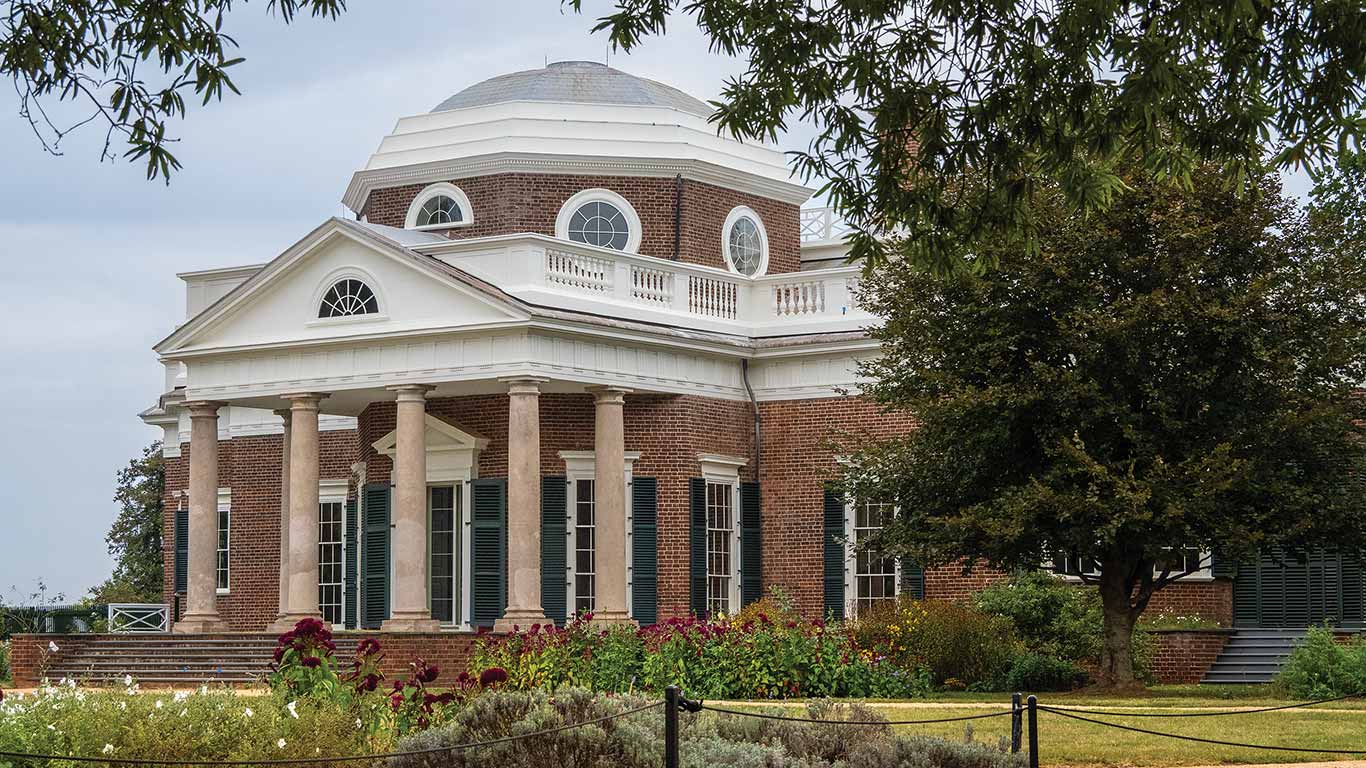
Thomas Jefferson started building Monticello, his home outside of Charlottesville, Virginia, in 1768, when he was 25 years old. Frequent remodels and modifications lasted throughout his life, consuming much of his money.
Agriculture, Education June 01, 2026
The French Connection
Thomas Jefferson forged America's agricultural links to France.
Story and Photos by Steve Werblow
As Americans celebrate the 250th anniversary of the Declaration of Independence, gallons of ink will be spilled praising Thomas Jefferson as a revolutionary, philosopher, president, and shaper of democracy. But the anniversary also gives us a chance to recognize Jefferson as an innovative farmer, passionate proponent of U.S. agriculture, and "America's founding foodie," who forged strong agricultural and culinary ties with France.
As America's minister to France from 1784 to 1789, Jefferson gathered seeds, cuttings, and food to bring home to the U.S., while using his Paris garden to show off New World crops like corn, sweet potatoes, and squash. In France, Jefferson became an expert at "culinary diplomacy," using elegant meals to encourage conversation, debate, and understanding. Throughout his political life and retirement, dining with Jefferson was often a culinary and intellectual adventure.
"He invited political allies and political opponents to dinner. Jefferson really believed conversation across difference was necessary, and he believed that good food and good wine could help smooth those conversations," explains Brandon Dillard. He's director of historic interpretation and audience engagement for the Thomas Jefferson Foundation, which operates Monticello—Jefferson's home—as a landmark, archeology site, and interpretive center for the public.
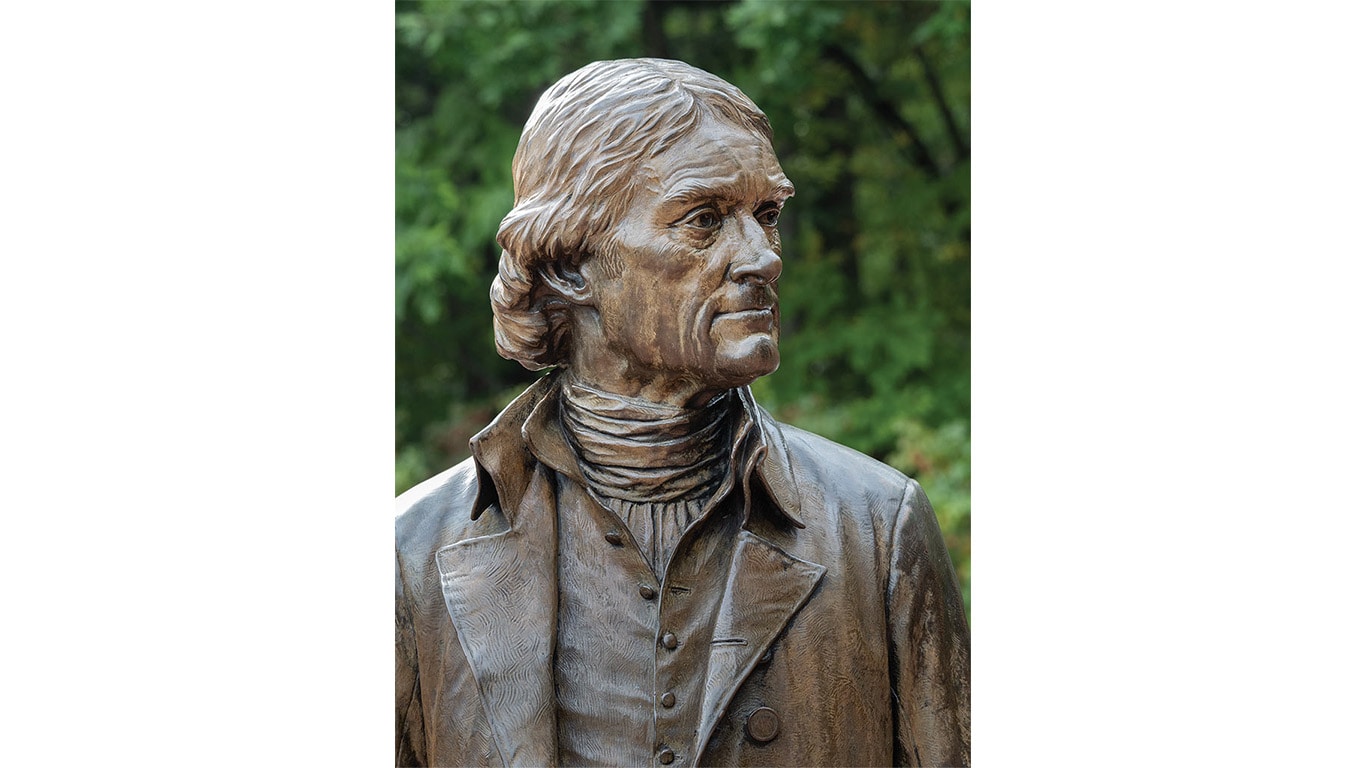
"Agriculture ... IS OUR WISEST PURSUIT, because it will in the end contribute most to REAL WEALTH, GOOD MORALS & HAPPINESS."
Above. Jefferson guided the development of American democracy, but was happiest on his farm.
On the farm. Jefferson's story starts and ends on the farm. At age 20, he was running the tobacco plantation he had inherited from his father, who had established the farm in Virginia's central Piedmont region. Over time, Jefferson expanded the operation to 5,000 acres. At 25, Jefferson began building Monticello, which became a lifelong architecture and agriculture project. Over the years, Monticello also became a showcase for crops from around the world and a testing ground for techniques like contour plowing, cover crops, building soil health with manure, and crop rotation.
As a newly minted lawyer in 1769, Jefferson was elected to Virginia's colonial legislature and represented clients in the courtroom. His passion for personal liberty and leadership in calling for a boycott of British goods set the course for engagement in the revolutionary struggle against the crown.
Seven years later, at the age of 33, Jefferson wrote the Declaration of Independence. Through the action-packed years of the American Revolution, he helped shape Virginia's constitution and served as the Commonwealth's governor. At the end of the war, Jefferson was a delegate to the Congress of Confederation, which sent him to France to succeed Franklin as minister plenipotentiary for negotiating treaties of amity and commerce.
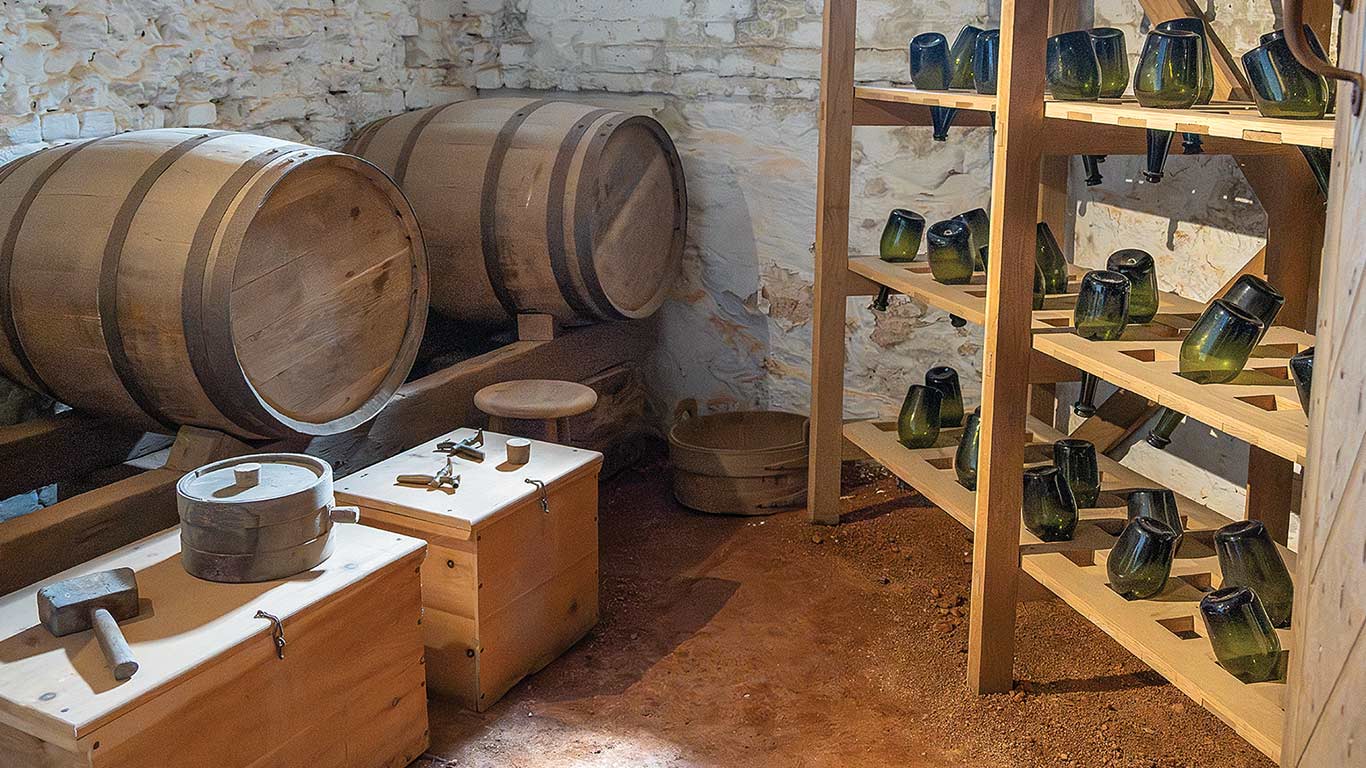
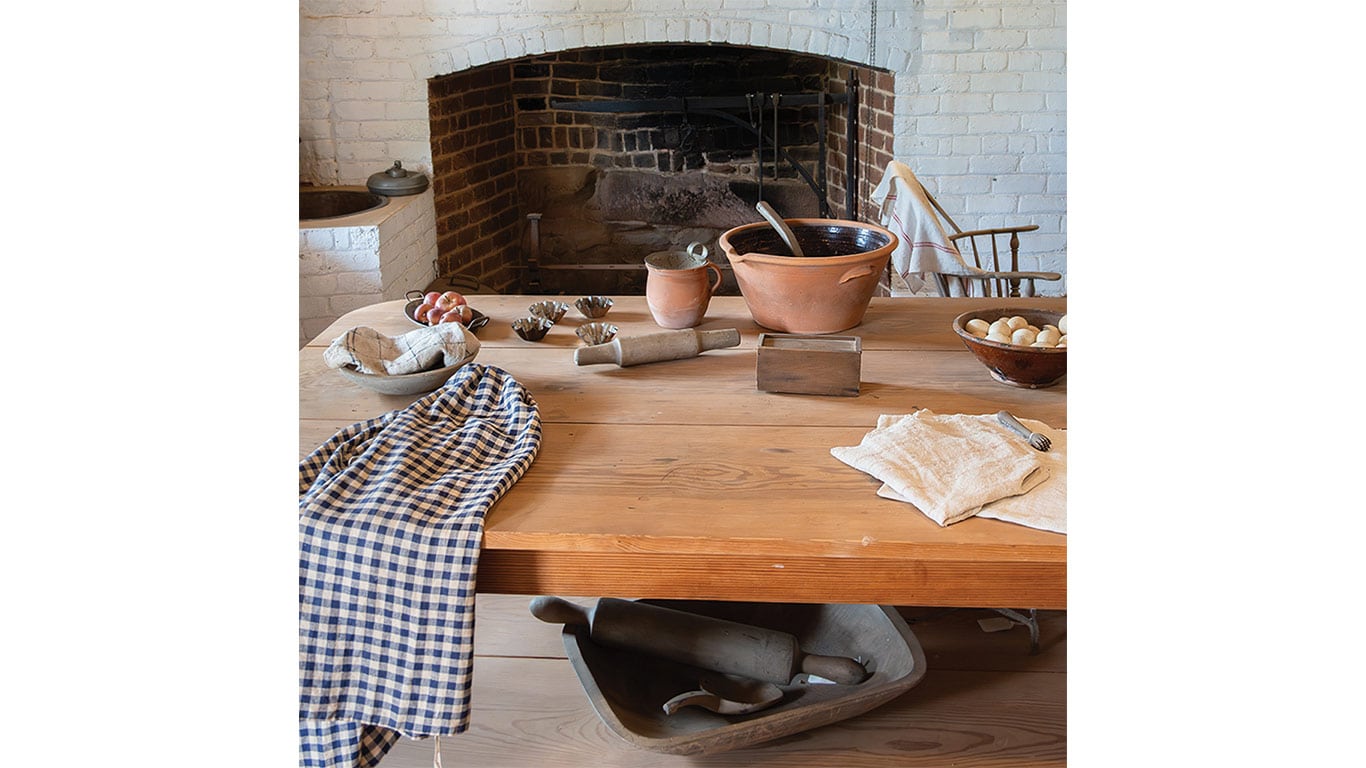
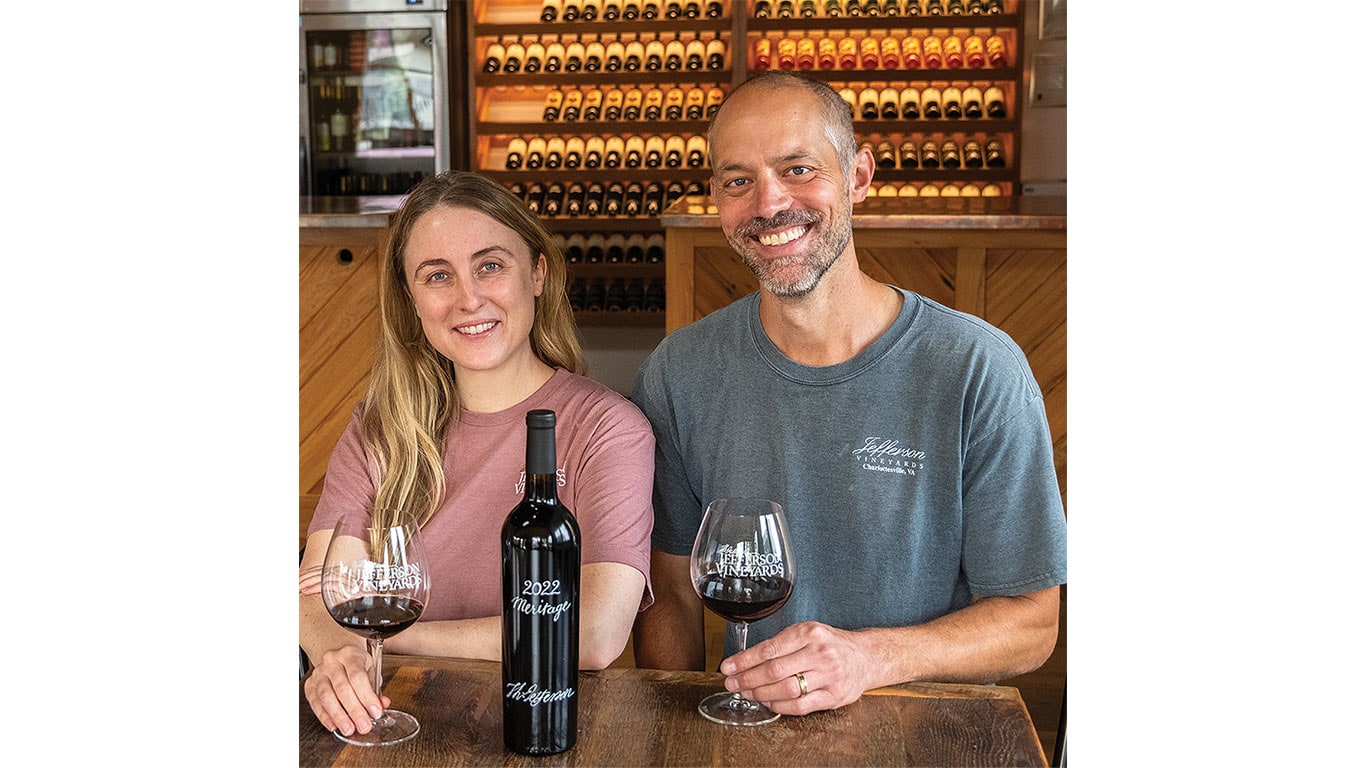
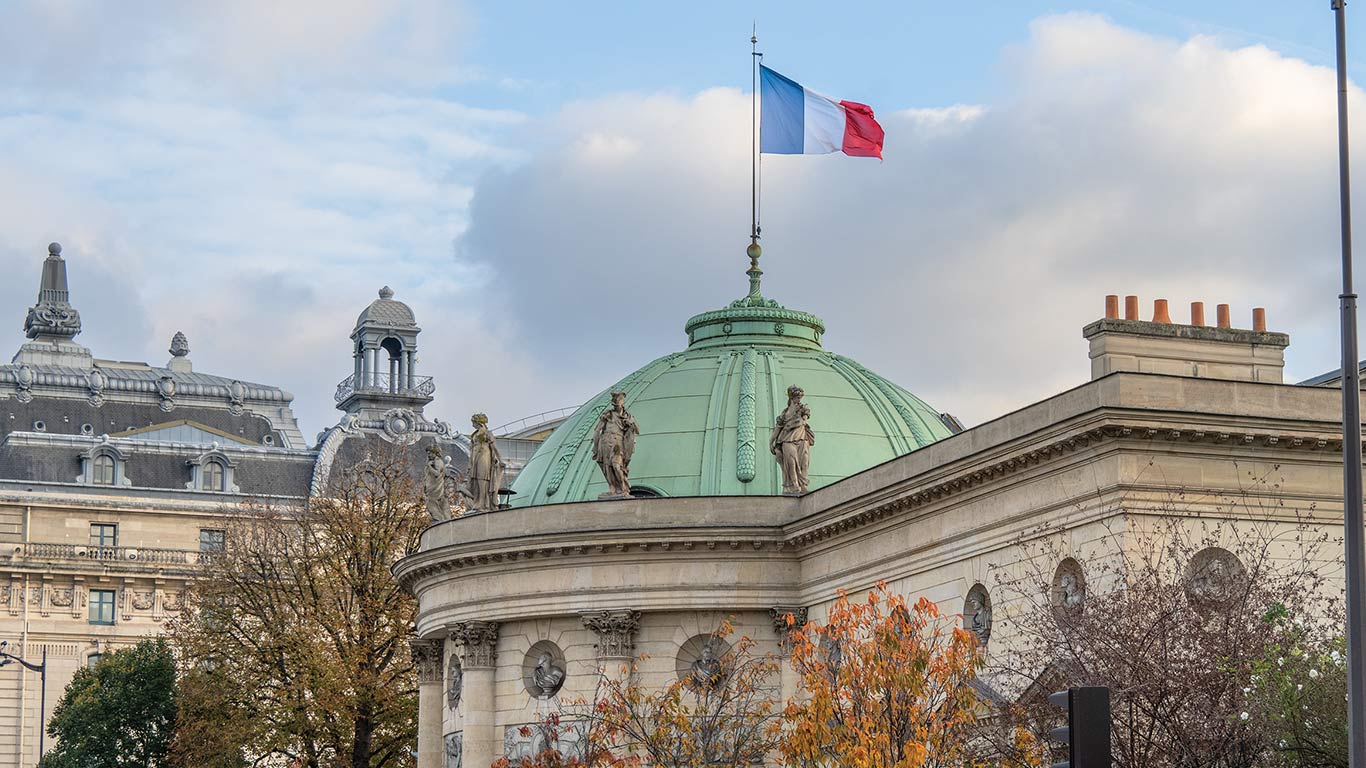
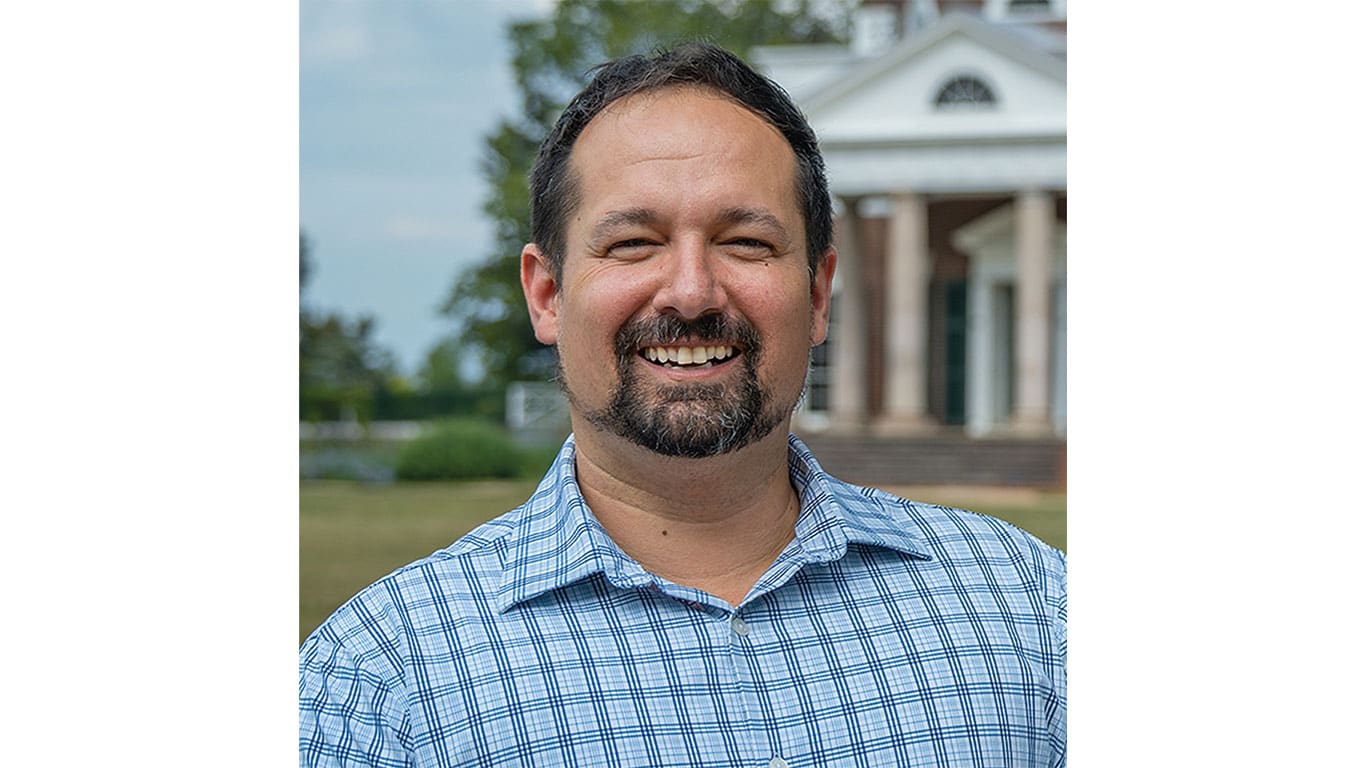
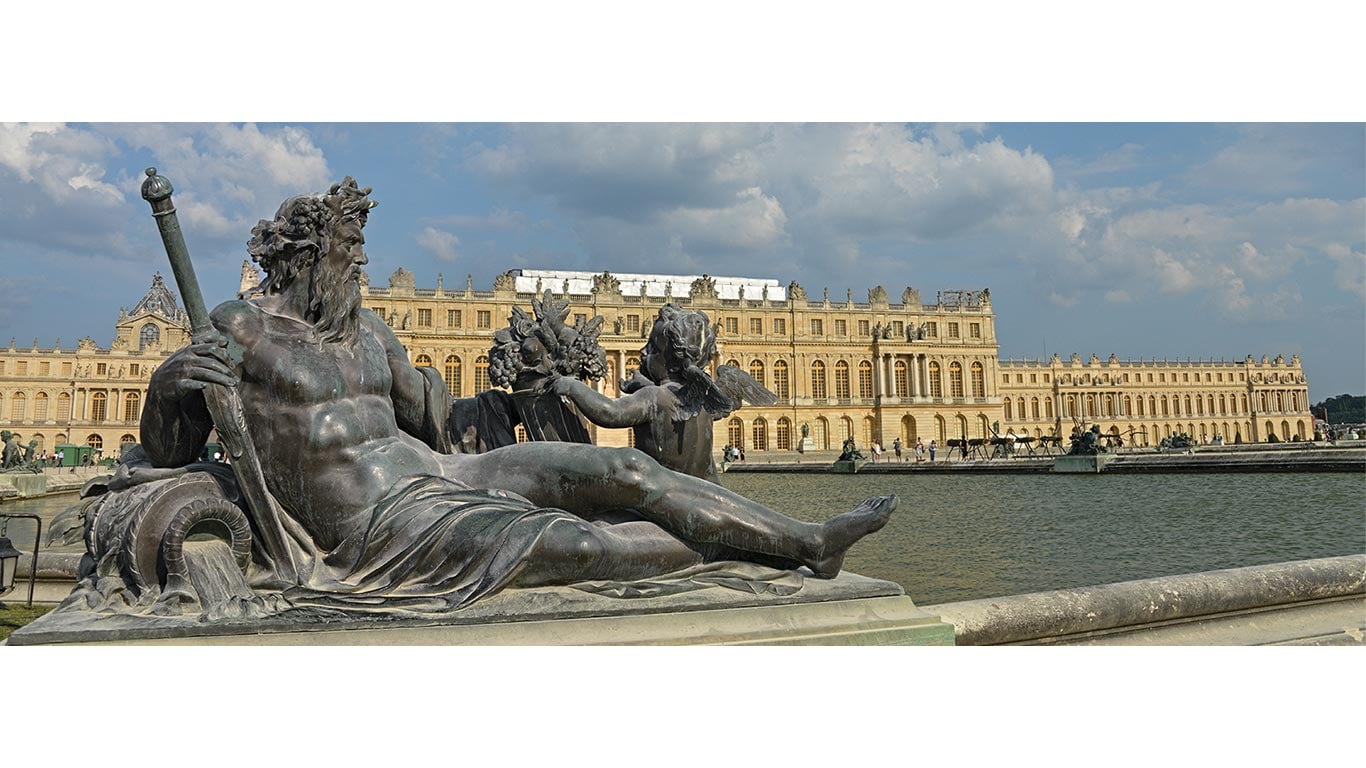
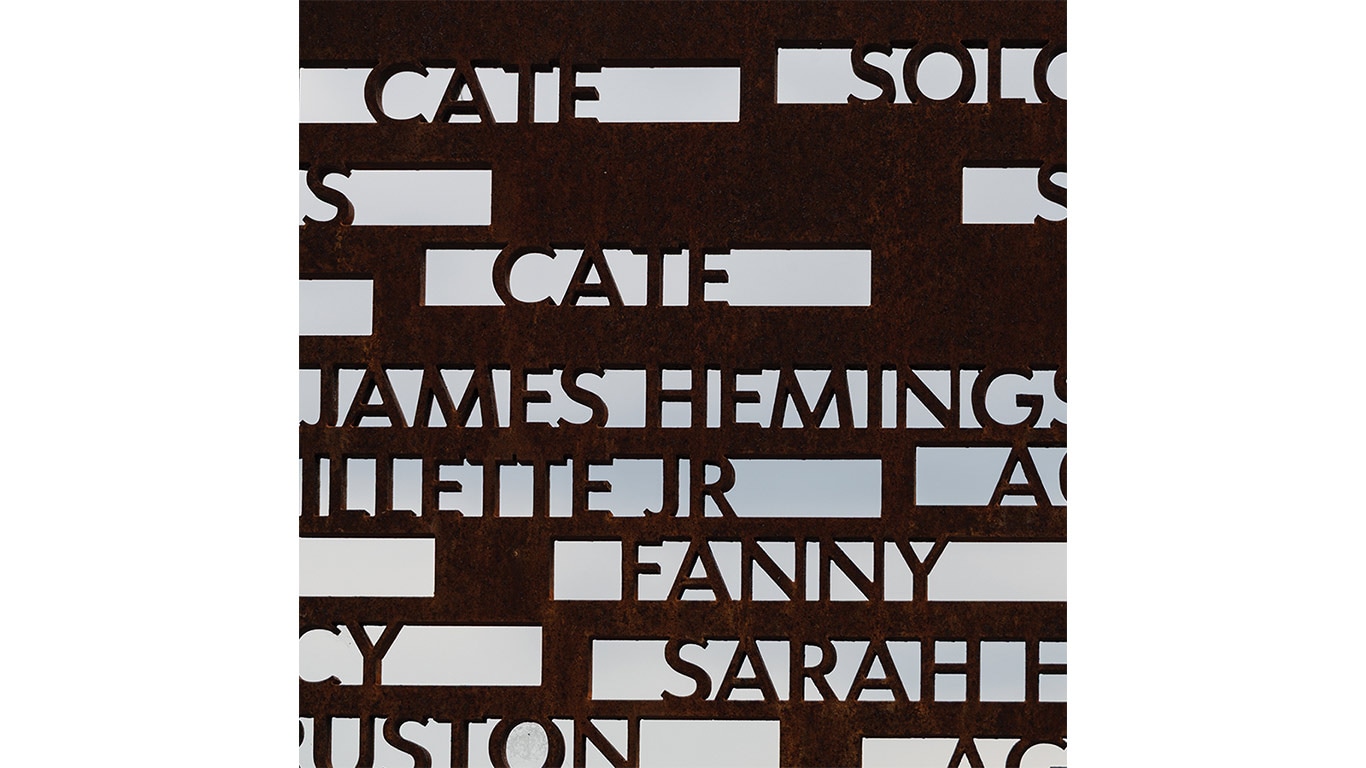
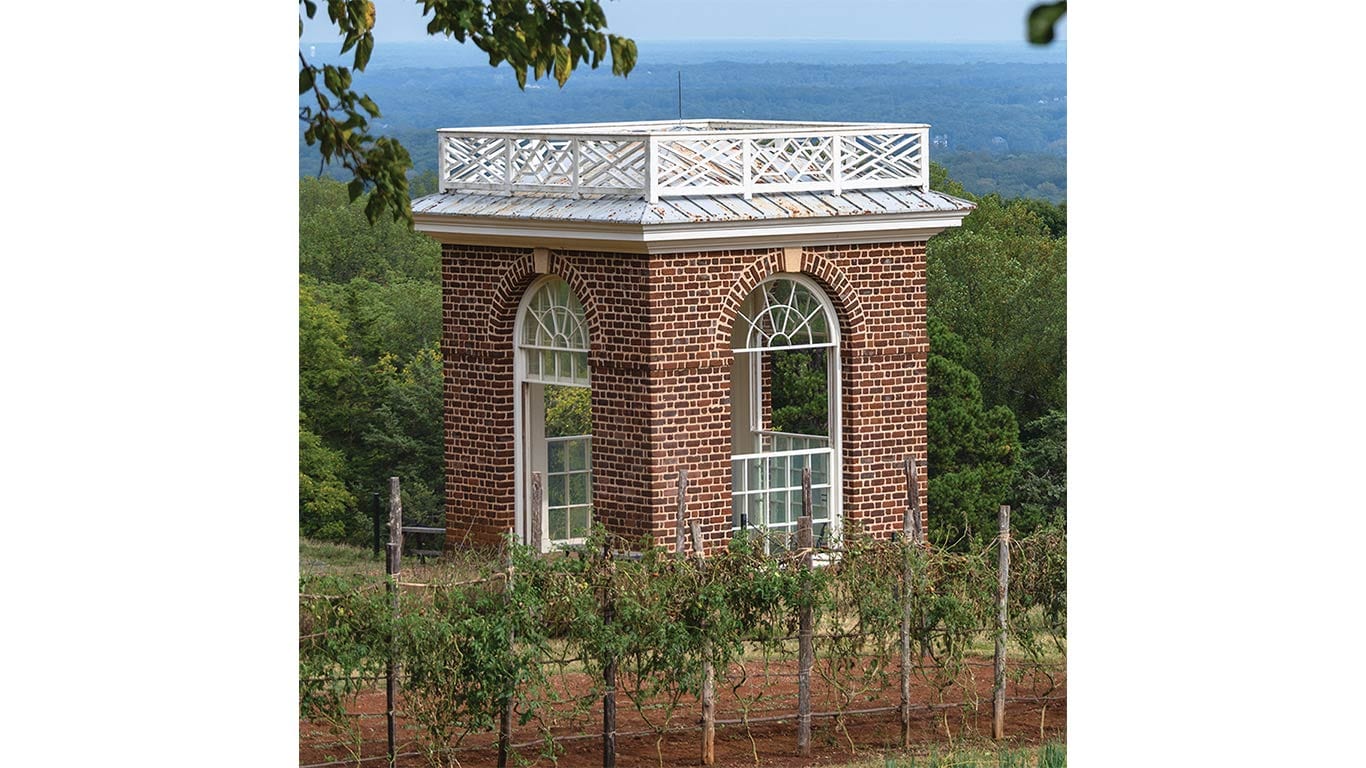
Above. A wine lover, Jefferson experimented with dozens of native and European varieties on his estate, donated land to Italian winemaker Phillip Mazzei, and regularly ordered wine from Europe. Monticello's 1809 kitchen was state-of-the-art. Allison Scott and Chris Ritzcovan of Jefferson Vineyards bring Jefferson's dream of excellent American wine to life. Paris' Hôtel de Salm inspired Monticello's dome. Jefferson represented the U.S. at Versailles. Monticello's garden pavilion. Monticello's memorial to enslaved people lists chef James Hemmings. Brandon Dillard.
Sharp eye. Amid state dinners, hobnobbing, and negotiating in Paris, Jefferson maintained his passion for farming and his sharp eye for promising crops.
In 1787, he embarked on a 3-month tour of France and Italy. Daily diary entries detailed crops, soil types, labor conditions, and—often critically—the quality of local food and wine. During his travels, Jefferson picked up plant material, including upland rice from Italy that he smuggled out of the country in hopes that it would provide Southern farmers with an alternative to flooded rice. He avidly collected seeds for the rest of his life, exchanging with André Thouin of the royal garden in Paris; Adrienne Catherine de Noailles, aunt of the Marquis de Lafayette; and farmers and seed dealers throughout the new United States and as far as Texas.
When, as president, Jefferson sent Lewis and Clark on their exploration of the Louisiana Purchase, he ordered them to send back plants and seeds from their journey. And he took note of the crops enslaved people cultivated on his property, including African staples like okra and sesame.
"He's constantly thinking about different kinds of crops, constantly experimenting with all kinds of stuff," says Dillard. "That includes ornamentals. It includes herbs for medicinal purposes. There are over 300 different kinds of vegetables growing here and over 70 kinds of fruits. There were over 1,000 fruit trees at Monticello at its peak.
"He was looking for industry," Dillard adds. "One of the reasons that he's trying to do some of this is because he wants to end our foreign dependency on things that we have to import. He is especially interested in doing so if those things that we have to import are dependent upon slave labor."
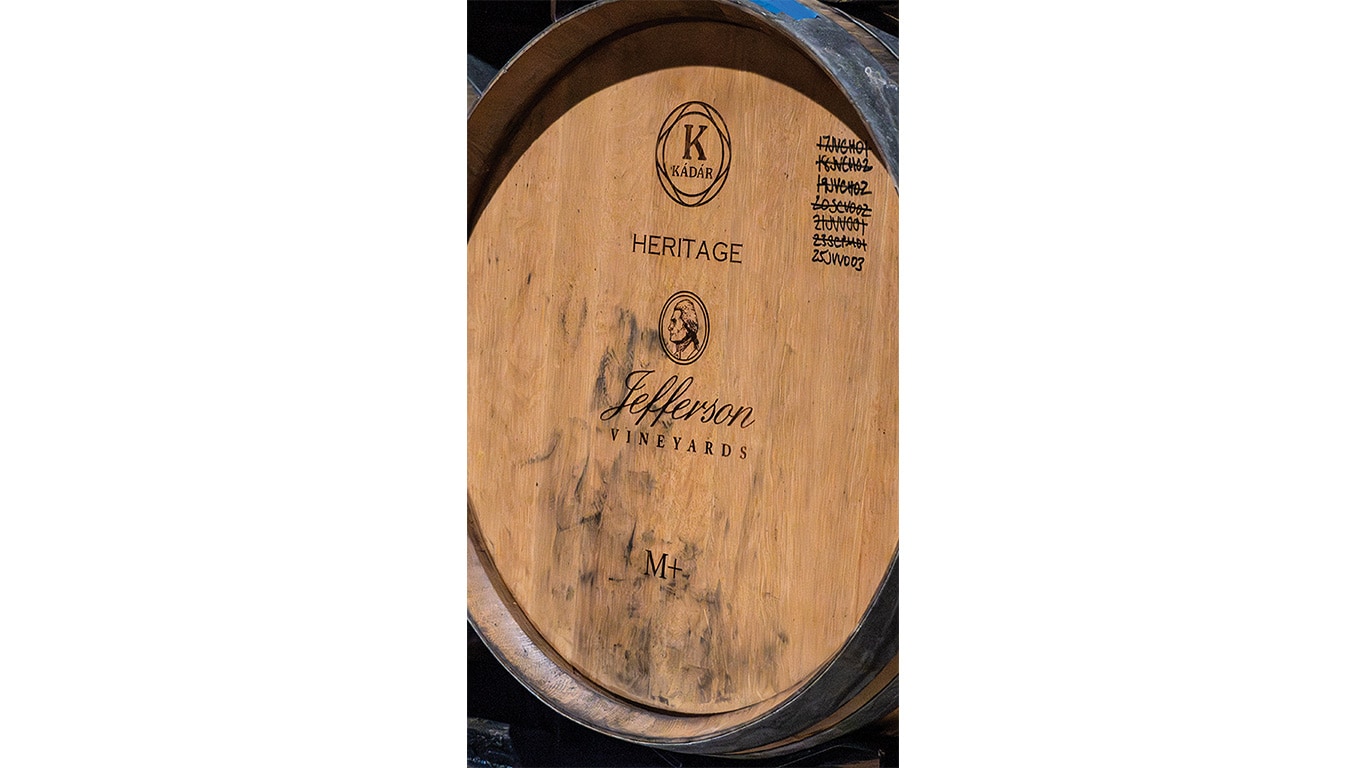
In the 1790s, Jefferson replaced tobacco with wheat as his farm's principal crop. He planted maple trees in hopes of creating sugar with less dependence on enslaved labor than imported sugar cane from the Caribbean. ("The irony, of course, is that enslaved laborers at Monticello did the actual labor," Dillard notes.) He sought olive varieties suited for local oil production, and donated land to Italian-born winemaker Phillip Mazzei to launch a U.S. wine industry. Many of the vines froze, and the rest were trampled by Hessian soldiers' horses. But the dream came to life at Jefferson Vineyards, where Chris Ritzcovan and Allison Scott produce fine wine on some of the same acreage.

"Those who labor IN THE EARTH are the CHOSEN PEOPLE OF GOD"
Above. Jefferson's library contained more than 6,000 volumes on agriculture, law, philosophy, science, and more.
In the garden. Based on documents including the Garden Book Jefferson kept from 1767 to his death in 1826, the Thomas Jefferson Foundation reestablished Monticello's gardens much as they were in Jefferson's day.
"We have a seed saving program, in Jefferson style, growing these crops with the intention to preserve them and keep these varieties going," says Michael Tricomi, manager and curator of historic gardens at Monticello. "We have some products we make for our shops, and we work with the Blue Ridge Area Food Bank on donations." Tricomi and his team are also working with Monticello's chef to supply produce to the estate's cafe for seasonal dishes.
"Jefferson was definitely getting into crop rotations, especially in the fields around Monticello," Tricomi adds. "He had a 7-year crop rotation plan in his fields—different periods of cover crops and fallow periods and different crops to rotate in and out."
He also had a strong sense of the power of soil health. Jefferson wrote to his daughter Martha when he was secretary of state, "When earth is rich it bids defiance to droughts, yields in abundance, & of the best quality. I suspect that the insects which have harassed you have been encouraged by the feebleness of your plants, & that has been produced by the lean state of the soil."
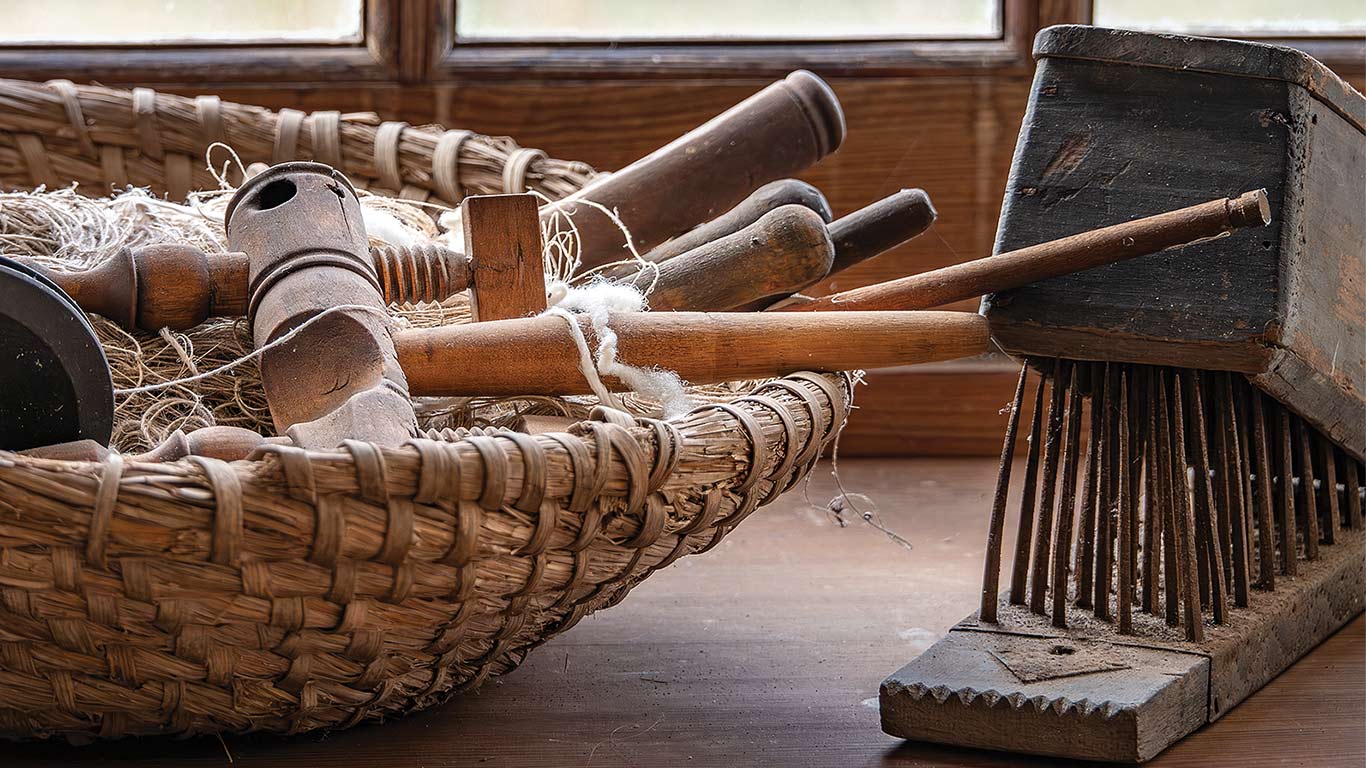
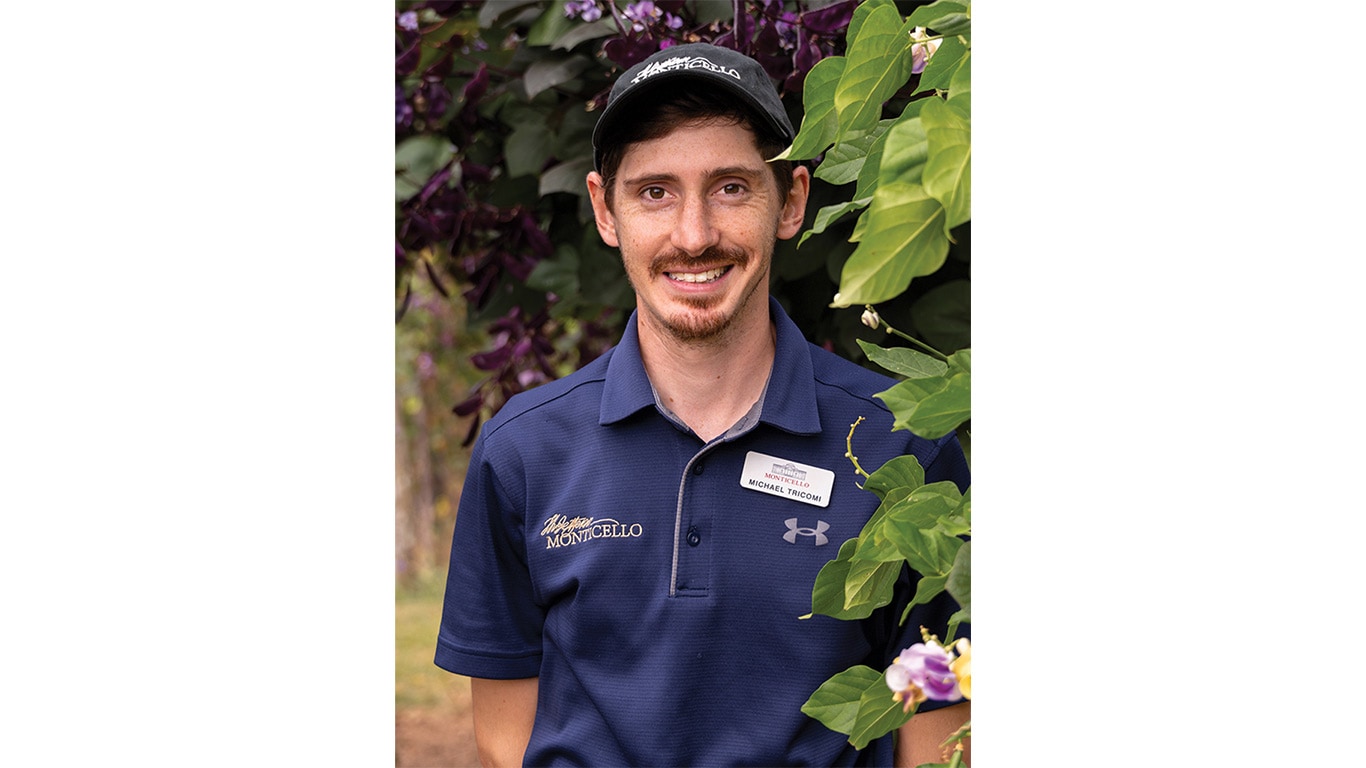
Above. At the textile workshop, slaves spun and wove Monticello's wool and hemp. Jefferson loved peas, says Michael Tricomi.
On the menu. For decades, Jefferson entertained throngs of visitors. In 1809, he completed a state-of-the-art kitchen, featuring tools like an 8-opening stew stove that allowed cooks to simmer delicate dishes, a pasta machine, and a clockwork spit-jack that turned meat in the hearth.
Meals centered around salads of fresh vegetables and fruits, and featured novelties like macaroni and cheese, tomatoes, cauliflower, raisins, almonds, ice cream, fried chicken and waffles, and gumbo.
Dillard points out that Jefferson's fusion cuisine was a perfect metaphor for the new country.
"If we're thinking about this in terms of America, we have enslaved Black chefs trained in the French method cooking crops from continents all over the globe, making new dishes that are unlike things anybody has ever seen before," he explains.
That cuisine summed up Jefferson's colorful life and his deep love of agriculture. In 1811, he wrote, "No occupation is so delightful to me as the culture of earth." ‡
More articles related to:
Read More of The Furrow
AGRICULTURE, FARM OPERATION
Growing Her Own Way
2026 is the Year of the Woman Farmer, but she's been doing it in Illinois since 1986.