 A John Deere Publication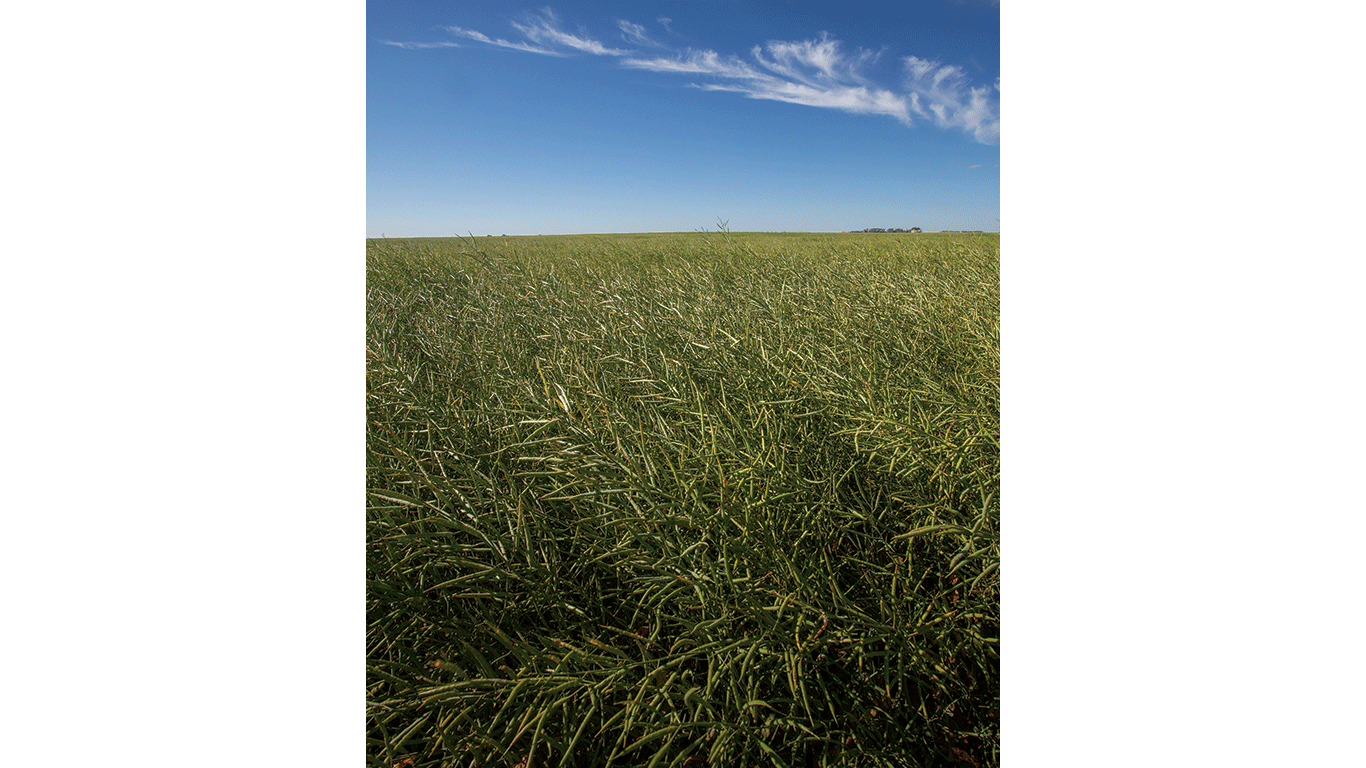
Mark Bruce and his family have been conducting on-farm trials to test how farm inputs perform on their dirt for a decade.
Agriculture, Farm Operation April 01, 2026
The Right Blend
Doing on-farm test plots pays dividends.
Story and Photos by Lorne McClinton
Mark Bruce doesn't mince words about test plots. They're a hassle, and they mean putting another item on your to-do list during the busy spring planting season. Still, the Moosomin, Saskatchewan, grain and oilseed producer says they're worth it. The knowledge he gains by spending a few extra hours setting up test plots has paid off time and time again.
"It's just ground-truthing," Bruce says. "There's lots of marketing material and other mainstream data you can source out there. It's not that I don't put any weight to all the Extension and university research out there. It's all excellent data and gives you a good baseline to start with. But there are a million ways to put seed in the ground. Everyone does it a bit differently, so a product that works great for me might do nothing for someone else and vice versa. Before I jump in and invest however many dollars on a product I like, I want to know how it will work on our own dirt."
Bruce and his family have spent the last decade testing fertilizer rates, seeding densities, and spray volumes on their farm. He says it's not difficult to create replicated test plots using the width of the seeder or sprayer in John Deere Operations Center™, then use the GPS data to record the results with the combine.
Their on-farm trials have led them to bump up their water volumes for fungicides and slightly increase their seed row-placed fertilizer rates. They're also gradually leading them towards adopting higher-end plant health products. They're not moneymakers every year, but when he looks at his five-year average, he comes out ahead.
"Still, doing the test plots to learn this is always a pain in the butt," Bruce says. "There's a mental hurdle you have to overcome and then do it. You're always glad you did them after they're done. Often it makes your decisions black and white."
Since 2024, Bruce and his family have tried something different for their on-farm fertilizer trials; they host ALPINE® Fertilizer trials. Company researchers come to their farm with a specialized, truck-pulled research seeder that tests different combinations of macro- and micronutrients. They conducted fertility trials on wheat in 2024 and on canola in 2025.
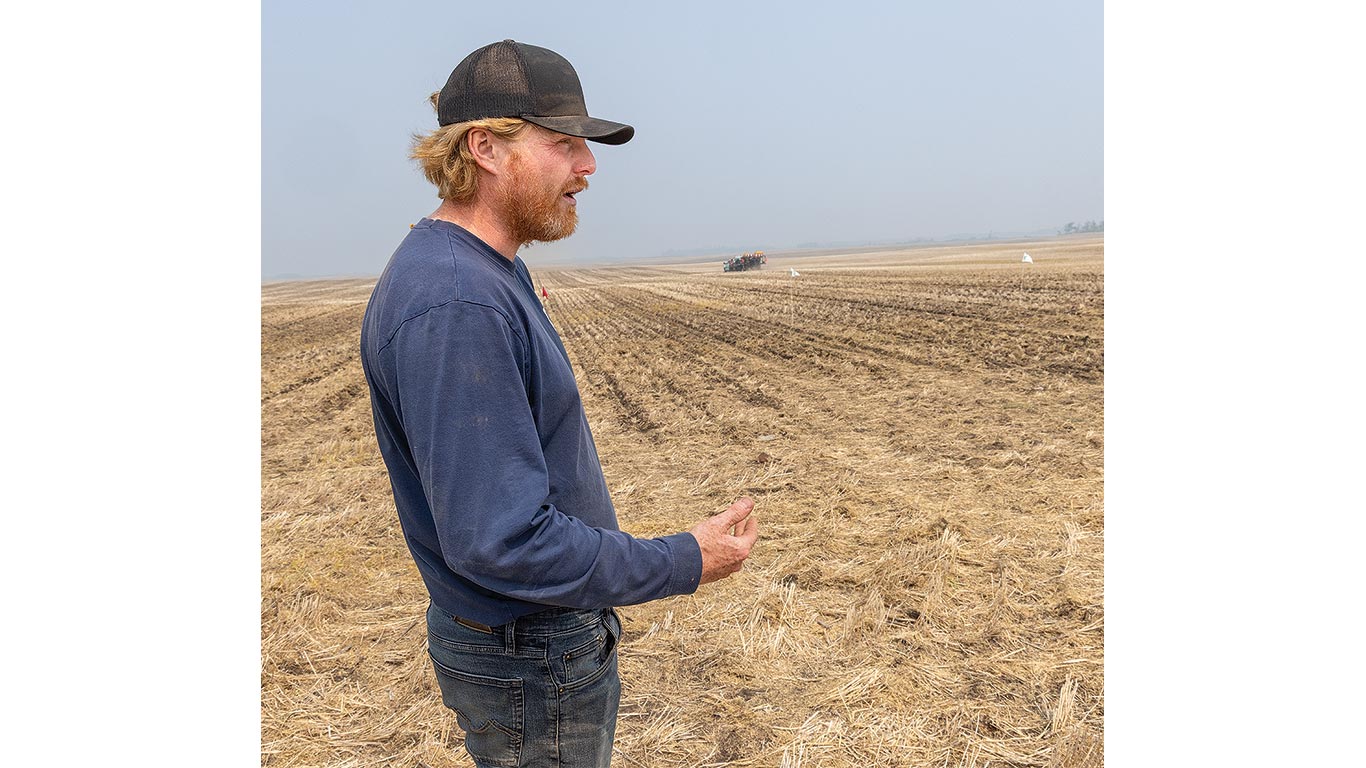
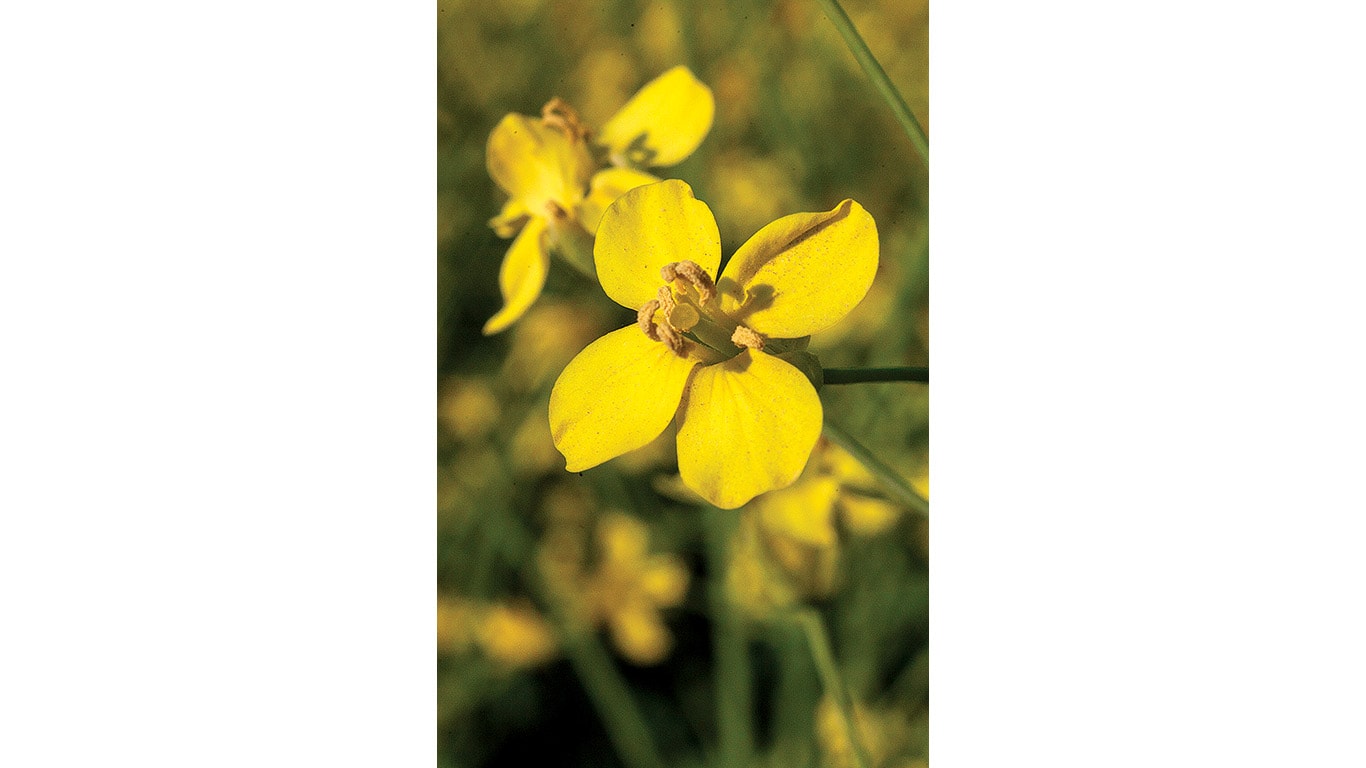
Above. Bruce says doing trials is a hassle but the data makes it worthwhile. Since 2024 they've hosted ALPINE® Fertilizer trials. Since they send out a team to do them, they get the data without the headaches.
Hassle-free results. "They seeded 12 acres of canola plots using various combinations of seed-placed nutrients and then came back to apply foliars on adjacent 12-acre plots around herbicide time," Bruce says. "They're very well coordinated and will show up within a day or two of when we planted the surrounding field to get fair tests. We get all the benefits of having a trial, but we don't have all the hassle of setting it up."
Bruce was still waiting for results from the 2025 canola trial at the time of writing. However, last year's wheat trials produced a surprising result.
"A foliar fertilizer treatment on the wheat at herbicide time produced about a three-bushel yield increase; that's enough to generate a return on investment," Bruce says. "Do the results justify a foliar application? I've always felt nutrients worked best when they are placed in the soil and taken up by the roots. I still believe that, but our results prove that a crop does respond to a foliar application when it's applied at the right time. So, I can see if the weather cooperates, it's a way to give the crop a little boost."
For Bruce, on-farm trials aren't about finding a magic bullet; they're about getting clarity on what products work best on his farm so he can make informed decisions. If they also put more dollars in his jeans, the extra effort is more than worth it. ‡
More articles related to:
Read More of The Furrow

AGRICULTURE, EDUCATION
Thinking Big in a Small Box
Maxing diversity brings multiple incomes to minimal acres.