 A John Deere Publication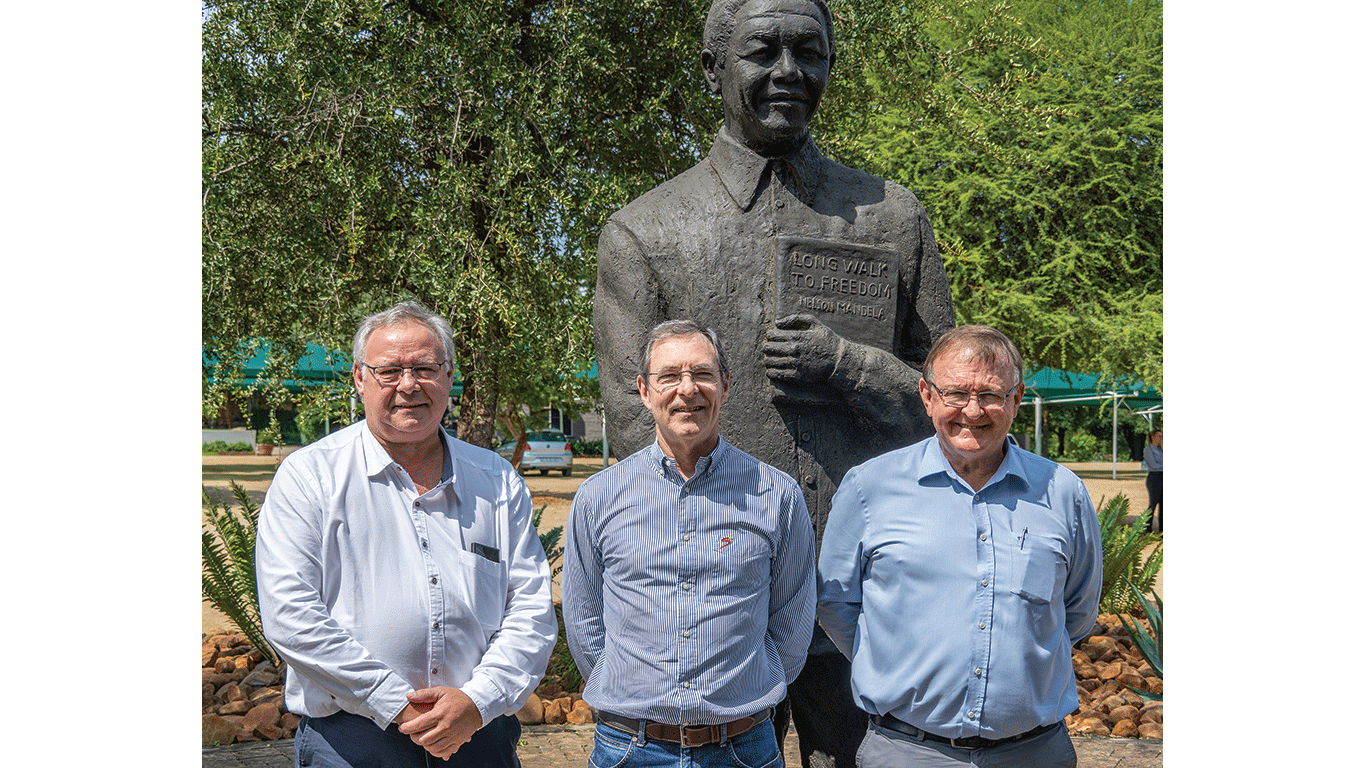
Piet Prinsloo, Clive Garrett, and Tommie Van Zyl of ZZ2 Group stand by the company's statue of Nelson Mandela, who embodied the heroic Roman virtues of prudence, temperance, justice, and fortitude.
Agriculture April 01, 2026
Philosophers
ZZ2 drives business on philosophy.
Story and Photos by Steve Werblow
South Africa's ZZ2 Group, which farms more than 12,000 acres of fruit and vegetables, dates back to an ancestor who arrived at the Cape of Good Hope in 1699 with the Dutch East India Company. But its governing philosophy dates back more than 2,000 years, to the writings of the famous Greek philosopher Aristotle.
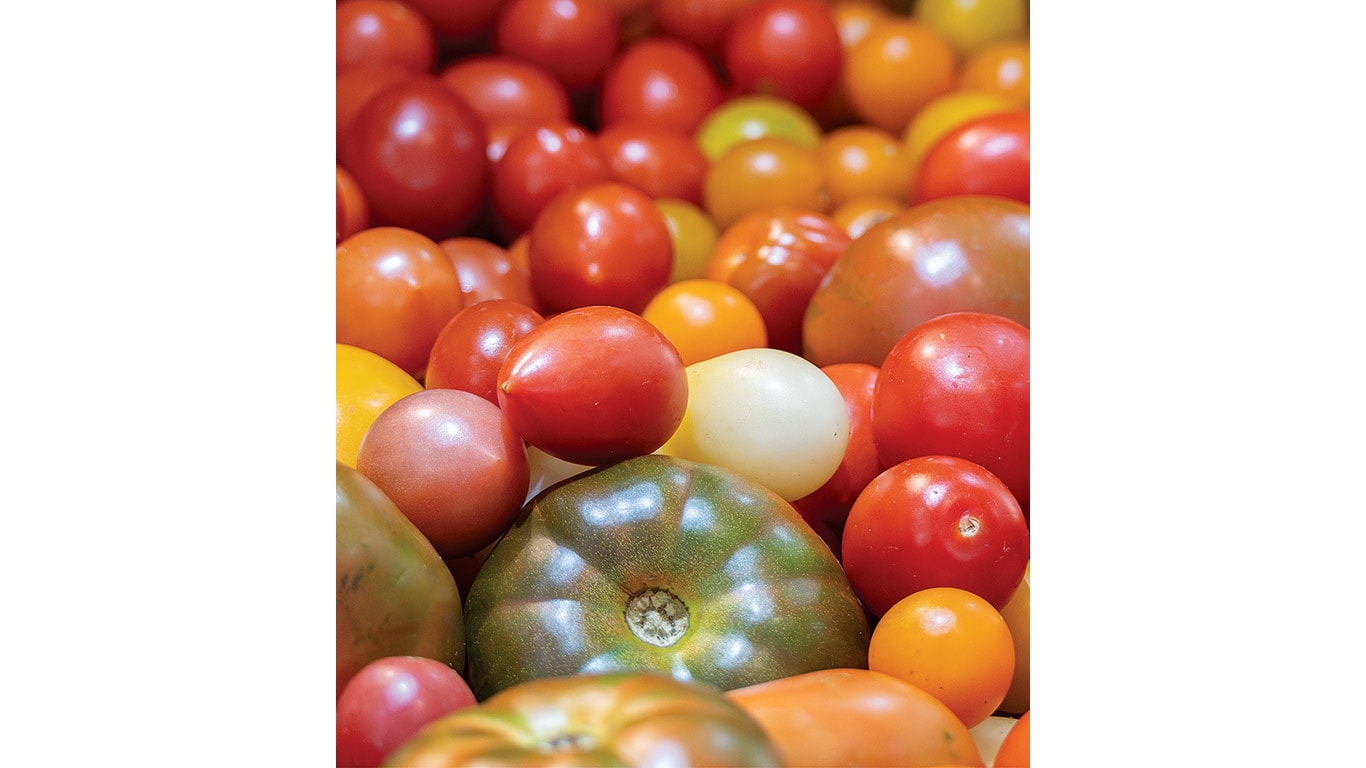
The farm's leadership team keeps meticulous track of the tomatoes their crews harvest all year long, as well as the avocados, almonds, apples, onions, citrus, cherries, dates, pears, tropical fruit, and beef they produce for domestic and export channels. After a quick review of the massive scale of the operation, which spreads across six South African provinces and into the neighboring country of Namibia, a meeting with the farm's management feels a lot like a college philosophy class. Moreover, it's a master class in building a business very deliberately on a set of carefully considered principles that drive every decision.
"We are looking for frameworks that could help us understand complex human systems without reinventing the wheel," says CEO Tommie Van Zyl. "We found this in the Four Causes from Aristotle, written nearly 2,400 years ago."
The Four Causes — basically, the philosopher's way of breaking down the "why" of any situation — include the final cause or ultimate goal, the conceptual design, the efficiencies, and the materials. Van Zyl and his team separate those four causes into the "supra system," which covers the final and formal causes, and the "sub system" of materials and efficiencies that supports them. Breaking them up helps the ZZ2 team prioritize its time and effort.
"A very important thing to sort out is the supra system, because that's where we should spend the most time," Van Zyl explains. "That's where the real strategy and tactics come from. If the final purpose is clear and the design is coherent, efficiencies become much easier to sustain. For ZZ2, the final cause is always the consumer. From that point, everything else must align: agronomy, logistics, technology, markets, financial performance, and people."
Van Zyl points out that Aristotle's Causes create "a blueprint for how to hold complexity in balance without drifting into crisis-driven decision making."
ZZ2 embraces what Van Zyl calls an "open system," which is outward-focused, adaptable, and future-oriented. Most notably, it is a flat organizational structure rather than a tall one with many layers of management. That lends itself to nimble decision making.
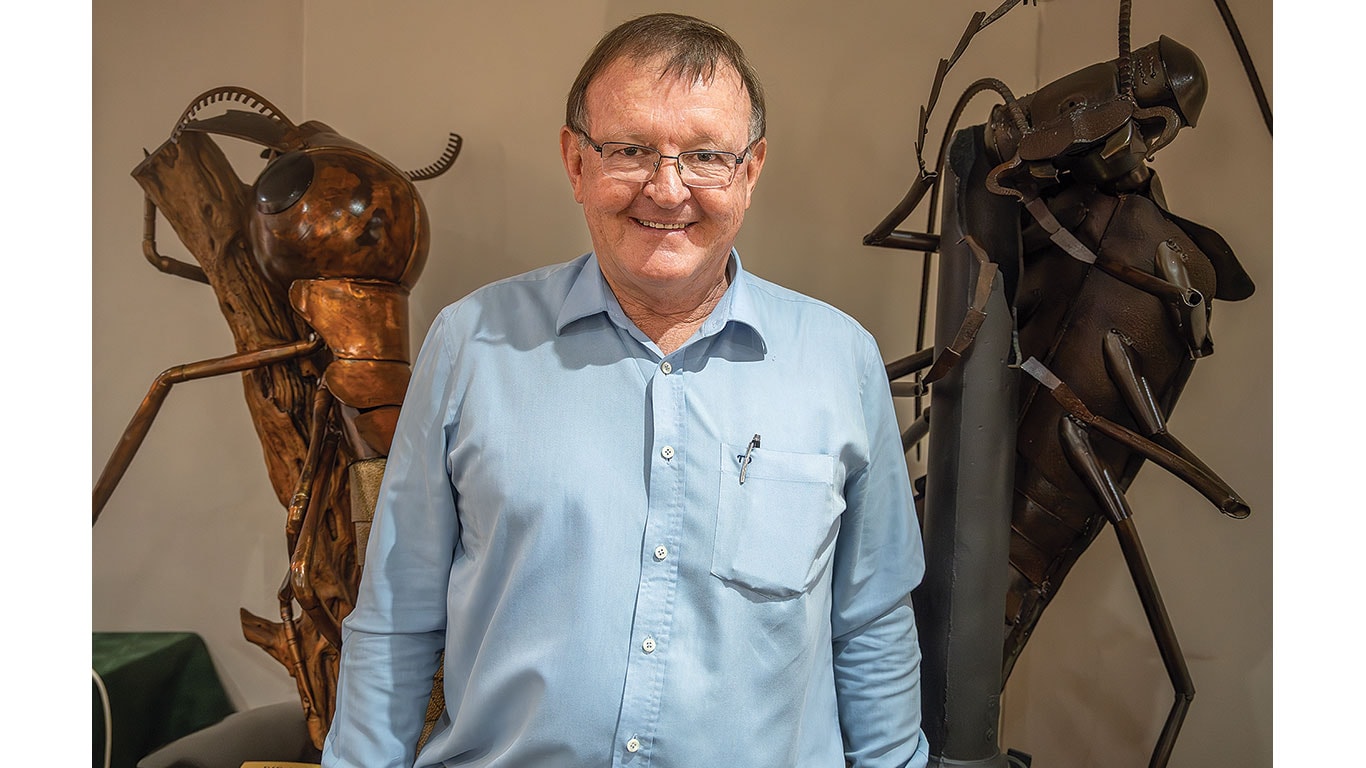
Above. Tommie Van Zyl stands between statues of a termite and a cockroach—both survivor species, each with a different approach to life. ZZ2 trademarked Natuurboerdery, which translates to "farming in harmony with nature."
Survivors. A corner of ZZ2's boardroom is dominated by a pair of huge, bronze insect statues. One is a termite, the other is a cockroach. Van Zyl explains that they, too, help guide decisions.
They're both survivors, he notes. The roach is a generalist, a pioneer that adapts quickly. Van Zyl says those skills suit the fast-moving tomato business in South Africa. The termite is a specialist, its colonies structured, interdependent, and precise. That's like the export fruit business, says Van Zyl, built on long-living orchards, rigid phytosanitary systems, and global supply chains.
"Think like a cockroach but act like a termite," Van Zyl advises. "You need the creativity of the one and the discipline of the other."
Sustainable. Van Zyl says ZZ2 looks not just to the Greek philosophers, but also to indigenous communities and other cultures from around the world that have converged on South Africa.
"We draw from these long-lived experiences to build a business that is resilient, agile, and socially constructive," he says. "Yet our primary task remains straightforward: we are farmers whose job is to produce food. For that reason, we do not pretend to be philosophers; rather, we see ourselves as farmers with a philosophy.
"Good thinking helps us build order in a disorderly world so that we can keep doing the simple, humble work of feeding people," Van Zyl concludes. ‡
More articles related to:
Read More of The Furrow
AGRICULTURE, FARM OPERATION
The Right Blend
Doing on-farm test plots pays dividends.
AGRICULTURE, EDUCATION
Peachy Perfection
Organic production keeps centennial orchard profitable.