 A John Deere Publication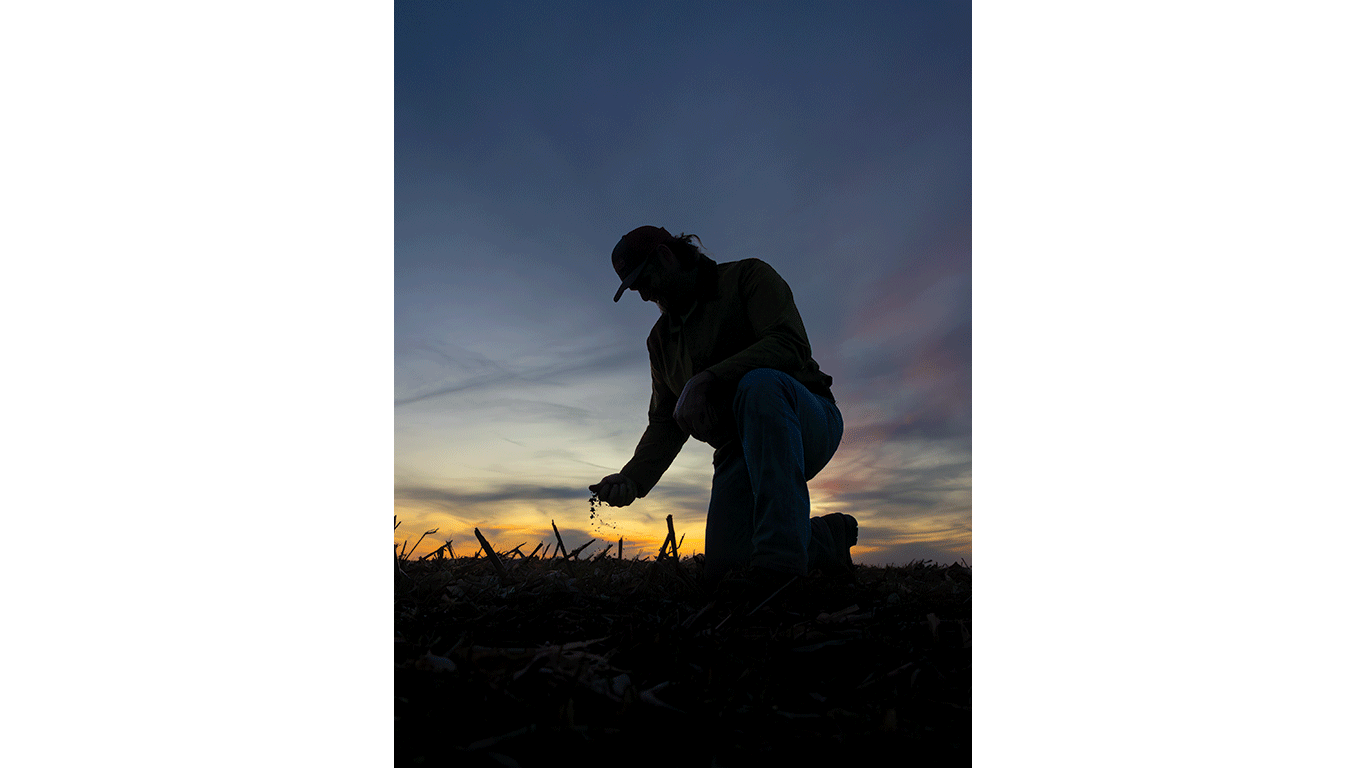
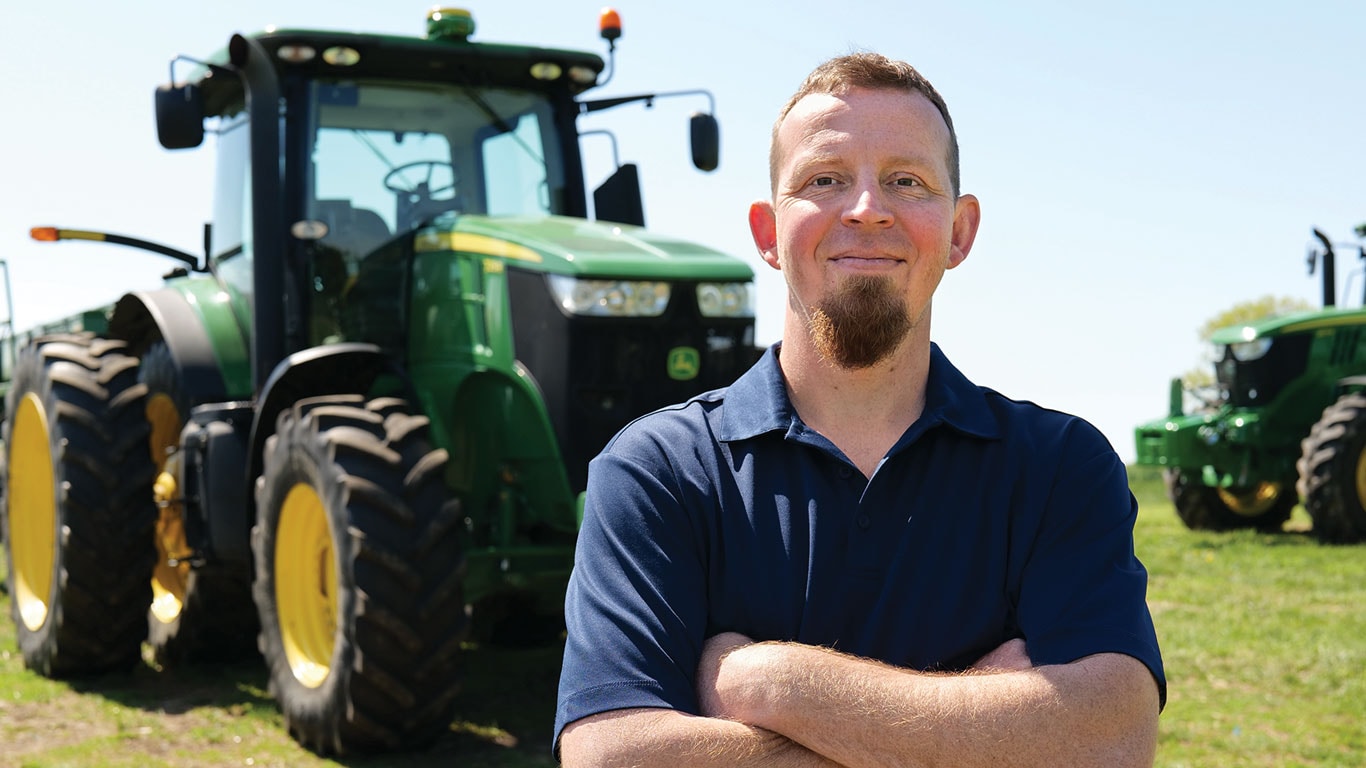
Haynes planted more than 200 acres for the 2026 wheat harvest.
Agriculture, Farm Operation April 01, 2026
Winning With Wheat
Wheat and soybeans pay off in Illinois.
Story and Photos by Bill Spiegel
Dan Haynes doesn't live in wheat country; corn and soybeans are king in Menard County, Illinois.
But Haynes, who farms about 1,500 acres of crops with his wife Betty, also has 150 first-calf heifers. A lot of area farmers grow 30 acres or so of wheat each year to bale wheat straw.
"I figured if I was going to grow 30 acres of wheat, I might as well grow 150 acres," he says.
It wasn't a flippant decision.
Haynes thought of it in terms of baseball. If he strung together several base hits, there was a chance he could knock in a run or two: wheat behind corn could break up disease and weed cycles; wheat could help cash flow in the summer; and he could plant double-crop soybeans after wheat was harvested and straw was baled.
Those base hits added up: wheat yielded 115 bushels per acre; double-crop soybeans averaged in the 40s. "The wheat/soybean program was our most profitable acres on the farm in 2025," he says. Moreover, he put up about 3,900 pounds of wheat straw per acre.
How he did it. Haynes figured he'd manage his wheat similarly to corn, since both are grass crops. That meant choosing the right seed varieties, timely fertilizer applications, and protecting the crop from disease.
He planted AgriMAXX® 513 and 525 varieties, at a rate of 1.6 million seeds per acre into corn stubble. There was no fertilizer or herbicide applied in the fall. Instead, he waited until spring greenup to topdress the crop with urea, diammonium phosphate (DAP), and potash, and applied AMS later. His goal was a pound of actual nitrogen per bushel of expected yield; other nutrients were based on soil test results and previous crop removal rates. He applied Prosaro® fungicide at flowering using a ground rig to ensure leaf coverage.
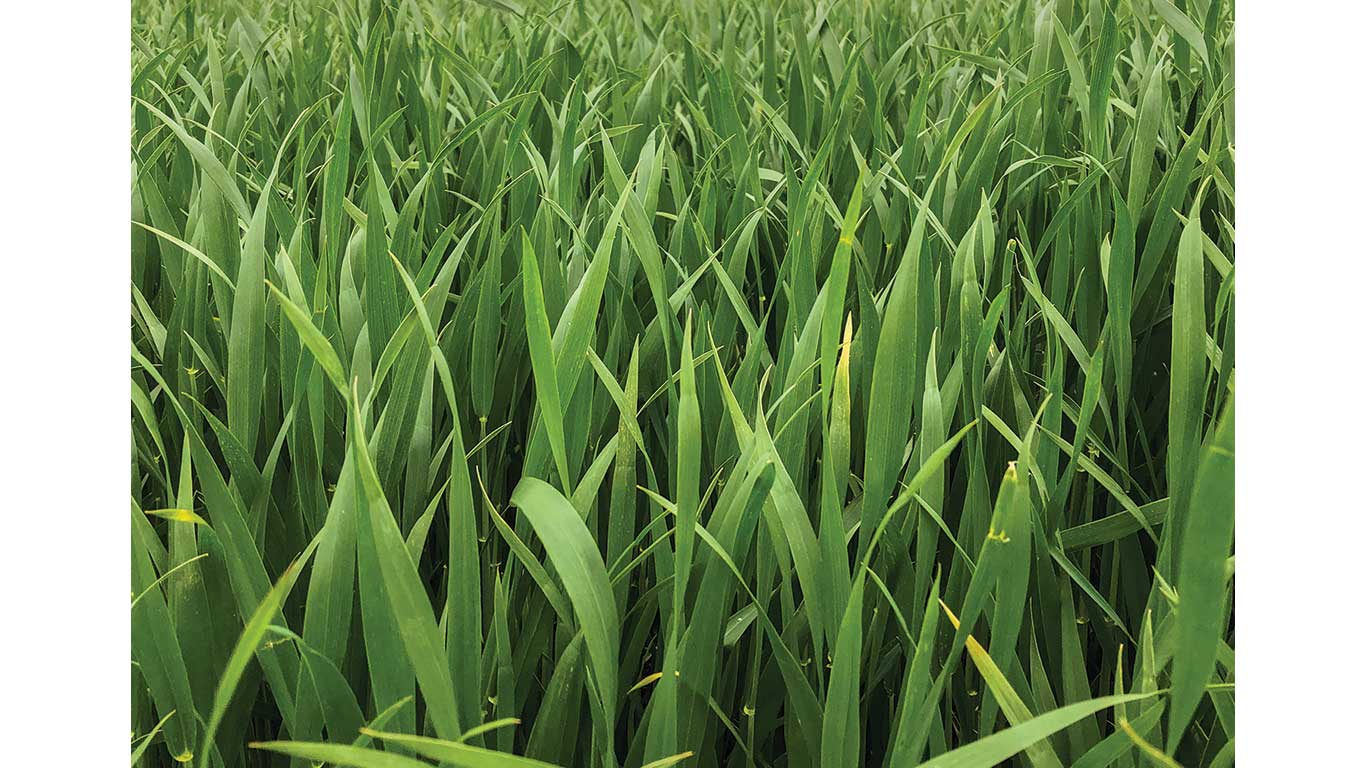
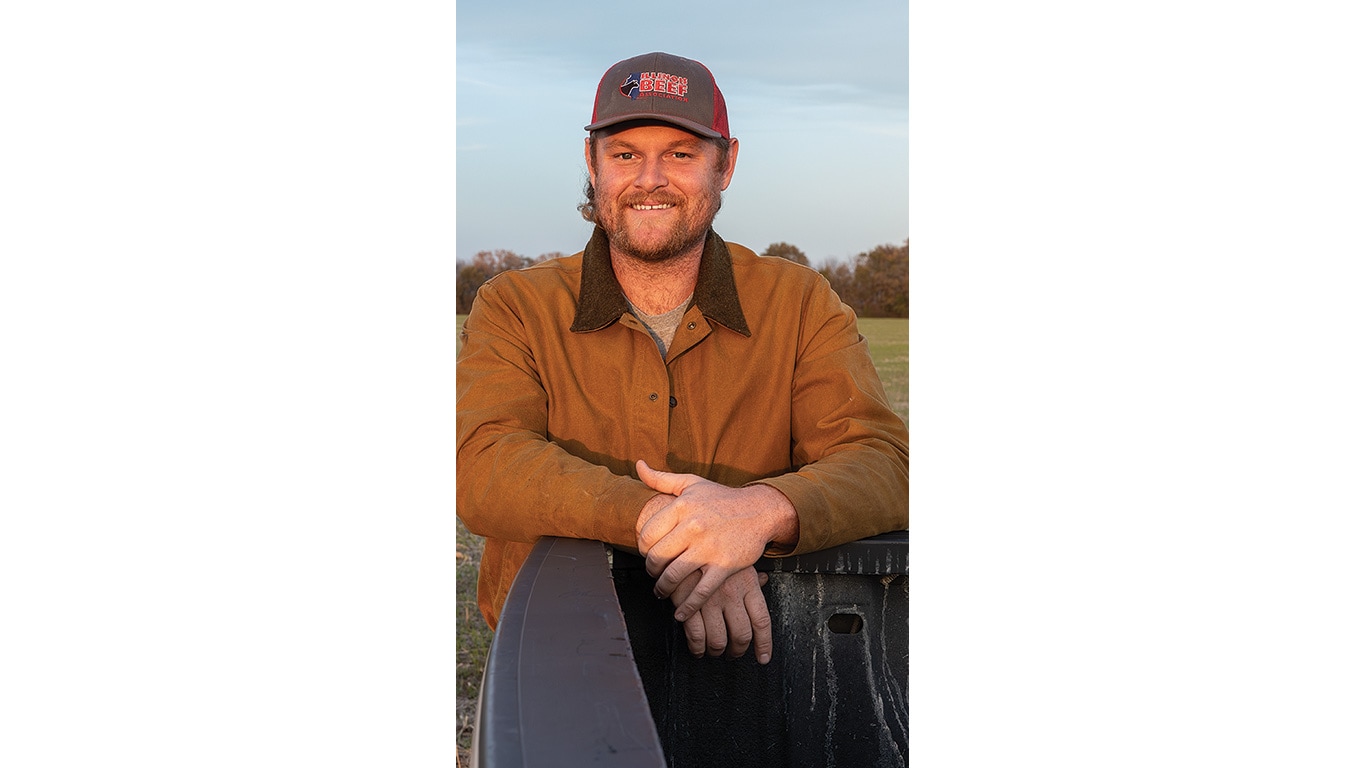
Above. Leaf health is paramount when aiming for top wheat yields and plenty of straw. Oakford, Illinois, farmer Dan Haynes planted wheat for the first time in 2024, earning 100-plus bushel-per-acre yields, using management strategies similar to his family's corn crop.
Ancillary effect. Adding wheat to the corn/soybean crop rotation had additional benefits.
"I hate using one ounce of chemical more than I absolutely have to. I don't like handling chemicals and feel that the less we can use by adopting other management practices, that has to be good for everyone," he explains.
Not only did he not apply any herbicide to his wheat crop, he needed just one pass of clethodim and glufosinate on the double-crop soybeans to clean up some volunteer corn.
"The weed suppression with a good stand of wheat is unmatched," he continues.
Crops and cows. Haynes grew up on a cattle operation in Missouri and met his wife Betty while both attended the University of Missouri. They had a chance to rent some ground close to Betty's family near Oakford, Illinois, close to the Sangamon River.
"It was always a dream of mine to be what I thought of as a 'real farmer.' We had cattle, but it's not the same," Dan says.
When he and Betty moved closer to Menard County on a farm near her folks, he found he missed raising cattle, and brought the herd east.
"I keep looking around and wondering how can we shoehorn a few more cattle in here," he says.
And now, he has the best of both worlds.
"I must have done the back-of-the-napkin math 1,000 times," he says. "There are a lot of days I kind of feel like a junkyard dog, because we're scratching, and trying to figure out how to make all this work, and how to make every acre profitable. Some of these different ideas start to come into the equation." ‡
More articles related to:
Read More of The Furrow
AGRICULTURE, AG TECH
Tech@Work
Balancing tradition and tech: Precision Ag Essentials