 A John Deere Publication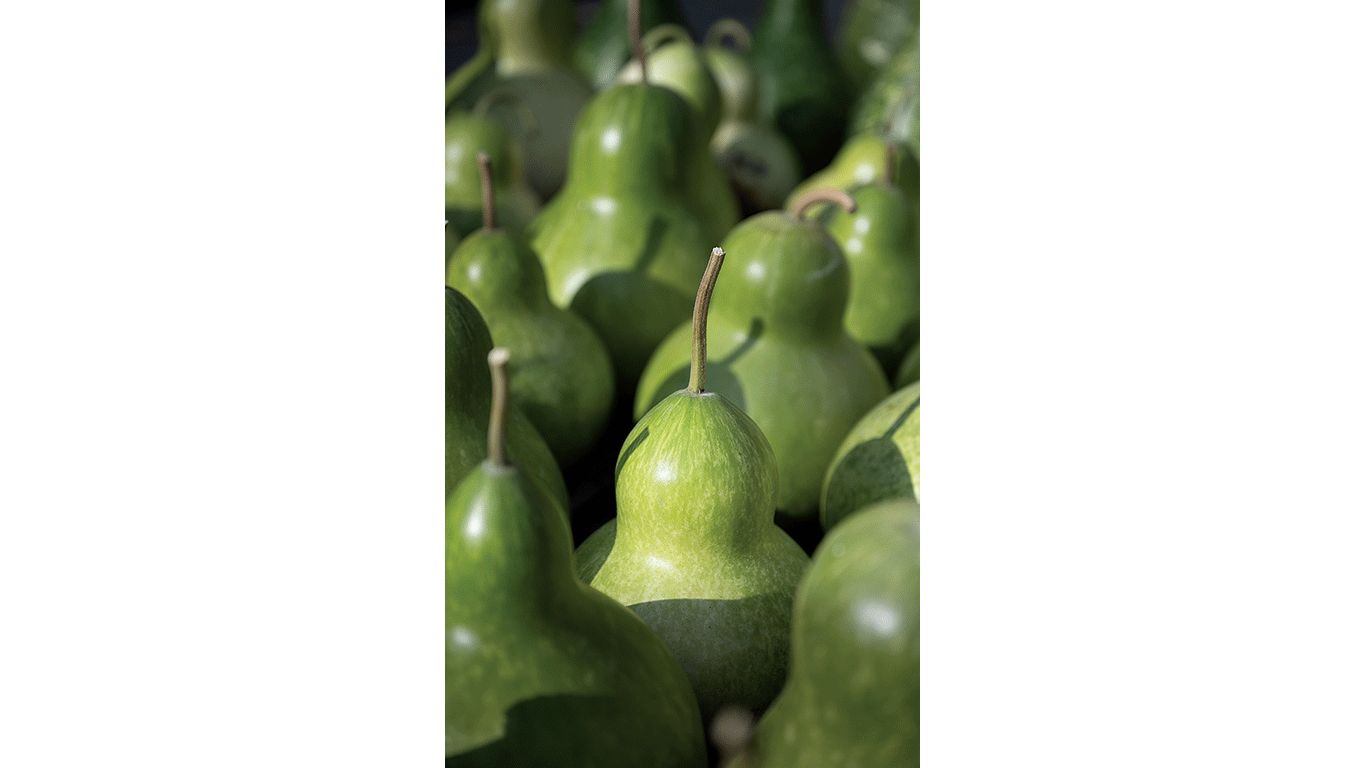
Gourds should still be bright green when picked, a task that must wait until the vine dies. If picked too soon, the gourds won't develop the hard lignin-reinforced shells that transform them from perishable fruit to permanent art.
Specialty/Niche April 01, 2026
Good Gourd Almighty
When you find your calling, go all in.
Story and Photos by Martha Mintz
Gourds. Everywhere, there are gourds. They're green and dangling from cattle panel archways. They're spread across the ground, gradually emerging as once robust leaves crinkle and fold themselves away, like artists pulling the canvas back to reveal their summer masterpiece.
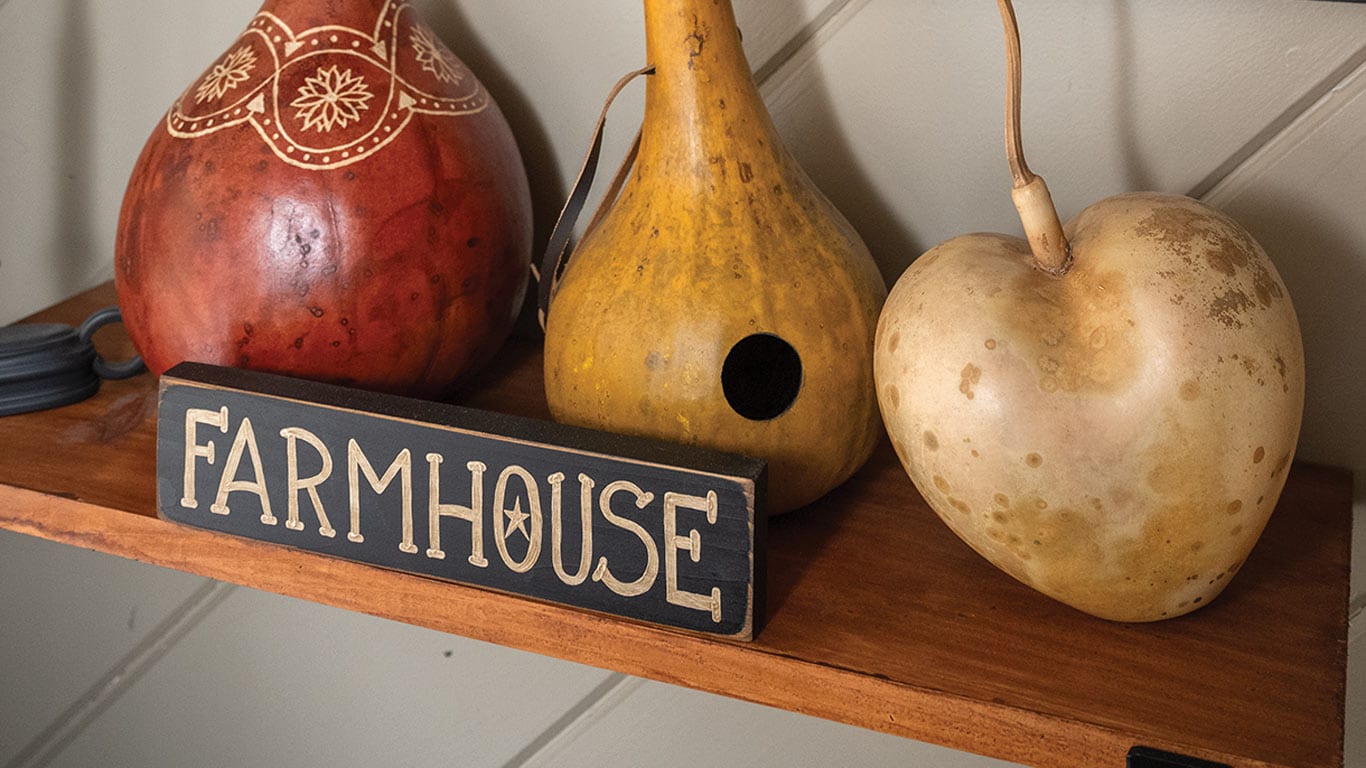
Gourds. They're tucked away hanging in trees and from fence posts around Aaron Letourneau's New Gloucester, Maine, acreage. There's every shape and size, some brightly painted, others weathered back to yellow. All have round carved doors beckoning birds from the surrounding woods to come on in and make themselves at home.
Gourds. They're perched on shelves throughout the house. Some artfully painted, fitted with clock faces, or riddled with swirls of tiny holes brilliantly illuminated from within. The lamps emit chaotic dappled light that grant any space an infusion of cheer.
On the entry table. Gourds. In the rustic loft of the barn portion of his traditional New England connected farmhouse. Gourds. Decorating the border wall along the road. Gourds. And they bring pure joy to all who pass.
Gourds have nearly completely overtaken Letourneau's life, and he couldn't be more pleased with the development.
Something else used to have a firm grip on his free time.
"On October 11, 2021, I quit drinking," he says. Kicking the 20-plus year addiction was, of course, a challenge. "When you quit drinking—it's hard to explain—but time stops moving the same way. All of a sudden you have all this time, and it's not a good thing because you're uncomfortable in your skin."
Drinking used to make time flow nicely. Instead, time felt stuck. Letourneau was frozen, until he wandered to the barn where he was storing some of the first hardshell gourds he grew the year before. He thought, "I'm going to make something with them."
He made some birdhouses. Time passed. He painted some gourds. Time passed.
"It turns out art is healing. When you are making art, it releases endorphins. When you finish a piece, it releases endorphins. When you walk into a room and see your finished work, it releases endorphins. It's so good for your brain. The whole art process really helped me heal," he says.
Letourneau went all in. He spent the winter painting, carving, and planning for the 2022 growing season.
"I was hooked," he says. And a gourd farmer and artist was born.
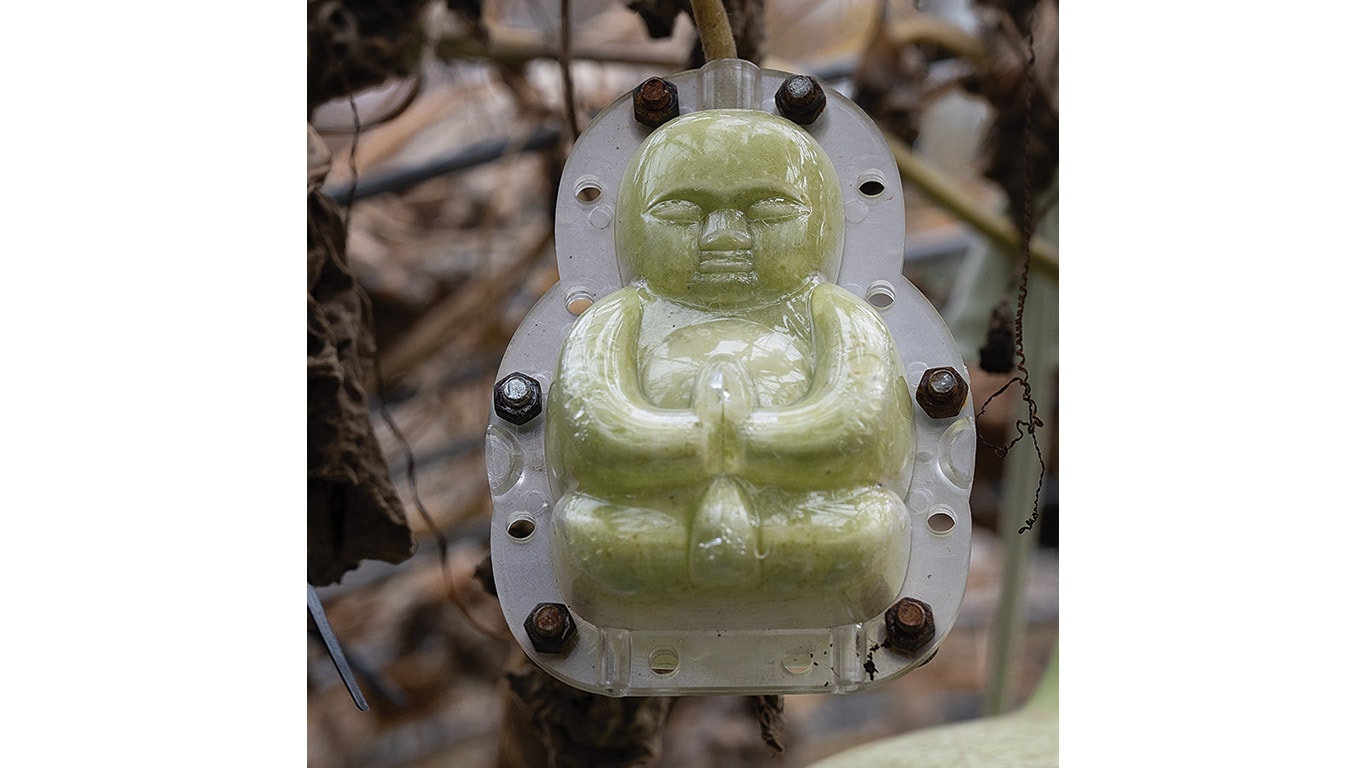
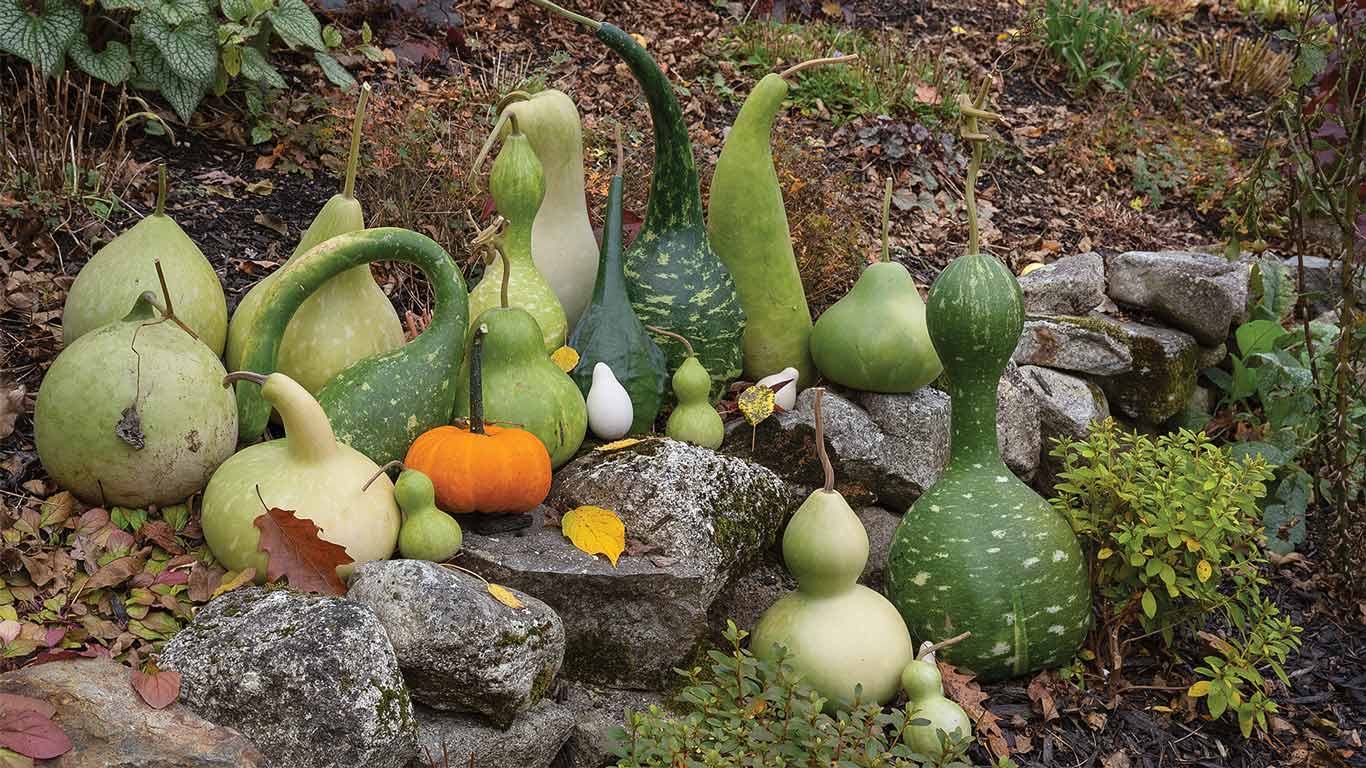
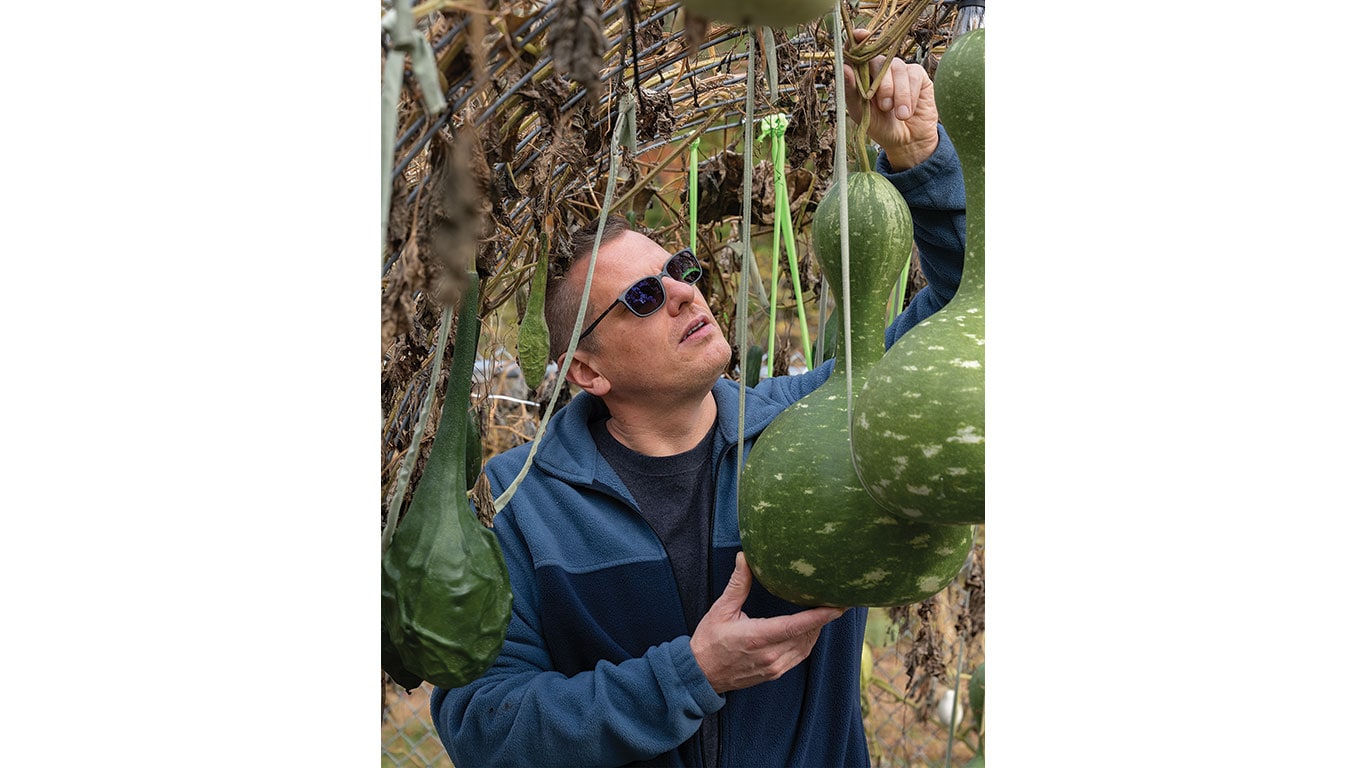
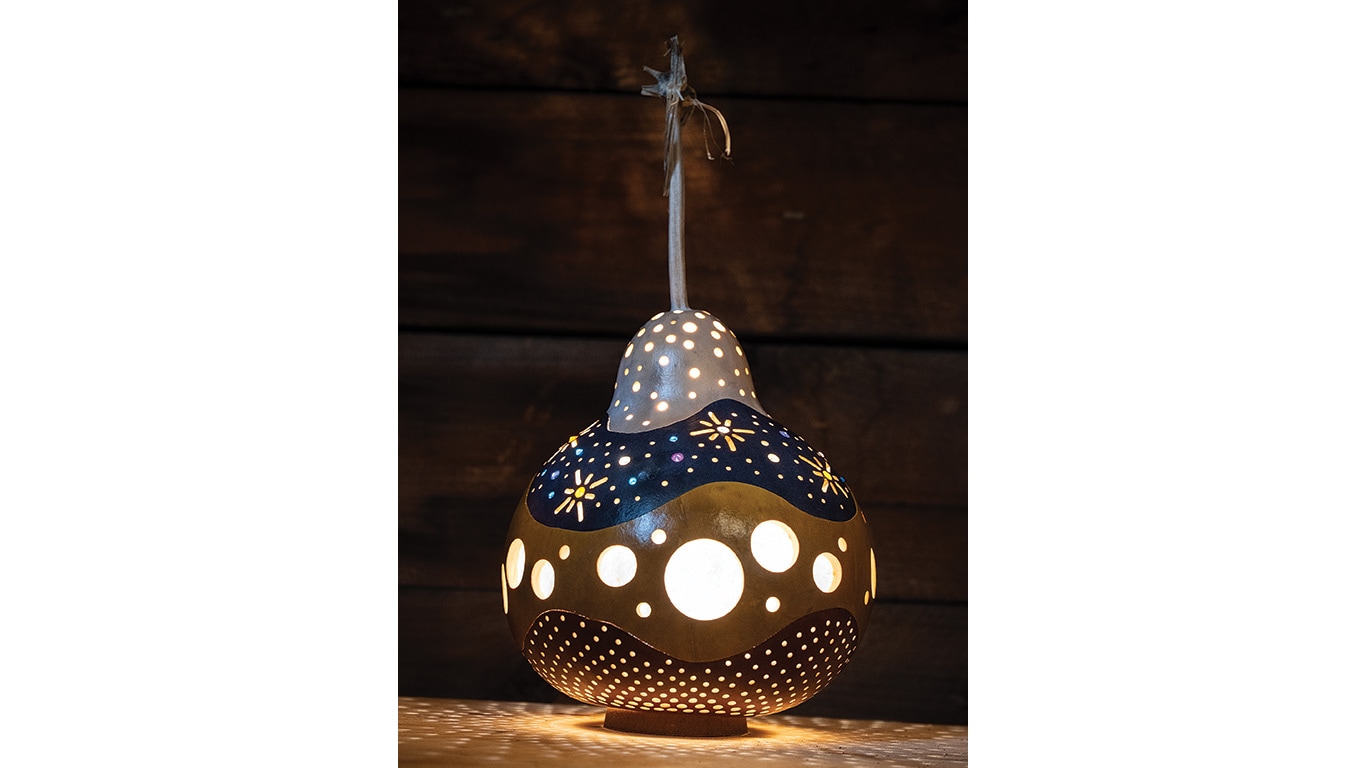
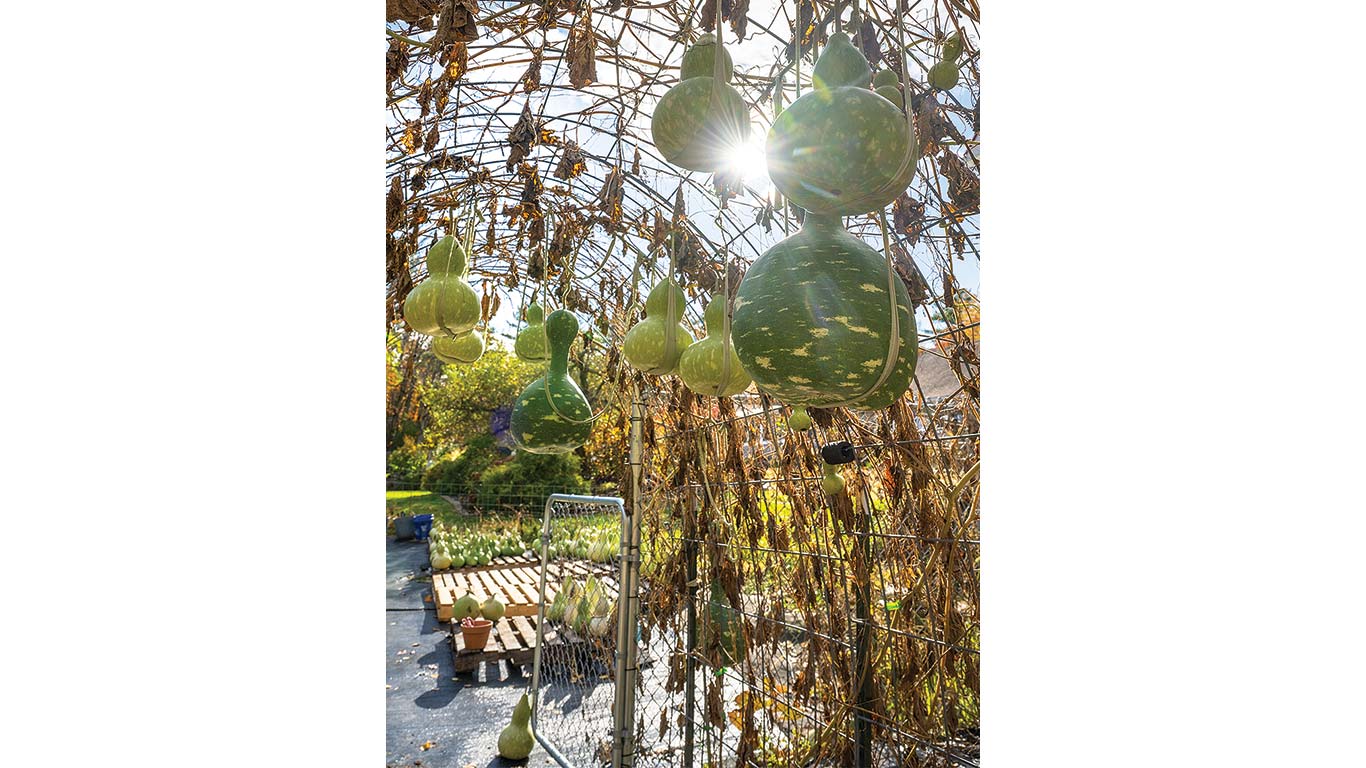
Above. Letourneau grows 20-plus varieties of hardshell gourds. Many are rare, so he saves seeds and hand pollinates to prevent undesirable crosses. Each has a unique color pattern and shape. Occasionally he uses molds like this Buddha or a heart to force a shape, though he prefers natural. Hammocks support bottleneck gourds. The extra thick and hard shells of martin gourds with their somewhat flat bottoms make them perfect for making lamps.
The seed. Hardshell gourds entered Letourneau's life because they were survivors. He'd always gardened. Many hours were spent tending vegetables during childhood summers with his grandparents. Everywhere he moved as an adult, he planted a garden.
His plots were filled with the usual tomatoes, cucumbers, melons, and greens. Then there came a time when his work-life balance got skewed dramatically to work. His once meticulous gardens suffered the neglect.
"I'd plant these extravagant gardens and not take care of them because I never had time. I'd lose them to weeds and pests. One year I just walked away from the garden I planted," he says.
When he returned late that fall, he was surprised to see the gourds he'd planted and abandoned had gone on without him. They hung on their vines, dried and perfect.
"They were beautiful, and they'd become something that doesn't rot. There was a permanence to what I'd grown now," he says. A lightbulb flickered to life. Here was a garden plant that was happy with neglect and would wait patiently to be harvested.
That doesn't mean they're easy, especially when growing them in Maine. Letourneau was motivated to make it work and shares many of the things he's learned on his Sweet Woodruff Farms social media accounts. It all starts with the seed.
"The seed packets say 120 days, but it takes 150 days to get a full-grown gourd with a thick, hard shell," he says. The last 30 days are when the lignin production happens, hardening the shell. If picked prior to frost, they will rot.
Letourneau starts seeds early in the mini greenhouse he fashioned from cattle panels. He grows nearly every variety of Lagenaria siceraria, or hardshell gourds. Purple martins (named for the birds), or birdhouse gourds are a hearty favorite.
"In 2023 we got hit with disease and lost almost the whole crop. It was a learning year. The martin gourds were the only ones that survived," he says.
More than 100 seedlings soon grow into sprawling vines that envelope Letourneau's extensive gardens, including multiple cow panel tunnels. He hand pollinates 800 or more gourds each year.
"Growing gourds is a night sport," he says. Hardshell gourd blossoms are a stunning white, but they bloom at night. Letourneau loves his nocturnal adventures in the garden.
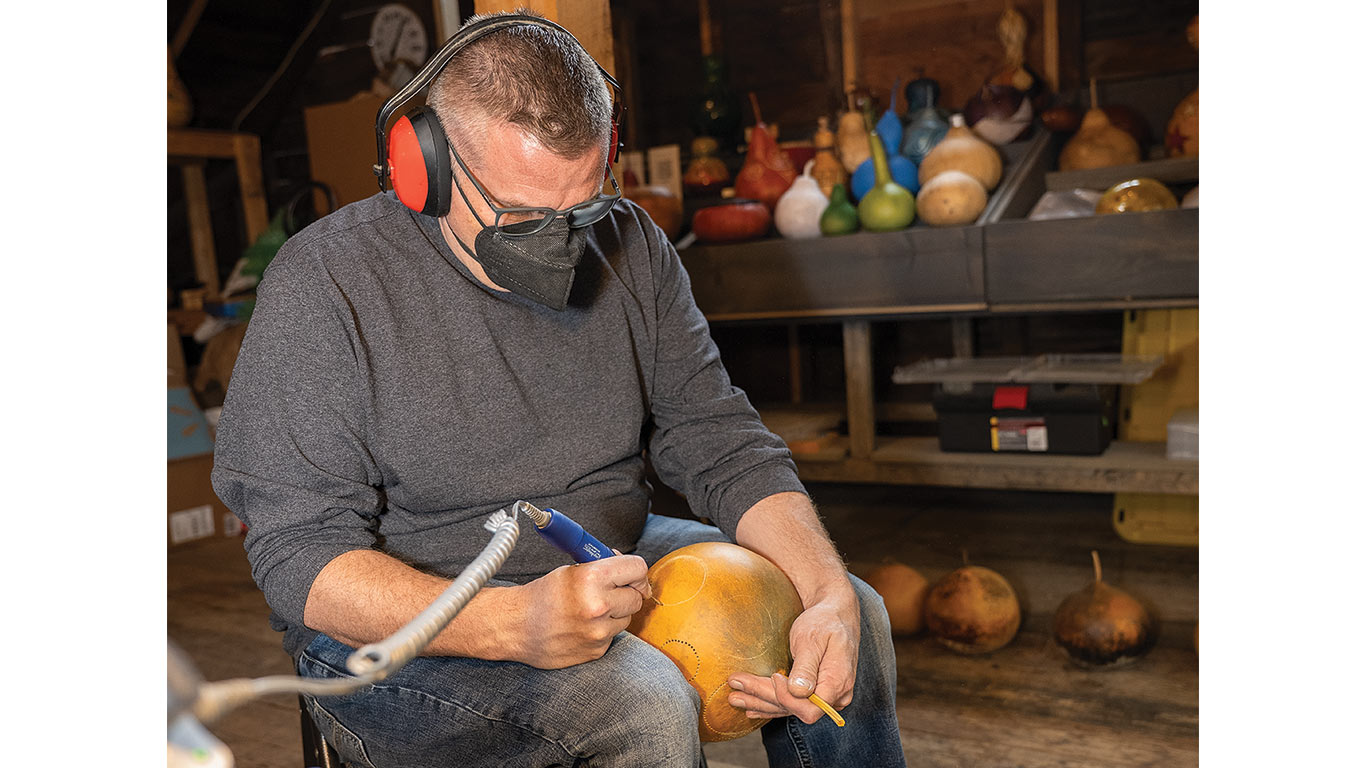
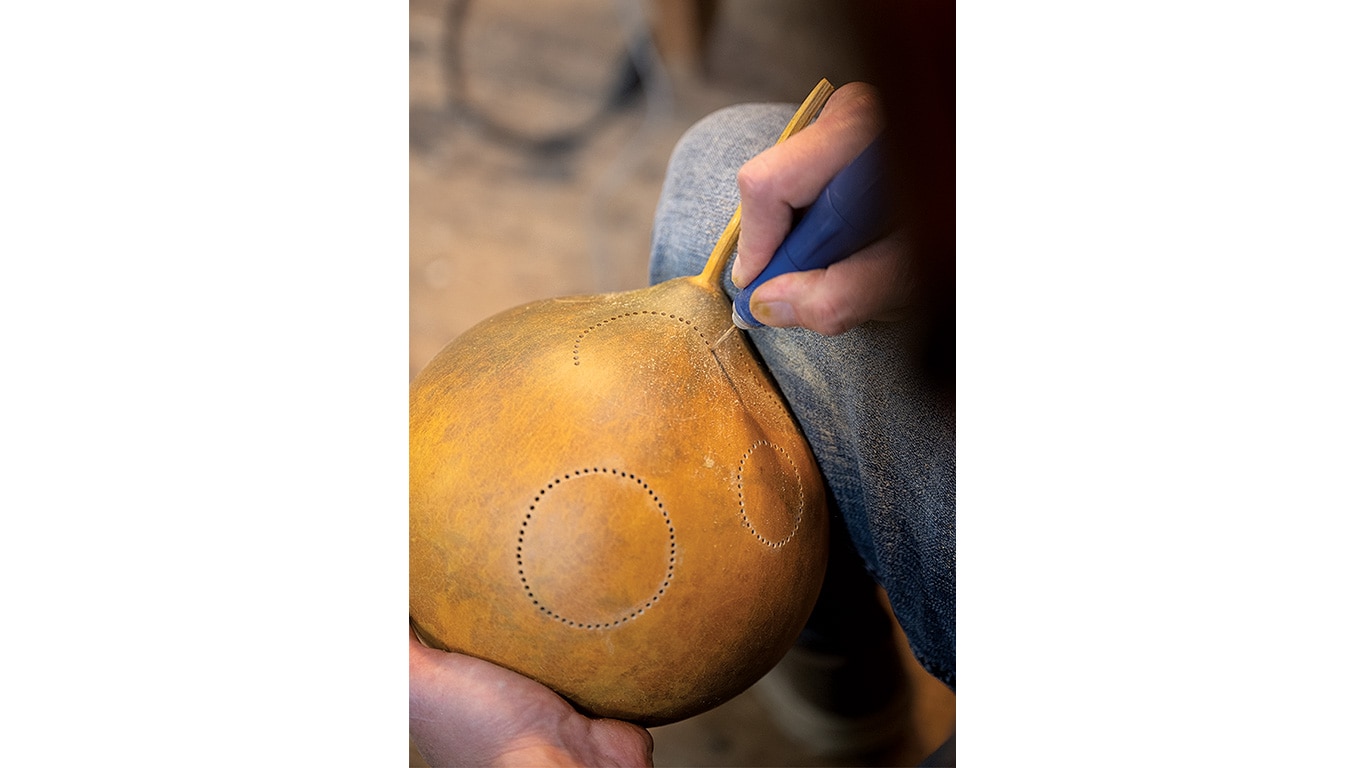
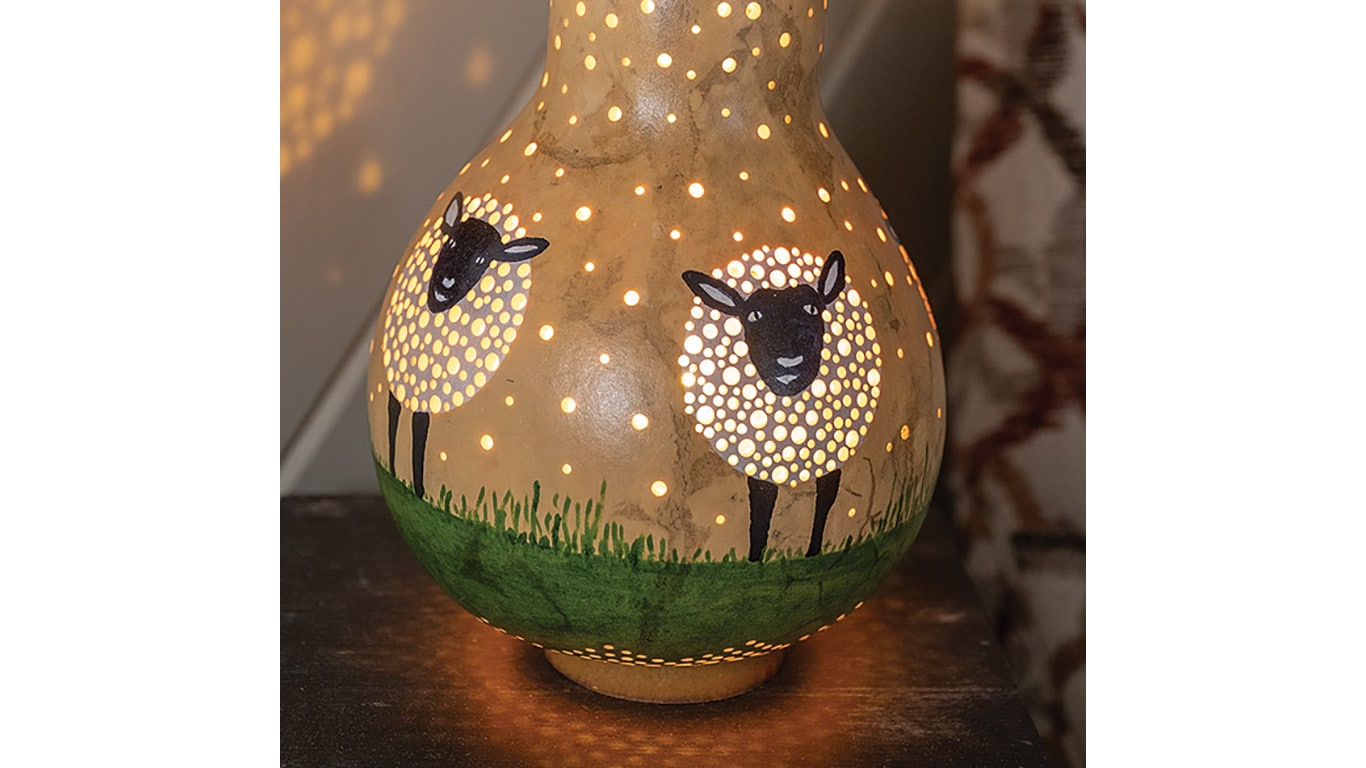
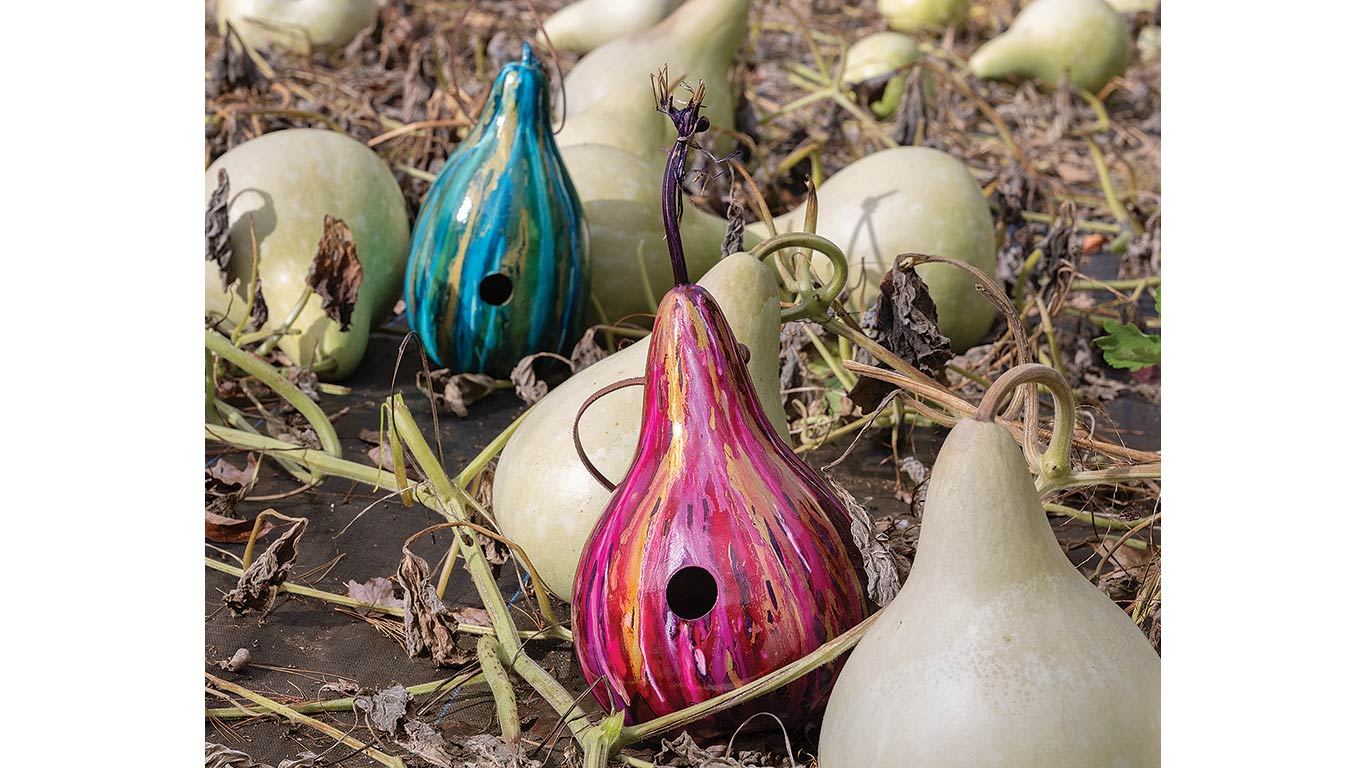
Above. Aaron Letourneau is currently in a 'circle' phase with his gourd lamp projects. While orbs are in, he's also gone through animal and puzzle phases. No matter the phase, time in the workshop is good for his soul. Gourds get the privilege of enjoying the full effects of the long Maine winter. They are collected on pallets and left to dry until spring. Before they're fully dry, seeds are removed and they get washed inside and out. Letourneau explains all of this and more in online videos. His Instagram is @gourdfarmer1, TikTok @gourdfarmer.
"The tunnels are lit by solar lights. In Maine, there are so many night noises. There's a train in the valley, bats and owls swoop around, there are coyotes and deer in the woods. It's not a quiet night, it's alive," he says.
If he didn't hand pollinate his plants, a whole parade of night pollinators would gladly do the job. The flowers start opening at around 6 p.m. when some bees are still around. Then come the hummingbirds that give way to tiny white moths. Around midnight, the giant five spotted hawk moths come out.
"There's a whole rhythm," he says. Hand pollinating delivers 30% better yields, however, so he still takes the night shift.
Yellow jackets and birds are garden friends and encouraged to flourish. Yellow jackets eat black bean aphids and other problem insects. Eastern bluebirds eat tons of insects, including cucumber beetles and squash vine borers. Native Americans used to hang gourds to attract birds.
"We line the entire forest around the yard with birdhouses. I'm convinced the same birds come back each spring," he says. "We just let nature do its thing."
The gourds are left on the vine late into fall. Once picked, they remain outside on pallets. The Maine winter will blanket them in snow as they continue to dry.
Come spring, Letourneau drills a hole in the side or bottom of the gourds and cleans out the seeds with a power washer. They then are moved inside to continue drying before starting their new life as a piece of art.
The bottle-style varieties with their long necks mostly become birdhouses. "I love the maranka gourds because they have this wicked wrinkly texture," he says.
Basketball gourds and penguin gourds (also known as powder horn gourds as they were used to carry gunpowder) are larger with thicker skins, making them ideal for lamps.
In his workshop, Letourneau uses alcohol inks to create flowing, vibrantly swirling patterns. He's explored a variety of themes with his lamp projects.
Using a Dremel tool and drills, he creates pathways for light. Sometimes the patterns are random, other times they are combined with paint to create fun creatures, like roosters, sheep, and seasonal characters like snowmen and jack-o-lanterns.
"For a while I got in a puzzle piece phase. I would cut the gourds up, paint or carve designs on the pieces, and then put them back together," he says.
His art is mostly for enjoyment in his own home. His partner Keith estimates he has 20 to 30 gourds scattered around the house with another 20 seasonal pieces in storage. Sometimes he gets bored with a piece and sells it or gives it to a friend.
He takes the same approach with his social media videos.
"I don't really want anything from anybody. I want to show you how to grow gourds and how to make art with them because it's been so valuable for my mental health and for me. I want to spread that love. Anybody can do this. It's not hard," he says.
Sometimes he teaches local classes on making and painting gourd bird houses.
"There's this amazing connection because you grew this thing and now people are having fun and making art with it. It just comes full circle," he says. ‡
More articles related to:
Read More of The Furrow

SPECIALTY/NICHE, RURAL LIVING
A Thousand Thanks
Flag display connects community to its veterans.
AGRICULTURE, EDUCATION
How to Start a Worm Farm
Let the little guys help your soil.