 A John Deere Publication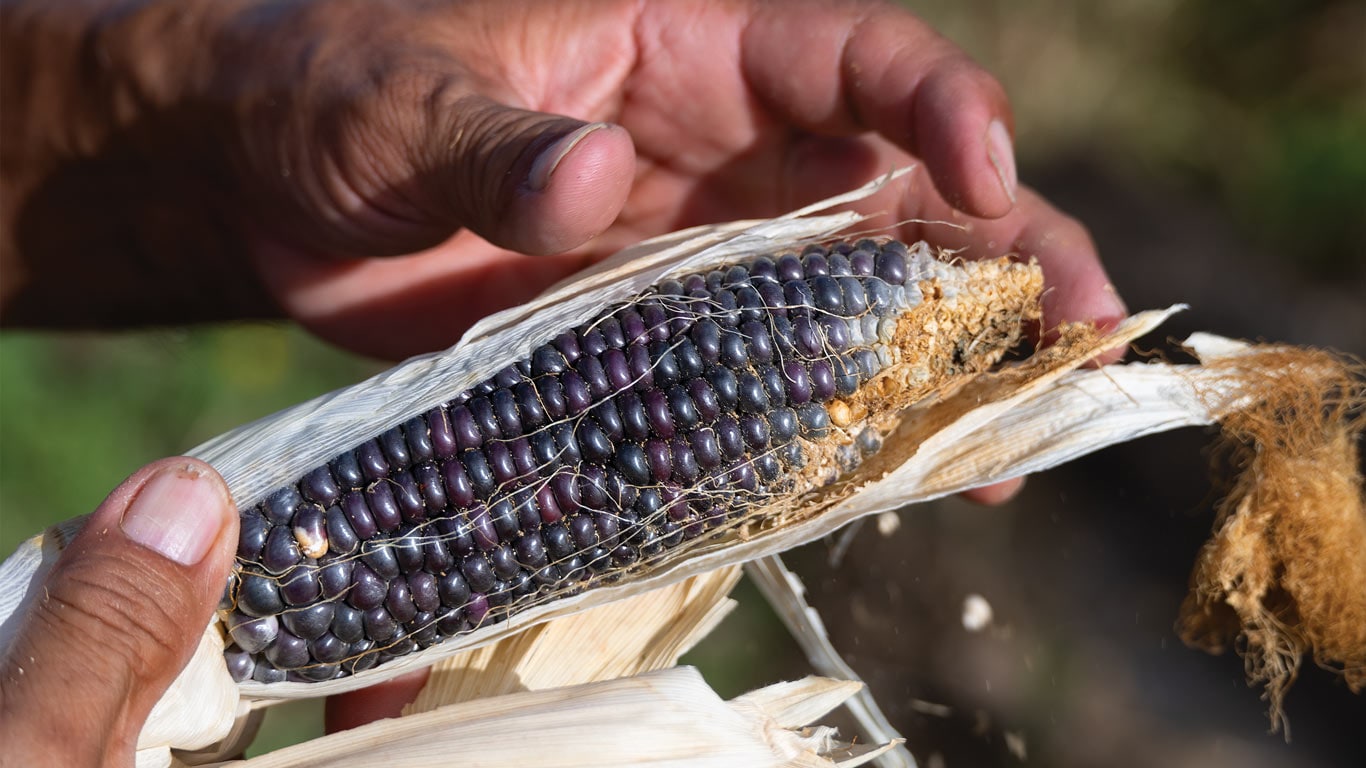
Graham Beyale's seed bank started with blue corn.
Agriculture, Sustainability April 01, 2026
Caretakers
Native foods represent past, present, and future.
Story and Photos by Steve Werblow
Driving through the Navajo Reservation outside Shiprock, New Mexico, to harvest blue corn from his parents' field, Graham Beyale shares a story of Turkey, who shook the seeds for corn, squash, tobacco—and all the other vital crops—from her feathers.
"So the teaching is, as a child, to be the turkey, be a seed protector, be a seed cultivator," he says. "And we see it now. We see the world in need of real food. Those teachings mean everything now." Beyale took those lessons to heart. As founder of the online Biyáál Trading Post—which sells Navajo staples like blue corn mush and Navajo tea, as well as seeds from Beyale's seed bank—Beyale is part of a growing food sovereignty movement.
In keeping with the Diné (Navajo) tradition that humans were created from ears of corn, Beyale's mission started with maize. A neighbor gave him blue corn seeds a decade ago. That inspired Beyale to become a caretaker of heritage corn crops.
"These corns are different, they taste different, they're used in different ways not only in terms of consumption, but ceremony-wise," he says. "It's my responsibility—it's all of our responsibility—to protect them and to grow them."
His seed bank has grown to include indigenous varieties of beans, squash, melons, and more.
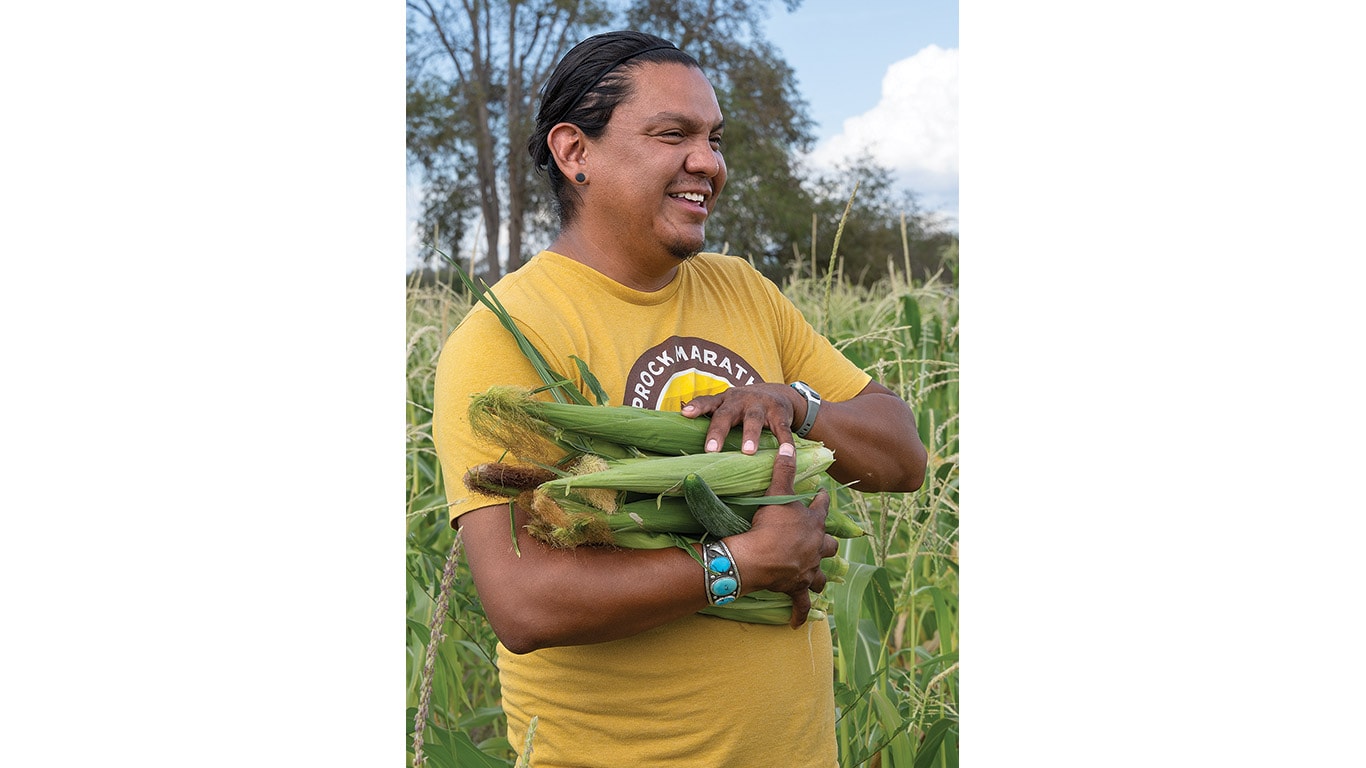
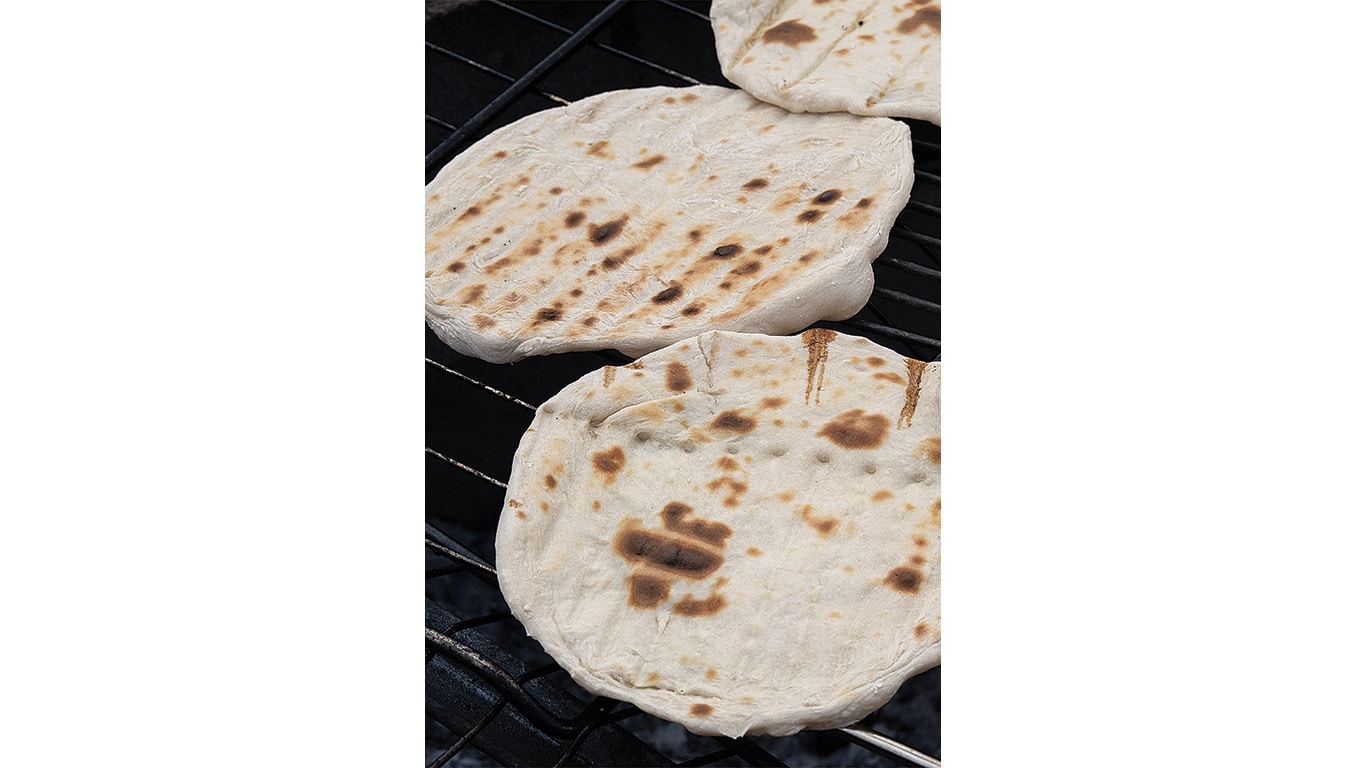
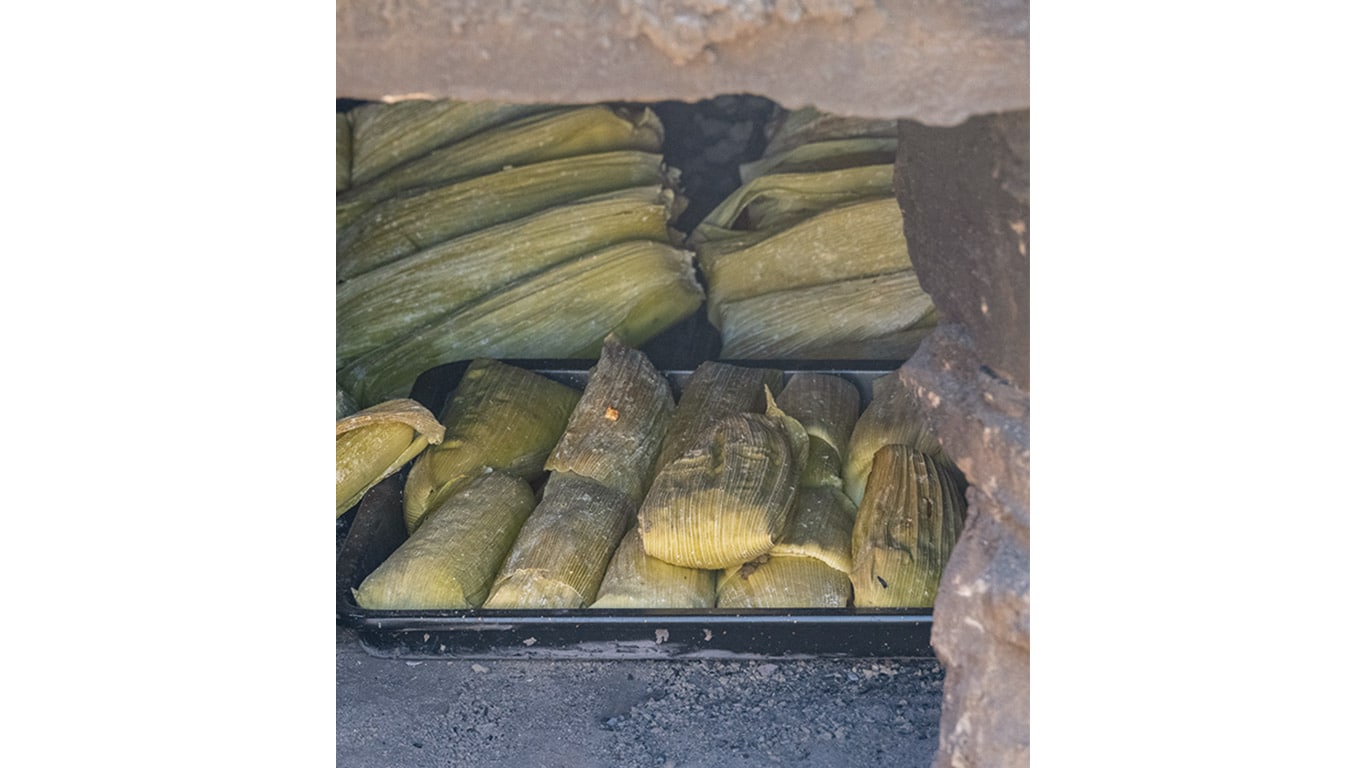
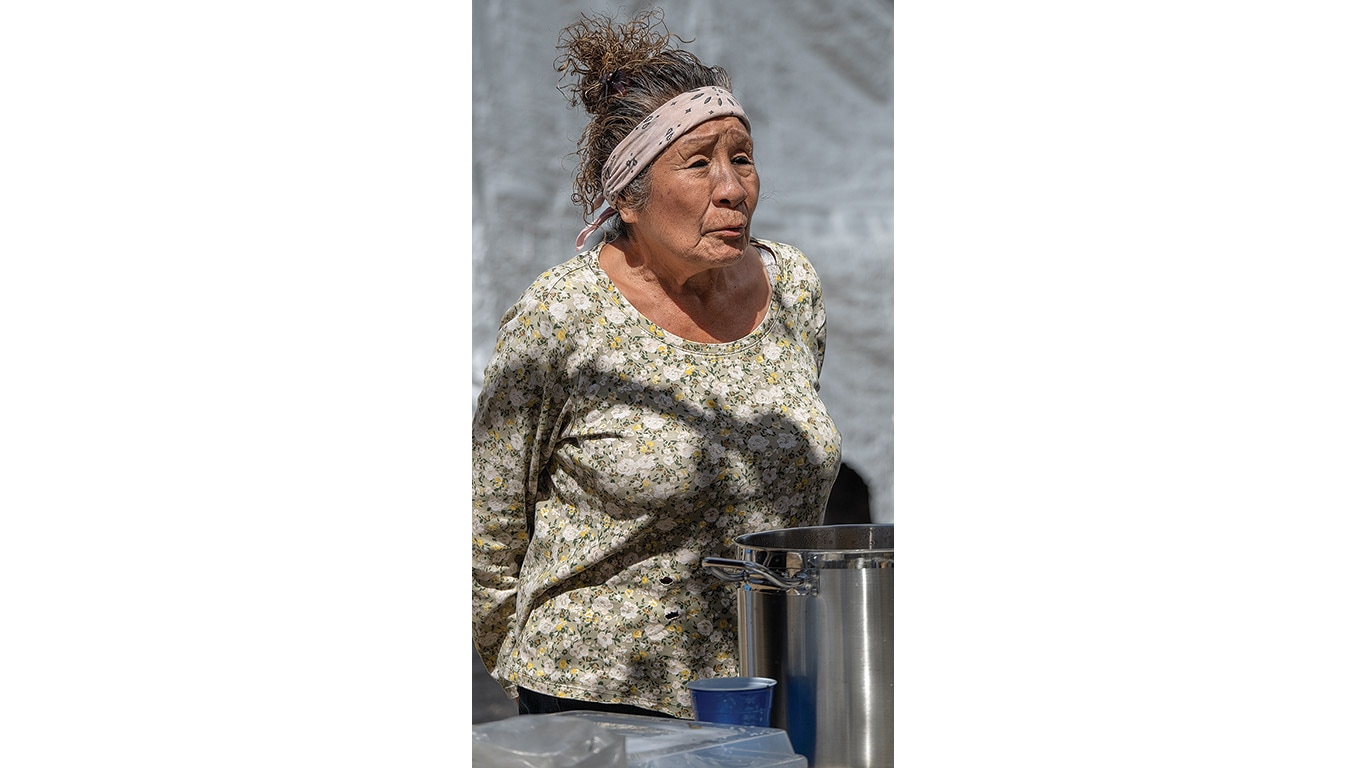
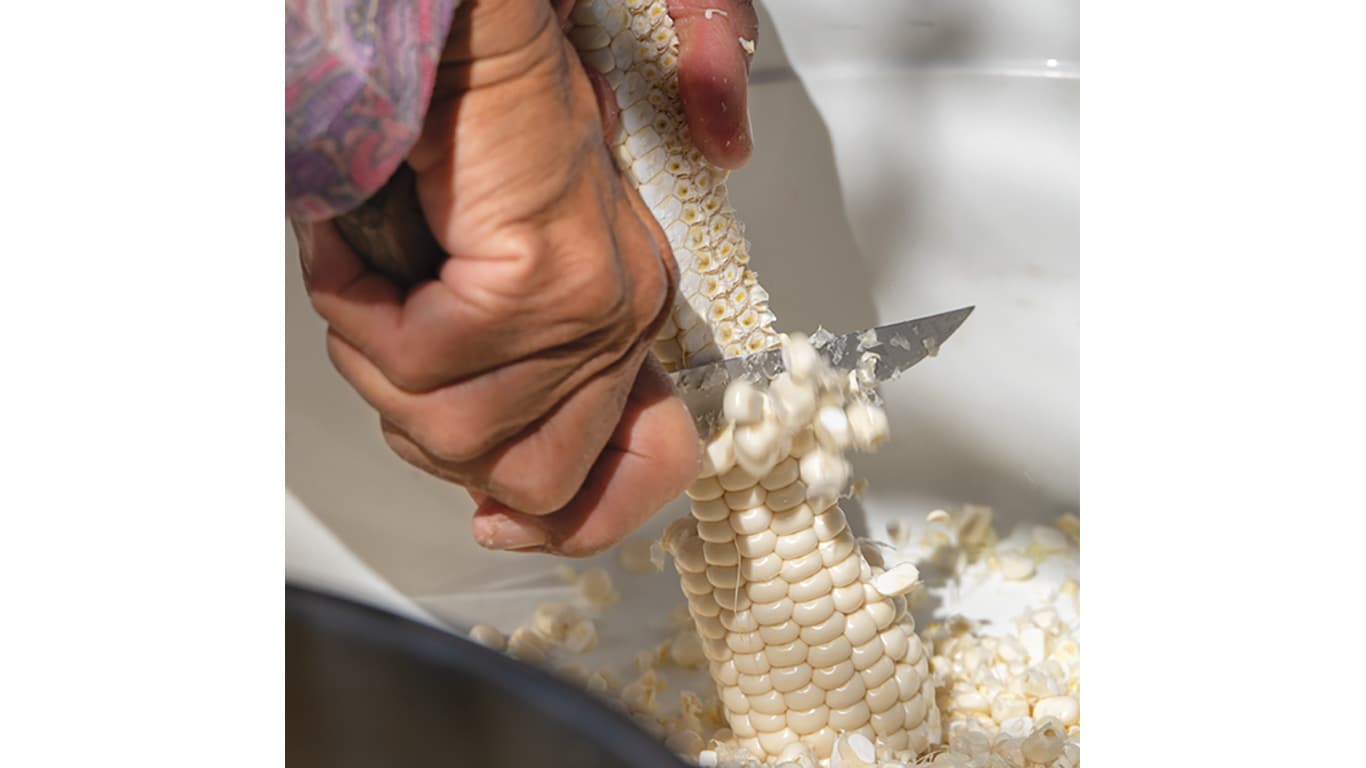
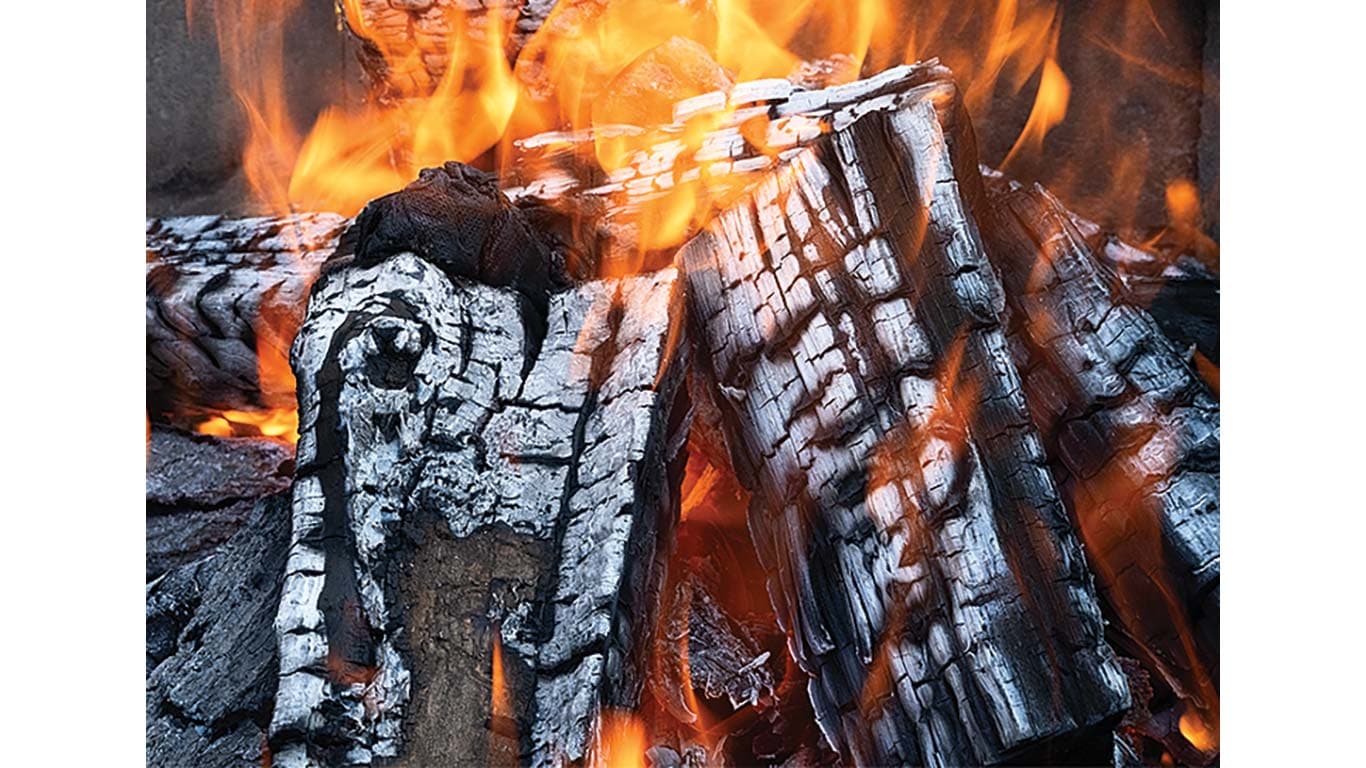
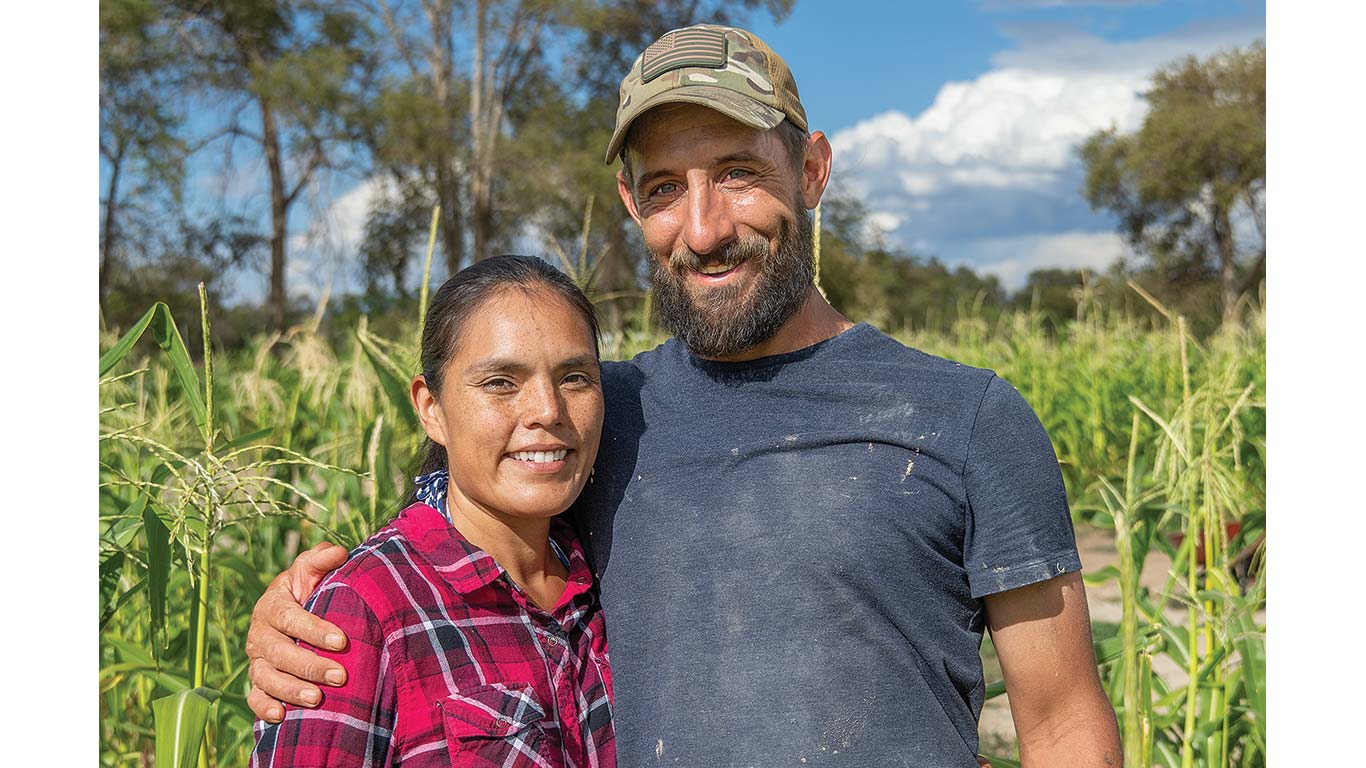
Above. Graham Beyale launched Biyáál Trading Post online to distribute Navajo food and seeds. Participants in Beyale's recent food workshop prepared fresh bread on the grill to accompany mutton. Kneel-down bread, wrapped in corn husks like tamales, bakes in Beyale's stone oven. Bertha Etsitty offers a blessing at Beyale's food workshop. The first step in making kneel-down bread. A fire warms the stone oven. Danielle Goldtooth and Alan Moore are building Steam Corn Punk around a global vision.
Future. He and others on the reservation consider themselves caretakers of tradition, health, and a sustainable future.
"As Navajo, we have some of the highest rates of Type 2 diabetes in the world," he notes. "That's definitely very bad, but it's also something we can learn from. We have mentors who have knowledge of very fundamental ways of preparing food without having to change it, without having to alter it, without having to pump preservatives into it, without having to make it grow faster, without all the additives. The exciting part is that this generation is embracing those teachings and collectively we're coming back together and looking at our communities as a whole and we're saying, ‘How do we change this? How do we see ourselves 100 years from now?'"
Beyale treasures traditional dishes like blue corn mush with juniper ash, tamale-like kneel-down bread, and oven-dried steam corn that can last years in storage. But his vision of the future is not trapped in the past.
"We get to use these fundamental teachings and throw in a modern twist," he points out.
Beyale's neighbors Danielle Goldtooth and Alan Moore, founders of Steam Corn Punk, call their cuisine "transcontinental culinary synthesis." Building on Moore's classical culinary training, Goldtooth's renowned work in craft cocktails, and outside-the-box thinking about native foodways, Steam Corn Punk is the ultimate global mash-up.
Moore lays it out. What if the Spanish conquistadors engaged in trade instead of pillage when they arrived in the Americas? What if the Silk Road, Europe's markets, and the ancient American trade routes that connected the Navajo to South America's grand civilizations were linked? To Moore and Goldtooth, that can taste like quail molé on a bed of steam corn pasta or sumac-cured quail eggs on mescal-lime foam.
"We're elevating the food in order to tell the stories of the ingredients, and we want our stories of our ingredients to have healing," says Goldtooth, who was recently recognized by Food & Wine for her creativity and food activism.
Moore and Goldtooth provided white corn from their farm for a food workshop Beyale hosted at his homestead. Diné College Extension agent Beverly Maxwell and community elder Bertha Etsitty used it to lead a group in making kneel-down bread. Nearby, Arnold Clifford butchered a sheep (which many participants proudly noted is a required skill in the Miss Navajo Nation pageant). The sheep was provided by Reisha Lewis-Adams, a young shepherd building her flock of Navajo Churros, a breed decimated by a forced cull in the 1930s.
The smell of food—mutton, corn, squash—filled the air. The sounds of the Navajo language carried over Randy Travis and Billie Eilish songs as participants of all ages shared insights and practiced an ancient tongue that describes food and philosophy that have no words in English.
Enthusiasm for the chance to gather around food and learn from each other was electric. Surrounded by listeners young and old, Clifford discussed his ethnobotany research and told the story of Turkey and her seeds. PhD student Majerle Lister described the impact of policy on Navajo life. And Graham Beyale smiled.
"As long as we're together as Diné people, as long as we're talking, as long as we're eating, we're going to be OK," he says. ‡
More articles related to:
Read More of The Furrow
SPECIALTY/NICHE
A Taste of Honey
Childhood dream turns into something more.
AGRICULTURE, SPECIALTY/NICHE
Free to Farm
This farm is a stepping stone from prison to new opportunities.