How Seeding Moline Is Reinventing U.S. Manufacturing
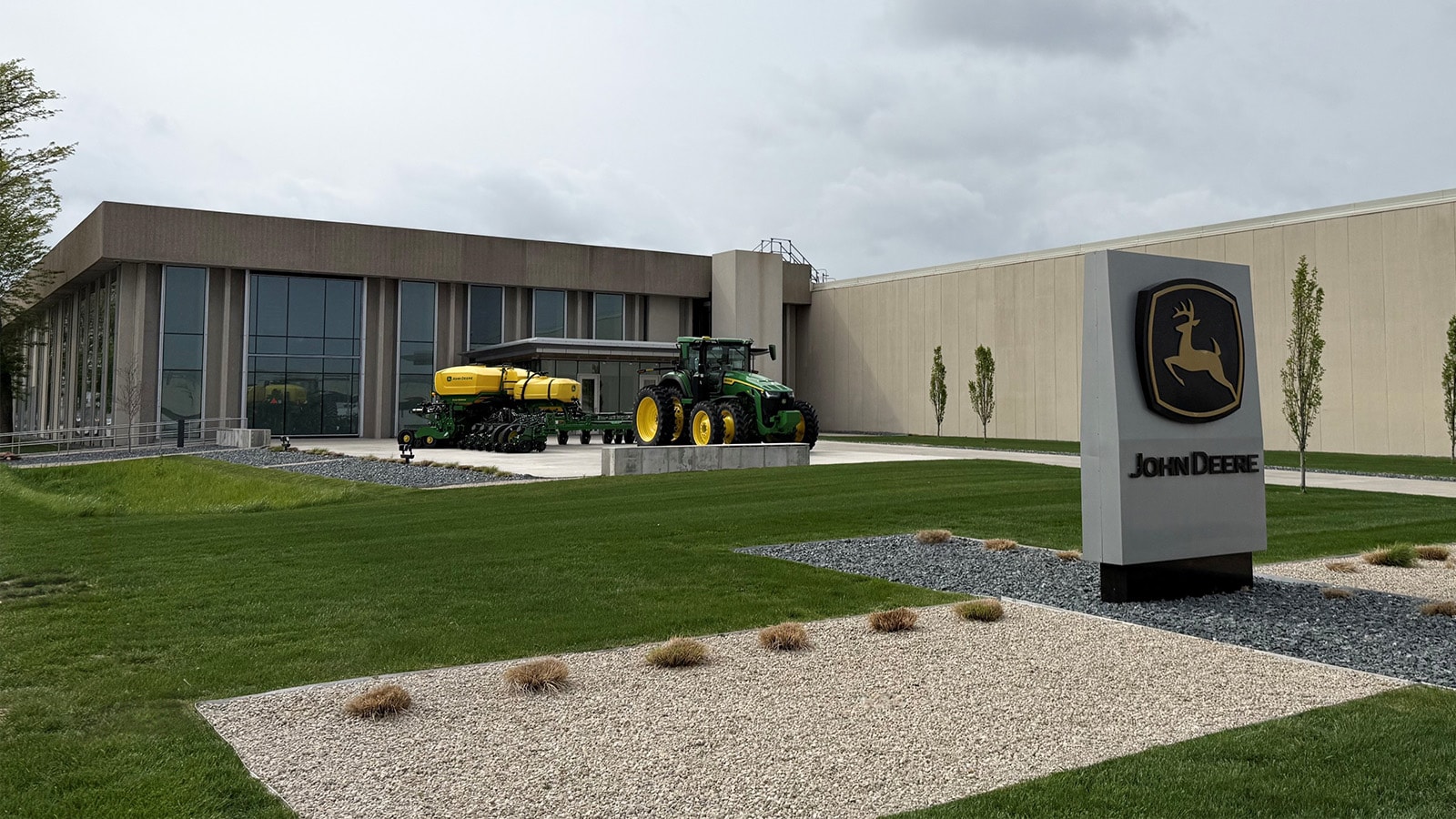
Over 146 years ago, our John Deere Seeding factory in Moline, Illinois, laid the foundation for planting innovation—becoming the proud home of the planter and John Deere’s oldest factory.
With roots stretching back to 1879, our legacy runs deep as we turn raw steel into planters through expert assembly and craftsmanship. Today, under one roof spanning nearly 14 soccer fields, we continue building equipment farmers can count on day after day.
That ongoing commitment to our customers, and to our workforce, is why we continue making bold moves in Moline, Illinois — most recently investing $30 million to modernize 55,000 square feet of our Seeding factory.
This transformation is more than a facelift. It’s a strategic leap forward in how we assemble the row units that power our planters and deliver unmatched precision in the field.
Smarter Systems for Smarter Farming
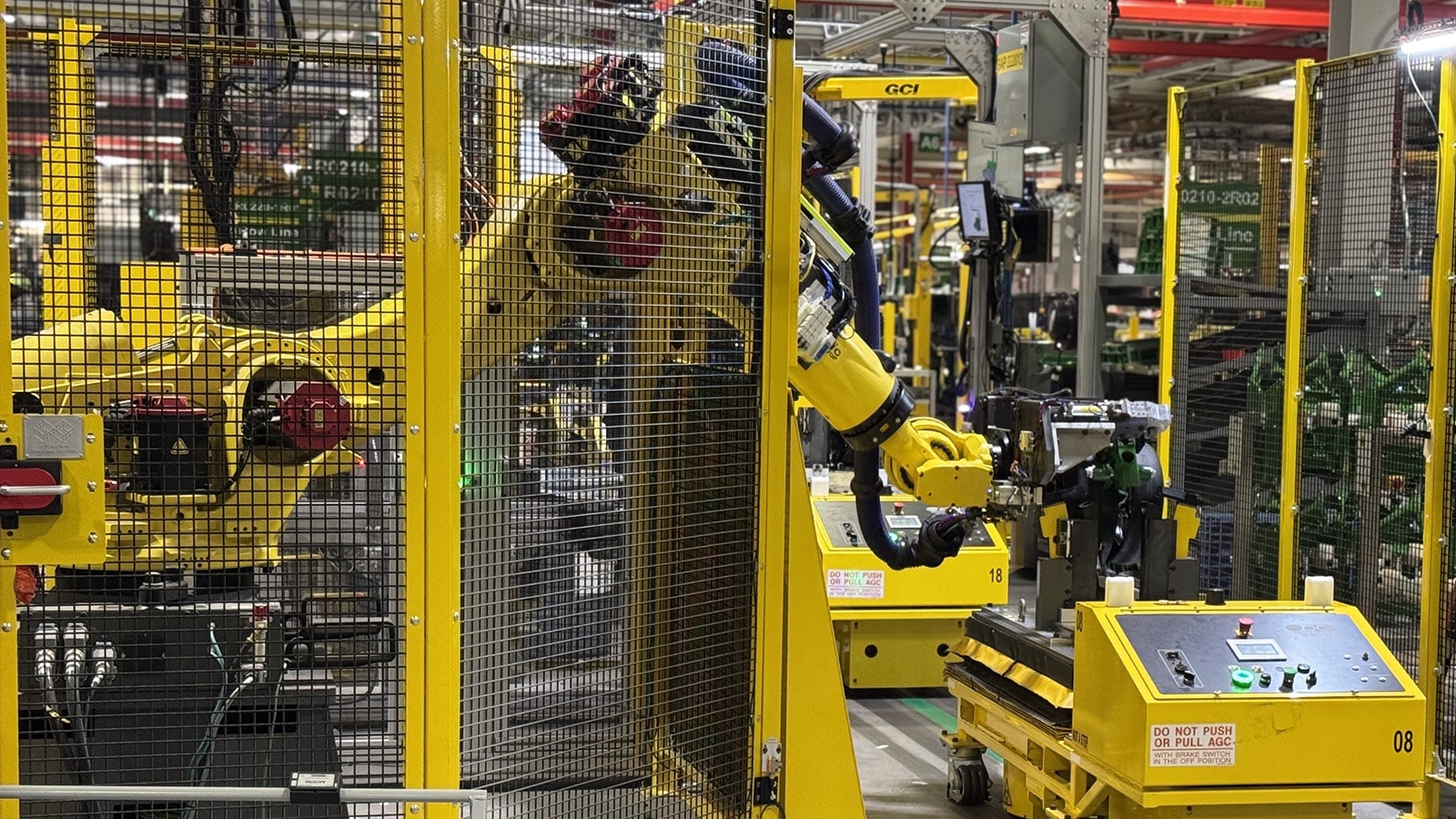
The new row unit product line is a major leap in technology for our Seeding facility. We’ve added a significant number of systems, controls, and robotics to improve safety, quality, and overall performance.
“We’re modernizing our manufacturing capabilities to match the intelligence and competitiveness of our planters. No matter the configuration, these row units are designed to deliver exceptional quality our customers can trust,” Chad Christ, focus factory manager, explained.
Robots, Lasers, and Real-Time Control
Three standout innovations are driving this transformation:
- Safety: Our open/close wheel robot has reduced the highest ergonomic risk in the factory. Previously, operators had to manually lift and place heavy wheels over 200 times per shift. Now, a robotic system uses cameras to locate wheels, assemble them, and stage them for inspection—no heavy lifting required.
- Quality: We’ve introduced a laser profilometer in the blade assembly to validate contact length, addressing a key customer concern: inconsistent seed placement. The system even alerts engineers if measurements begin to drift outside set limits.
- Productivity: A remote Human Machine Interface (HMI) ties everything together. It collects and analyzes data across the department, allowing real-time adjustments from anywhere. This intelligence helps us manage optionality and respond quickly to changing business conditions.
“This investment enhances the precision and consistency of our manufacturing processes,” Chad says. “With state-of-the-art quality systems in place, we’re able to validate our products and ensure traceability.”
Rooted in Moline, Growing Everywhere
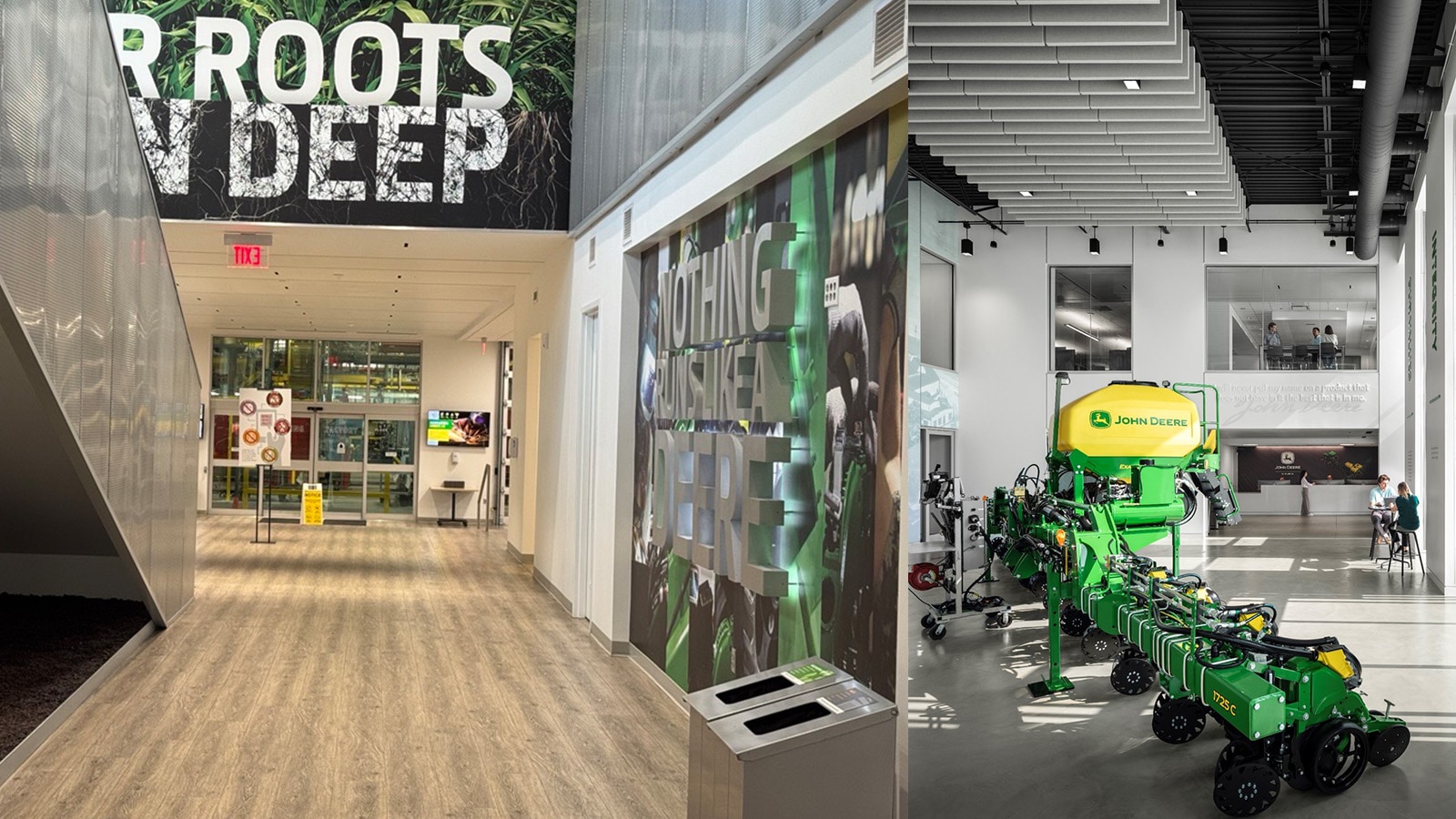
In the past five years, we’ve invested over $60 million in Seeding, including new tuggers, R&D breakthroughs like ExactShot, and refreshed office and visitor spaces.
This investment isn’t just about technology—it’s about people. “This $30 million investment reflects John Deere’s enduring commitment to this community—building on 146 years of history right here on River Drive,” Chad shares.
In the past five years, we’ve invested over $60 million in Seeding, including new tuggers, R&D breakthroughs like ExactShot, and refreshed office and visitor spaces.
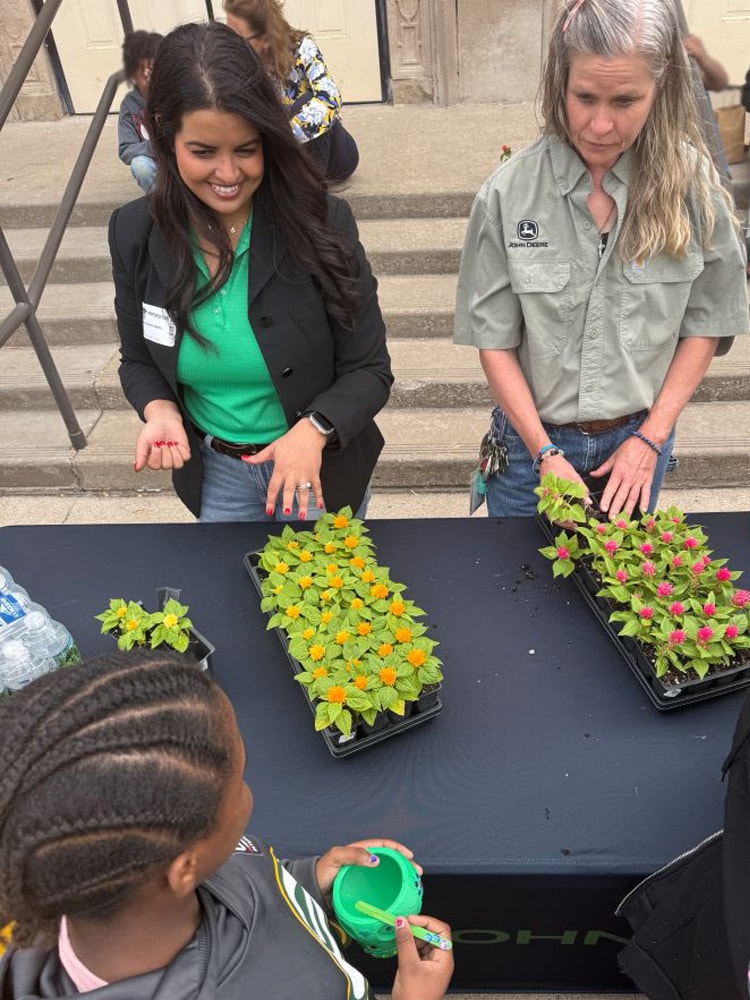
Our Seeding team also dedicated nearly 5,300 hours in 2025 to support the local community and schools—sparking curiosity in STEM and agriculture and inspiring the next generation.