Designing the Next 100 Years at Deere’s Headquarters
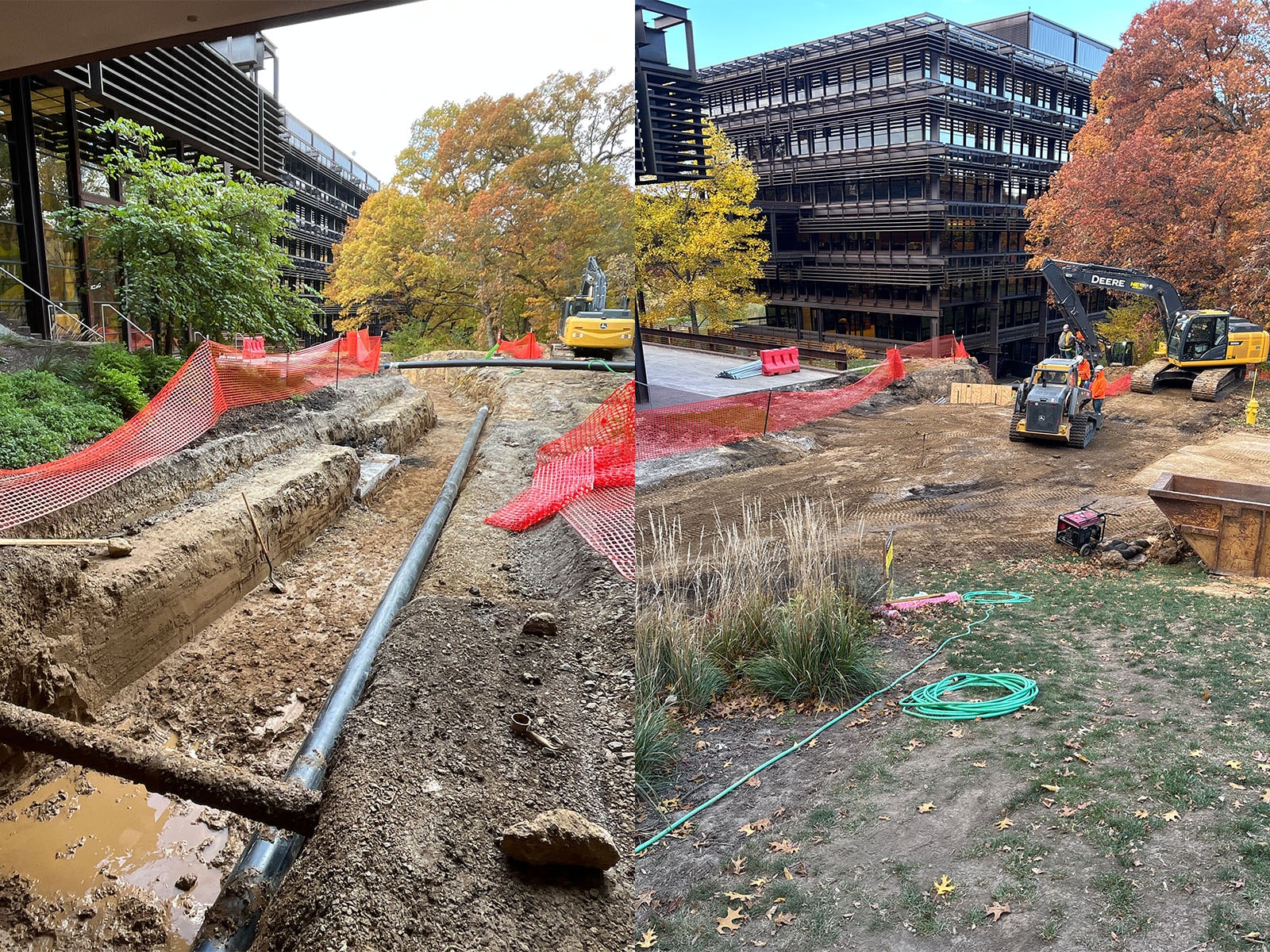
John Deere’s world headquarters in Moline, Illinois, is entering a new chapter. A major geothermal modernization project is now underway, preparing the building for its next century of work while preserving everything people love about the iconic site.
Rooted in the Land
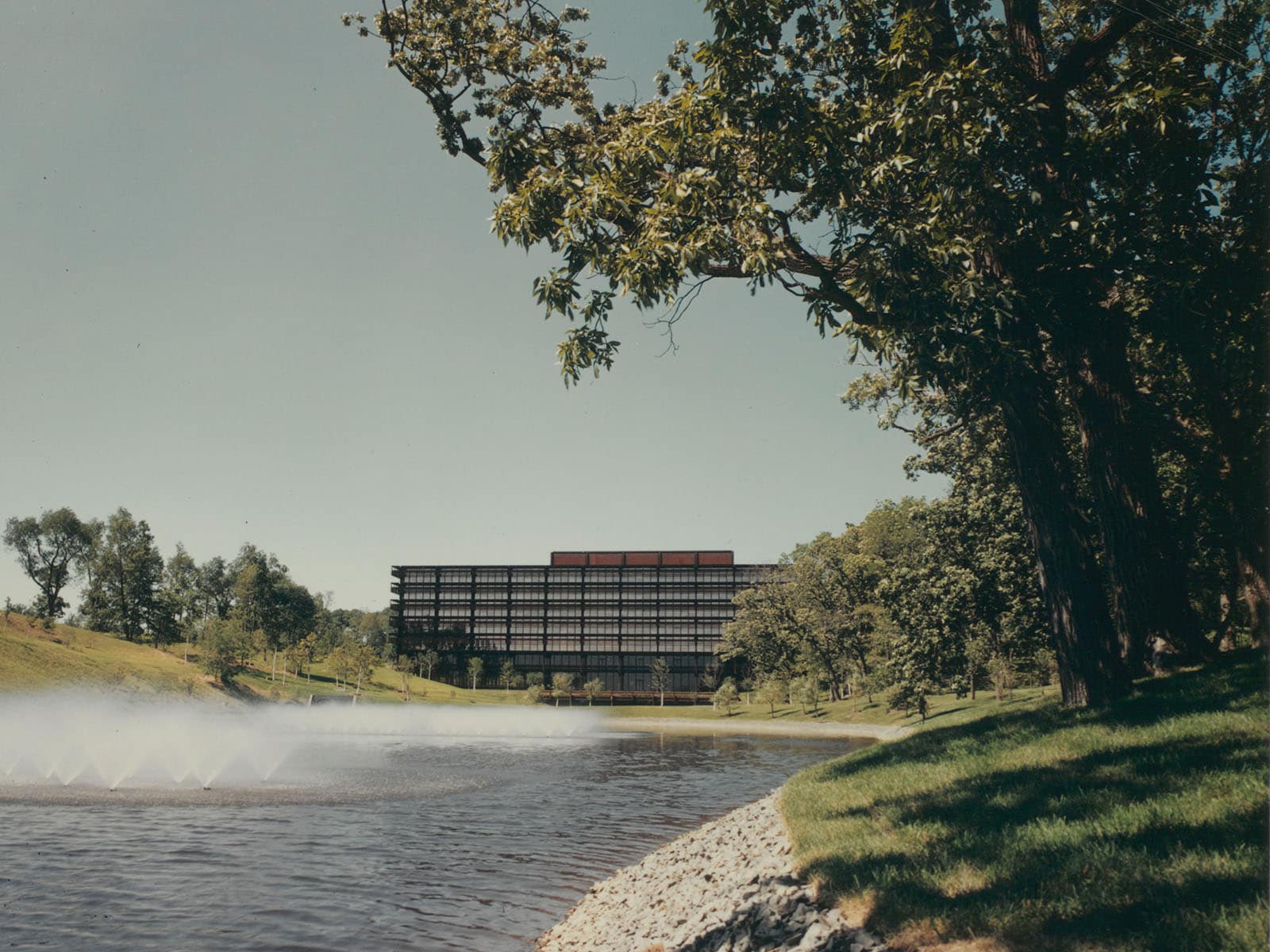
When it opened in 1964, the COR-TEN steel, glass, ponds, and rolling landscape immediately set the campus apart. It was designed to blend into the land around it, becoming one of the region’s most recognizable landmarks.
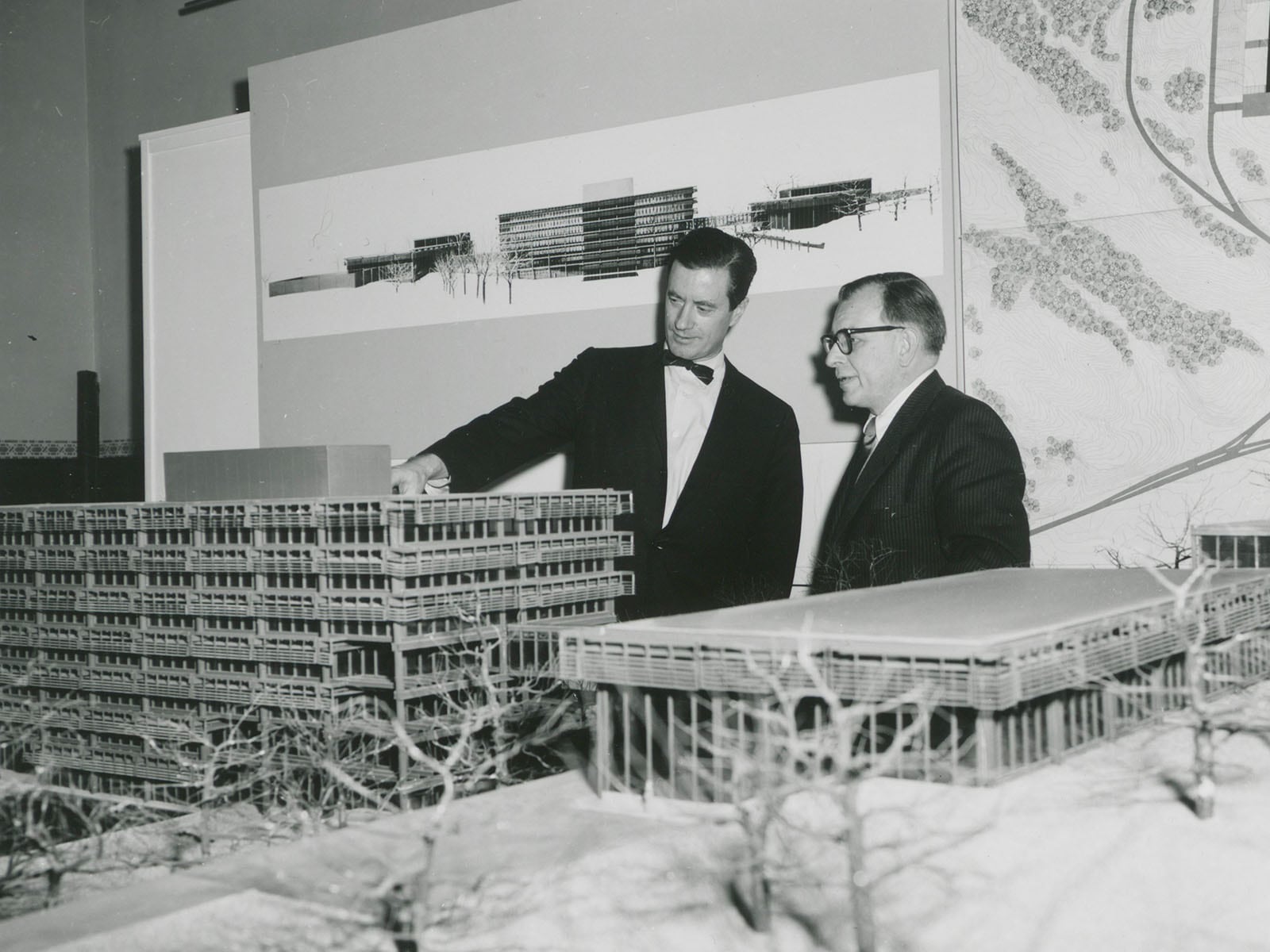
Architect Eero Saarinen and Chairman William Hewitt imagined a place that felt modern and grounded at the same time. They chose materials that echoed the Midwest and shaped the area to keep visitors and daily activity closely connected to the surrounding landscape.
For example, they selected COR-TEN steel for its warm, earthy tone that mirrors the bark of the surrounding oaks. Saarinen described the concept as a “nature culture hybrid,” a phrase that still captures the spirit of the campus today.
Designed for People
From the beginning, the headquarters was intentionally planned around the experience of the people who would spend their days there. Sunlit workspaces, movable steel partitions, and a cafeteria overlooking the pond created an environment that felt open, flexible, and connected. Innovation showed up everywhere, including:
- The largest U.S. installation of touch tone phones
- Movable partitions with easy access wiring
- A control center that automated lights and building systems long before smart buildings existed
- An auditorium with translation booths and a revolving stage
- Reflections of an Era, a three dimensional mural by Alexander Girard celebrating Deere’s history and rural Americana
“In thinking of our traditions and our future, I believe it should be modern in concept, but at the same time, be down to earth and rugged,” Hewitt said.
We’re preserving the character that makes our worldwide headquarters iconic, while modernizing its energy systems to reflect the sustainable world our customers are building. It’s meaningful work, giving history a future.
Innovation as Tradition
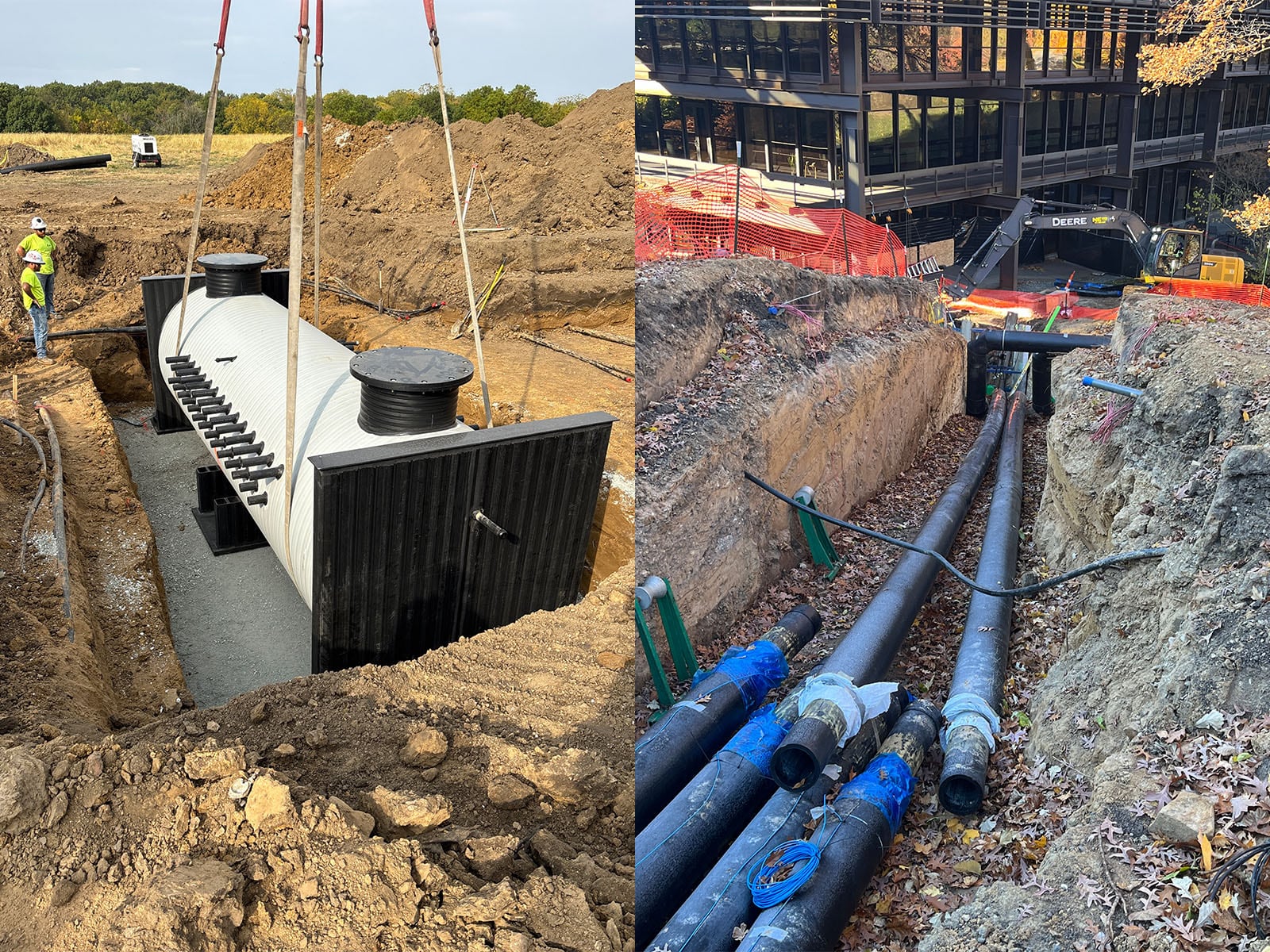
For more than sixty years, the campus has relied on its original mechanical systems. Now, that long tradition of innovation continues with the geothermal project. The upgrade will create a fully electric central utility plant that reduces energy use by 55% and lowers carbon emissions by 24%.
How it works? The design uses 276 geothermal borings, each 600 feet long, integrating modern engineering into the surrounding landscape. The approach preserves the farmland like setting and honors the embodied energy of Saarinen’s original structures. Even the historic cooling pond at the front of the property will support the new system.
“We’re transforming this historic structure into a high performance, all electric geothermal facility,” said Chad Walters, facilities project manager. “We’re preserving the character that makes our worldwide headquarters iconic, while modernizing its energy systems to reflect the sustainable world our customers are building. It’s meaningful work, giving history a future.”