 A John Deere Publication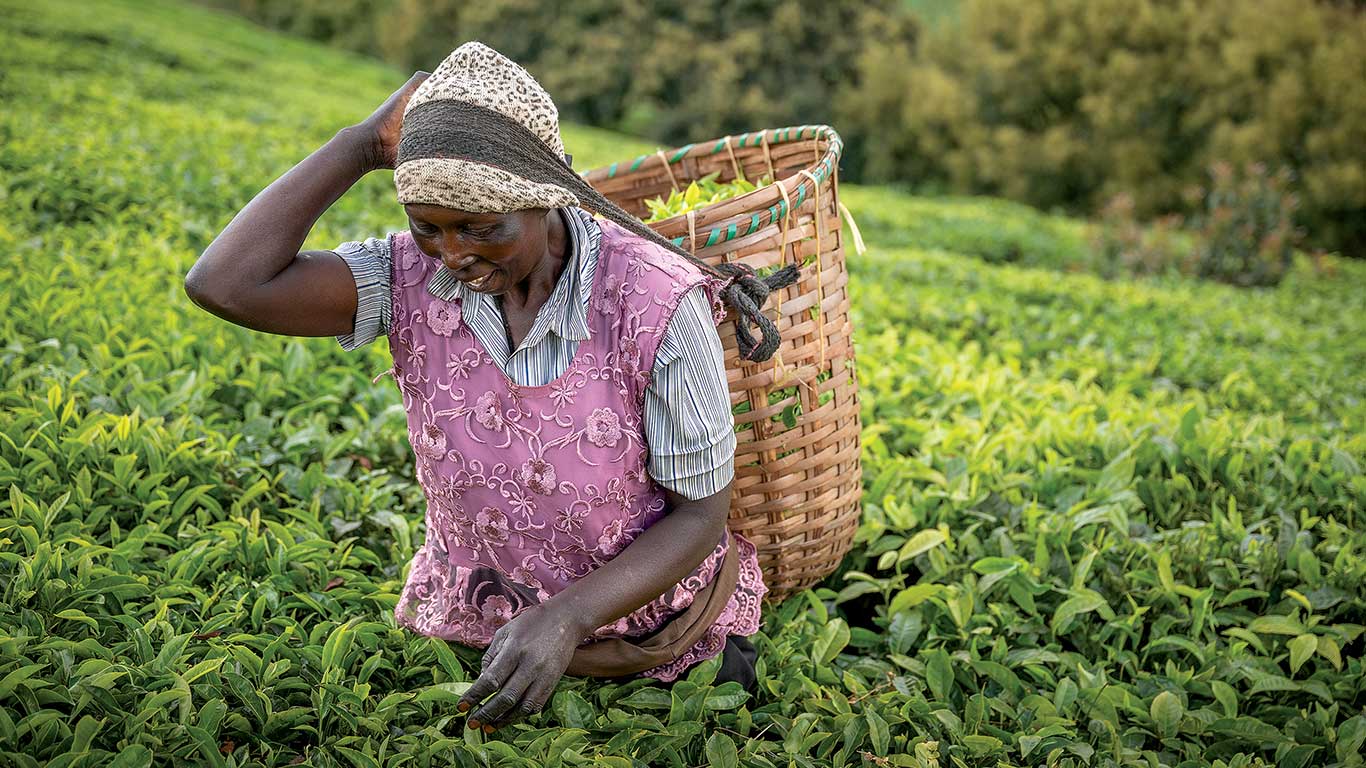
Peris Kerubo has picked tea two leaves and a bud at a time for 25 years.
Agriculture, Education June 01, 2026
Two Leaves and a Bud
What it takes to produce one of the world's most popular beverages.
Story and Photos by Katie Knapp
Atop one of Kiambu County's steep hillsides north of Nairobi, Kenya, Peris Kerubo secures the large, woven basket to her forehead and glides between thick, waist-high bushes.
Two leaves and a bud. Two leaves and a bud. She tosses each pinch over her shoulder and reaches for the next with mesmerizing rhythm developed from 25 years of practice.
On a good day, she'll pick 40 kilograms (88 lbs.) of tea leaves by midday and then carry the full basket down to the collection center. The leaves are then weighed and quickly trucked to one of 71 smallholder-owned factories managed by the Kenya Tea Development Agency.
The basket of leaves Kerubo picked on that sunny, October day last year represents just one of nearly 70 million baskets filled on smallholder farms across the country. Roughly half of the country's total production comes from these farms.
"Our 600,000 smallholder farmers count in bushes, not acres—500, 1,000, maybe 1,500," says Grace Mburu, KTDA's head of marketing.
The opposite trend is happening compared to U.S. farmland. With each new generation, Mburu says, the tea farms are subdivided among the family members. The average plot has shrunk to half an acre.
"When the crop came to Kenya 100 years ago, it was purely run by the whites," says Enock Matte of the Tea Board of Kenya, the government agency responsible for the regulation of the country's tea industry. "In 1957, when Africans were first permitted to grow tea commercially, smallholder production totaled 19,000 kilograms of finished tea. Now it is about 300 million."
Today, tea is Kenya's leading export commodity and accounts for 1.2% of the country's GDP. Though in total production Kenya ranks third in the world, it leads in exports with about 95% of the total production being exported.
"Apart from the farmers, the tea value chain supports about 6.5 million Kenyans, or about 13% of our population," Matte says, further emphasizing the crop's importance.
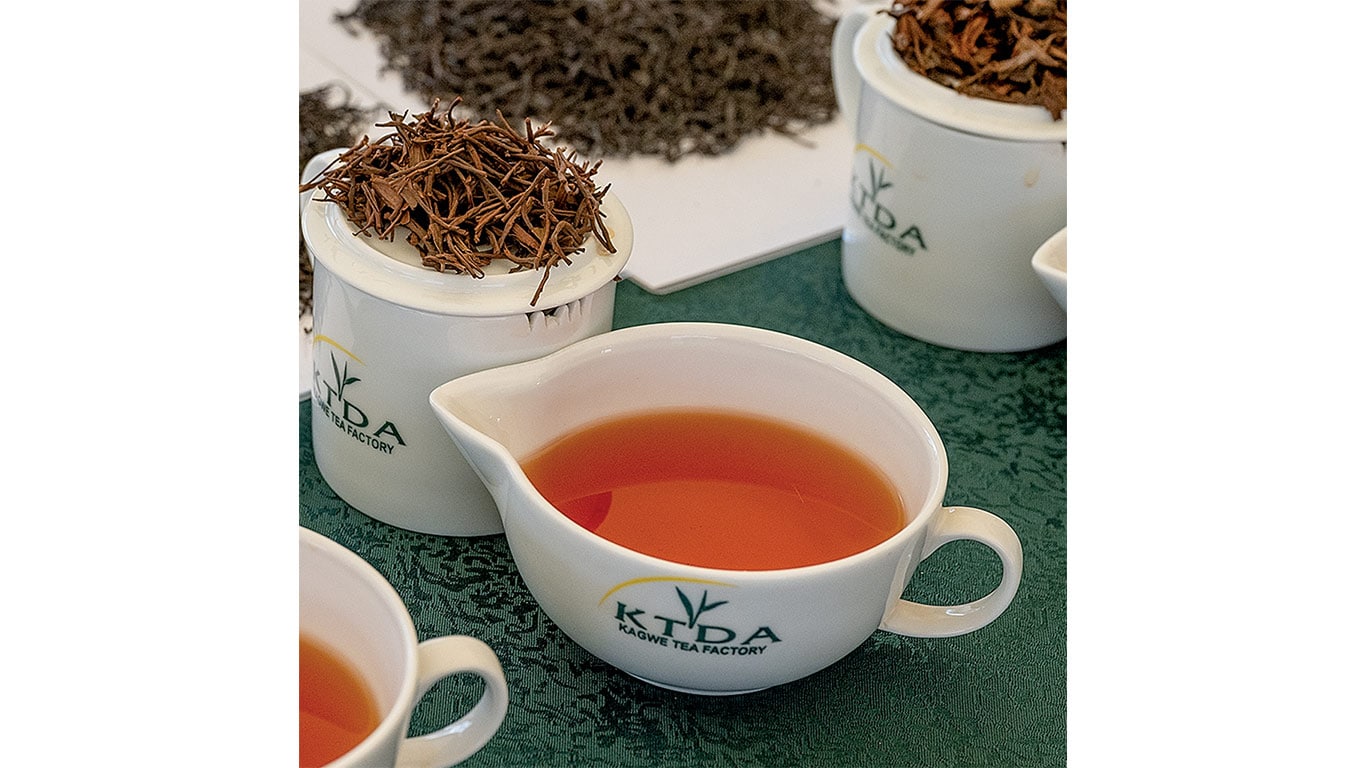
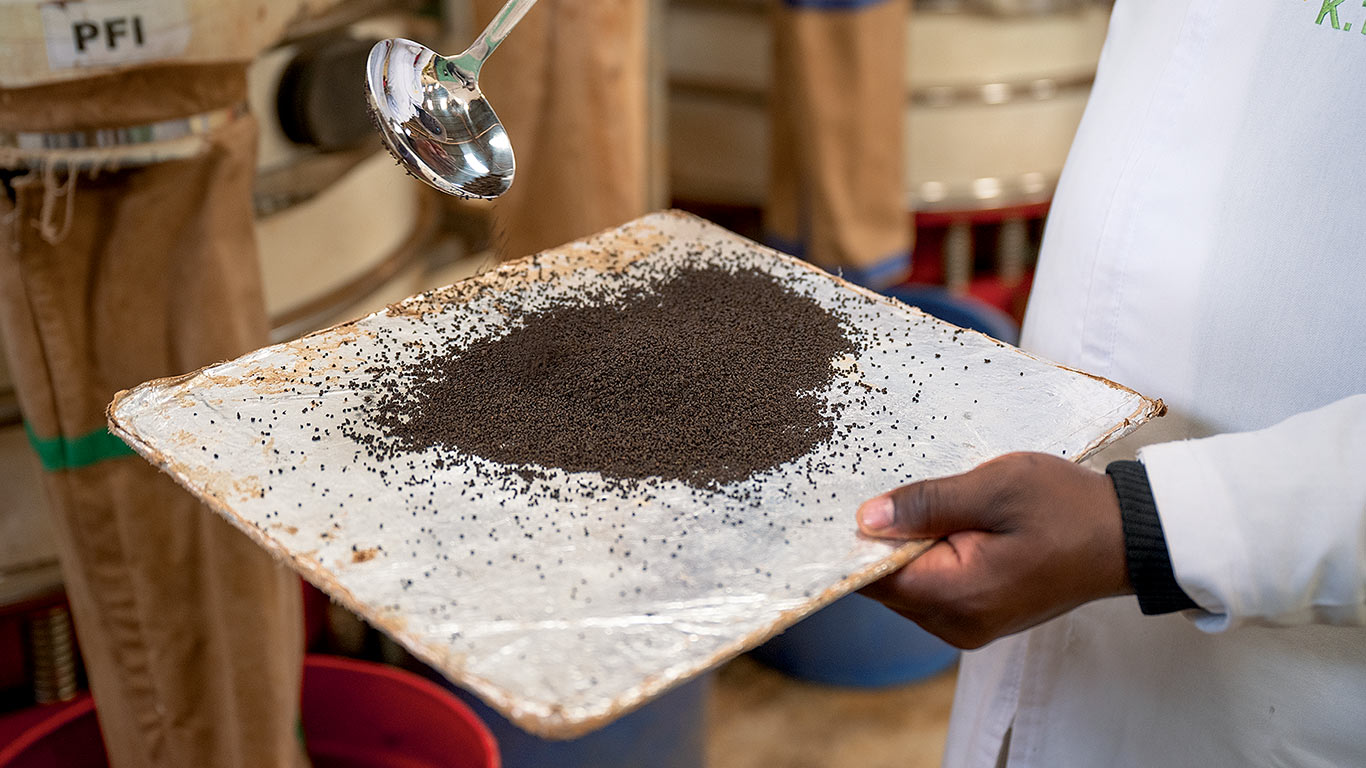
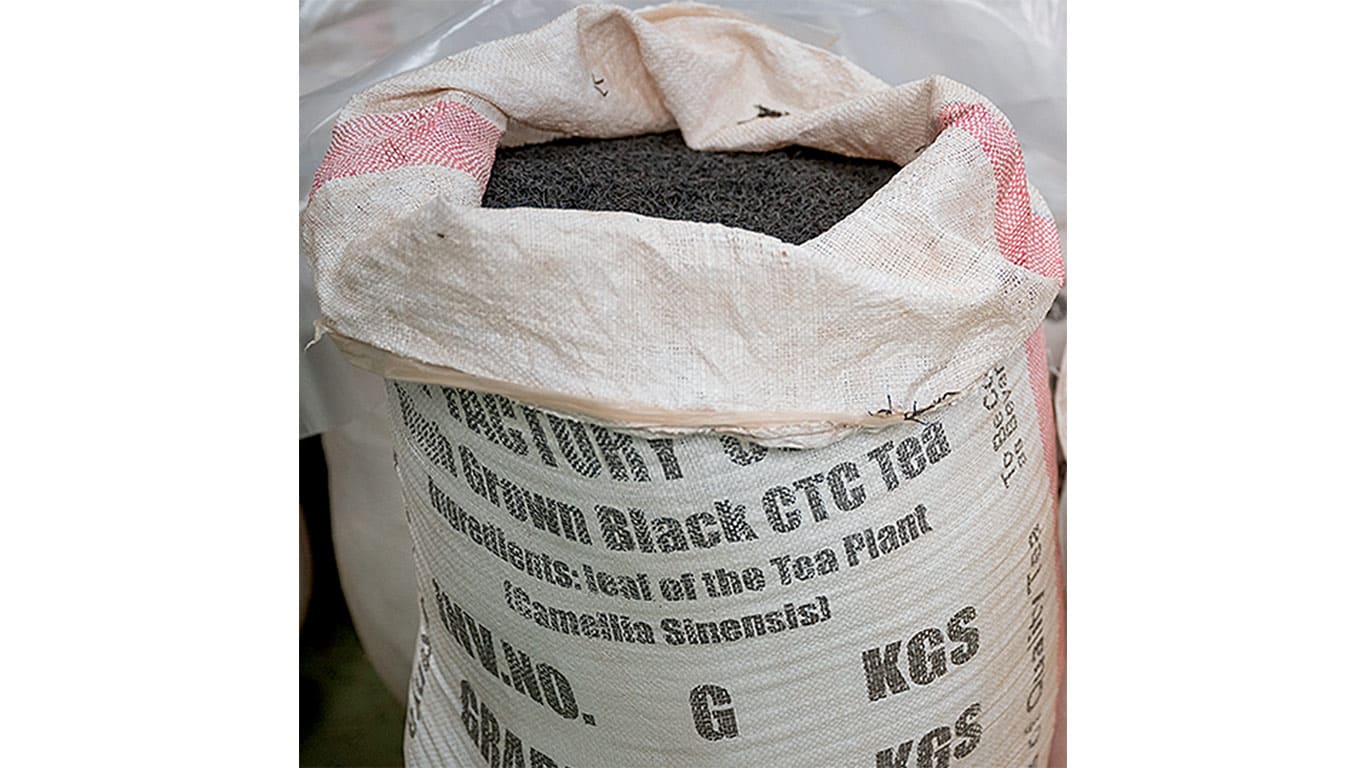
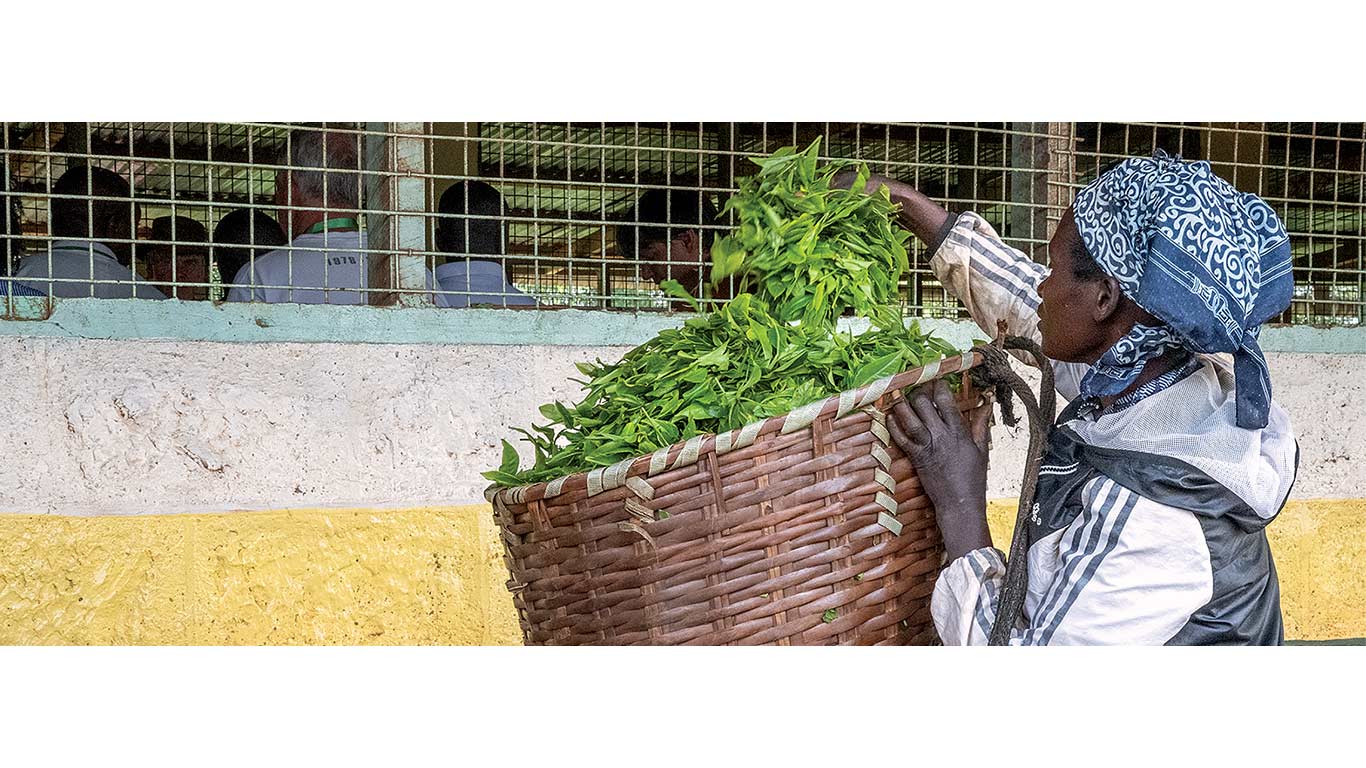
Above.The primary processing method for Kenyan black tea is CTC (crush, tear, curl) which results in the granules found in most individual tea bags. Pluckers bring each basket of leaves to a collection center. KTDA production manager tests the final quality.
Once the tea is dried and processed into black orthodox (a type of loose-leaf tea) or CTC (crushed granules common in ready-to-brew tea bags), it is sold on auction and shipped abroad from Kenya's port city Mombasa. From there, it might be blended with tea grown elsewhere.
"If you ever take English breakfast, it has tea from Kenya, India, Rwanda—all the major producers," Mburu from KTDA explains. "We all bring different attributes to the tea, so to make a unique cup of tea, they take teas from different regions and bring them together."
While the Tea Board and other marketers try to grow both the export and local markets, KTDA is focused on helping the smallholder farmers navigate the same challenges farmers anywhere else in the world are facing—rising input costs, erratic rainfall, and infrastructure issues.
KTDA-employed extension educators help the farmers with their ongoing pruning, fertility, and pest management. They also help identify blocks that need to be replanted. Many bushes are 60 years old or more, producing well below their potential.
This system is working because last year KTDA farmers reported a 12% year-over-year production increase while large and independent farm production lagged.
"When you get this tea on the shelves in your respective countries," Matte says, "I don't know what runs through your minds when we ask for a higher price, but because of the people behind this tea—you will understand what they go through." ‡
More articles related to:
Read More of The Furrow
AGRICULTURE, LIVESTOCK/POULTRY
Up the Value Chain
Beef producer brings in new customers one bite at a time.
AGRICULTURE, AG TECH
Tech@Work
Seeing the full picture with precision agriculture.