 A John Deere Publication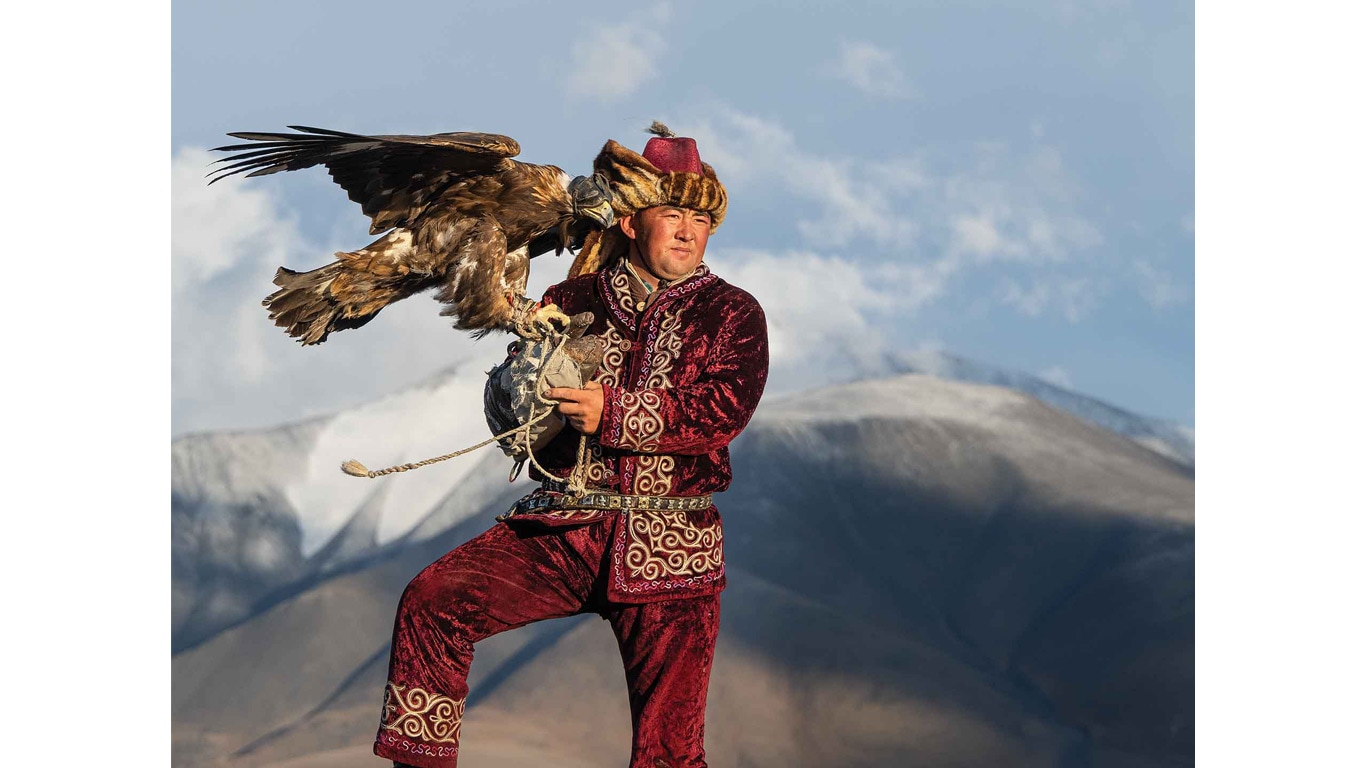
Serikjan, or Seka, a 23-year-old eagle hunter, caught and trained his first golden eagle when he was 9. He hunts and competes in contests with his eagles.
Agriculture, Specialty/Niche March 01, 2026
The Wanderers
Glimpses of the nomad cultures that once ruled the world.
Story and Photos by Steve Werblow
Mongolia is a land so vast it seems infinite, like you're looking not just at space, but at time. Wandering horses, camels, cattle, sheep, and goats ignore sparse traffic. Gers—nomads' round, canvas-covered portable homes—are scattered around the landscape like stray golf balls on an abandoned green. Squint hard enough to look past the motorcycles, SUVs, and solar panels around the gers and it's not hard to see back to the distant past, when fierce riders launched from these steppes and conquered much of the known world. Twice.
My wife and I spent our summer vacation on a photographers' trip to Mongolia. There we discovered a love for the history and a deep respect for the nomadic herding culture that still sustains about 1 million Mongolians—28% of the nation's 3.6 million people.
Just 1% of Mongolia's land, mostly along the country's northern border with Russia, is suitable for crops. With the exception of watermelons treasured for their sweetness, cabbage, potatoes, a little wheat and rapeseed, and some hothouse tomatoes and cucumbers, agriculture in Mongolia is all about livestock. Even in the outskirts of the capital, Ulaanbaatar, horses and goats graze in the shadows of apartment buildings and industrial parks, and supermarkets stock milk from horses, camels, and goats. In the deserts and glacial mountain valleys, ger dwellers greet guests with rich tea blended with camel or yak milk, and candies made from dried curd. And Mongolian meals are heavy on meat—mostly mutton, though horse, goat, and beef are also on the menu.
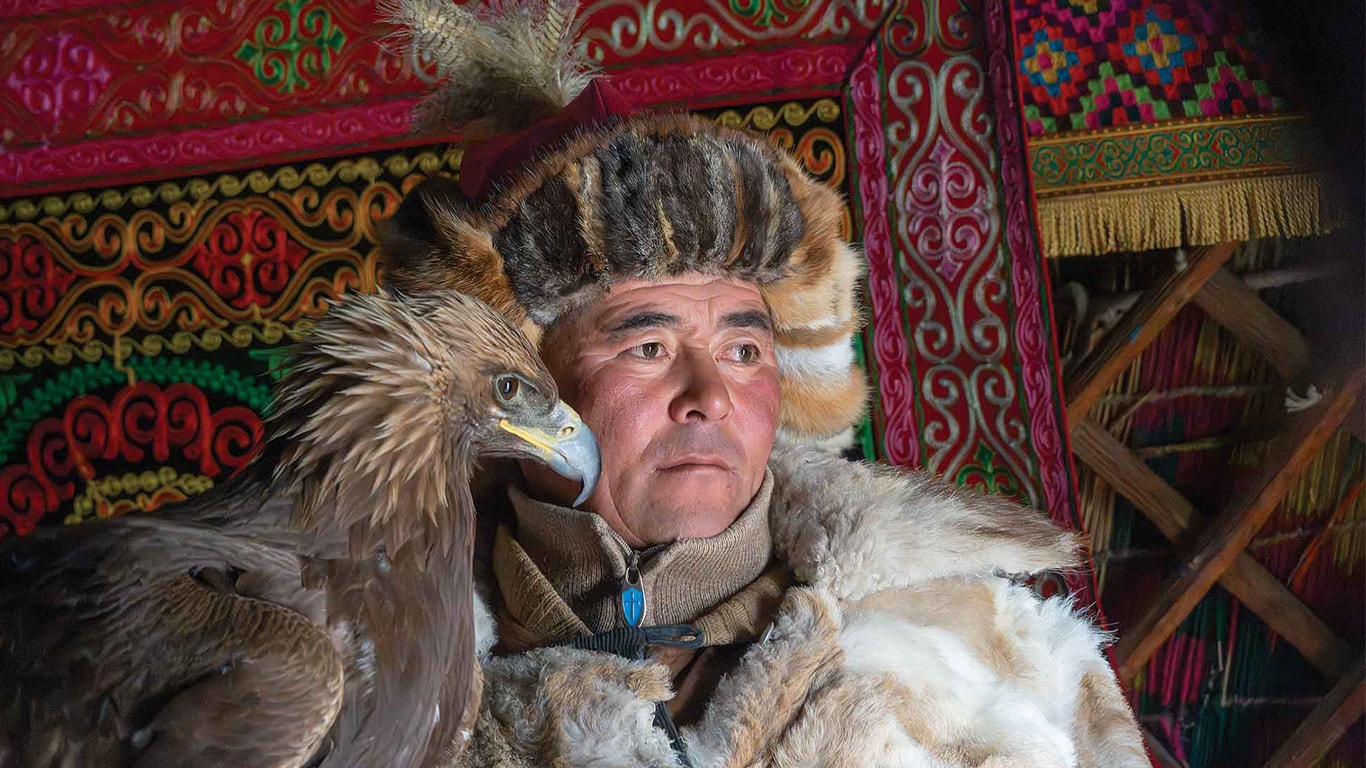
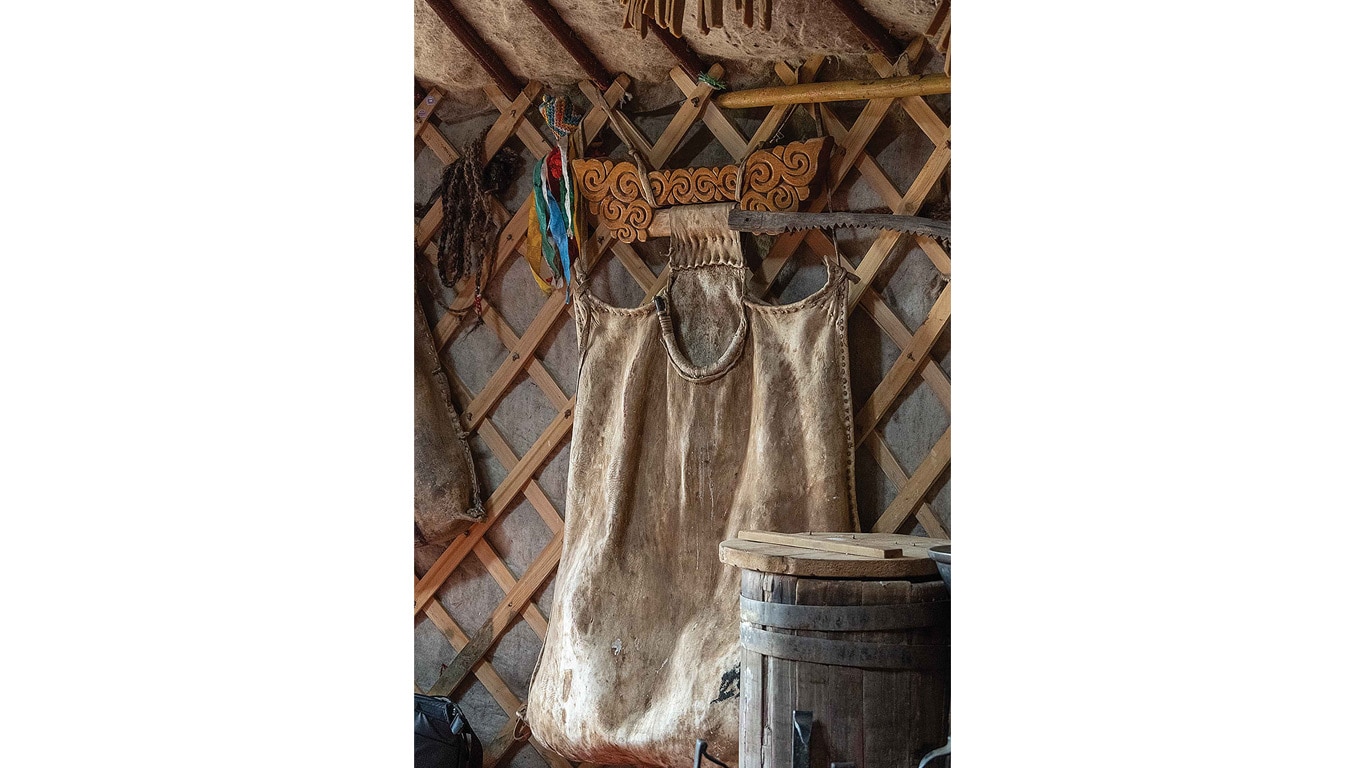
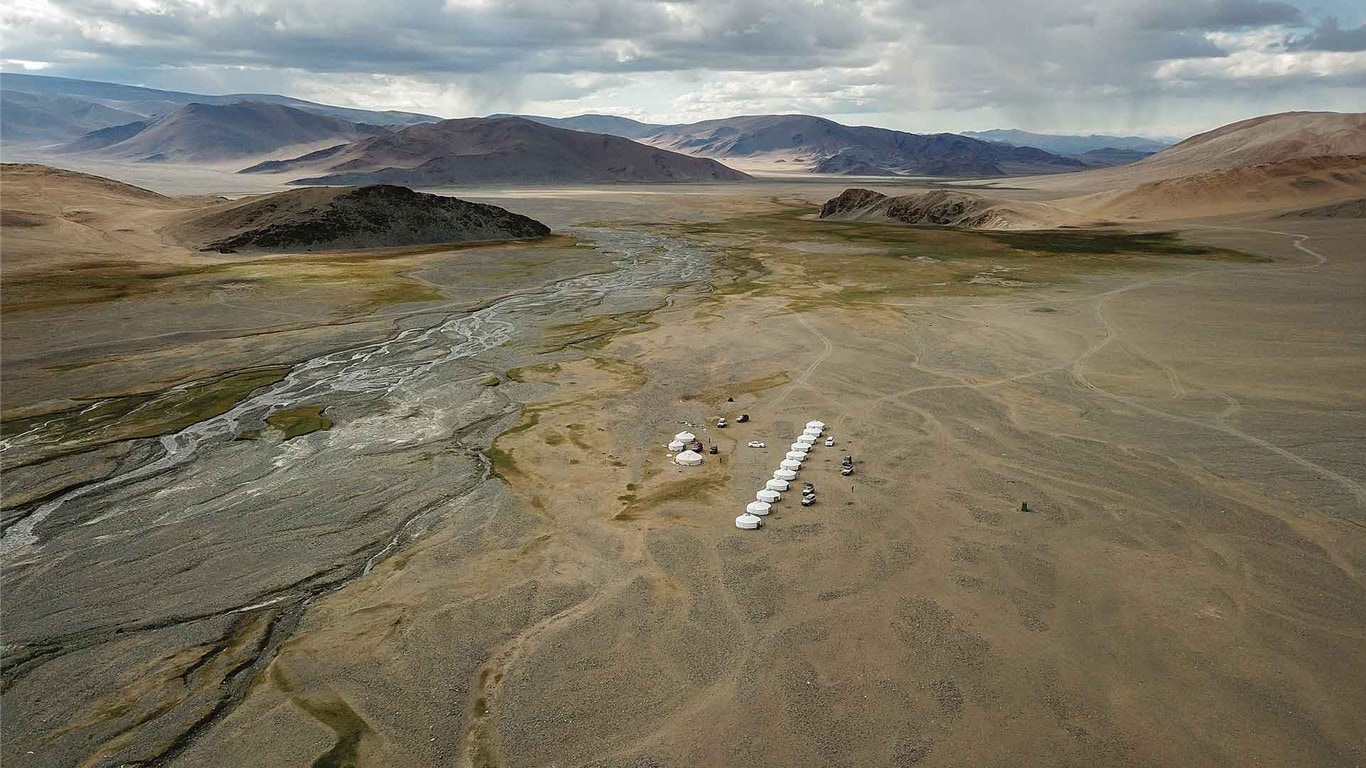
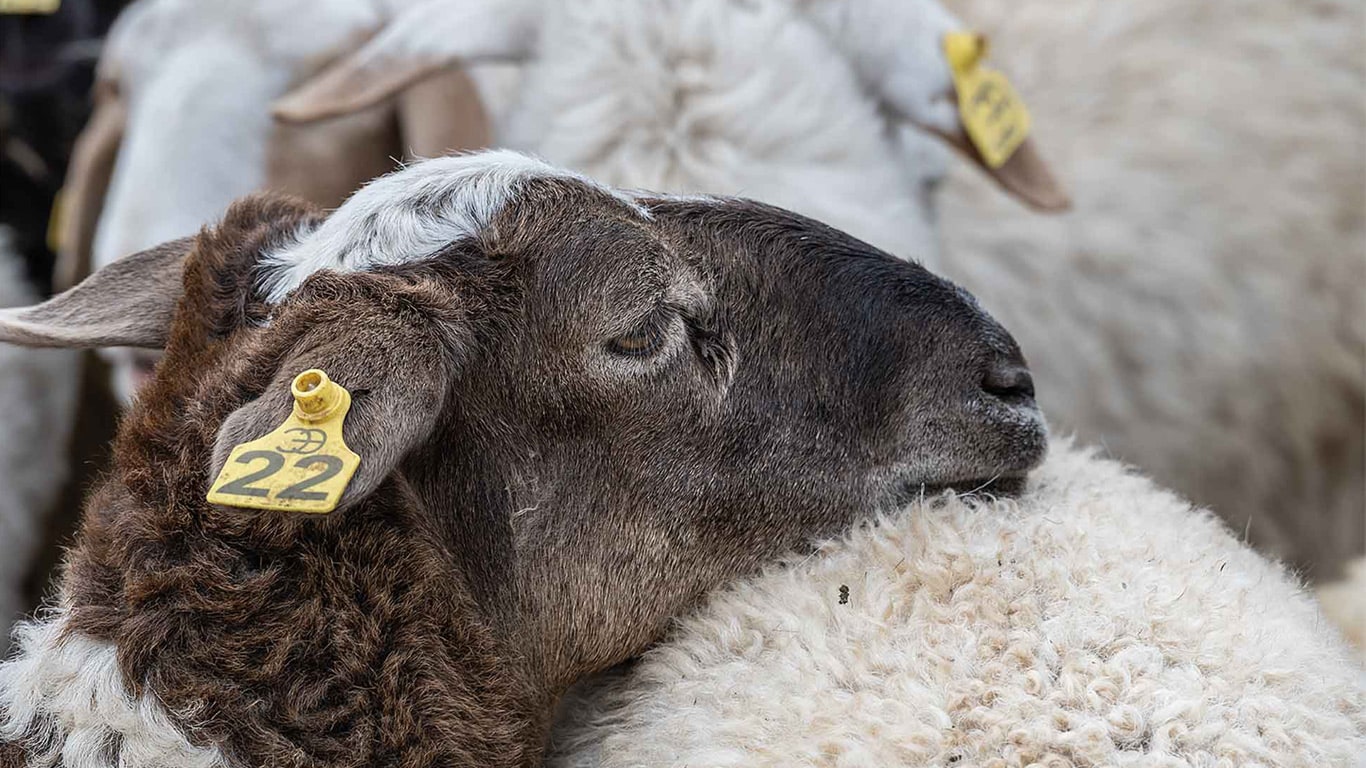
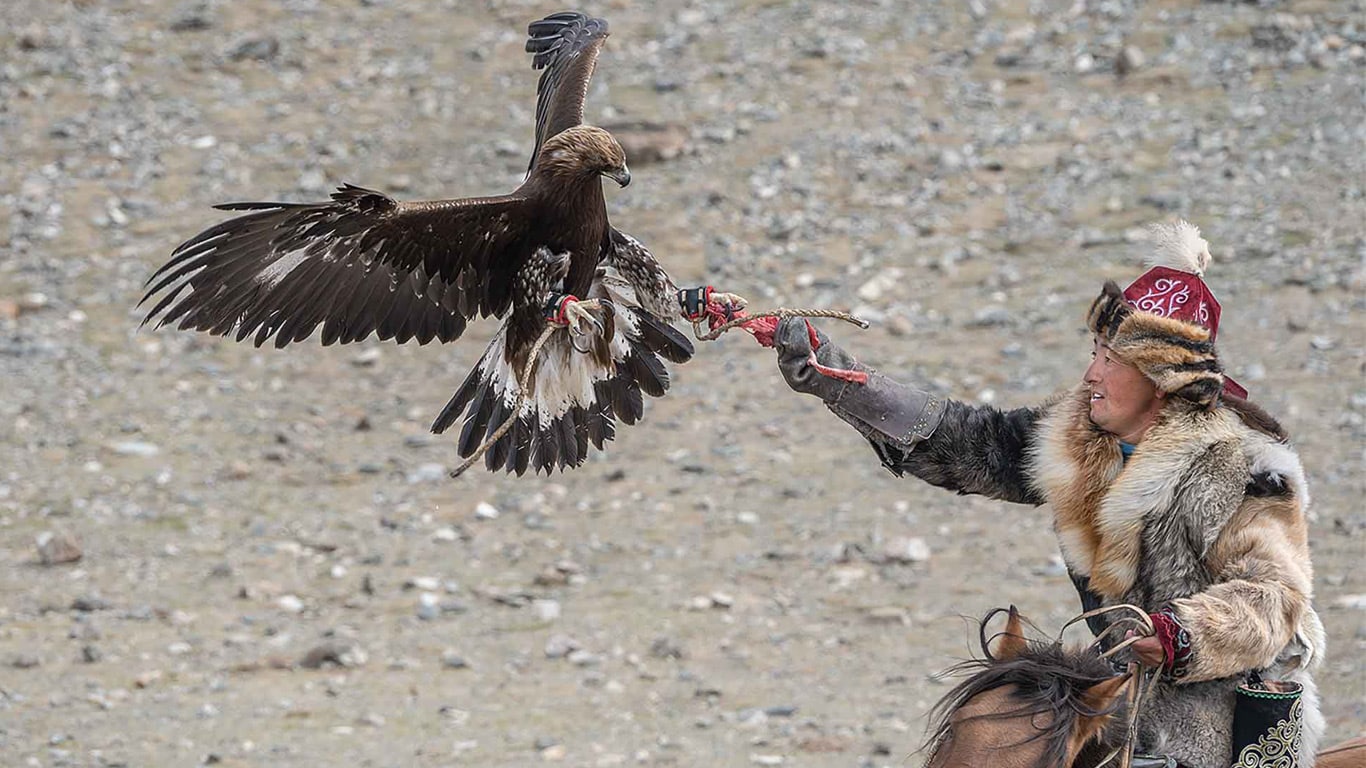
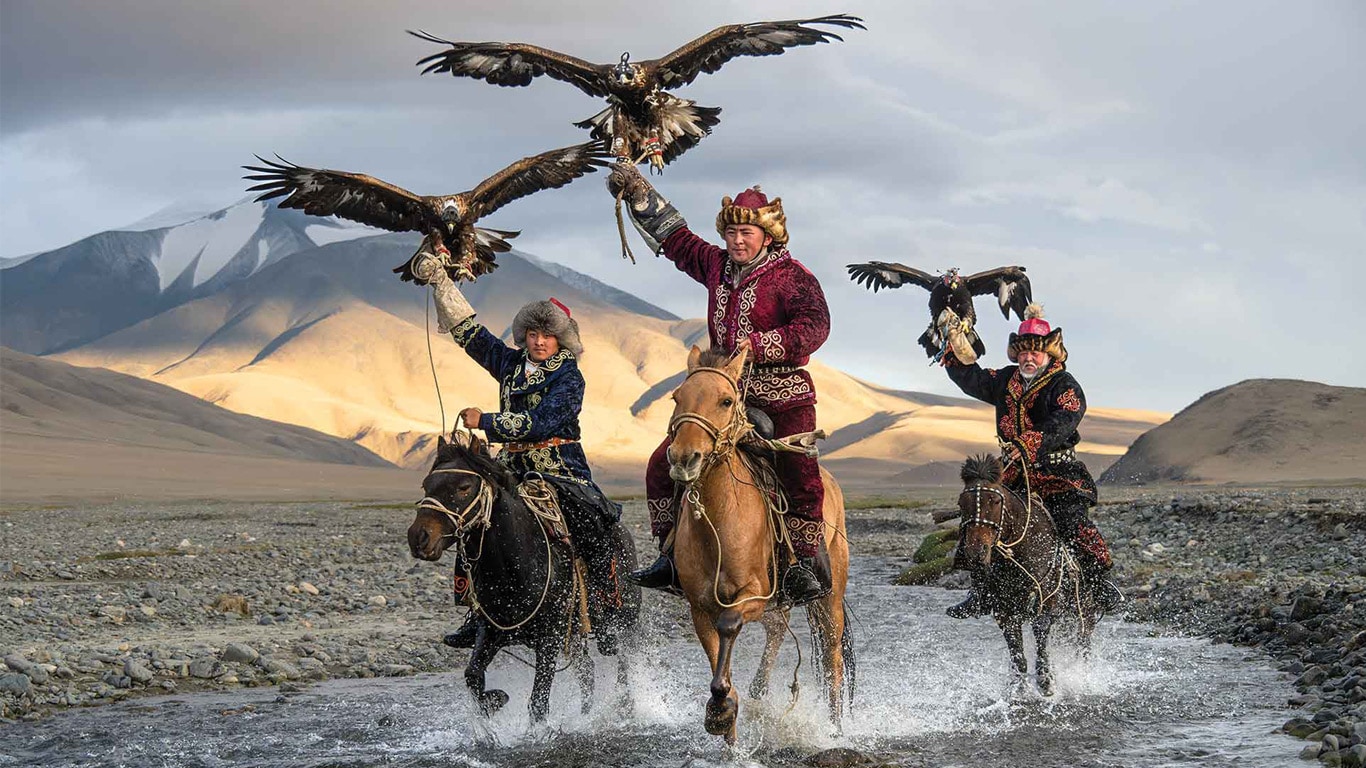
Above. Bauirjan has hunted with eagles since he was 18. This bag holds fermented mare's milk. A ger camp on summer range in the Altai mountains. 43 million head of livestock live in Mongolia. Hunters train female eagles, then let them go when they are breeding age. Elaman (left), Seka (center) and their father Shaimurat ride with their eagles.
Riders. In the northwestern tip of Mongolia, where borders with Russia and China squeeze the country to a point, a nomad named Shaimurat and his family herd horses, cows, sheep, and goats. The family is part of Mongolia's Kazakh ethnic minority. They are also keepers of a tradition of hunting with golden eagles that dates back to the Bronze Age.
During the summer, many of Mongolia's 250 eagle hunters compete in contests that show off their birds' training, their horses' sure-footedness, and their own exquisite riding skills. At her owner's call, an eagle swoops down from a mountainside, her 7-foot wingspan blocking out the sun as she grabs a hunk of meat from her owner or attacks a sheepskin dragged behind a running horse. Riders engage in brutal, mounted tug-of-war contests, hanging off their horses as they grapple over a sheepskin. In another event, they charge at full gallop, roll to their horses' bellies, and grab at a knotted rag on the ground before hoisting themselves back into the saddle.
It's easy to imagine the terror of seeing these skilled riders approaching across the plains as they conquered massive swaths of Asia and Europe. Attila the Hun battled the Romans in modern-day Italy and Germany, 5,000 miles from home, in the 5th century. In the 1220s, Chinggis Khan (the Mongolian spelling of the Persian "Genghis") united Mongolian nomads into an army that eventually controlled an empire stretching from Korea to portions of Austria and Poland. Armed with state-of-the-art military technology including gunpowder, boiling crude oil called naphtha, and rock-heaving trebuchets, Mongolia's riders stopped only when they reached the end of Europe's plains, where their riding skills no longer gave them an advantage.
The Black Plague of the Middle Ages and local insurgencies eventually broke the Mongol empire. Today, the country's nomads live a peaceful life, and a moderately prosperous one. Herders are taxed at a lower rate than city dwellers, enjoy an earlier pension, and get free agricultural tuition for one child, notes guide Undraa Ria of Ulaanbaatar, whose grandparents were nomads.
Shaimurat says through a translator, "living by herding is good in Mongolia." As temperatures dipped toward freezing in September, he and his sons Elaman and Seka were planning to move about 30 miles from summer to autumn range. Then they would move again to their two-story house in the village of Altantsögts to hunker down for winter. Shaimurat and his sons have also tapped into a growing tourist market, hosting a ger camp on their summer grazing grounds and conducting eagle festivals for guests. Shaimurat says it helps preserve the culture.
But it's not all for show. When the tourists go home, he and his sons ride with their eagles out to the snowy steppes to hunt rabbit, fox, and wolf. Their fur coats and hats are evidence of their success.
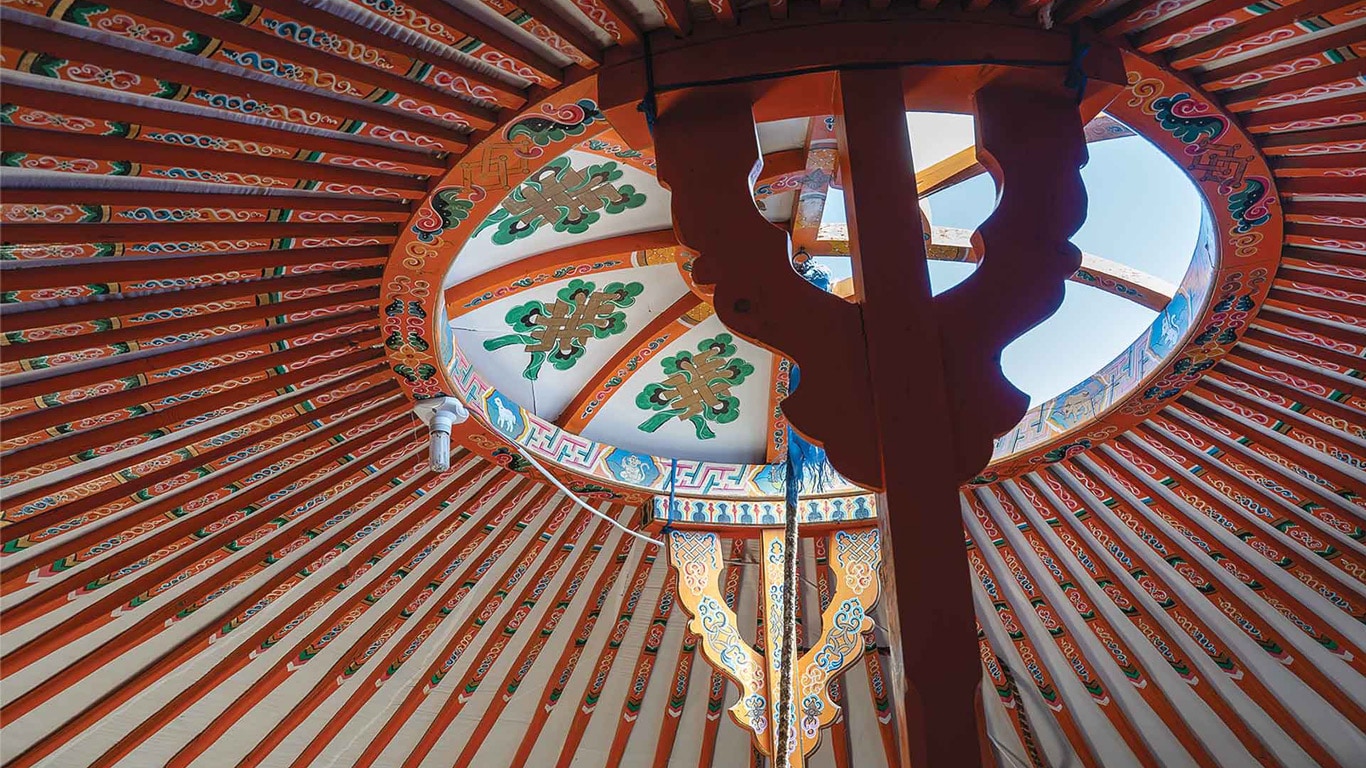
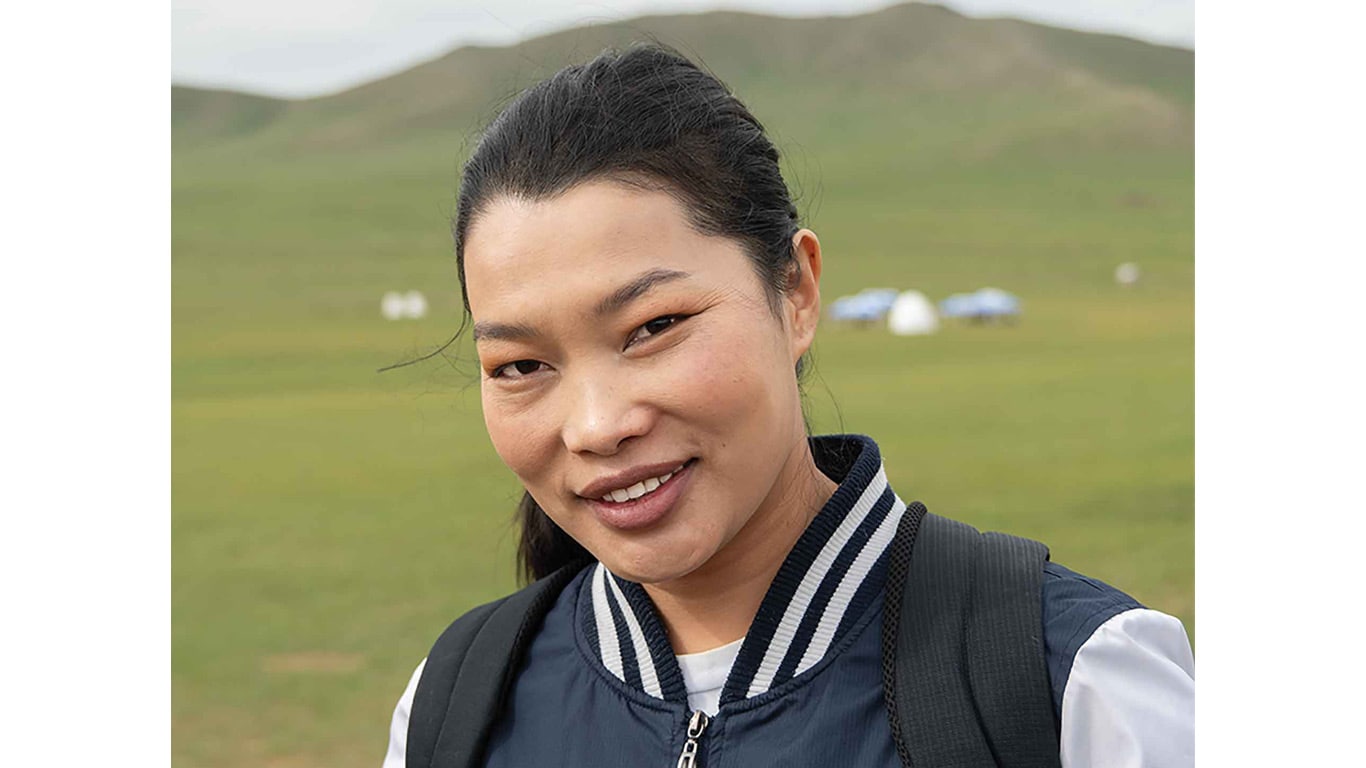
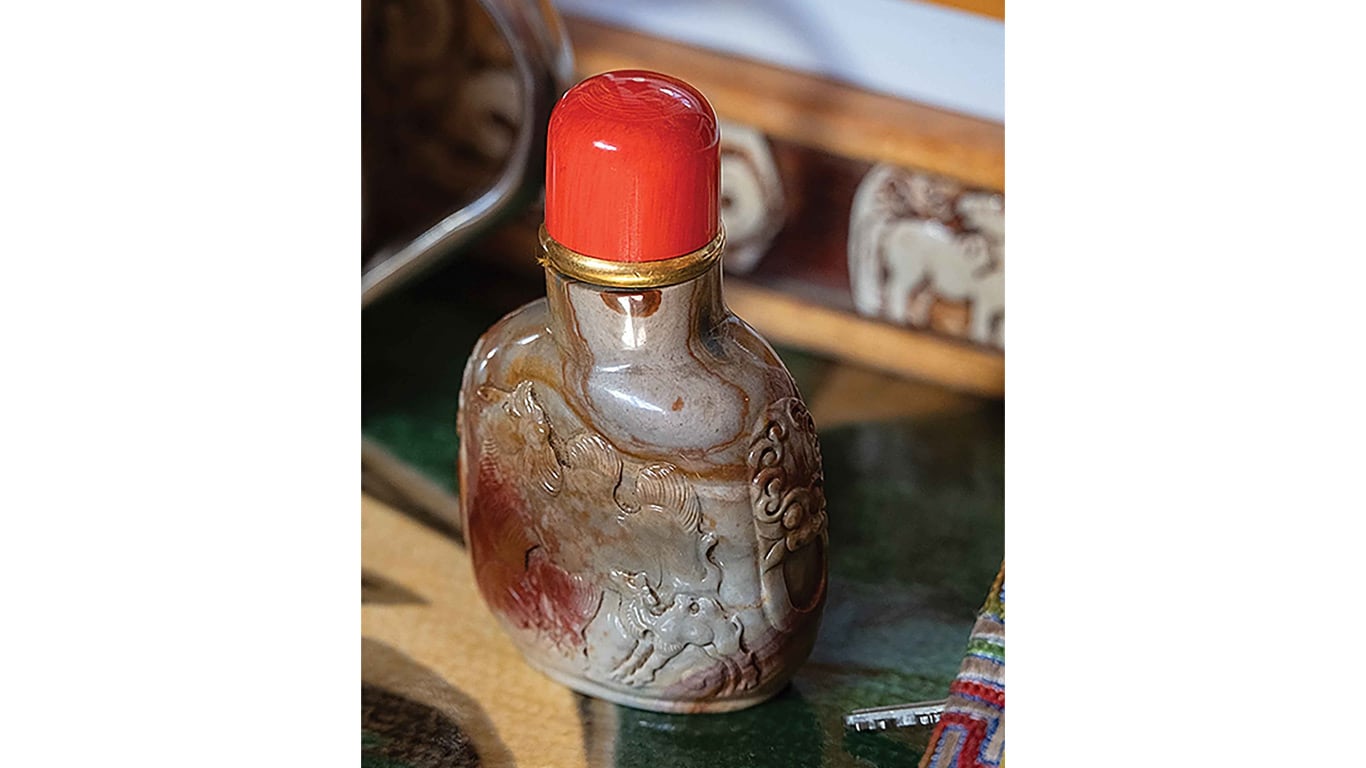
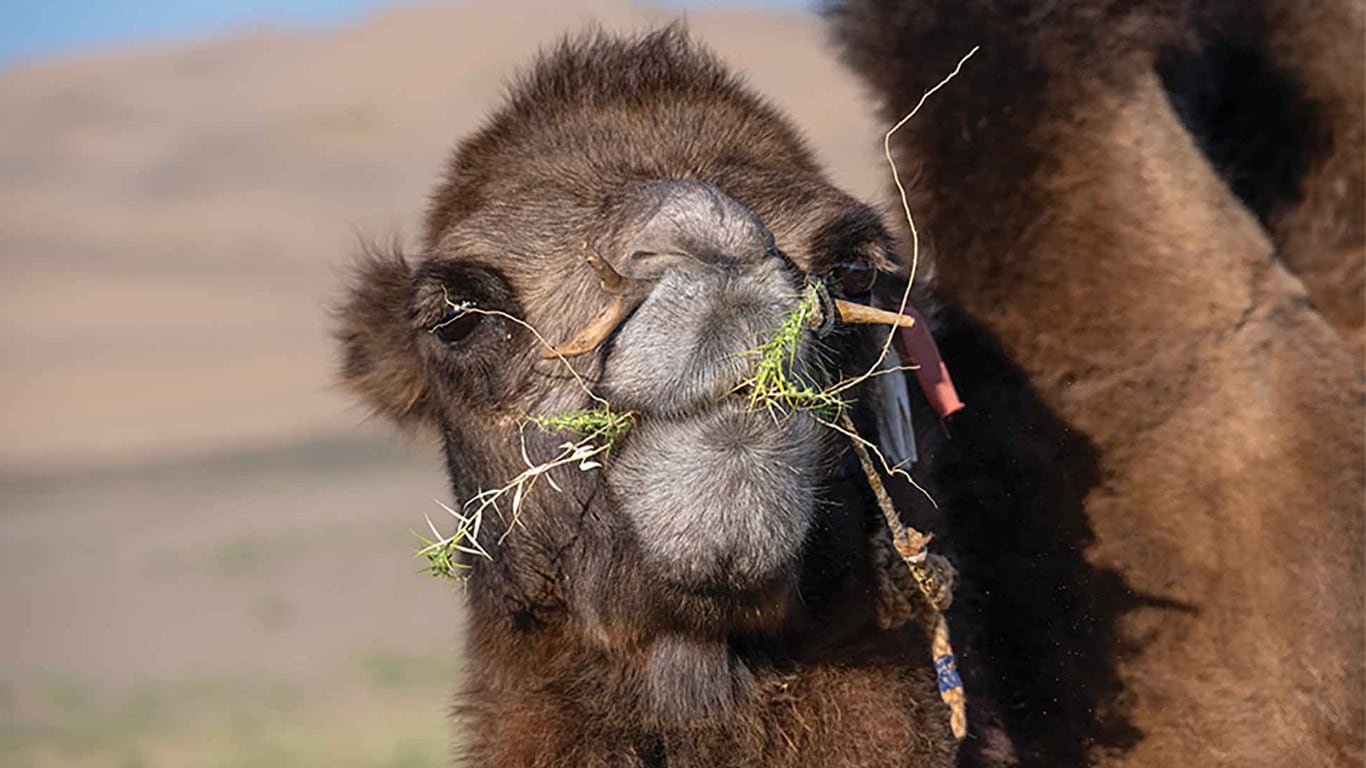
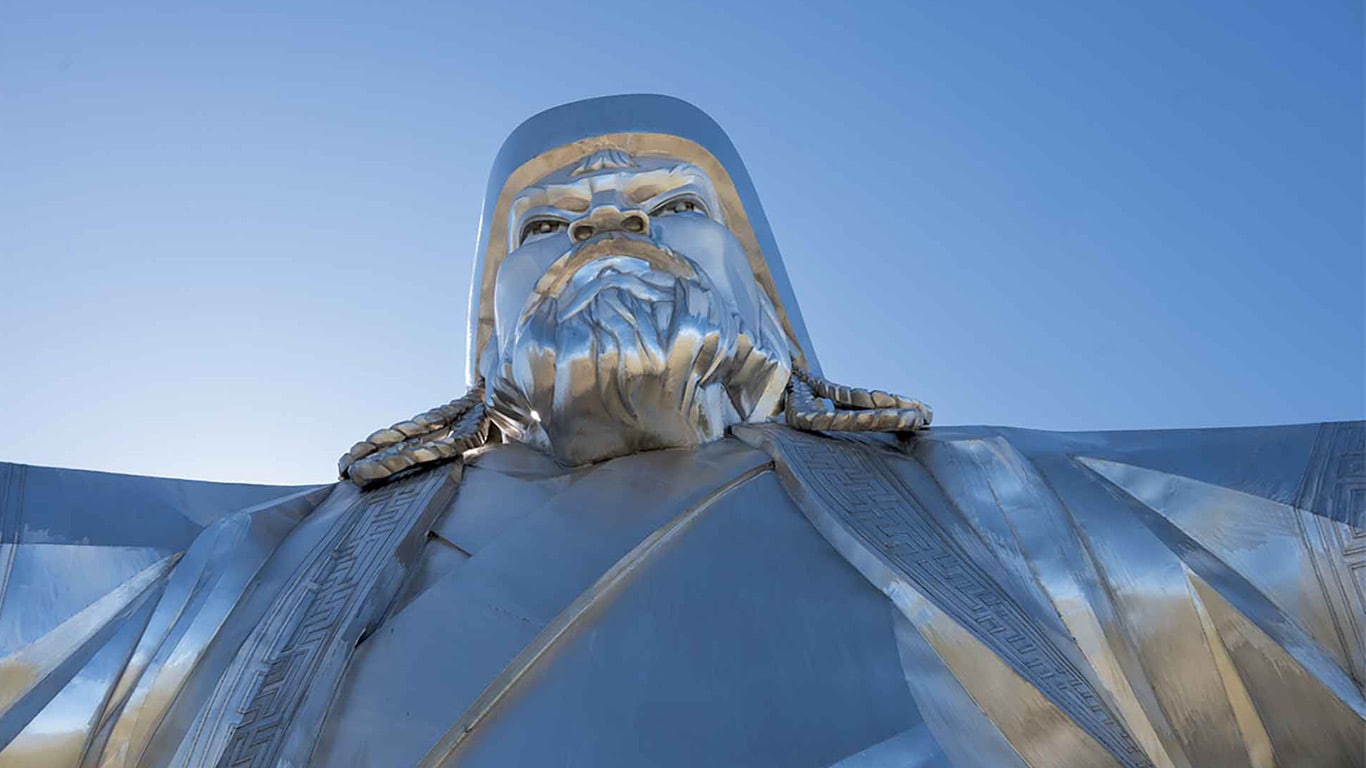
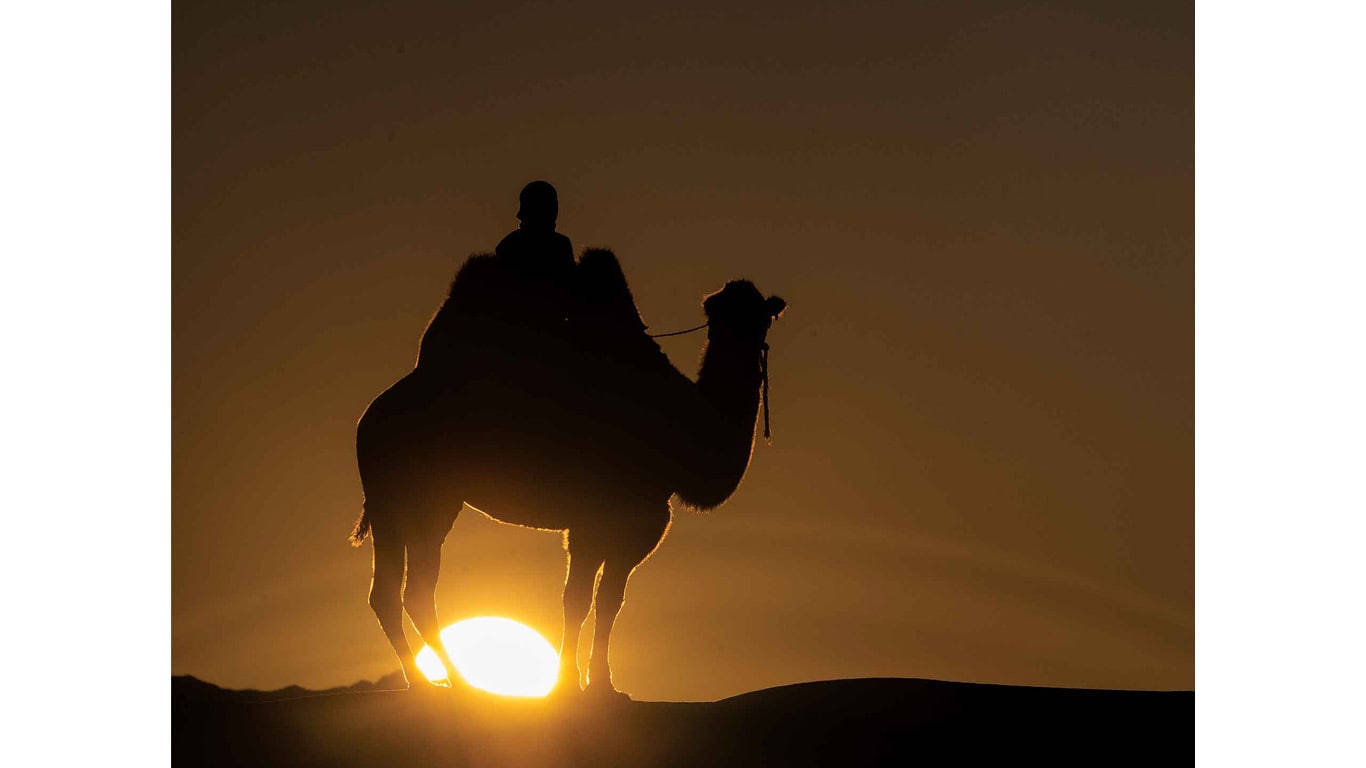
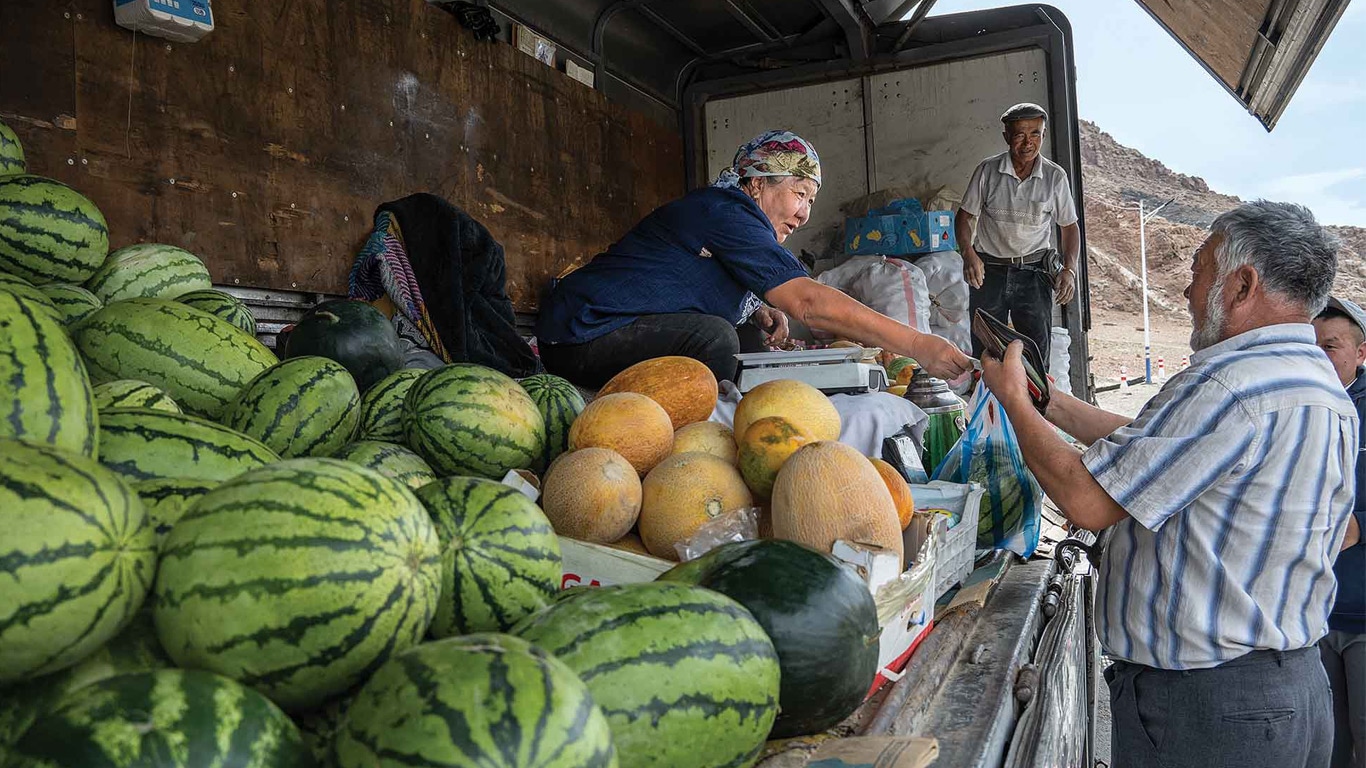
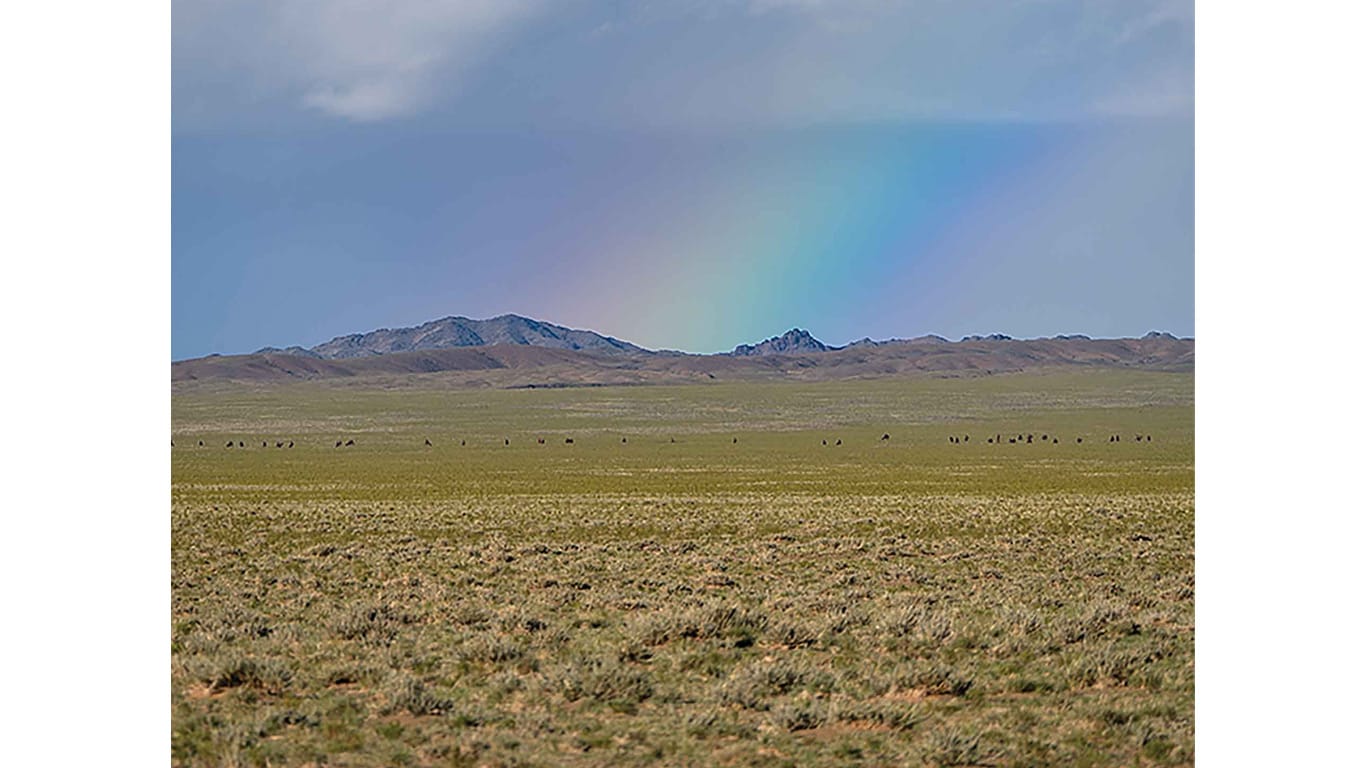
Above. This family's ger is decorated with Buddhist motifs. Two people can assemble it in about 2 hours. Undraa Ria's grandparents were nomads; she grew up in a small Gobi city. Mongolian men greet each other by exchanging snuff bottles. Camels thrive on thorny scrub and withstand -40 degree winters in the Gobi Desert. Chinggis Khan united warring clans to create a Mongol empire. Urangoo and her camel watch sunrise on the Khongor Dunes. Shaimurat buys fruit on the roadside. Though Mongolia has virtually no cropland and little farming culture, sweet, local melons are prized. The Gobi Desert is beautiful but harsh, with blazing summers and frigid winters.
Overstocked. Canadian cattleman Graeme Finn of Southern Cross Livestock in Madden, Alberta, has visited northern Mongolia 7 times in the past 3 years to advise nomads on improving their beef herds and reducing overgrazing. He is a contractor on a project run jointly by the Mongolian Department of Agriculture and Global Affairs Canada.
"We've got to get them higher than a 40% conception rate and 30% survival rate for calves," Finn says of the northern cattle he works with. He and his colleagues are also trying to convince the nomads to thin their horse herds—not a small ask in a culture where wealth is counted in horses.
Finn says a new nomad cooperative can help popularize better beef genetics, encourage less aggressive grazing, and maybe even fence off winter pastures so herders can adopt fodder stockpiling strategies. They are also trying to build markets for better beef by selling to the gold and coal mining companies that are driving Mongolia's economic boom. Ultimately, higher quality could boost the value of Mongolia's nascent meat exports to neighboring countries and the Middle East.
Unfortunately, he adds, the traditional lack of land ownership—and lack of fences—inhibit the conservation mindset.
"Guys who are trying to do a good job move off the land, and somebody moves in and eats up whatever he left," Finn notes.
Five hundred miles to the south is the Soviet-built city of Dalandzadgad, which, like other regional Mongolian cities, looks like it's just waiting for the next brutal winter to blast in. A few hours of tough, roadless desert driving from there are the Gobi Desert's Khongor Sand Dunes. In the dunes' shadow, a Mongol nomad couple named Zorigoo and Urangoo put some of their 100 camels to work carrying tourists on rides. They also run a shop and ger camp.
While Zorigoo and Urangoo work together through the summer, many other nomad families spend much of the year apart. At 6 years old, children move with their mothers to a village or town to go to school. Men mind the herds out on the steppes or up in the mountains until they come into town to weather the winter.
The men are not completely isolated during the grazing season, though. The countryside is dotted with small community centers for nomad clans where herders gather for celebrations, political speeches, and games or festivals. There's also a police officer and a doctor based in every community center, each dedicated to the clan. In some areas, short rows of abandoned-looking block or log buildings come to life in the summer as pop-up village shops.
Meander. Visitors are welcome, and gers always have a teapot on to entertain guests. Sometimes those guests are teenage boys approaching marrying age. Undraa, the guide, says they are officially "looking for their goats," but they're really trying to meet the neighbors' daughters. Once they spot a girl they want to court, they will come back for months to help her and her family with milking and chores.
So it has gone for generations—at least since Chinggis Khan forbade nomadic clans to steal each others' brides over 800 years ago as he forged disparate clans of wanderers into a nation and an empire. And as long as eagles glide on the wind, camels look side-eyed at passing trucks, and herds of sturdy horses run across the thin grasslands, so it continues on the Mongolian plain. ‡
More articles related to:
Read More of The Furrow
AGRICULTURE, FARM OPERATION
Grass Roots
Turfgrass sets the tone for this Missouri farmer.
AGRICULTURE, SPECIALITY/NICHE
A Sea-Swept Cheese
Cheesemaker finds success among the seals.