 A John Deere Publication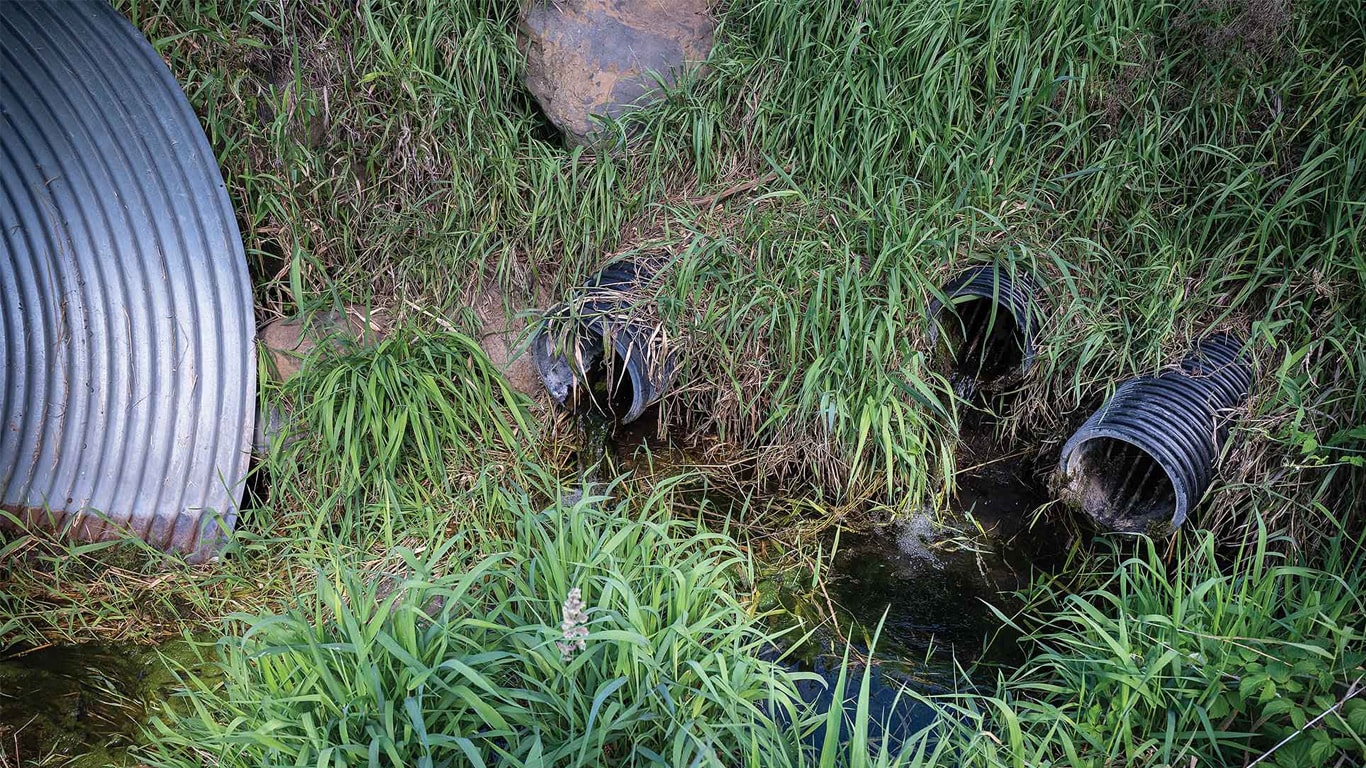
For nearly a decade, farmers in north-central Illinois have been testing the water flowing out of their field tile.
Agriculture, Education March 01, 2026
Testing the Waters
Bureau County farmers take control of their nitrate narrative.
Story and Photos by Katie Knapp
The blue bucket in Brian Joehl's freezer doesn't look like much, but it represents a wake-up call that changed how he farms.
After a four-inch rain in 2017 washed 30 to 40 pounds of nitrogen through his tile lines, Joehl and his brother switched from fall anhydrous applications to split applications.
"It prompted us—we knew we had to change our practice," says the Princeton, Ill., farmer.
Joehl had this data immediately after that heavy rain because he's part of a group of Bureau County farmers who has spent nearly a decade collecting their own data rather than waiting for someone else to tell them what is in their water.
Back in 2015, Alan Madison, a Walnut, Ill., farmer and retired NRCS director, had grown frustrated with the finger-pointing. "There was a lot of rhetoric in the news about how farmers were putting all this nitrate in the tile water, that we were the ones causing all the problems," he recalls.
Rather than wait for regulations or defend against accusations, Madison rallied fellow farmers. "Let's monitor our water and see," he told them.
Every week since the rallying cry, all year round, a group of about 15 farmers collected water samples from their tile outlets—creating a data set that's teaching them things they never expected.
"What we didn't know was that after soybean harvest you get a large flush," Chris Von Holten explains. "A lot of the nitrogen released from the dead roots goes in the ground, but unless there is something else growing there to capture it, it gets flushed out."
Now he tries to get his cover crops seeded as quickly as possible in the fall.
"We apply some into standing corn, and then plant the soybean fields after harvest is complete. We still might lose some nitrogen if there's a lot of rain in October, but we are going to capture more than we used to," he says.
The weekly commitment of trudging out into waterways and filling the freezer with buckets eventually reduced the group to a dedicated core. "You had to sample after heavy rain events," says Madison. "It was a lot of effort. Some guys dropped out."
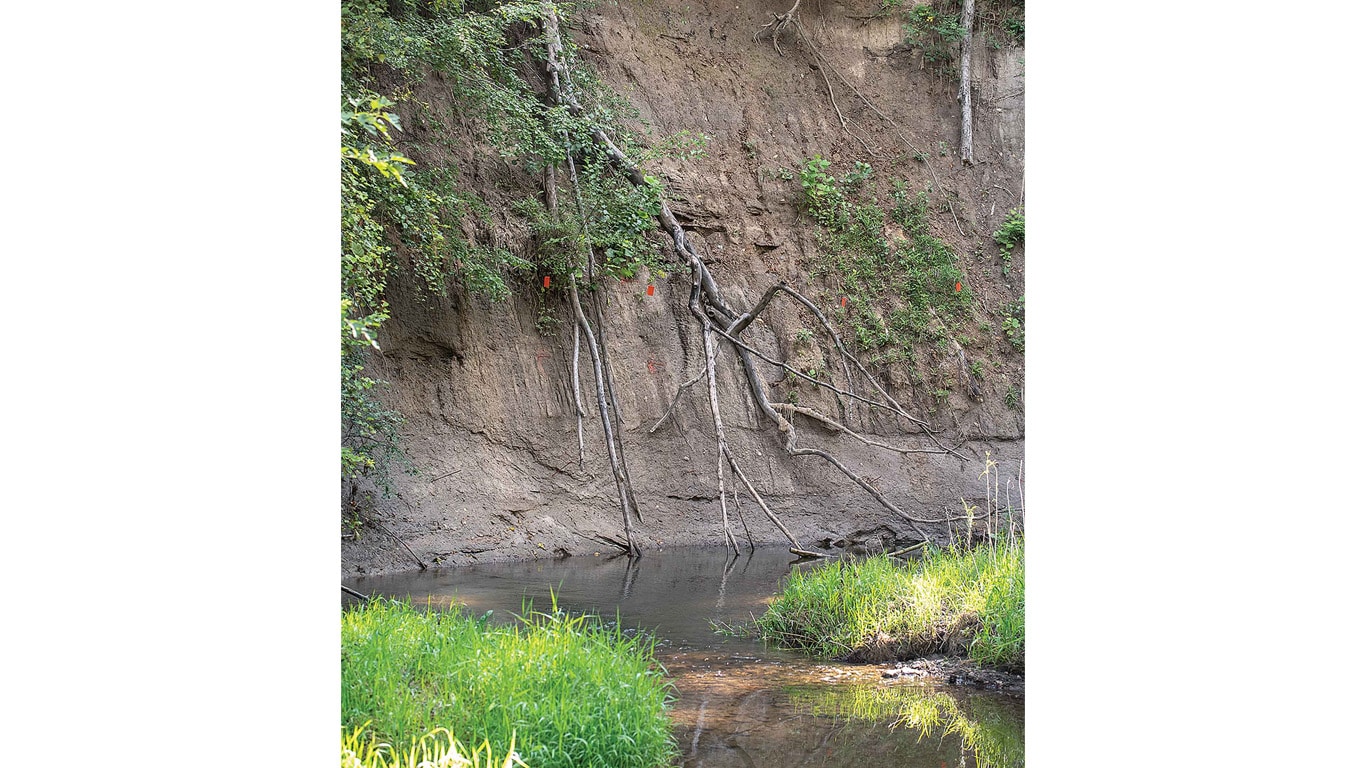
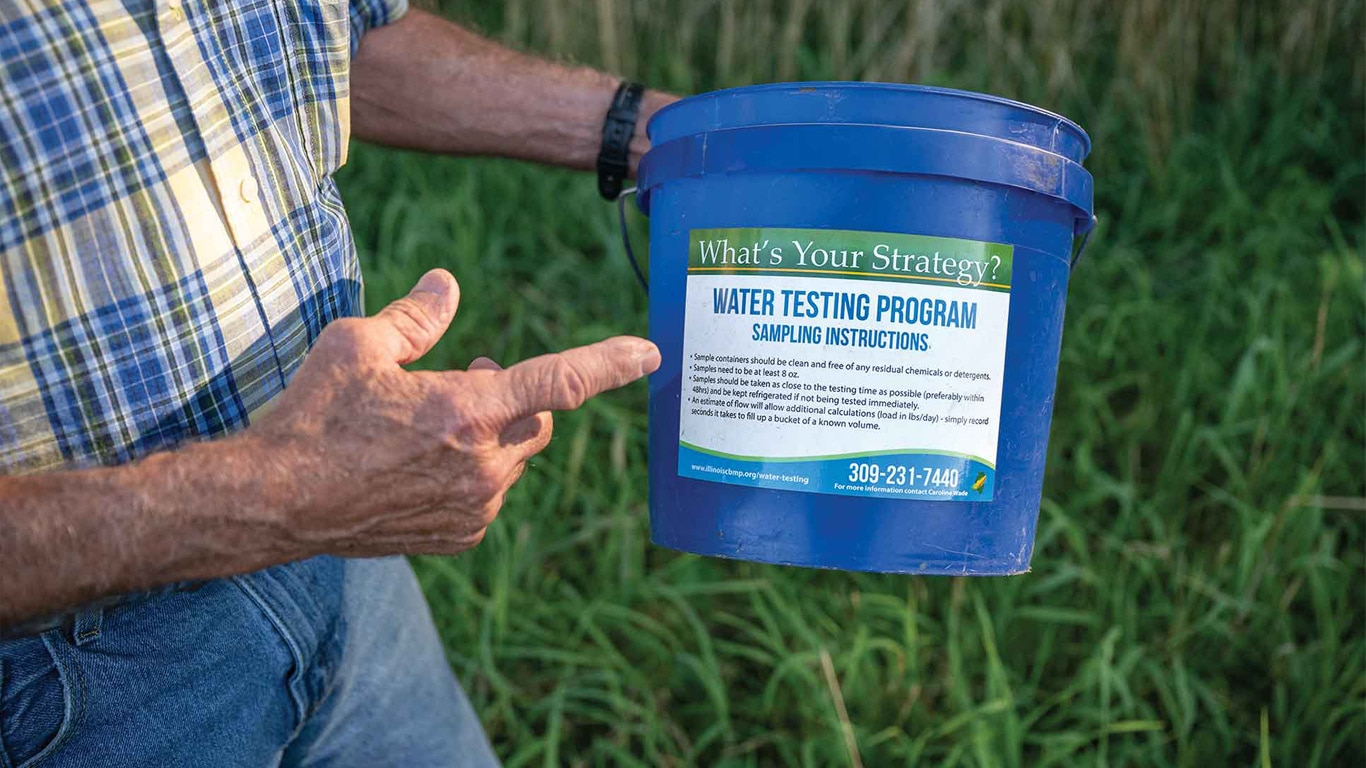
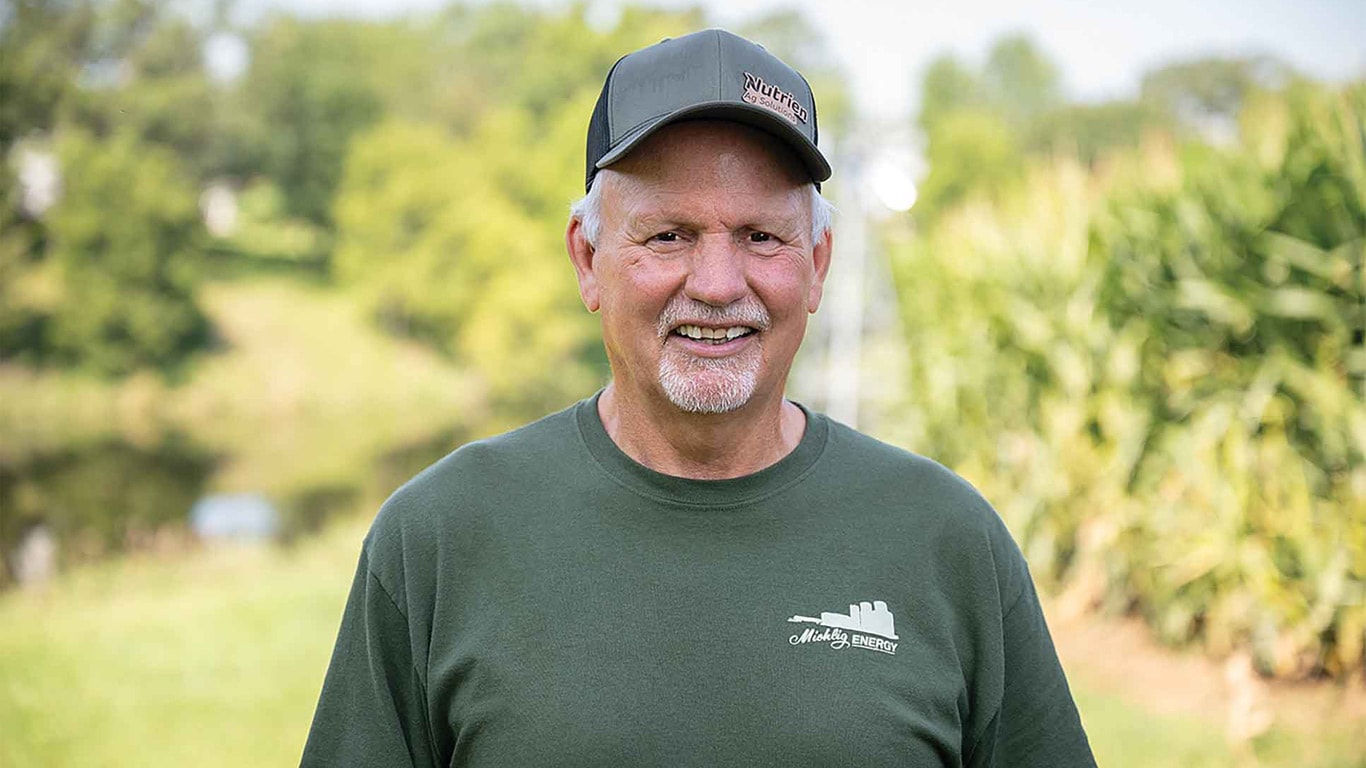
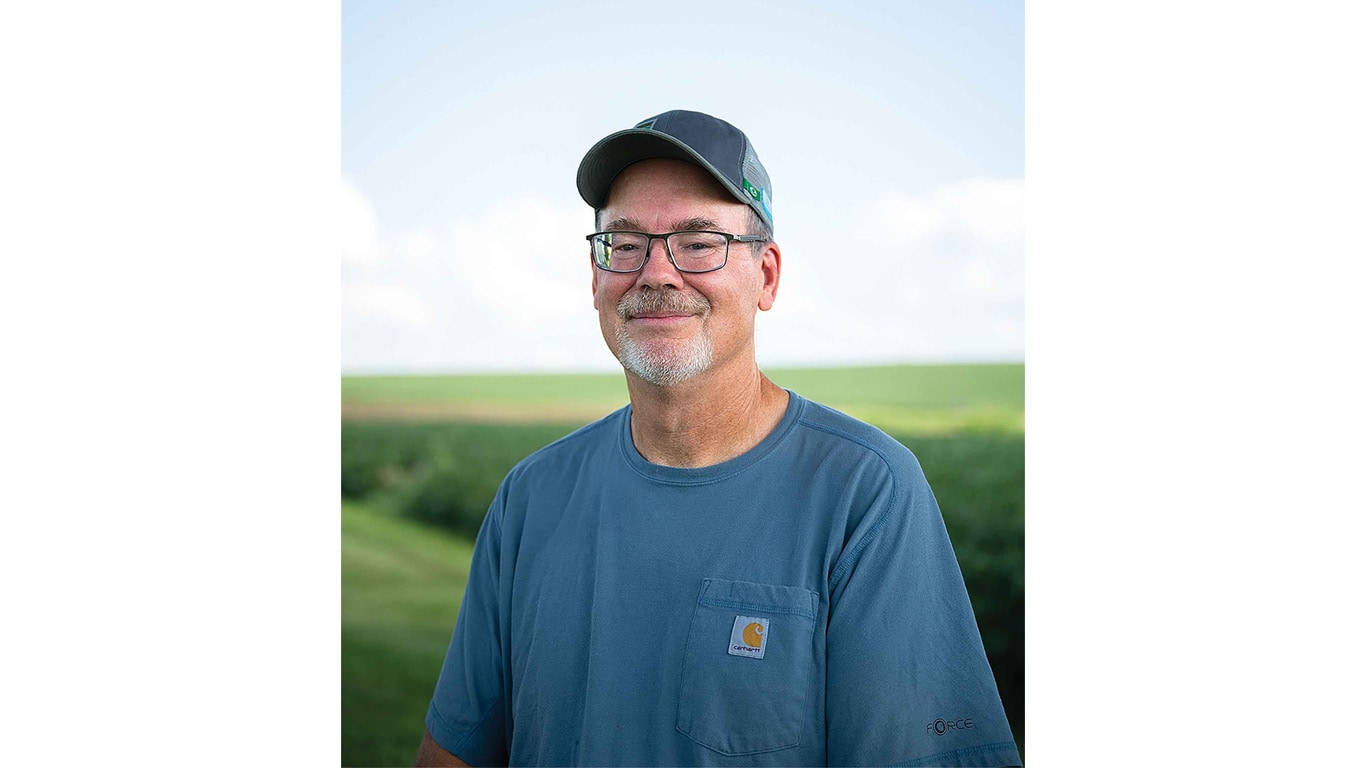

Above. Before recently installing automatic sensors, they would collect samples in small buckets each week and after heavy rain events. They are also now monitoring stream bank erosion. Brian Joehl, Chris Von Holten, and Alan Madison are among the farmers who started the project.
But gathering data was only half the battle.
After struggling with a private consulting firm that didn't deliver what the farmers had hoped, the group partnered with the University of Illinois in 2021.
They also gathered funding from Illinois Nutrient Research & Education Council, Farm Bureau, commodity organizations, ag retailers, and their own pockets to automate the data collection.
Now, solar-powered sensors do the work of the bucket brigade. Each farmer has installed monitors at their tile outlets to measure both nitrates and phosphorus continuously. The group is currently monitoring nine fields, about 400 tile-drained acres in total. They also have added stream bank erosion monitors.
Dr. Andrew Margenot, the University of Illinois soil scientist who now helps analyze the group's data is extremely optimistic about the project.
"Nobody else is doing a project like this, and yet this is exactly the type of farm-scale research we need more of," Margenot explains. "It shows how complex the system is to both the farmer and hopefully the non-farming public, too. And, it is completely farmer-led."
Three more years of data collection should yield actionable recommendations, according to Margenot and his team.
Meanwhile, more neighbors are asking questions at the coffee shop and adopting cover crops.
"I don't try to push it, just lead by example, but the word is out," says Von Holten. ‡
More articles related to:
Read More of The Furrow
AGRICULTURE, SPECIALTY/NICHE
Haskap Pioneer
Finding a footing for berries in Montana.
AGRICULTURE, LIVESTOCK/POULTRY
Passing the Torch
Diversified farm prepares for transition.