 A John Deere Publication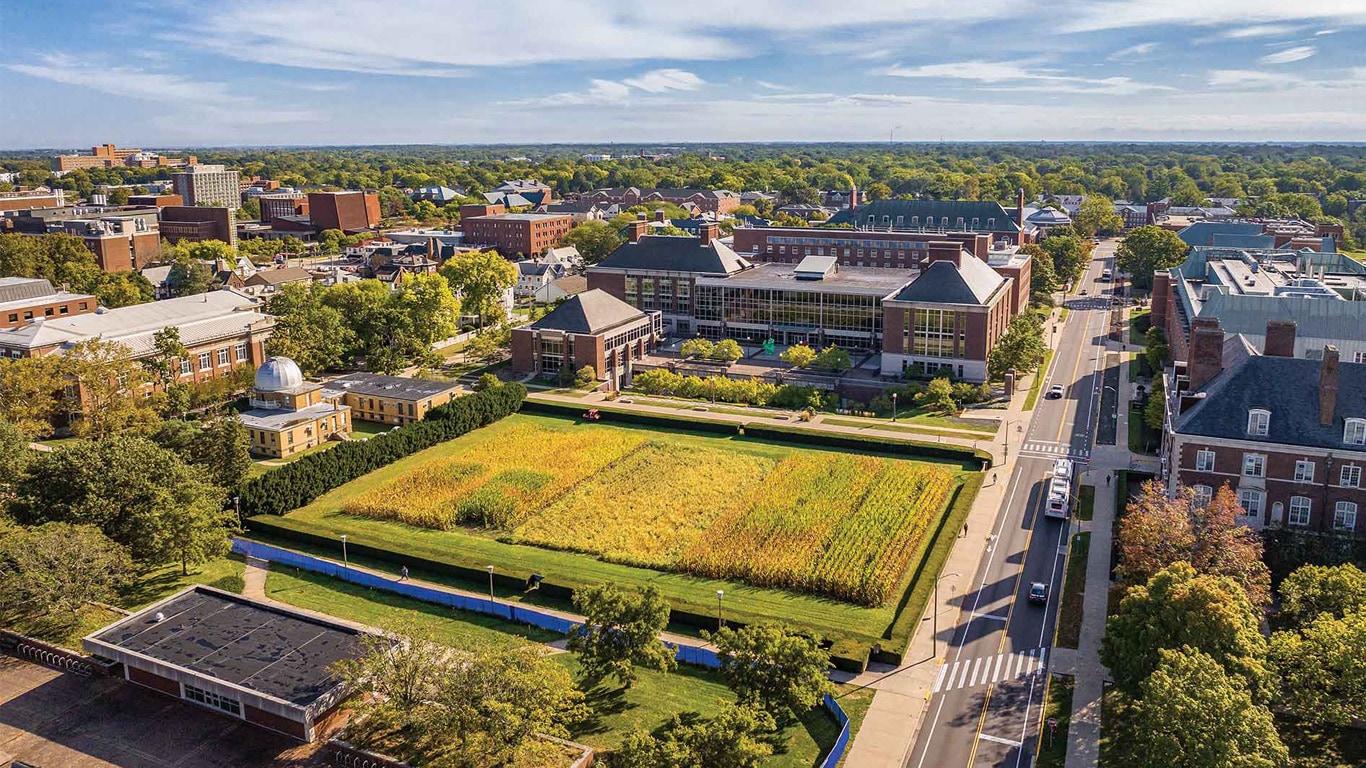
Campus has grown up around the plots. What was originally five acres is now one encased by troublesome hedges. (Photo provided by the University of Illinois Urbana-Champaign)
Agriculture, Education March 01, 2026
No Shade Allowed
America's oldest test plots prepare for their next chapter.
Story and Photos by Katie Knapp
"No sir we don't mess around, our library's underground. 'Cause you can't throw shade on the corn.''
These words finish the chorus of the University of Illinois a cappella group The Other Guys' famous song about a corn field in the center of campus.
It's no ordinary corn field next to no ordinary library building.
Legend has it that the library was built underground in the 1960s to not shade out the field. University documents suggest it was for aesthetics, but mission accomplished either way.
The design has preserved the most important one-acre corn field in the western hemisphere.
The Morrow Plots were started 150 years ago as a five-acre research field near the agricultural buildings. The section remaining today has one plot with corn grown continuously each year since then, another in a corn/soybean rotation, and a third in a small grains/soybean/corn rotation.
The Morrow Plots' longevity is second only to that at Rothamsted Research in England where winter wheat has been studied consistently since 1843.
''If I could go back and talk to the researchers who started the Morrow Plots in 1876, I'd first thank them,'' says Crop Sciences Department Head Dr. Adam Davis. ''They were asking decadal questions, questions fundamental to crop production in Illinois.''
''One of the big lessons from the Morrow Plots is that you have to take care of your soil. If you mine your soil, you end up with corn cobs about that big,'' he says picking up an ear from last year's harvest dwarfed by his hand and with only a few yellow kernels. ''If you feed your soil, you can end up with really good yields and sustainable crop production.''
Presumably this was the original hypothesis.
On the original agriculture building dedicated in 1901, just steps from the field, the words of then University President Andrew Sloan Draper are etched along the entrance: ''The wealth of Illinois is in her soil and her strength lies in its intelligent development.''
Davis calls the field a living monument. And the University is rightfully celebrating it, now protected as a National Historic Landmark, this fall.
First thing's first, though. They must take care of a squirrel problem.
As campus grew up around the Morrow Plots, so did the shrubs around them. Unfortunately, the many squirrels living in these bushes treat the plots as their personal buffet all season long.
In honor of the past 150 years and to ensure the research continues for another, Bayer's Crop Science division has funded a renovation project that includes replacing the hedges with a fence.
''We want to make the plots visible from all directions and highlight them as the crown jewel they are,'' Davis explains.
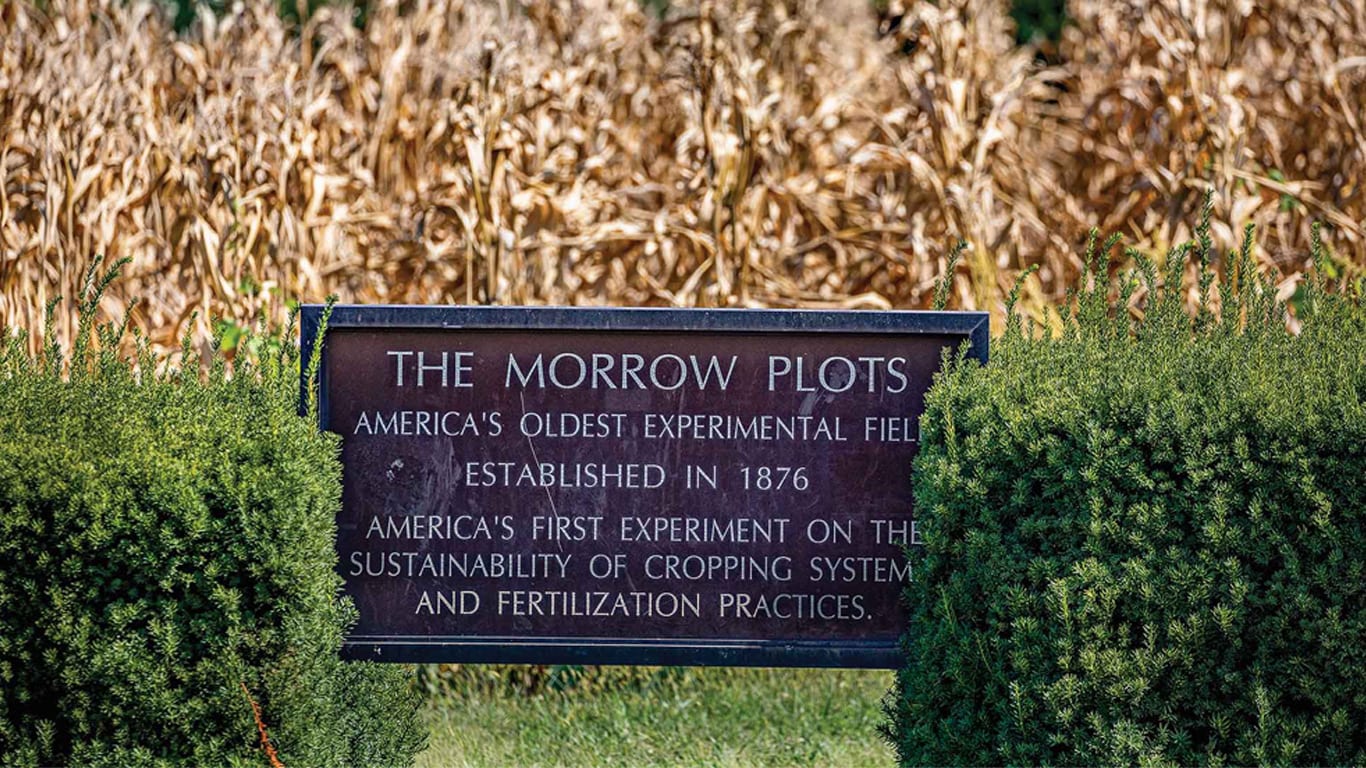
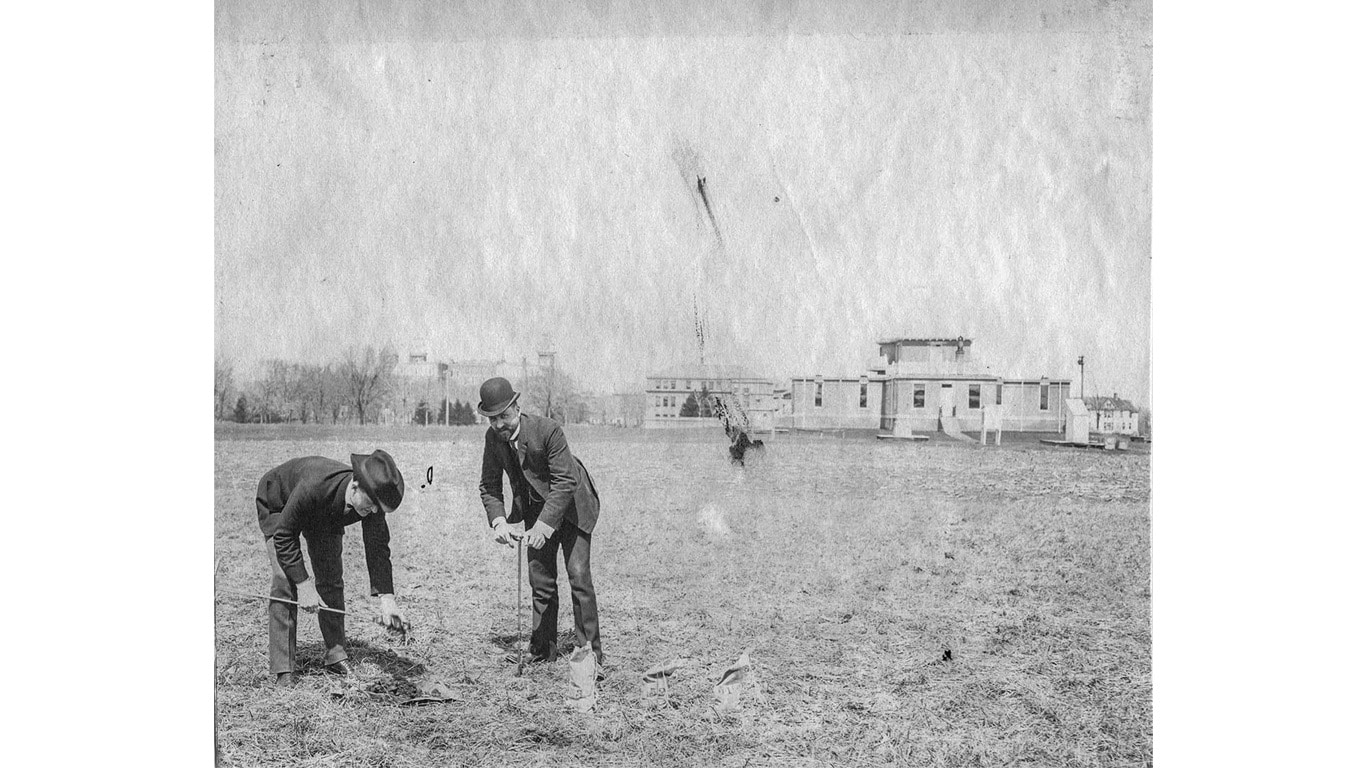
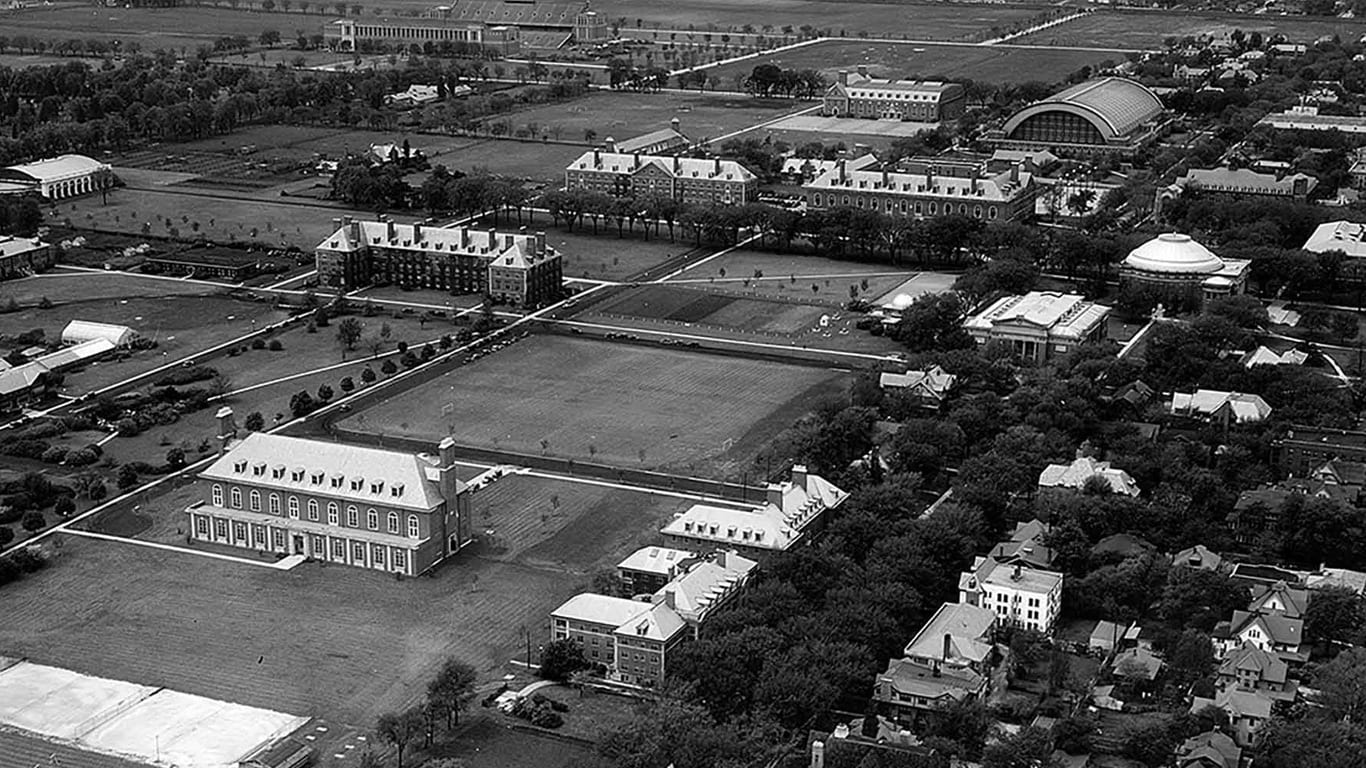
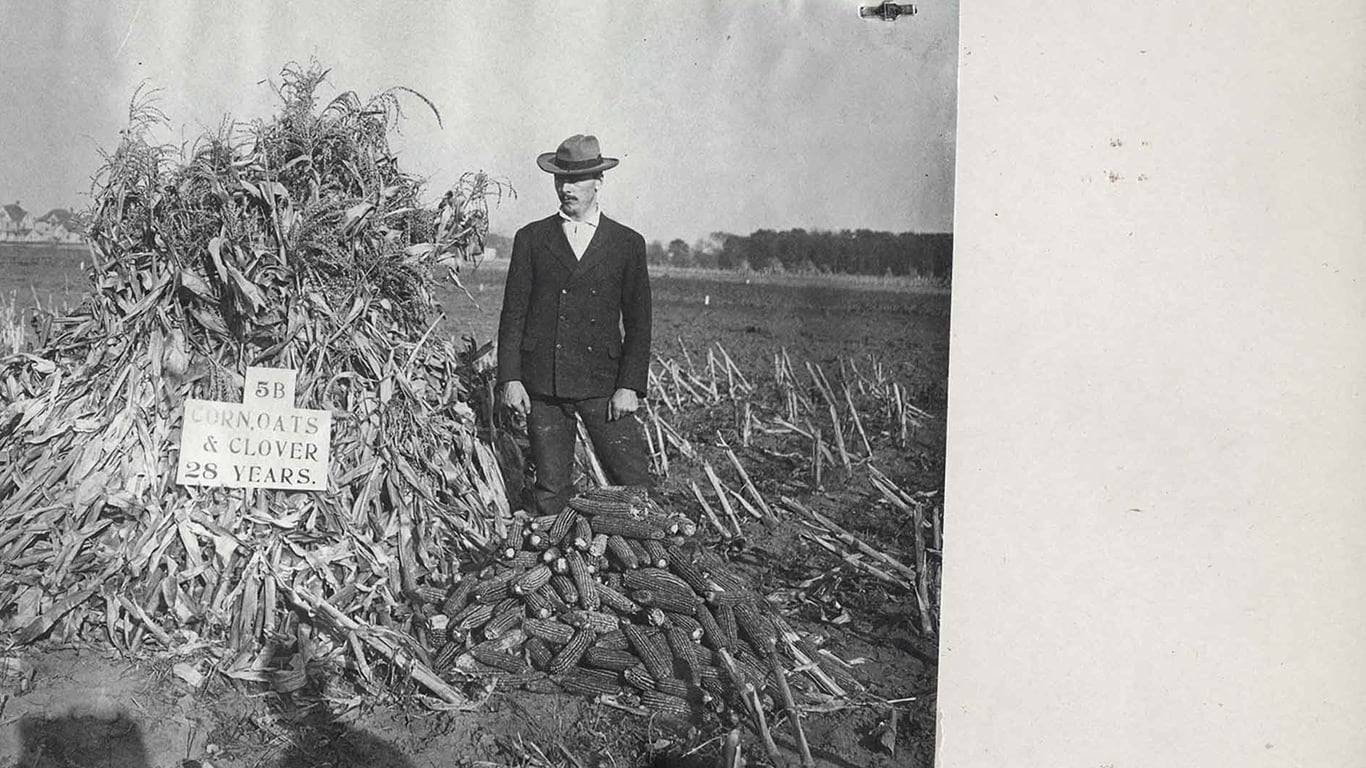
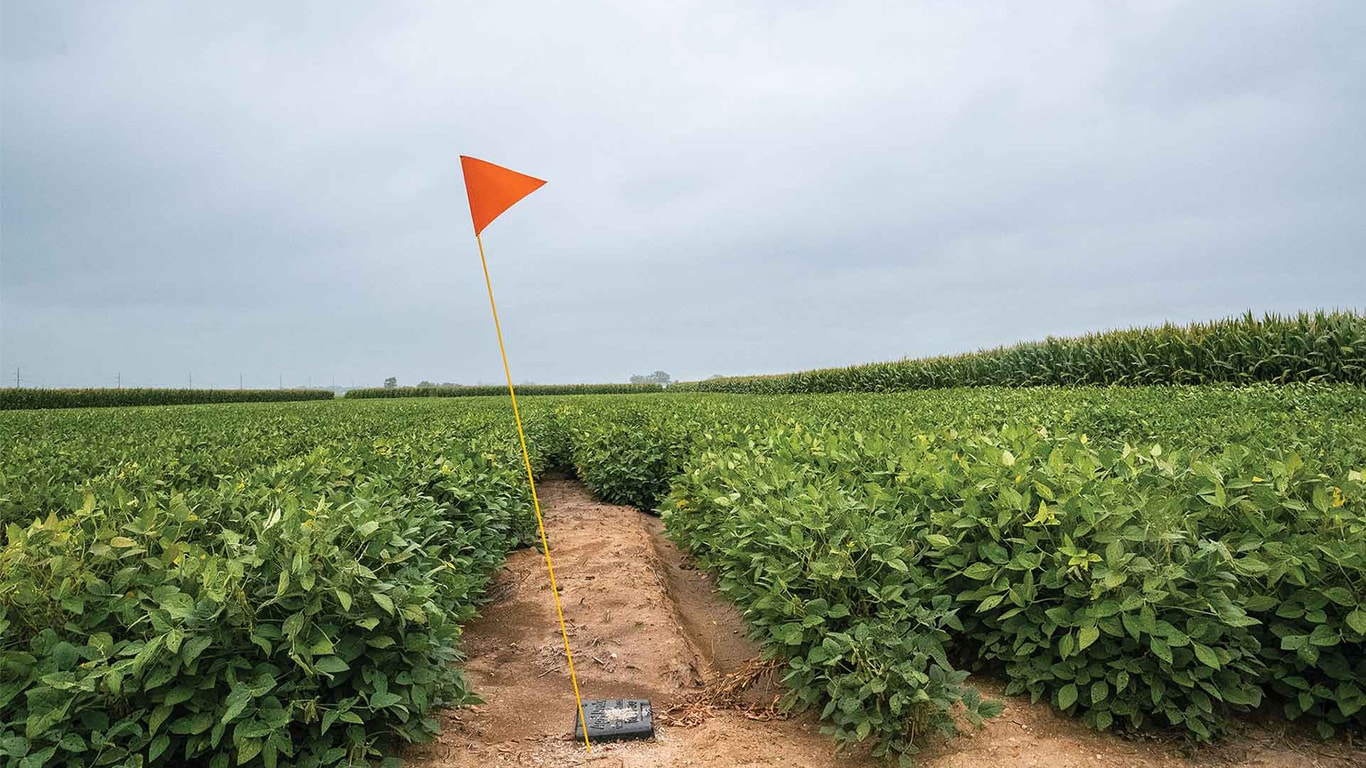
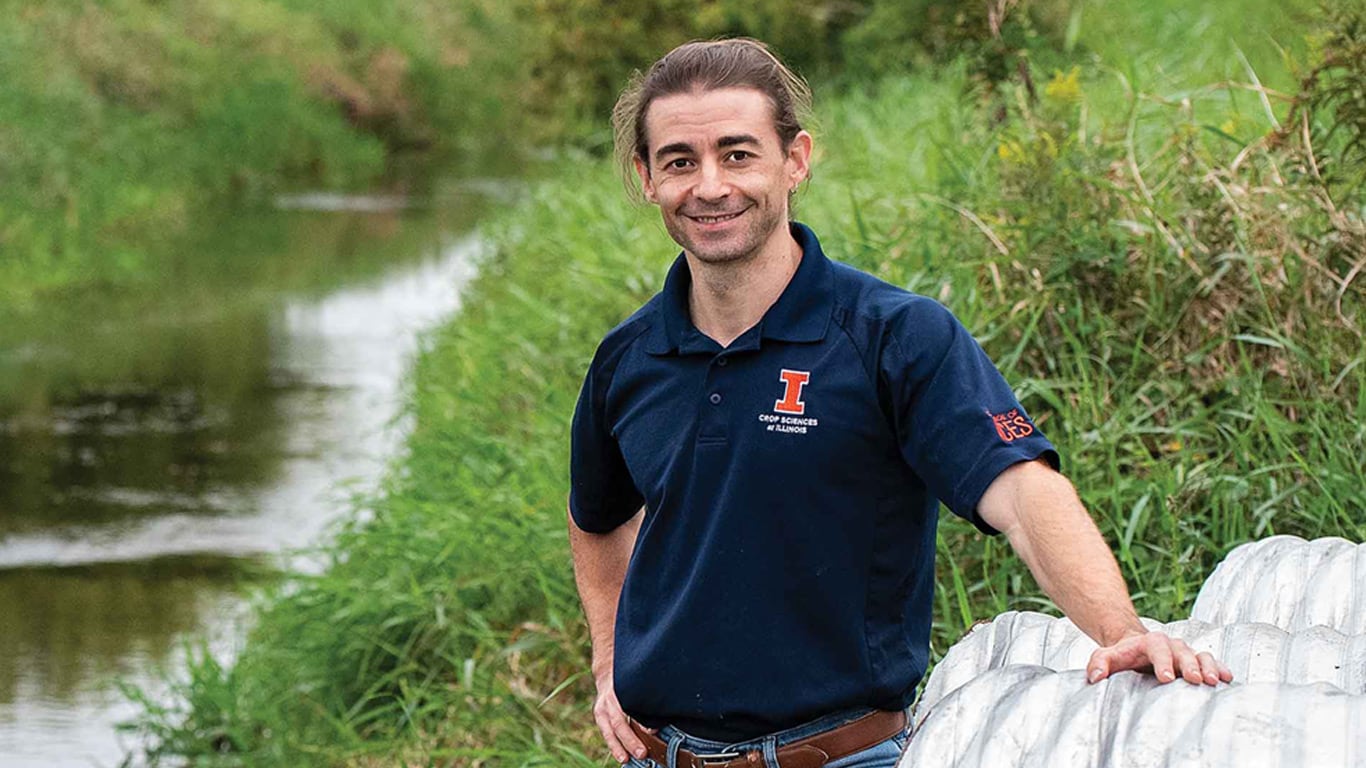
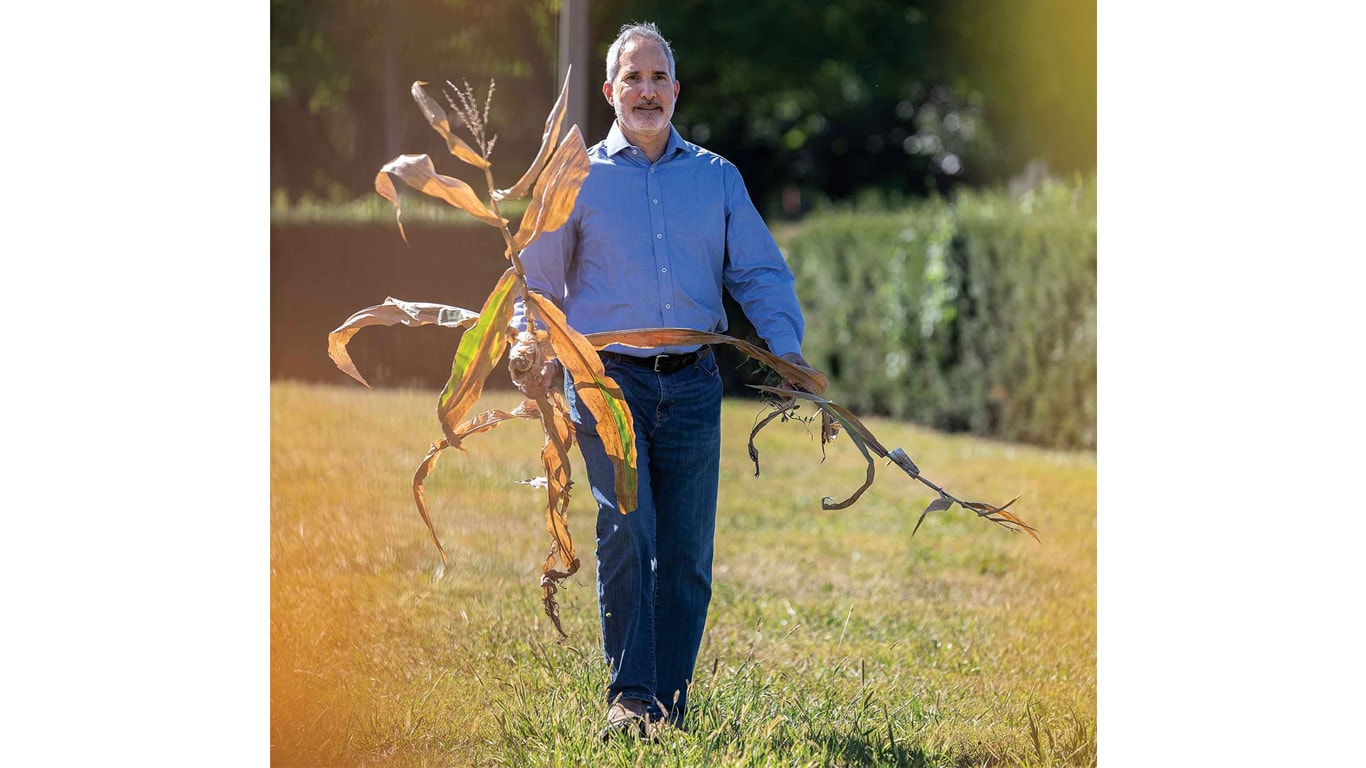
Above. The Morrow Plots, named after the first agriculture dean of the University of Illinois, have been used to study soil fertility when raising corn for 150 years. Researchers took soil samples in April 1904 and then gathered yield data that October. Buildings began encroaching on the plots by 1935 (Archival photos provided by the University of Illinois Urbana-Champaign). Dr. Andrew Margenot shows off the individually tiled sections of the new Alma Mater Plots south of campus. Dr. Adam Davis pulls two stalks from the 2025 crop to illustrate the stark yield difference between mining and feeding the soil.
The next chapter. ''The original purpose of a land-grant institution was pretty clear—technical education—but now farmers have their own agronomists, and the ag industry is highly developed,'' Davis explains. ''Where we fit in now is with timelines absolutely unavailable to other parts of the ag sector. We can look at long-term trends within the changing environment, changing society, and changing economy.''
Davis and his soil science colleague Dr. Andrew Margenot, who runs the Morrow Plots, have been asking farmers what they want to know and what they want their descendants to know in another 150 years.
The common threads are making the on-campus research more visible and applicable for farmers with increased scale. The seemingly simplistic change from hedges to a fence, adding a live webcam, and posting the data online are this year's musts. But the team is also adding a new field to the project.
''We see the new 55-acre Alma Mater Plots south of campus as a satellite of the Morrow Plots,'' explains Margenot.
In the 64 additional, individually tiled plots, they can better study trade-offs between yields and other performance dimensions with the goal to find more overall value for farmers.
The renovations and new plots will be unveiled on October 28, 2026, followed by an academic symposium. It's still undecided if The Other Guys will serenade the ribbon cutting. ‡
More articles related to:
Read More of The Furrow
AGRICULTURE, AG TECH
Tech@Work
Farming Smarter with John Deere Rate Controller 3.
AGRICULTURE, FARM OPERATION
Grass Roots
Turfgrass sets the tone for this Missouri farmer.