 A John Deere Publication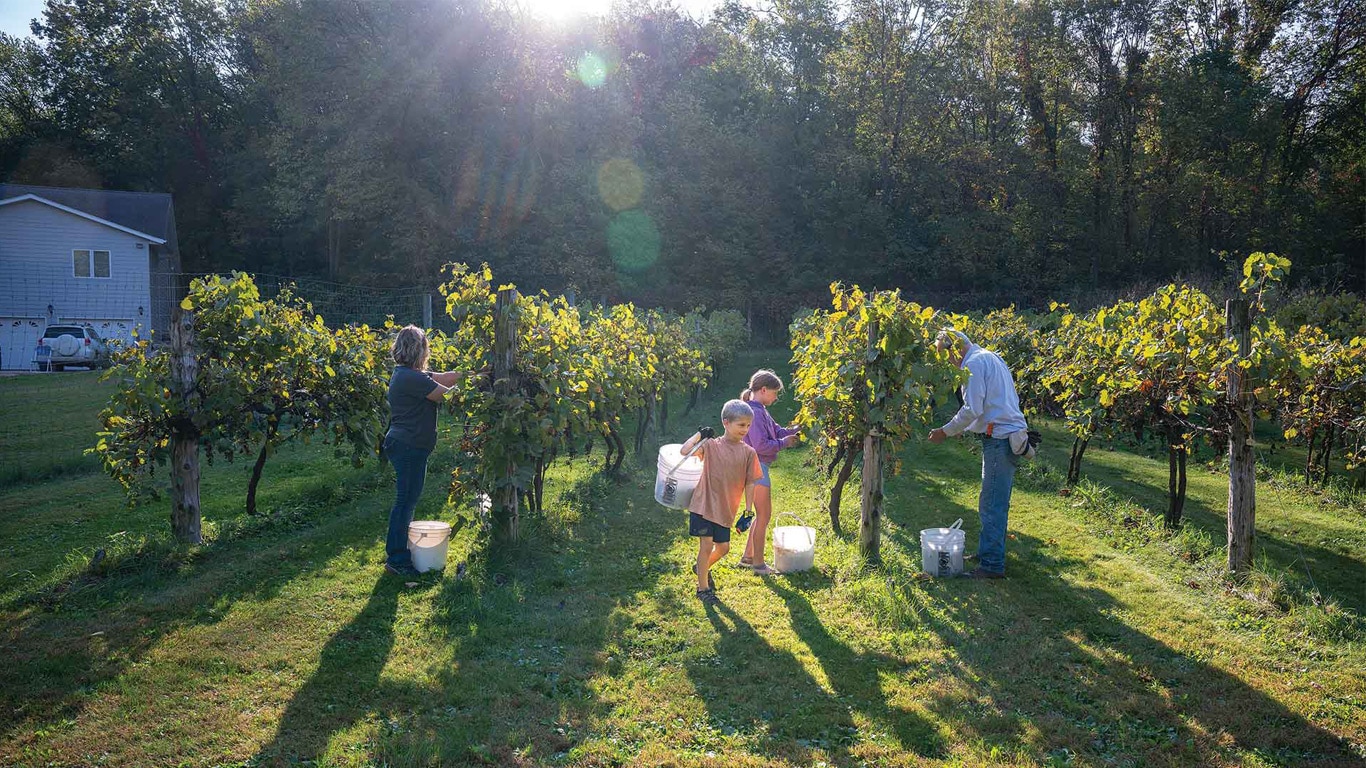
After challenging weather all year long, the Schloesser family harvests what remains of their 2025 Frontenac gris grape crop. Brad (right), grandchildren Ava and Isaiah Yost (center), LuAnn (behind the vineyard’s namesake cedar post), and daughter Jessica Yost (left).
Agriculture, Specialty/Niche March 01, 2026
Juicy Front Yard
Finding a wild vine led to a family project.
Story and Photos by Katie Knapp
"That's the lesson here—always be connected to the vine. Amen."
Brad Schloesser, of Saint Peter, Minn., delivers this observation while he and his wife, daughter, and grandchildren pick grapes in the family vineyard right outside his front door. They were slowly filling their buckets with whatever clusters the insects and weather have left behind.
It's a lesson 18 years in the making, born from a son-in-law's discovery of wild grapes and shaped by polar vortexes, market crashes, and the realities of farming in a changing world.
The story started when Charlie Yost was house-sitting at Brad and LuAnn's 150-acre property, and he found wild grapes growing in the timber.
By the time Schloessers returned from visiting another daughter in Texas, their son-in-law Charlie was buzzing with plans. "We're gonna make some grape juice. We're gonna make some wine," he told everyone.
Cedar Post Vineyard was born.
Brad, an ag teacher at the time, joined the Minnesota Grape Growers Association and ordered 325 bare-root vines: 100 Frontenac gris, 125 La Crescent, and 100 Marquette (all cold-hardy varieties suited for southern Minnesota's emerging viticulture scene). Then he cleared a flat section opposite the sheep pasture of their otherwise wooded property.
They fenced in the vines and watered each weekly.
Three years later, when the first fruit appeared, deer ate every cluster overnight.
"I mowed one day, and the next day I was looking and, like, all the clusters were gone," Brad recalls. Their 48-inch fence was too short.
They also quickly learned the black walnut trees bordering the new vineyard had to be cleared. "When they drop their nuts, it's like a herbicide," Brad explains. The vines in that corner struggled.
But the Schloessers persisted.
A 96-inch fence went up, the sheep occasionally grazed the grass in between the rows, and for the next decade, everything just clicked.
The microclimate created by the remaining timber protected the vines from wind burn and sun scald while providing a snow blanket in winter. A winery opened just three miles up the road and became their buyer.
In peak years, 20 family members and friends would harvest 4,000 to 5,000 pounds of grapes.
"It was really a special experience," Brad says with a pause.
Recalling memories of dirty, sticky hands and sore backs amongst all the fellowship took him momentarily away from the abysmal 2025 harvest he and just a few family members were attempting to collect on that oddly hot and buggy October day.
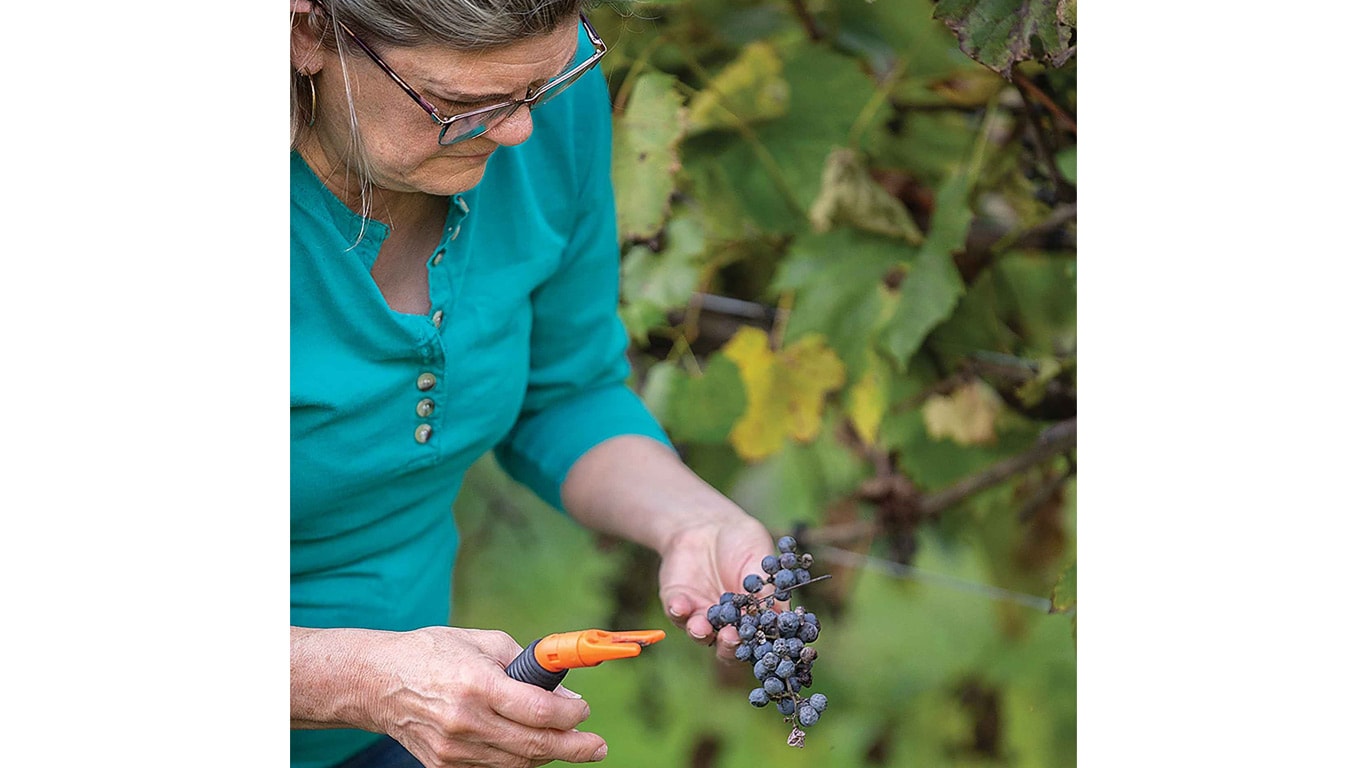
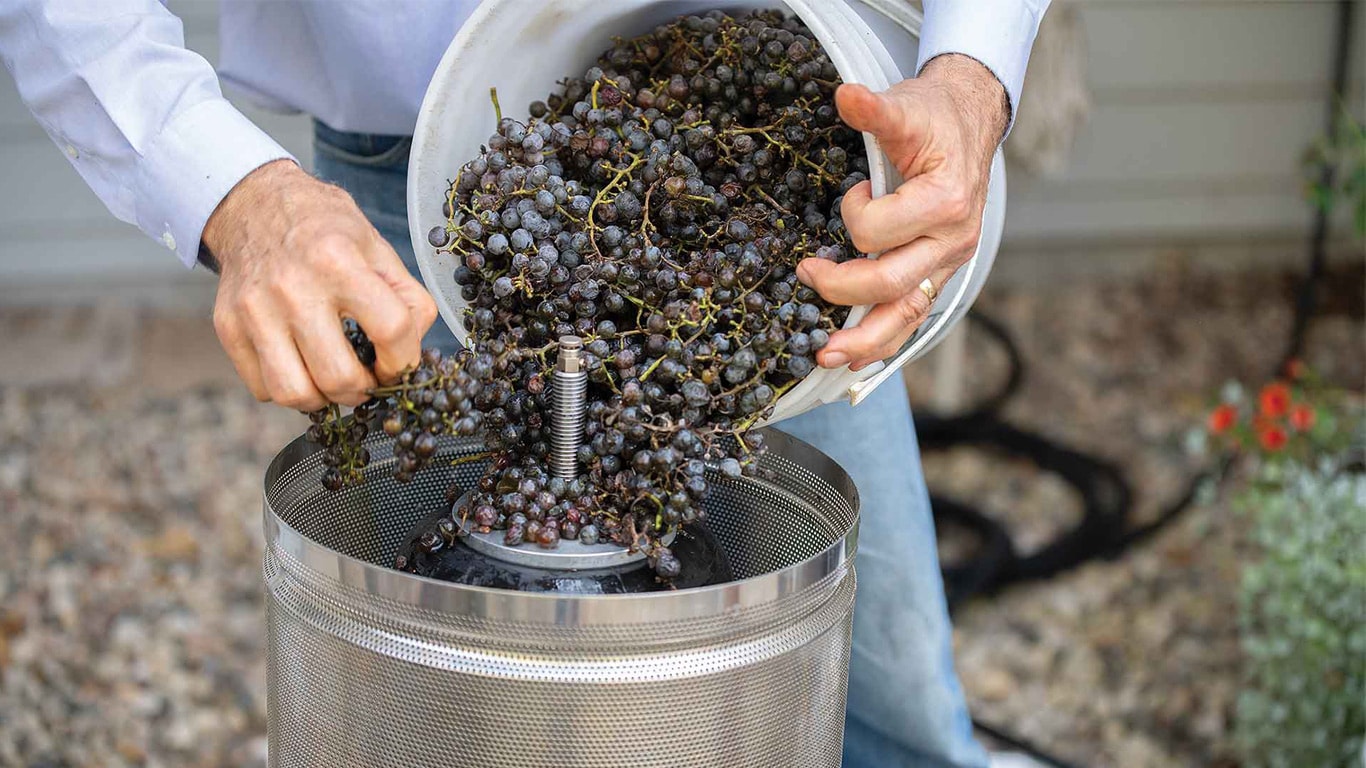
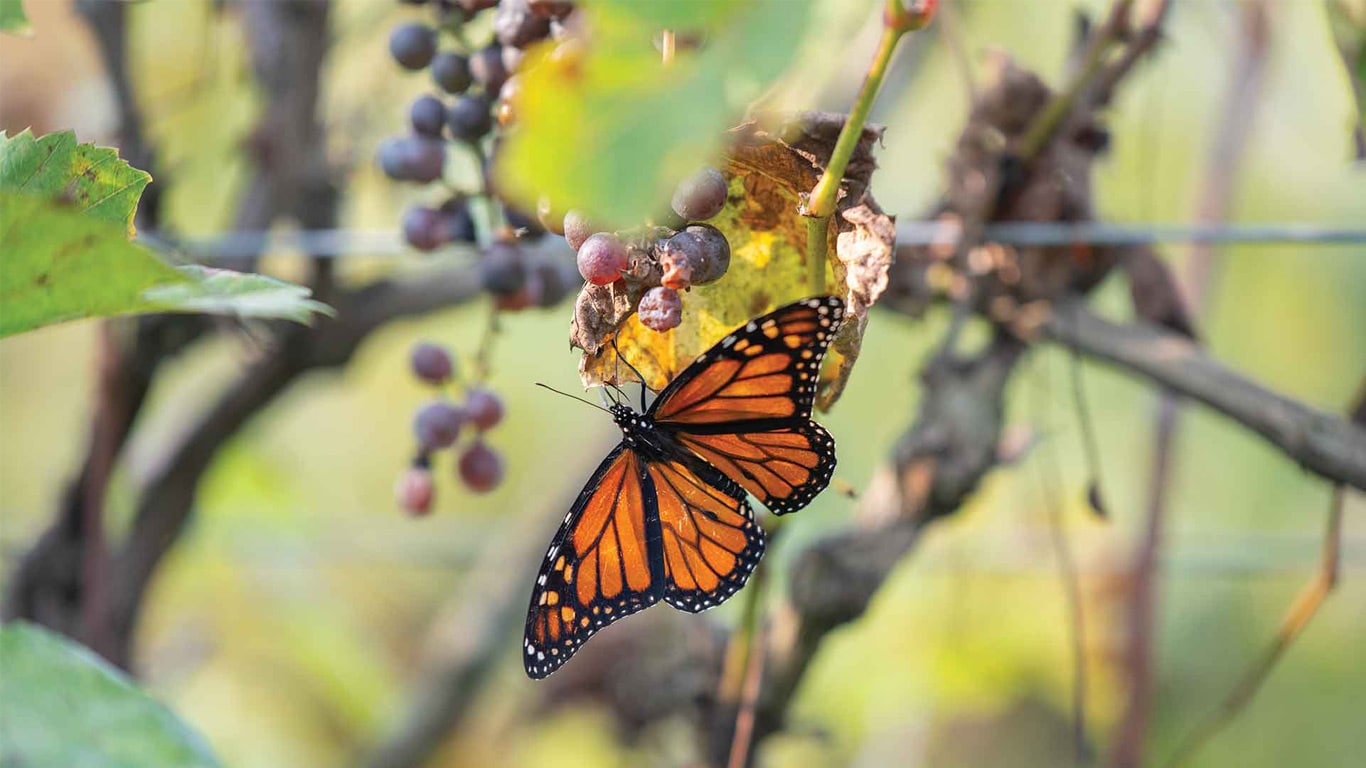
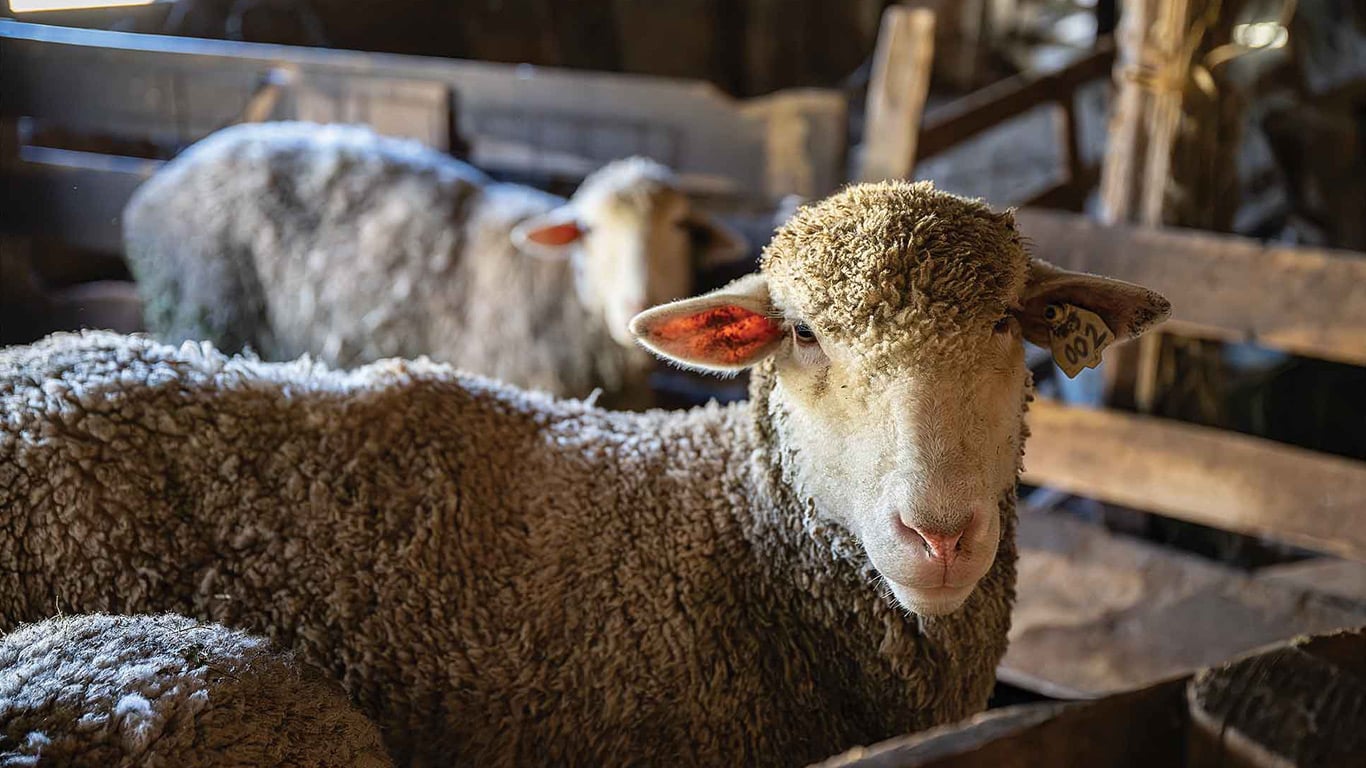
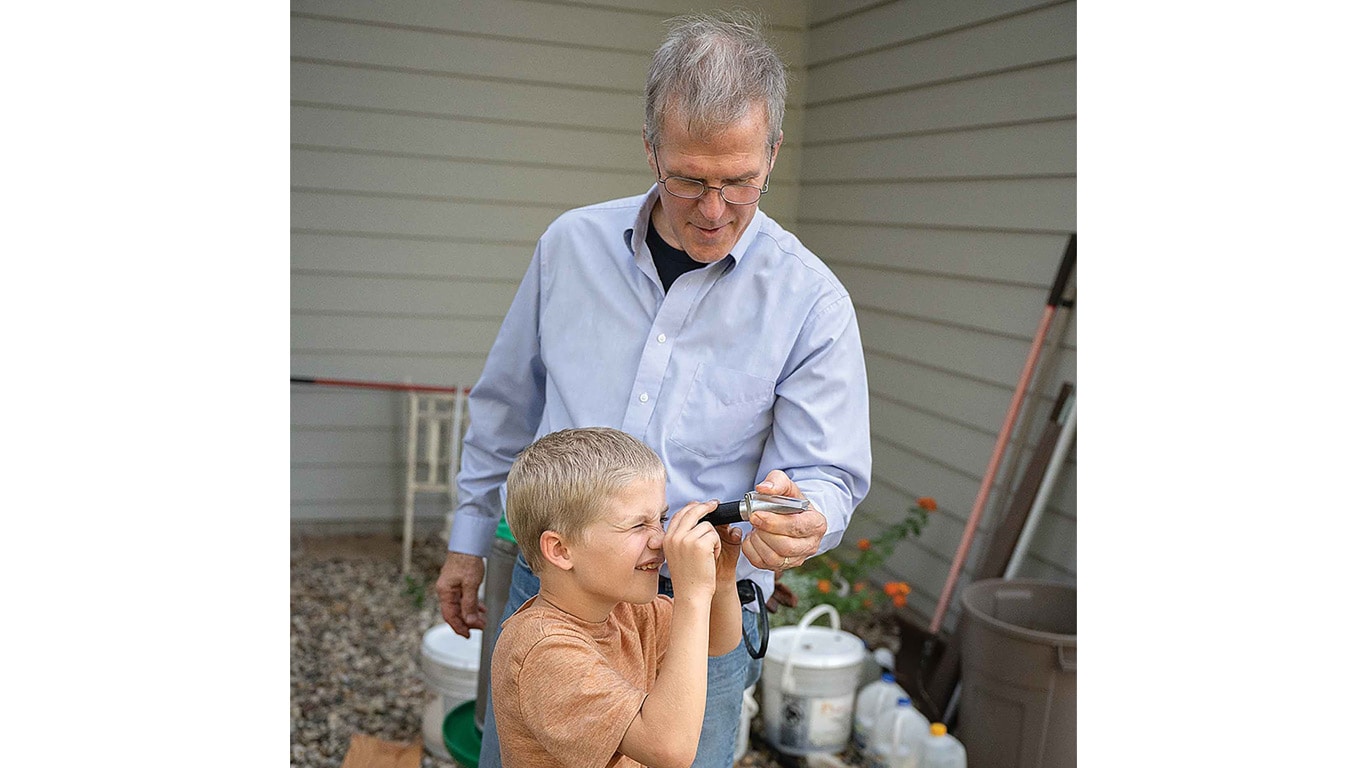
Above. LuAnn Schloesser checks clusters for insect damage. After 18 years of growing grapes, the family has seen pristine harvests give way to increasing pest pressure, even from butterflies. Brad dumps cleaned grapes into the juice press. He says, "This year, we’ll measure our harvest in quarts." Brad’s therapeutic flock of sheep helps manage grass between the vines. Isaiah, 7, learns how to measure brix (sugar content) through a refractometer.
Cycles of farming. Things started to shift after a polar vortex in 2018. The extreme cold and frost penetrated deep into the soil, killing all the Marquette and La Crescent vines. Only the Frontenac gris survived.
Then 2025 brought more challenges—excessive spring moisture and October temperatures hitting 92 degrees. And notice from the nearby winery that they would not be buying fruit anymore. Minnesota's wine consumption has dropped 25%, Brad learned, as younger consumers turn to craft beer and THC-infused drinks.
With no wine market, they simply pressed and pasteurized the juice from the maybe 500 pounds of fruit compared to their usual 1,500 to 2,200 pounds.
"Do I need 100 plants?" Brad wonders as he dumped a load into the press. He was thinking about his busy role as the executive director of the Minnesota Ag and Rural Leadership program and future retirement travel plans. "Spiritually, I talk a lot about pruning the vine. It might be time to do more actual pruning."
For the next few years though, he and LuAnn hope the Frontenac gris endures in its shady microclimate and brings more lessons of adaptation, family, and faith. ‡
More articles related to:
Read More of The Furrow
AGRICULTURE, LIVESTOCK/POULTRY
Honing Healthy Acreages
Soil health principles work in pastures big and small.
AGRICULTURE, RURAL LIVING
Renata's Garden
She brings plants to the people.