 A John Deere Publication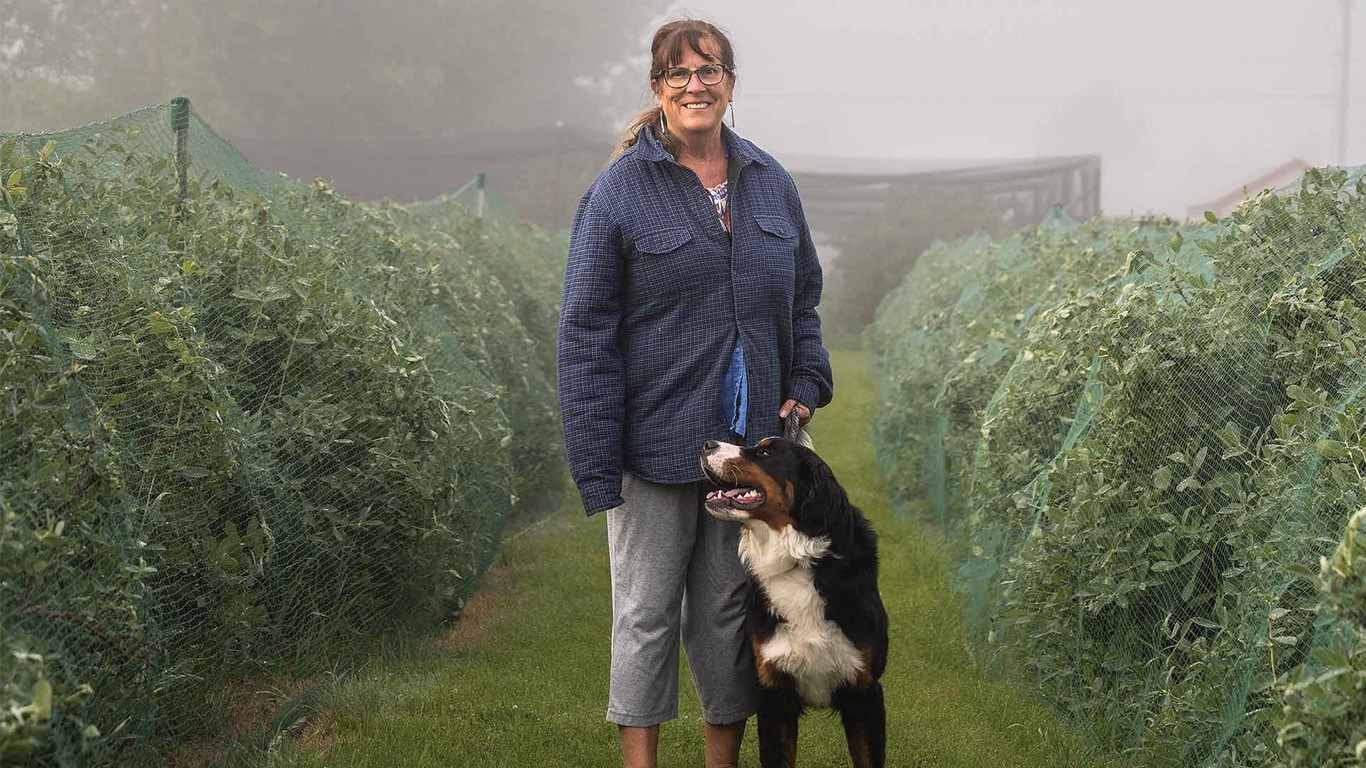
Catherine McNeil’s favorite time of year is when her haskap bushes are finally netted. Cedar waxwings are big fans of the husky blue super fruit and are a constant pest, despite the patrolling of McNeil’s pup, Loosey.
Agriculture, Specialty/Niche March 01, 2026
Haskap Pioneer
Finding a footing for berries in Montana.
Story and Photos by Martha Mintz
What can you do with a small acreage in Montana? Not much, most would say. Catherine McNeil, however, is using just 1.5 acres to grow haskaps and other berries and fruits on her Helena farm. She thinks the juicy, tart super fruit has a future in the state.
It started with a small hayfield. McNeil and her late husband Ken weren't sure what to do with it. They let Montana State University Extension use a fraction of an acre for a research site to explore the potential for berry production in the state. This was a decision that ended up bearing fruit for them.
Haskaps, also known as honeyberries, were one of the champions of the research. They thrived in the cool mountain valley and survived the harsh freezing temperatures of a Montana winter.
"The colder it is, the better they do," McNeil says of growing season conditions. "They don't like the heat and will stop maturing."
The McNeils sourced more haskap varieties from the University of Saskatchewan. Bob Bors, past head of the USask Plant Sciences Department fruit program, developed 10 haskap varieties and valuable research for growers like the McNeils during his tenure.
Starting in 2017 the McNeils planted 1,000 bushes and trees on 1.5 acres of the 5-acre hayfield. The bulk were haskaps, but they also planted dwarf sour cherries, pears, currants, and other berries.
Haskaps had a lot going for them. They knew the berry would grow. Farmers in other regions of the U.S. and Canada had proven the crop was marketable, and the fruit itself has built-in buzz.
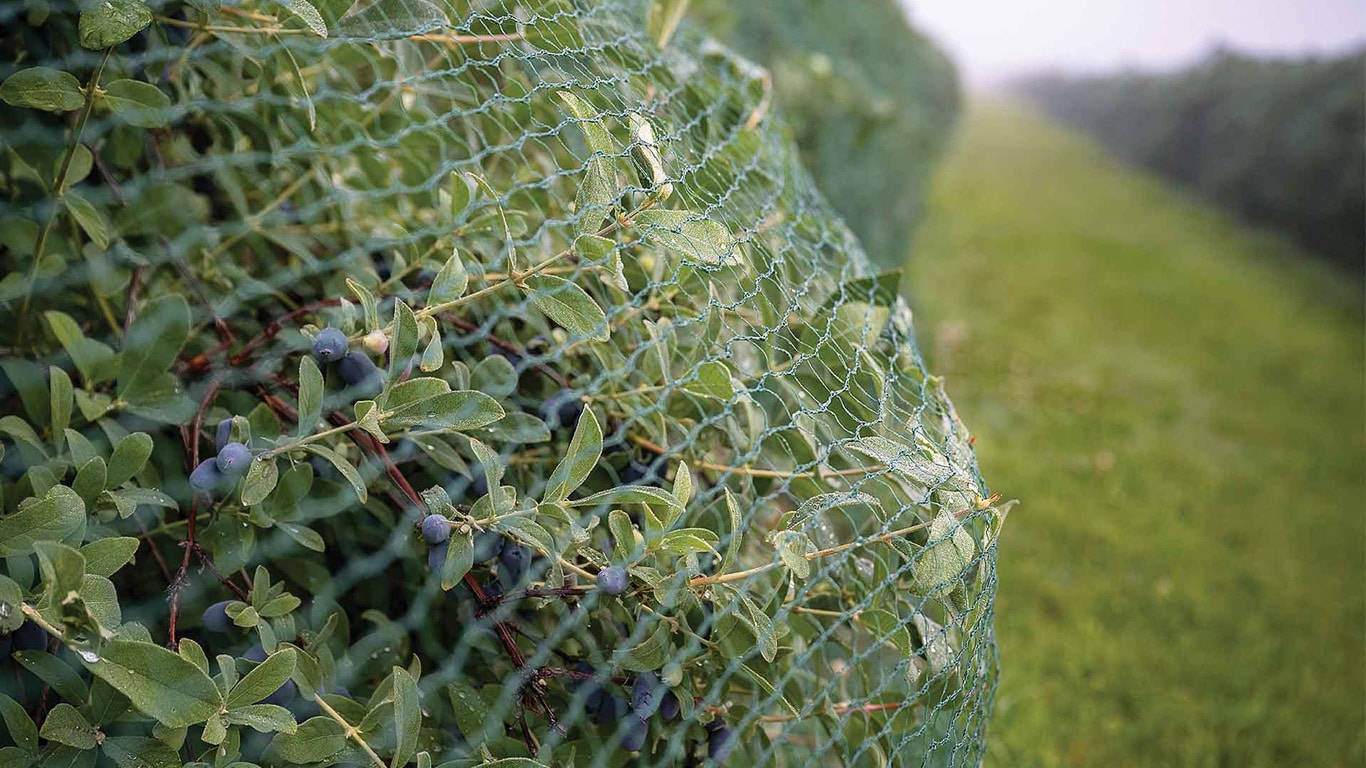
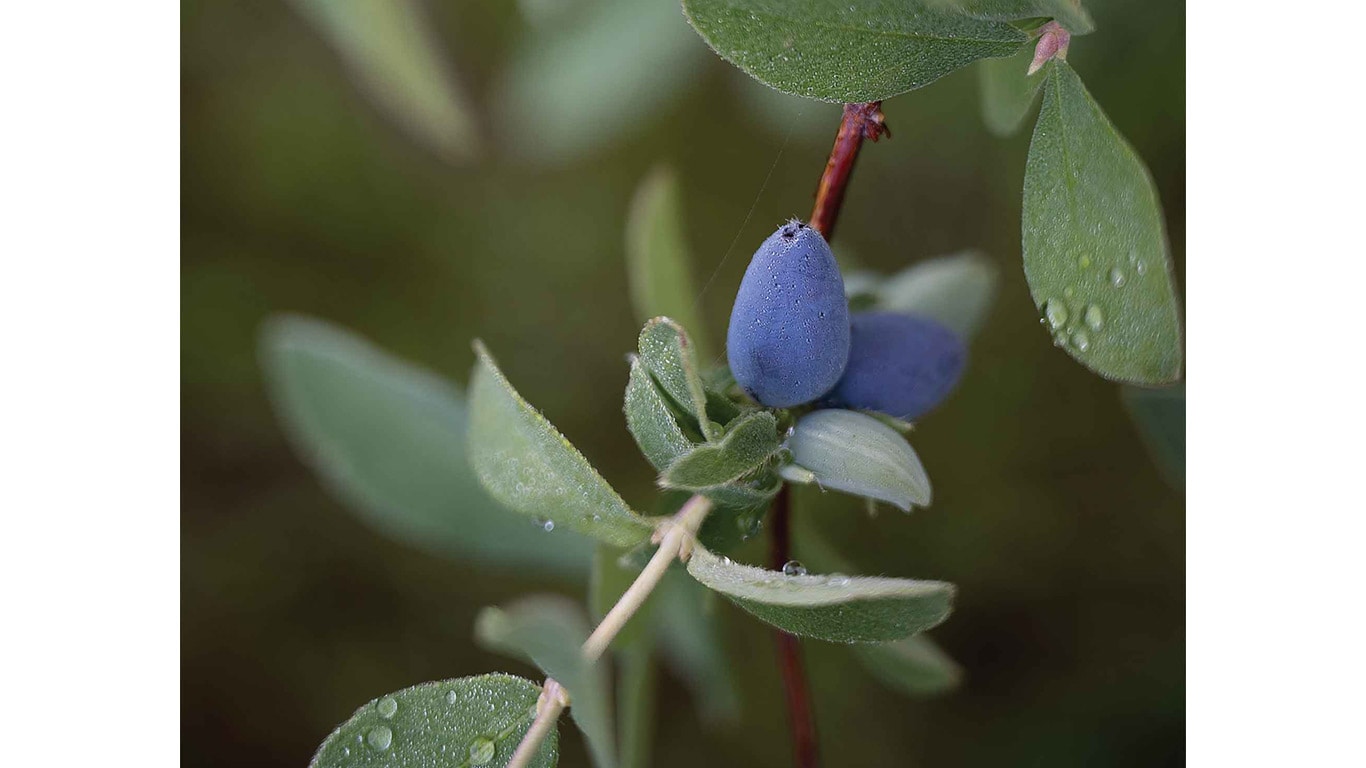
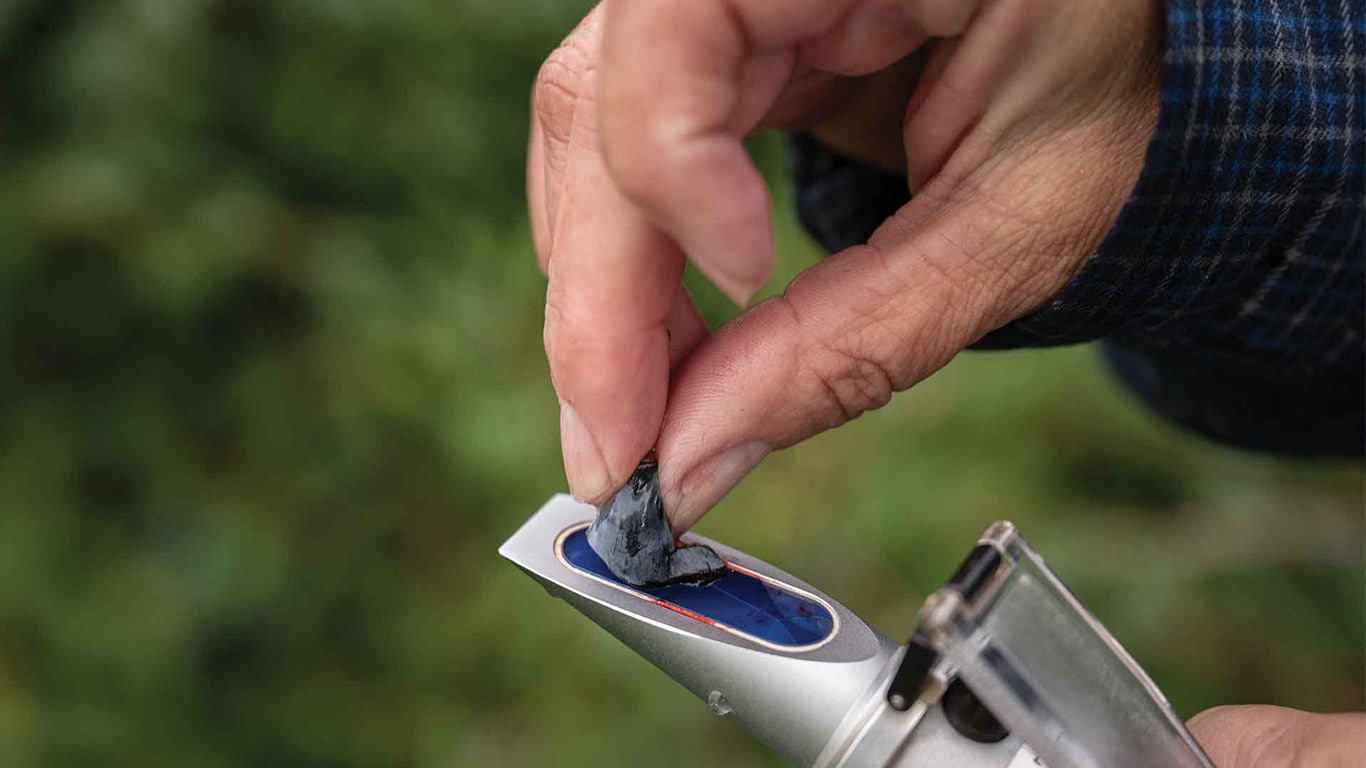
Above. As haskaps mature the plump berries darken and crumple a bit. McNeil aims for a harvest brix test of 15-17, ensuring sweetness to balance the natural tartness of the berries. They make excellent jelly, syrup, juice, and wine.
"Not only are they flavorful, but they're good for you. They're considered a super fruit because they have four times the antioxidants of blueberries. The fact that they grew here was huge," she says.
There was a buzz word—super fruit—but building the buzz about haskaps in a new market wasn't easy. "The hardest part through all of this has been developing a market," McNeil says.
Most people are unfamiliar with the fruit. It's also touchy to harvest, limiting how it's presented to consumers.
"They're fragile," McNeil says. While they share a color and are similar in flavor to blueberries, haskaps are very thin skinned. Harvest must take place in the cool of early morning and they have to be chilled further before they can withstand washing.
Very little of the crop is sold fresh. Most are frozen or processed into jams, jellies, and syrups. Fresh berries are a rare custom order. McNeil tried you-pick in 2025. The results were limited, but helped raise a little more local awareness for the crop.
McNeil's Apple Bar Orchard is no longer on its own in market development, however. There's a rising number of berry growers in Montana. In 2018, a few growers gathered to share thoughts.
One idea was to start the Montana Berry Growers Association.
"It made sense. If we had an association we could do things like combine berries if we had a market and came up short," McNeil says.
The real value came in access to grants to fund marketing and education. They started holding an annual conference and were able to bring in expert speakers like Bob Bors. A grant helped develop a website and produce some marketing materials.
The association now has members spanning the state. Together they may be able to tackle shared issues like crop insurance.
"I can insure my crop, but not the plants. If we lose our orchard, we're losing plants that are up to eight years old. It takes three years to get to production," she says.
A freeze cost her a large portion of her cherry trees in 2024. Haskaps survived, but faced other pitfalls. A freezer failure had her scrambling to find a buyer for 1,600 pounds of frozen haskaps.
Although the challenges are many, McNeil is optimistic markets and opportunity will grow.
"I think haskaps have potential for great benefit for Montana agriculture and consumers," she says. "I'm excited about expanding markets and finding new opportunities like cideries and breweries." ‡
More articles related to:
Read More of The Furrow
AGRICULTURE, SPECIALTY/NICHE
Alcohol Free
Hot trend opens up new market opportunities.
AGRICULTURE, EDUCATION
Testing the Waters
Bureau County farmers take control of their nitrate narrative.