 A John Deere Publication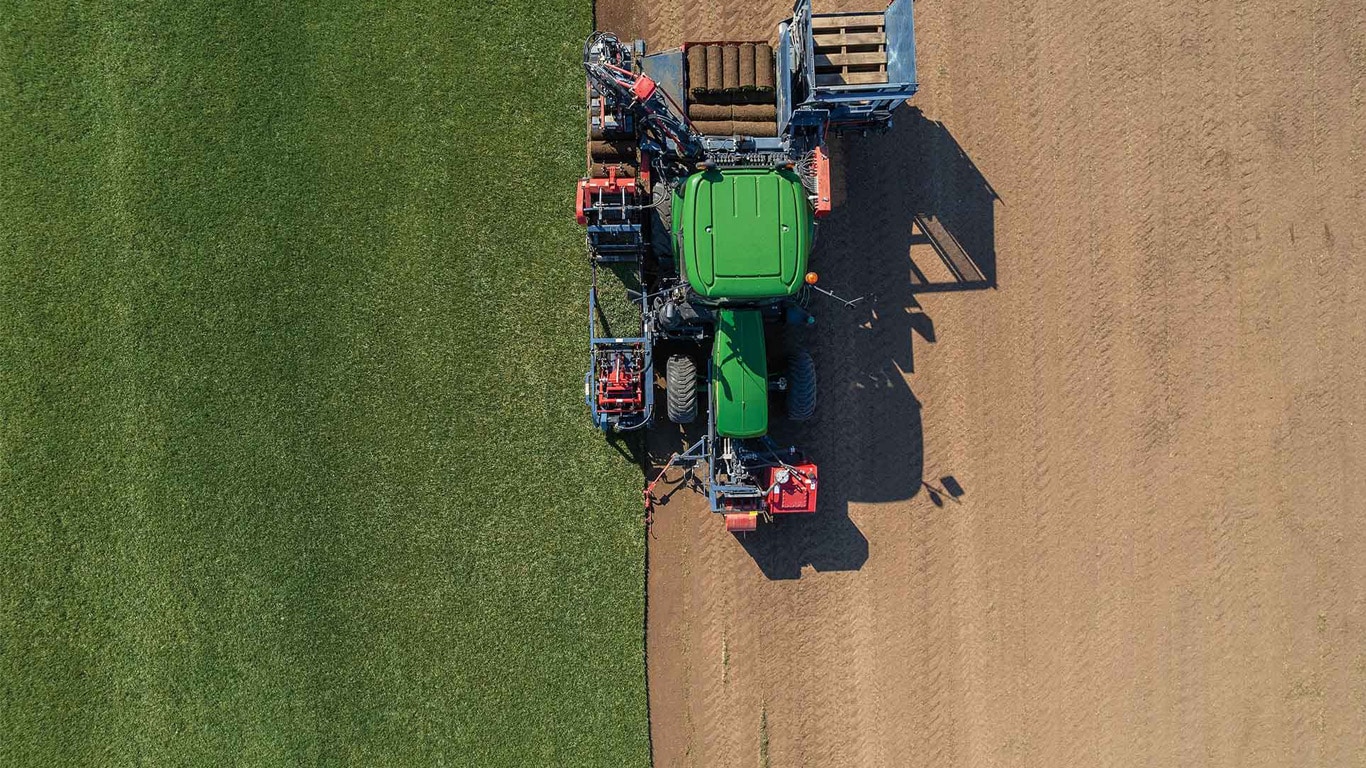
At Helt's Turf Farms near Lee's Summit, Missouri, modern machinery means one person can harvest, roll, and stack sod. Owner Shawn Helt runs the multi-generation operation, which is close to the Kansas City metro area.
Agriculture, Farm Operation March 01, 2026
Grass Roots
Turfgrass sets the tone for this Missouri farmer.
Story and Photos by Bill Spigel
When Colten Tadtman sets up behind home plate at the Highland Community Ballpark to start the 2025 season, he's surrounded by a ballplayer's dream: lush, green turf, sodded a few months prior by Helt's Turf Farms.
Highland had one of the worst playing surfaces in the Jayhawk Community College Conference and their record showed it.
To Tadtman, a freshman at Highland Community College and catcher on the school's baseball team, the field symbolizes the start of a new season: a fresh green slate, full of promise.
"It is a better, more consistent surface than the one we had before. Our old field was unpredictable and didn't play true," Tadtman says. "The whole team is excited about this field."
And that, Shawn Helt says, is exactly what fresh sod can do: create spaces for people to enjoy.
Grass lawns have long been a mainstay of U.S. culture, but the explosion of suburban housing after World War II fueled the expansion of well-manicured lawns. That's how Helt's Turf Farms got its start; Shawn Helt recalls a 1960s-era story where his grandfather Ralph, a farmer near Harrisonville, Missouri, had one field where bluegrass thrived. A relative in the building industry told Ralph a housing development in town may be interested in the sod.
A couple of weeks later, Ralph was looking through the classified ads in the local newspaper and found a sod cutter for sale.
"That's just dumb luck," Shawn says with a laugh.
Ralph's son Sam and his wife Sue formally launched Helt's Turf Farms in 1971; their son Shawn is the third generation.
As a kid, Shawn remembers a variety of jobs: riding the sod cutter and making sure rolls were ejected cleanly; he also steered a truck while employees loaded the back with sod. The business was in his blood.
"This is all I really ever wanted to do," he says.
The turf farm moved from Harrisonville to near Lee's Summit, Missouri, in 1986 to be closer to the Kansas City metropolitan sod market, which boomed until the nationwide housing market slump in 2008. The Helts then began to diversify acres into corn, soybeans, and alfalfa in Harrisonville, which is about eight miles south of the sod farm.
"It seems like most sod farmers are farmers who got into growing sod. We were sod farmers who got into growing conventional crops," Helt says.
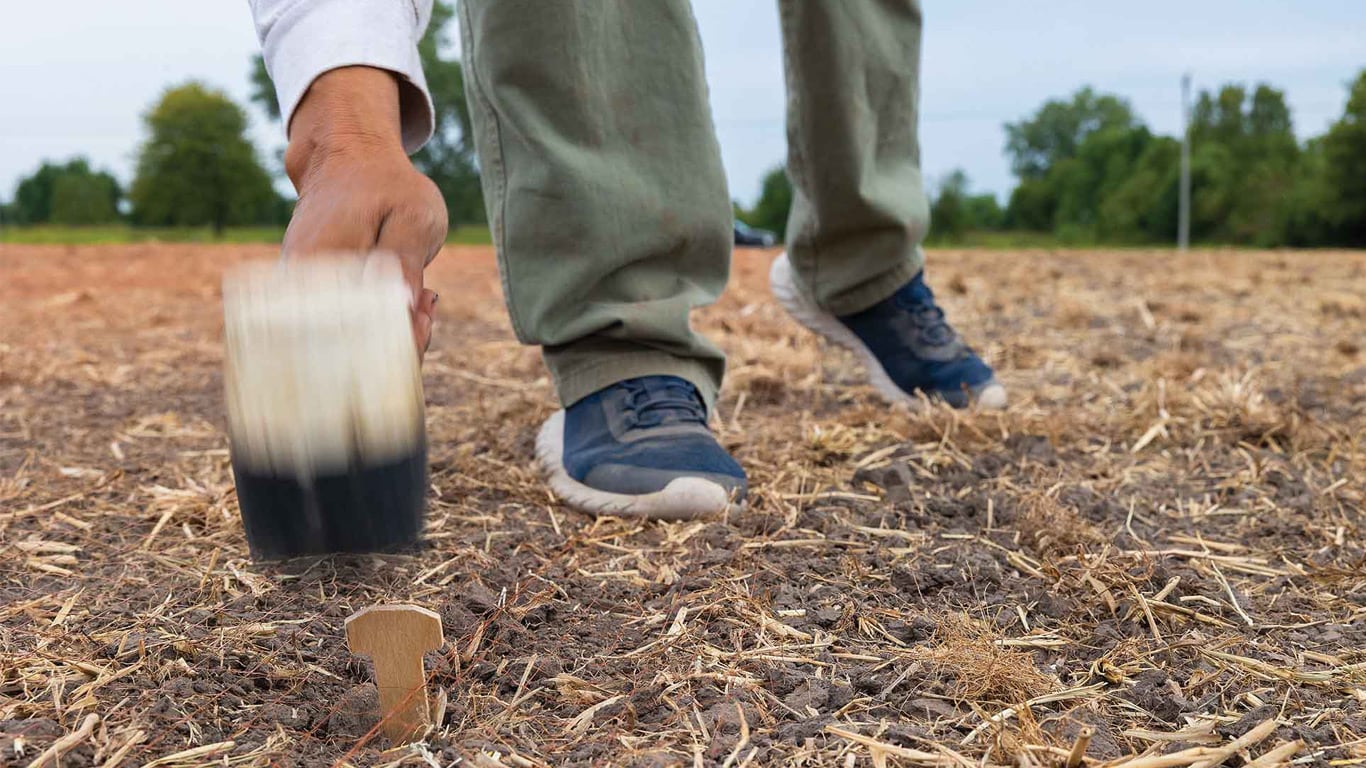
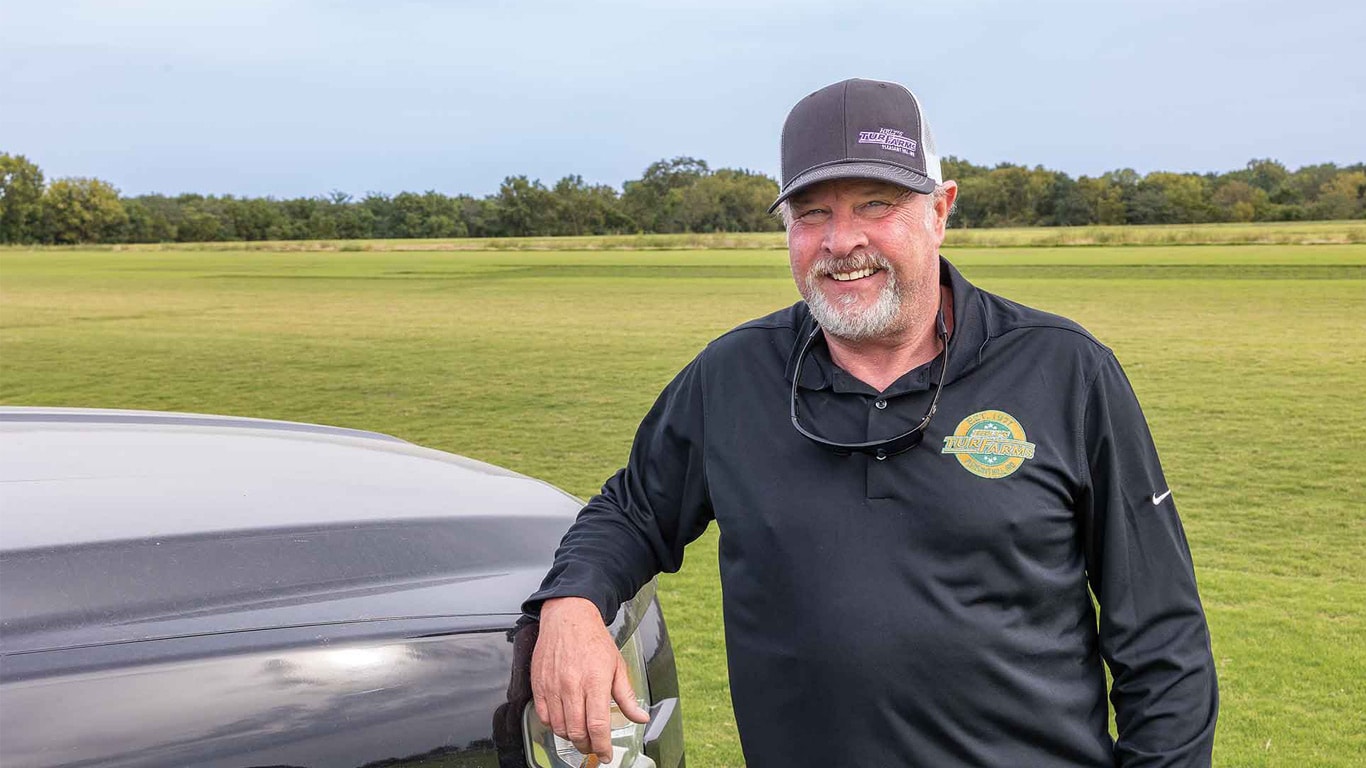
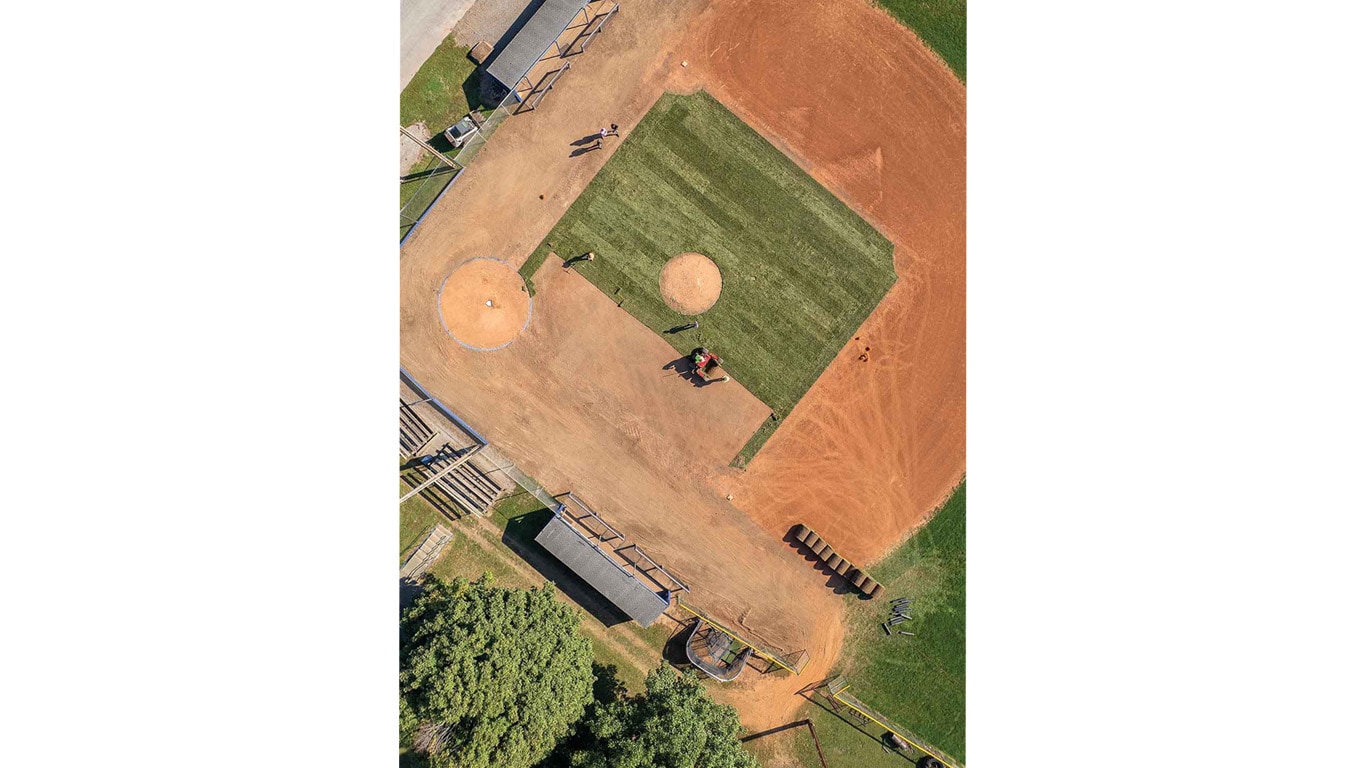
Above. A Helt's Turf Farms crew member taps in stakes that hold netting in place on a field just planted to a mix of bluegrass and fescue. Netting is critical to ensure sod roll integrity. Shawn Helt is the third generation to produce sod in the Kansas City, Missouri, metropolitan area. A new sod infield is installed at Highland Community College in Highland, Kansas.
Sod farming shares similarities with growing conventional crops: both convert sunlight and water into a marketable product using seed, fertilizer, and weed control products. But instead of seeding the crop with a massive planter or grain drill, his crew deploys two 10-foot grass seeders; in lieu of a combine, sod is gathered with a specialized sod harvester. One difference, however, is the cost of growing sod. Specialized machinery, crop inputs, and labor are all high compared to commodity crops. In all, Helt's fleet includes a dozen tractors, several semi tractor-trailers for delivery, and 30 employees.
Shawn, who works alongside his wife Michelle, mother Sue, and son Slater, says sod is grown on 600 to 800 acres of the farm's 1,500 total acres. After a few years of production, sod fields are rotated to corn, then soybeans, before going back to sod. Diversifying crops helps with weed control and reducing compaction, he says.
Helt's Turf Farm is built on sandy loam soil; not rolling, but also not perfectly level. The fields are irrigated with center pivot systems drawing water from ponds the Helts built years ago. Crews prepare a firm, level seedbed with several tillage passes before spreading starter fertilizer.
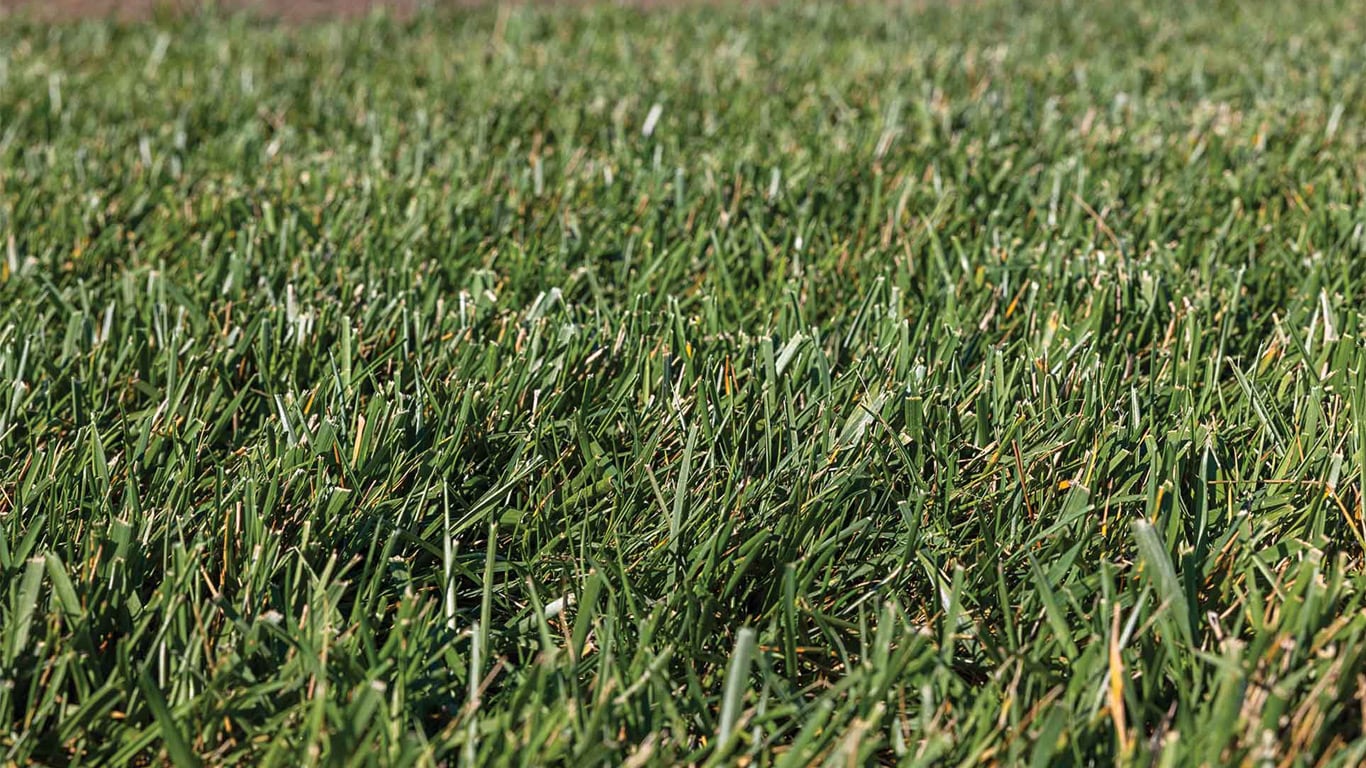
They seed bluegrass, fescue, and a fescue/bluegrass blend, and also grow Bermuda grass, established by "sprigging," or spreading grass stolons and rhizomes on bare fields.
Before the turf emerges, workers affix netting to the field. The plastic stuff holds roots and soil together and gives sod a more stable base when harvested, rolled, hauled, and installed.
Throughout the growing season, fields are constantly manicured, watered, and fertilized, Helt says.
Sod is typically harvested within 24 hours of installation. Harvesters create rolls that are 24-inches wide and 4.5-feet long. The farm has two installation crews, he says.
The farm's 50-plus years of tradition is a big selling point. So too is the company's image in the local community: their trucks all match and are always kept clean and their employees dress alike and are professional.
"Whether they use us or not, most of the home builders in Kansas City know we have a good product," he explains. "We aren't the cheapest, but we provide great customer service."
Roughly half the sod Helt's Turf Farms harvest is destined for residential use; 25% in commercial spaces, 15% in sports fields, and 10% sold at the office near Pleasant Hill.
Slater is the only one of Shawn and Michelle's three kids to join the family business; he has championed Bermuda, which is a longer-lasting, durable, and resilient grass for sports surfaces. They have three Bermuda grass varieties in which they are the exclusive licensee in Kansas City, Shawn adds.
"Slater was smart enough to know that to join the business, he needed to bring something to the table. He's onto something with this Bermuda grass market," Shawn explains.
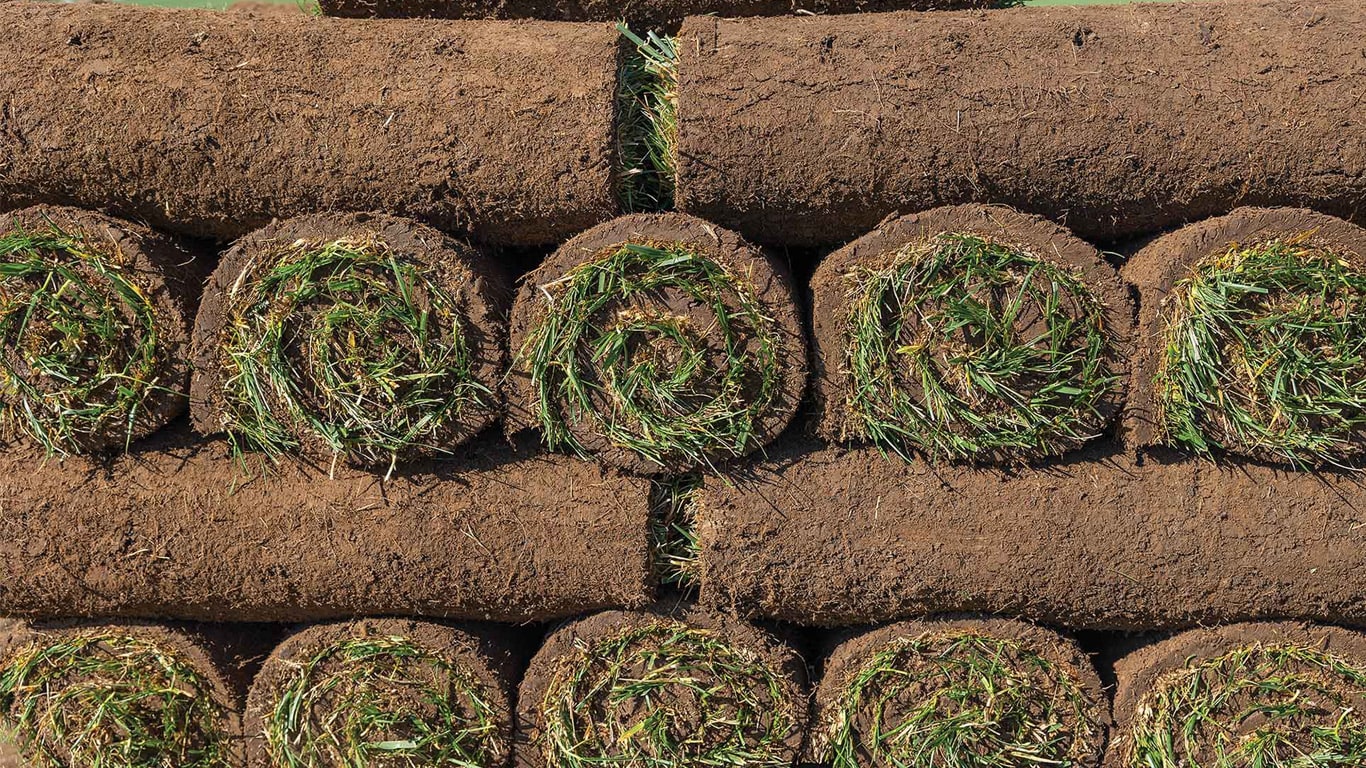
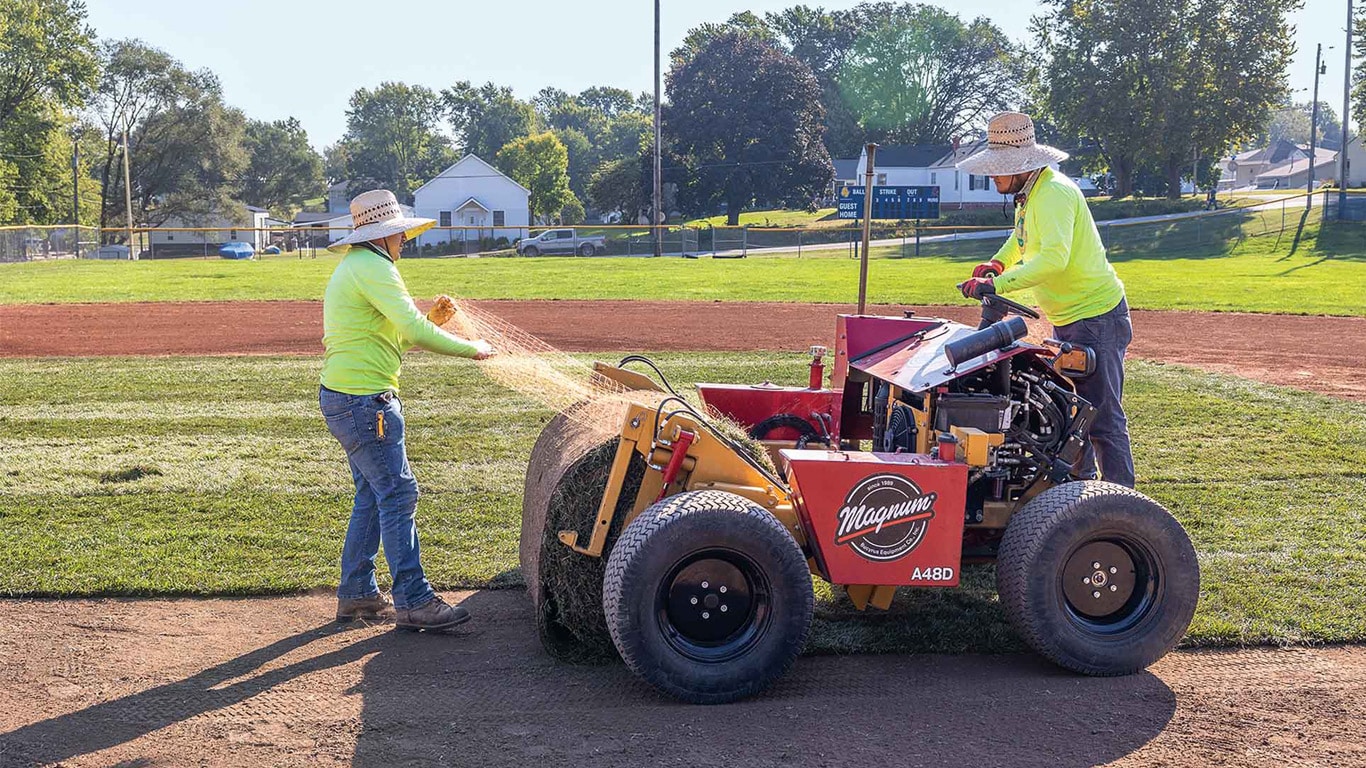
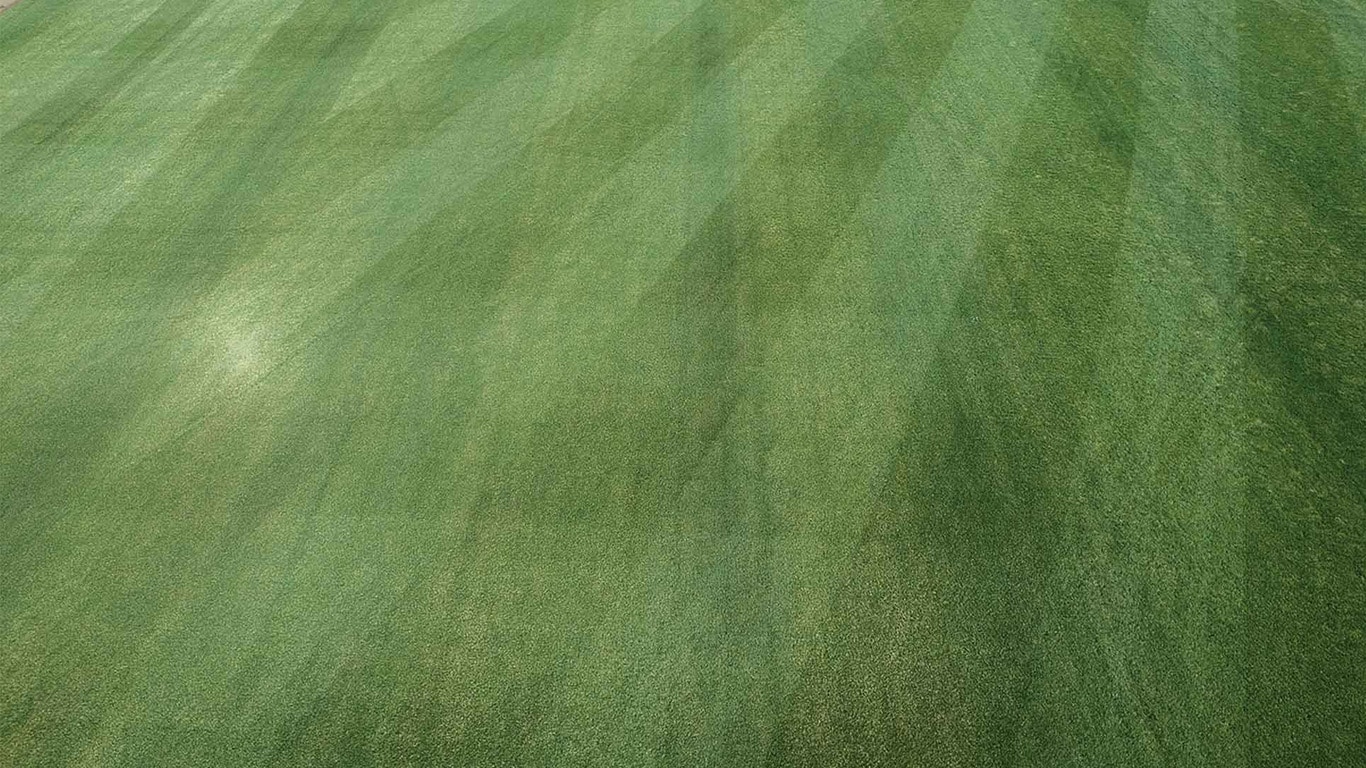
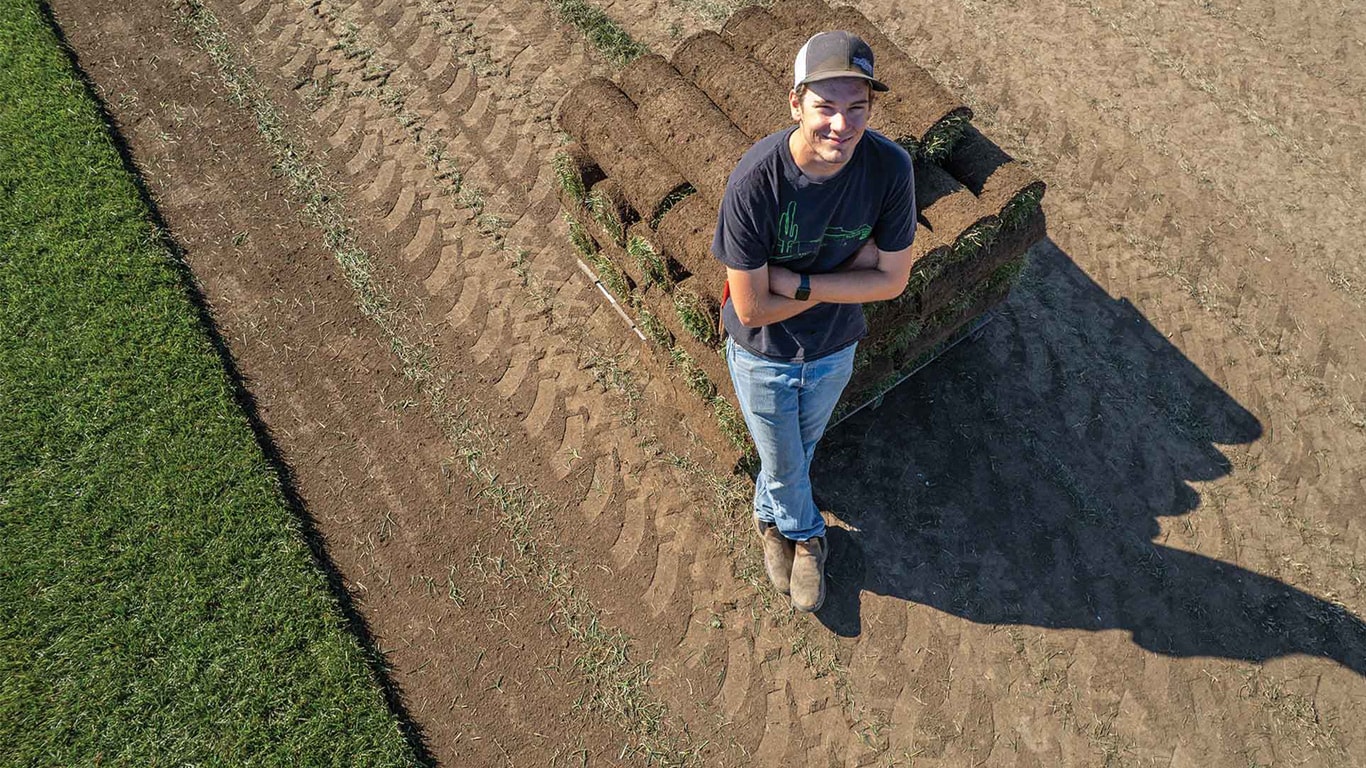
Above. Rolls of sod harvested in the morning were hauled 120 miles to Highland and installed by noon. At Highland, workers remove the netting that keeps the roll intact. Prior to harvest, turf is regularly fertilized, irrigated, and mowed to keep it healthy. Helt's Turf Farms crew member Grayson Leatherman is one of 30 employees. Fresh turf is the final touch that often completes home remodels, new home and business construction, and sports venues.
Race cars and green grass. Slater, incidentally, had a career as a race car driver before joining the family business.
"You know, farming, sod farming, and race cars all go together. We love to work and we hate money," Shawn laughs.
Missouri summers can be hot and dry and sod requires a lot of water. The Helts built three ponds that hold enough water to irrigate their sod fields. An 8-inch pipe connecting ponds and fields supplies the farm's water but managing the weather is a constant battle.
"The worst thing about being in the sod business here is that we're in this transition zone where it's almost too warm for cool season grass and too cool for warm season grass," he explains.
Another challenge for turf producers? Synthetic turf. Since 2017, the synthetic turf industry has grown 15% based on data from USDA published in 2020. The thought is that synthetic turf may cost more upfront but lasts longer and with less maintenance, but Helt disagrees.
"If you maintain a natural grass field correctly, it's better than turf and cheaper in the long run," he says. "Plus, on a 90-degree day, synthetic turf can get up to 140 degrees on the playing surface. On a natural grass surface, temperatures can actually cool off."
And finally, environmental battles. In Colorado, Nevada, and California, some communities are prohibiting new establishment of natural grass on private and public lawns, he says.
Helt doesn't see an end to those battles, but he's confident that natural turf's irreplaceable aesthetic attributes will win out: the sweet aroma after it is mowed, the sensation of bare feet on cool grass, and its ability to self-repair after a divot. Even the biome of natural grass, a natural habitat for insects, worms, and other organisms, is irreplaceable.
Field of dreams. For sports teams, grass offers hope, says Tyler Delong, the first-year head baseball coach at Highland Community College.
"We've had one of the worst surfaces in our conference, which is a major reason our team has been last. There were bumps and holes everywhere and our guys just got beat up by ground balls," he says. "Now, we have good turf. It gives us confidence."
That is music to Shawn's ears.
"The curb appeal of a newly sodded lawn is priceless," he says. "Not only does it put a smile on the customer's face but a lot of times it marks the final step in a long construction process." ‡
More articles related to:
Read More of The Furrow
AGRICULTURE, EDUCATION
No Shade
America's oldest test plots prepare for their next chapter.

AGRICULTURE, SPECIALITY/NICHE
The Wanderers
Glimpses of the nomad cultures that once ruled the world.