 A John Deere Publication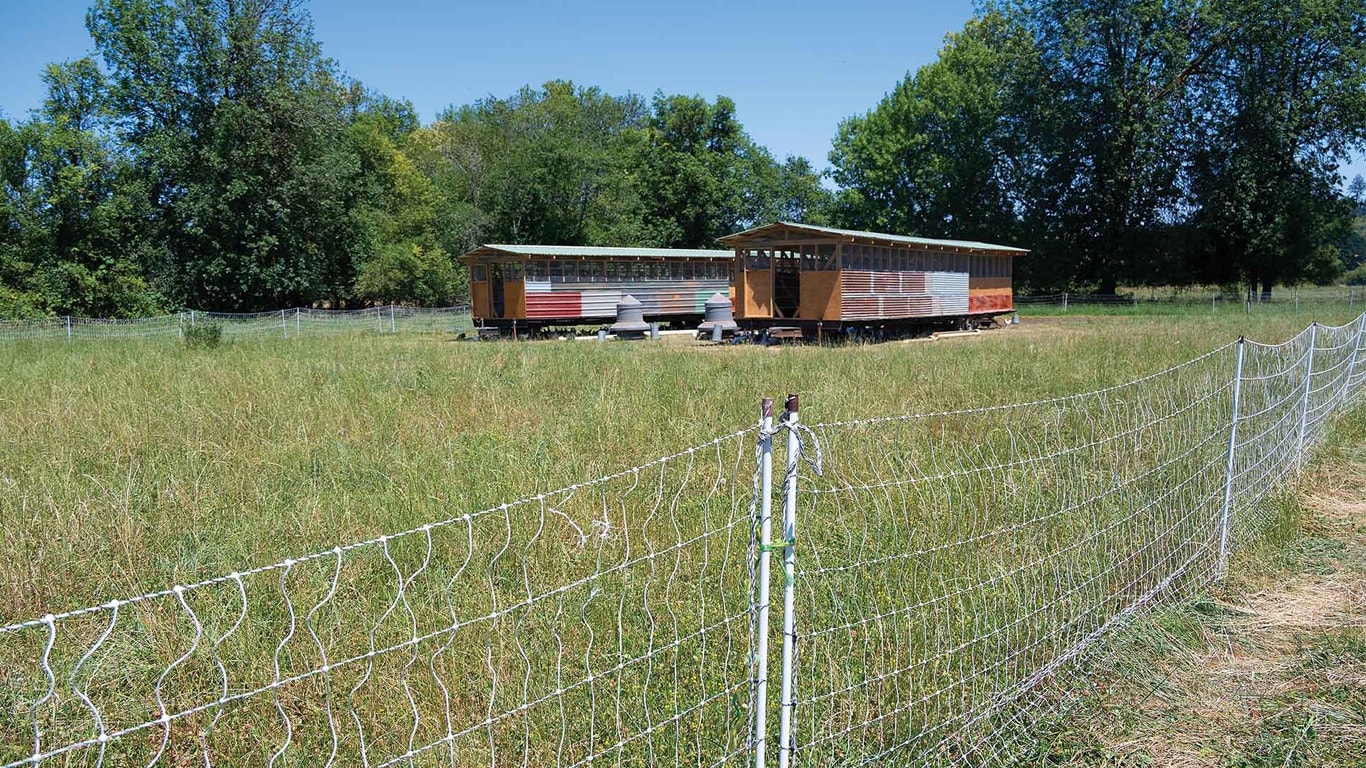
Salatin-style layer trailers are easy to pull across a pasture. Deck Family Farm's milk cows have a stellar view of nearby vineyards.
Agriculture, Livestock/Poultry March 01, 2026
Circles
Livestock rotation, interns, and happy customers keep Oregon farm rolling.
Story and Photos by Steve Werblow
John and Christine Deck are constantly running in circles on their livestock operation near Junction City, Oregon, and it's put their soil health on a straight upward trajectory, doubling organic matter levels to 8 or 9% since the farm started in 2004.
With backgrounds in conventional livestock production and degrees from University of California, Davis, the couple decided Deck Family Farm would be different—regenerative and diverse.
The Decks started with beef cattle, then added eggs to their farmers' market lineup. Today, they and up to 20 interns and hired hands from here and abroad manage 2,000 layers, 5,000 broilers, 700 hogs farrowed in the pasture, 250 beef cattle, and 12 to 15 A2A2 dairy cattle.
It's enough to make a manager's head spin, so John Deck keeps things straight with a 12-year rotation plan that starts and ends with healthy pastures.
''Diversity builds resilience, but requires patience,'' he says. ''Slow down and figure out, 'How do all these things work together under a system for a single farm?'''
Ten species. The system's foundation is the ryegrass, festulolium, chamomile, clover, plantain, and other grasses, forbs, and legumes in their pasture—as many as 10 species in a stand.
''You're putting a diversity of animals out there—same thing on the pasture,'' says Deck. ''They're all optimizing for success in their own little niche. And the animals appreciate it, too.''
Deck aims to get six years from a stand. He says festulolium, a perennial ryegrass/fescue hybrid, makes a durable, fast-establishing base for years of grazing. The pastures thrive with the nutrients from chicken litter and mammal manure. Just as important, the tougher grass can withstand the rooting action of hogs.
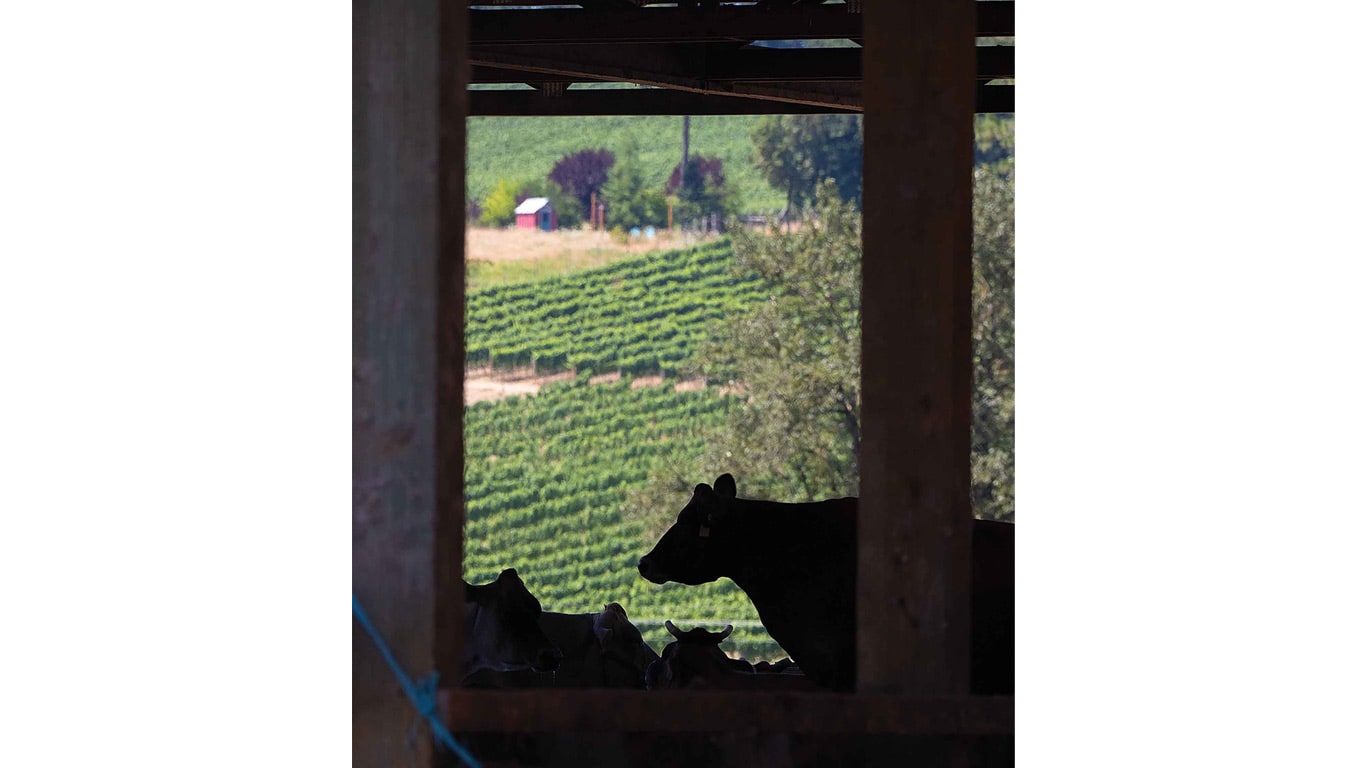
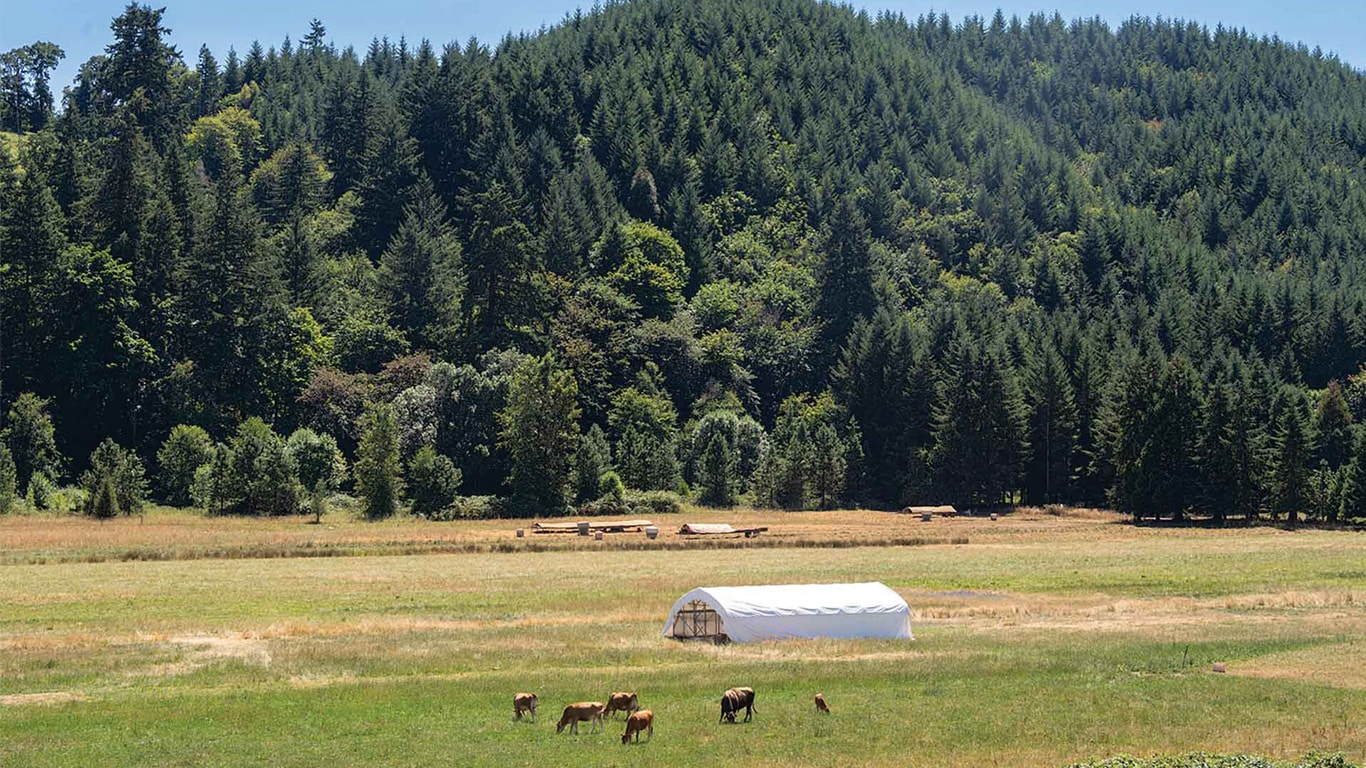
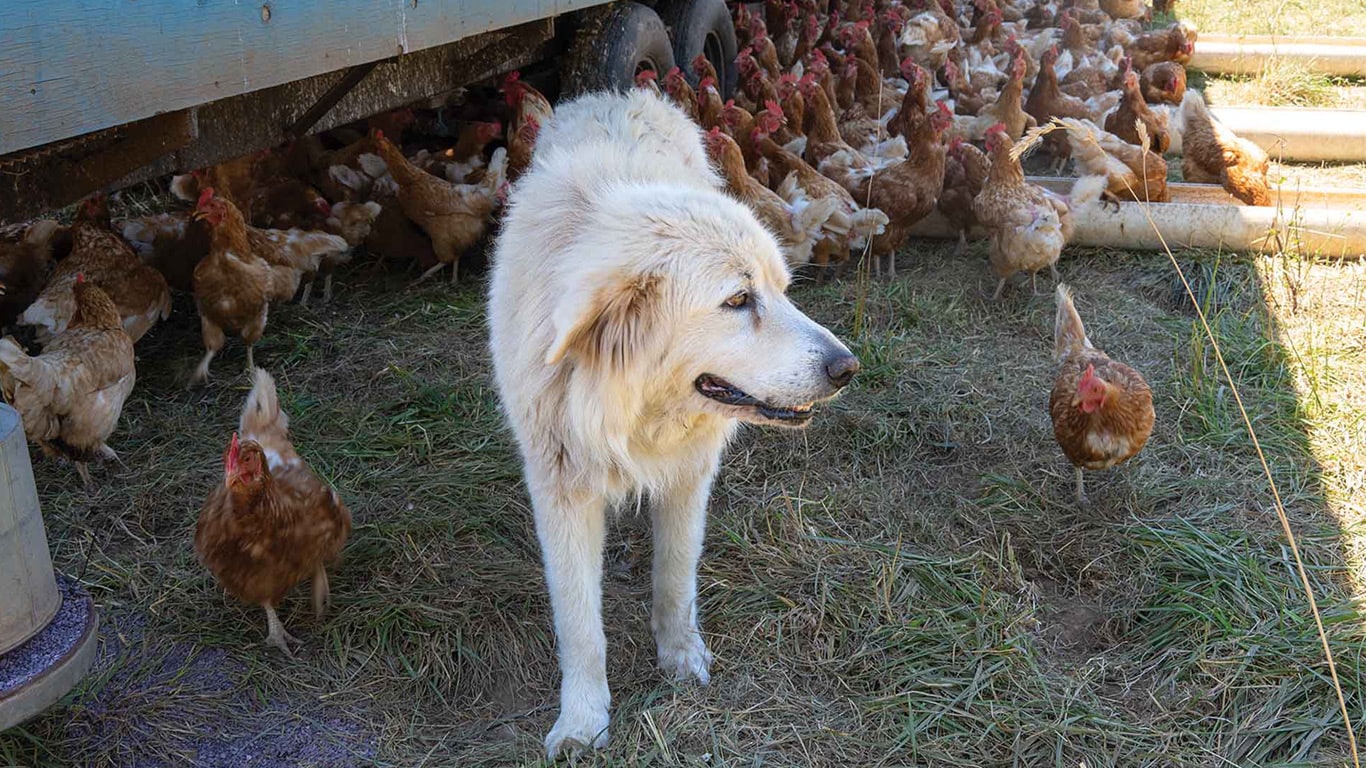
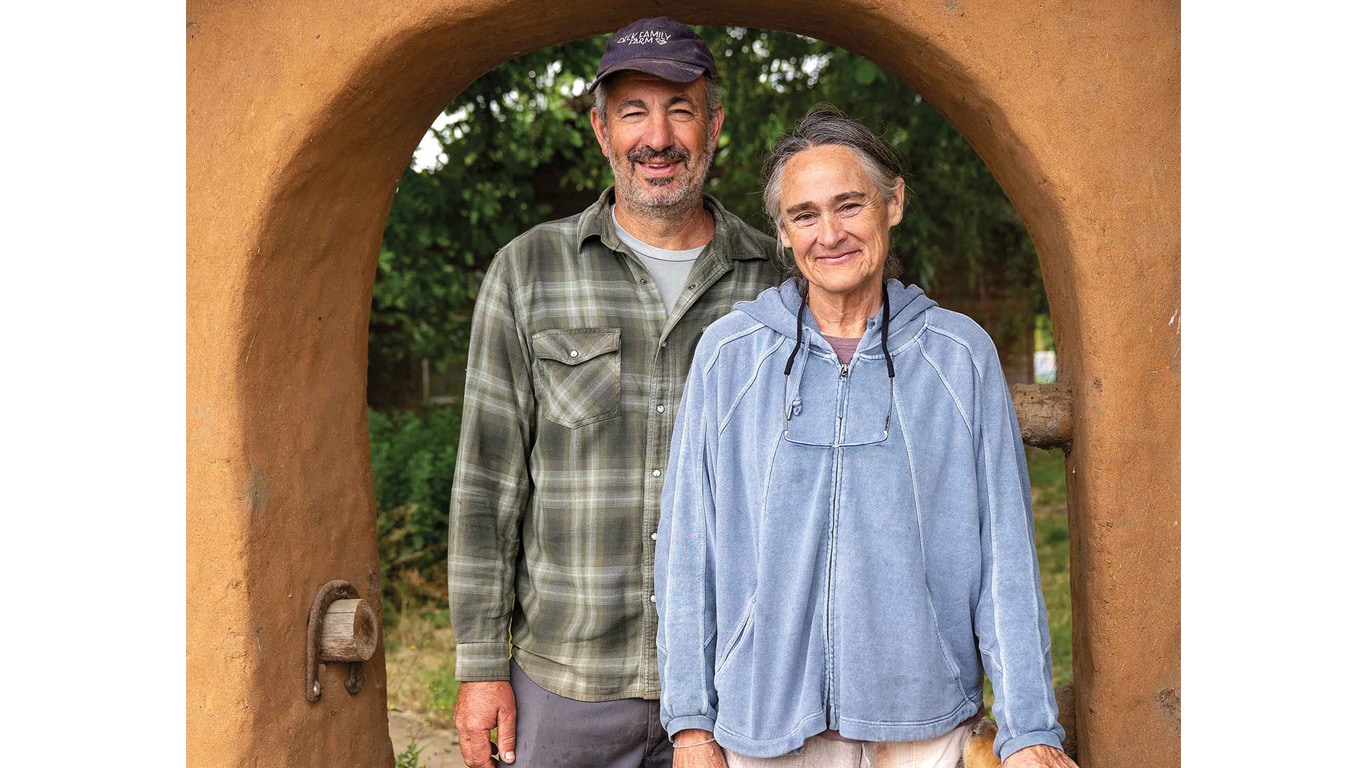
Above. Deck Family Farm's milk cows have a stellar view of nearby vineyards. Beef cattle graze the foreground, broiler trailers are in the middle, and Red Wattle pigs work near the treeline. Maya guards laying hens. John and Christine Deck plan 12 years in advance.
Orderly. Deck is very particular about the order of species that occupy a pasture. He says it's all about animal health.
''If you leave pigs on a pasture for three years, you start seeing liver flukes and worms, so we keep them healthy by moving them every two years,'' he explains. ''The cattle parasites and pig parasites are pretty different—they don't really share parasites. So I can bring in cows and break those cycles. By the time I'm back with pigs in six years, the parasite cycles have had a chance to break.''
Once a pasture is growing well, Deck starts with hogs. The farm's 60 Red Wattle sows and their piglets provide a big nutrient boost and loosen up the soil.
''We use our hogs as tillers,'' Deck says, ''but we want to move them before they get to the point where they destroy everything.''
An interseeded stand of towering sorghum sudan shades thistles as the mixed stand recovers from the porcine workout. Then comes a wave of chickens, scratching the soil and breaking up manure as their trailers are pulled a few yards at a time across the fields. Deck figures 15% of his Red Ranger broilers' diet comes from pasture. That's modest but important, he notes.
''If you're buying 10 tons of grain a month, even 10% is something,'' Deck says. ''And getting forage is going to improve their overall vitality and their will to live, and it entertains them. They've got full plumage, they're running around, they've got strength, they've got character.''
Deck Family Farm's mix of layers produce for two years, then end up as stew birds. Then there's beef and the dairy cows for unpasteurized milk, cheese, and yogurt. It's a vibrant mix that fills eight farmers' market stands and scores of community supported agriculture (CSA) baskets every week as the seasons—and the animals—go round and round. ‡
More articles related to:
Read More of The Furrow
AGRICULTURE, LIVESTOCK/POULTRY
Range Wars No More
Sheep and cattle together help regenerate, boost the grazing resource.