 A John Deere Publication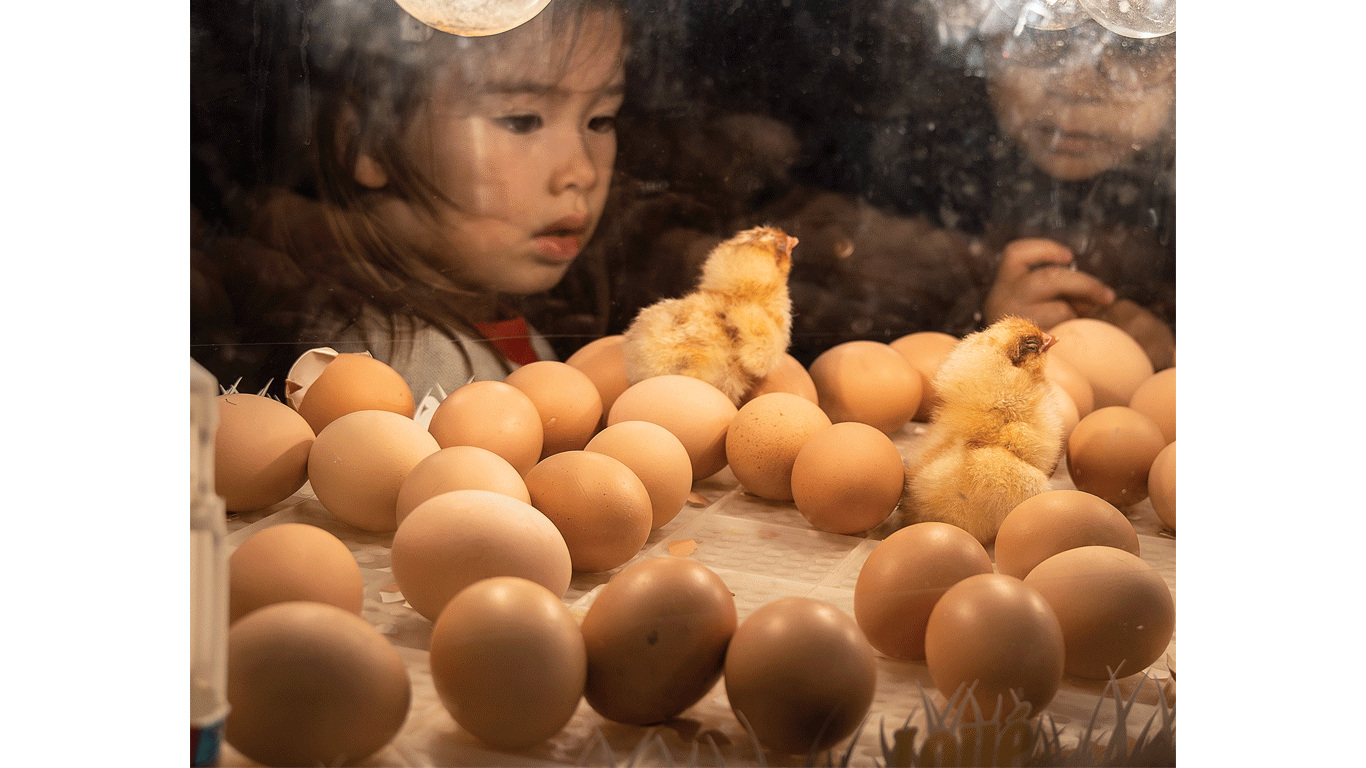
Loué's chick hatching booth was a huge draw at the Salon de l'Agriculture show in Paris.
Agriculture, Livestock/Poultry January 01, 2026
Slow Going
Slow-growing chickens are key to this company's success.
Story and Photos by Steve Werblow
In an industry famous for extraordinary productivity—in volume and speed—a cooperative of French poultry producers has staked its claim on small, free-range flocks of slow-growing birds. More than 1,100 farmer members of Fermiers de Loué spend three times as long raising their chickens as their conventional counterparts do. Loué members' flocks average a mere 5,000 birds, and the co-op's farmers must also produce feed and plant shade trees for the broilers, layers, and turkeys in their care.
Established in 1958 by poultry producers wary of the post-war industrialization of French agriculture, Fermiers de Loué has turned its long history of cottage-style production into a powerful brand that supplies 25% of France's premium chicken. French consumers love richly-flavored chicken, notes Loué's director, Erwan de La Fouchardière. The dense meat's relatively low water content allows consumers with an air fryer to put a roast chicken—France's classic dinner—on the table in an hour, he adds.
Loué's slow-growing chickens have a feed conversion ratio of 3, half the efficiency of conventional chickens, de La Fouchardière says. But because Loué producers use only natural light in their houses, electric bills are much lower, and processing and transportation costs are the same, Loué can narrow its price premium to 20% to 50% compared to conventional chicken.
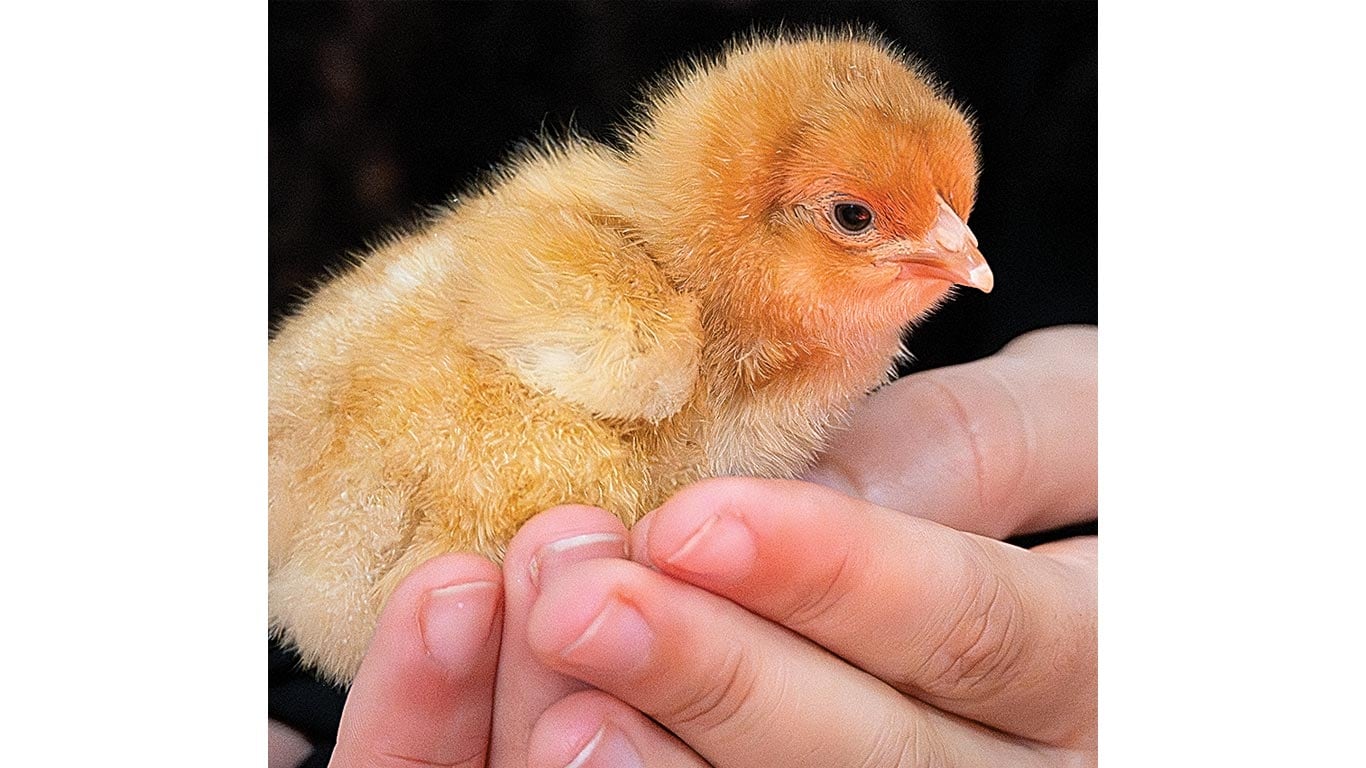

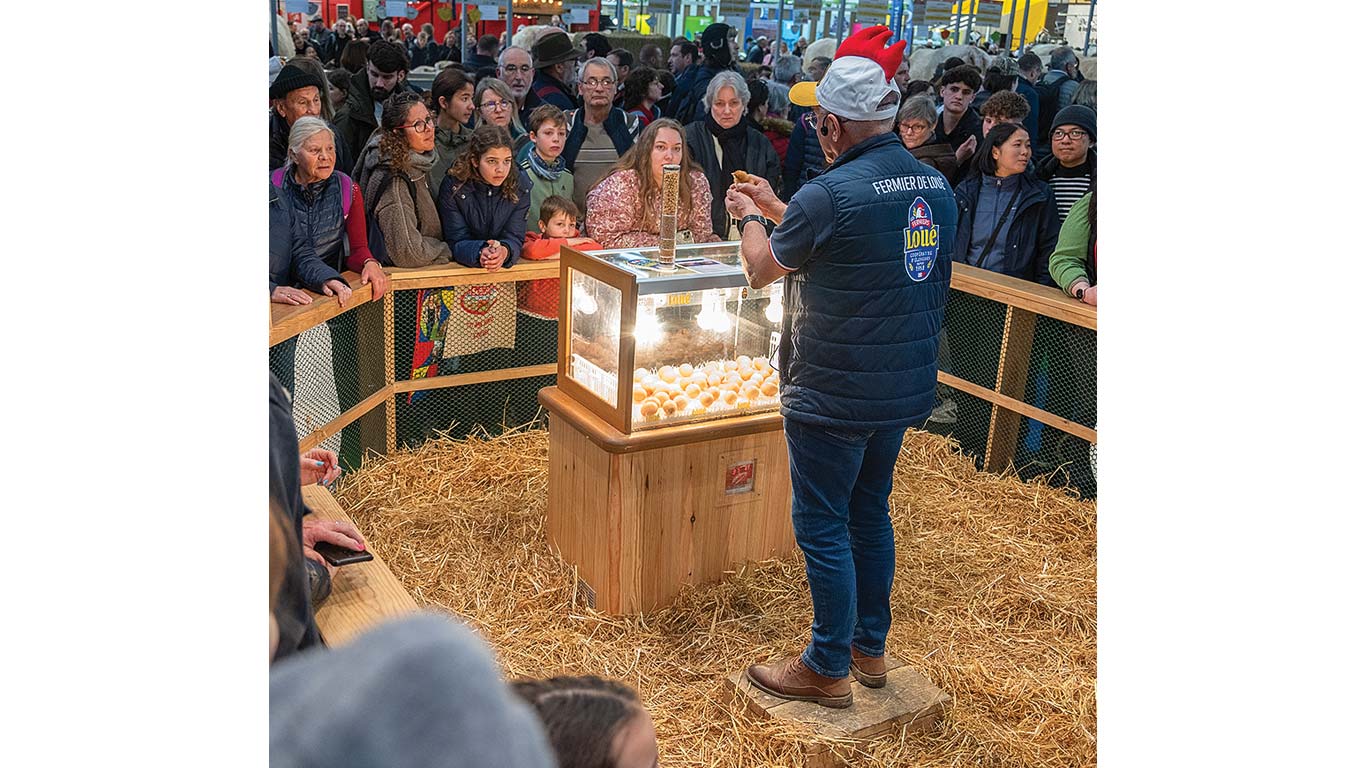
Above. This chick will take 3 times longer to mature than its conventional counterparts. Erwan de La Fouchardière says French consumers prize deep chicken flavor and supporting small farmers. A Loué producer explains poultry production.
Less enthusiasm. While French consumers flock to Loué chickens, American markets have been slow to embrace slow-growing birds. Whole Foods' announcement a decade ago that it would only sell slow-growing poultry by 2024 made headlines, but Tom Super of the National Chicken Council says slow-grown birds still only account for a fraction of 1% of U.S. chicken sales.
The Council also pointed out that switching one-third of U.S. broiler production to slow-growing birds would require nearly 1.5 billion more birds, 7.6 million more acres to produce the extra feed, and 1 billion gallons more water annually for birds to drink.
Production costs also jump, says Reed Dillard, poultry technical account manager at Alltech.
"Over the life of that bird, it's going to be more feed input, more water, more cost to heat and cool those birds," he notes. "And slow-growing customers are probably going to want organic certification. Then you can't feed synthetic amino acids, so your diet's going to be more expensive.
"Those slow-growing broilers inherently eat less per day, and their diet is cheaper to produce because it's got a lot of filler in it and you can lower crude protein levels a little bit," Dillard adds. "But your starter diet—your high-protein diet—you're going to feed about three times as long versus a conventional bird, and that's the most expensive diet."
Popular breast meat is also short on slow-growing birds, he says—about 20% of a slow-growing chicken vs. more than 30% on a conventional bird.
For a domestic market that prizes breast meat, mild flavor, and low prices, slow-growing chicken may not be celebrated in America nearly as much as it is in France.
But Dillard points out that American chicken producers are addressing changing demands for animal welfare in other ways.
"On a conventional level, they're using more enrichment tactics, whether that be pecking blocks or little T-posts where they can jump around a little bit," he says. "One company is putting windows in poultry houses where birds can see some sunlight."
And some consumers are embracing more dark meat, which used to be largely exported.
"I think in 5 to 10 years, you'll see better conformation on broilers—a little less breast meat, a little more leg, because you're seeing a bit of a trend where we want to keep that here," Dillard says.
So while French shoppers revel in their slow-grown Loué roast chickens, American consumers are slowly seeing changes, too. ‡
Read More
AGRICULTURE, EDUCATION
Teaching Through Tomatoes
4-H members learn to grow and give.
AGRICULTURE, LIVESTOCK/POULTRY
Dairy in Context
Success is found in knowing your potential and your limits.