 A John Deere Publication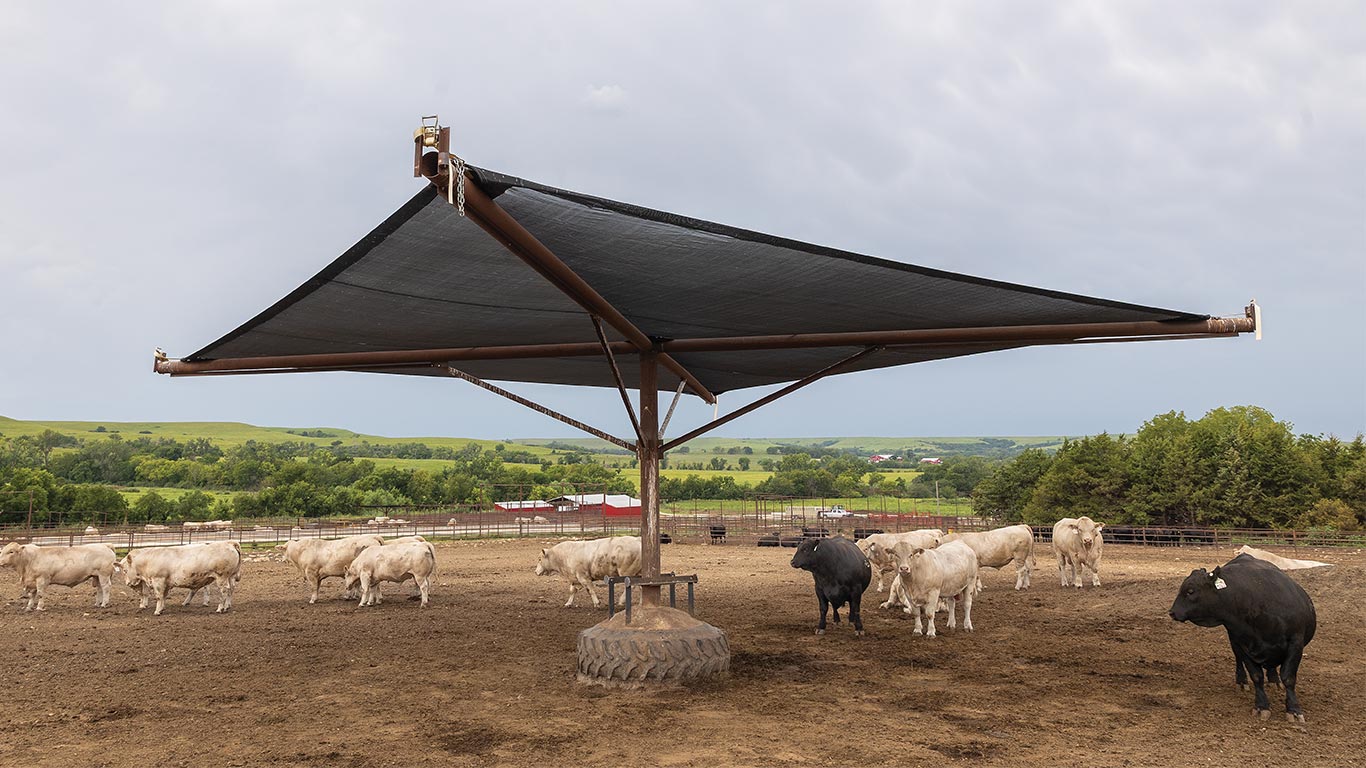
Charolais bulls take advantage of man-made shade at Nextgen Cattle Company's Flint Hills headquarters.
Agriculture, Education January 01, 2026
Cool Cattle
Cattle performance improves under shade.
Story and Photos by Bill Spiegel
Eight pens of cattle on the south side of Interstate 70 in Wabaunsee County, Kansas, each are fitted with a shade structure resembling a big patio umbrella.
When the sun bakes the Kansas Flint Hills from spring to fall each year, Nextgen cattle are clustered under those shades.
Nextgen Cattle Company was founded by cousins Derek Thompson, Damon Thompson and Brad Lindstrom. This is the ranch headquarters; and home to their Beefmaster, Charolais, and Angus seedstock enterprise; there are cow-calf and feedlot operations in other Kansas locales.
Nextgen's pastured cattle have access to natural shade like trees and stone outcroppings. In pens, however, animals need shade, says Joe Epperly, chief genetics officer for the company.
"Shade helps with feed efficiency, and overall animal comfort," Epperly says. "It's just plain good animal husbandry to supply shade and shelter."
Research shows that providing shade to cattle mitigates heat stress and benefits a producer's bottom line. Lily Edwards-Callaway, associate professor of animal science at Colorado State University, was lead author in a 2021 report highlighting the impact of shade on cattle.
"Shade has been shown to lessen the physiologic response of cattle to heat stress. Shaded cattle exhibit lower respiration rates, body temperatures, and panting scores compared with unshaded cattle in weather that increases the risk of heat stress," she writes.
Heat stress in cattle occurs when their bodies can't dissipate heat effectively. Affected cattle show physical signs like those listed above, but also have reduced appetite and milk production, decreased fertility, and lower immune function. Heat stress often affects carcass quality of cattle destined for slaughter, while conception may be compromised in breeding cows. Additionally, bulls affected by heat stress may have reduced semen quality, according to Michigan State University.
Mitigating stress of any type improves the ability of cattle to convert feed into muscle, but heat stress is particularly damaging.
"An analysis of performance and carcass characteristics across feedlot studies demonstrated that shaded cattle had increased average daily gain, improved feed efficiency, hot carcass weight and dressing percentage when compared with cattle without shade," Edwards-Callaway continues.
Extreme heat has caused massive death losses in cattle herds in the last decade. More than 2,000 cattle died due to extreme heat and humidity in 2022; hundreds more in Iowa in 2023. Heat stress costs the U.S. beef industry an estimated $500 million per year, according to a 2022 study by MWI Animal Health.
Epperly says shade structures are a good hedge against death loss. He notes that Nextgen's shade structures reduce ambient temperature 15 to 20 degrees.
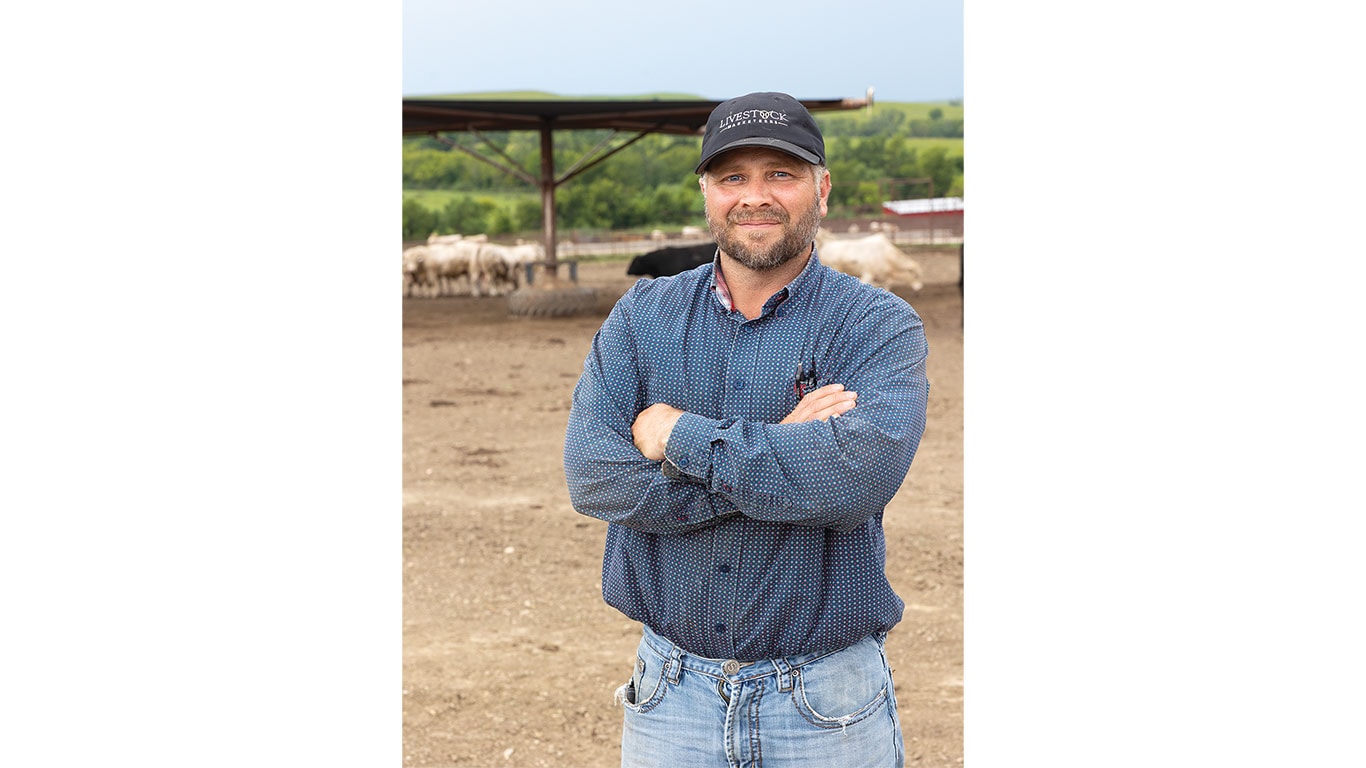
Above. Under shade, temperatures are 15 to 20 degrees cooler, says Nextgen's Joe Epperly.
Kinds of shade. Nextgen's shade structures feature a 30-by-30-foot black tarp strapped to a steel skeleton and held in place with a 5,000-pound cement base. A structure like this provides shade for about 65 animals weighing 1,000 pounds, and costs about $6,000. In a previous job, Epperly used in-line shades, a covered structure running perpendicular to the pen's feed bunks. Rather than a tarp covering the steel frame, in-line shades often have a roof made of corrugated tin or shed roof steel. There are a host of other commercially available structures, many of which are easily portable.
Shade structures require some maintenance, and since cattle congregate under them, caretakers will need to keep areas clean of manure. During the winter, users will need to remove the tarp, unless it's rated for snow-load. But those minor inconveniences are worth it, Epperly notes.
"With the cost of calves right now, it's a no-brainer." ‡
Read More
AGRICULTURE, LIVESTOCK/POULTRY
Finding Home
Idaho family creates opportunity to start their own ranch in Arkansas.
AGRICULTURE, SPECIALTY/NICHE
Without a Map
Fourth generation farmers keep building legacy without their guide.