 A John Deere Publication
Champion sheep dog handler Faansie Basson fell in love with competing in sheep dog trials after he was introduced to the sport. He's now been entering contests for 32 years.
Education, Specialty/Niche December 01, 2025
Sheep Dog Man
In stock dog trials, your competition is the sheep.
Story and Photos by Lorne McClinton
Faansie Basson gives a quiet signal and Finn, his Border Collie, shoots off on his outrun. He moves away from Basson in a sweeping arc to get behind a small flock of 10 wary sheep huddled on a hilltop hundreds of yards away. He silently circles across the paddock like a black-and-white boomerang.
Welcome to the final round of the Kingston (Ontario) Sheep Dog Trials, one of the four major stock dog trials held in North America annually. It attracts scores of competitors from across Canada and the United States. Faansie Basson, originally from South Africa, now a sheep producer from Paris, Kentucky, and Finn are ranked among the best.
The modern sheep dog trial is a complex, timed challenge. Competitors work with four sheep in the preliminary rounds but face off against two flocks of 10 (five wearing collars) in what's called an International Double Gather for the championship round. The goal is for the dog to quickly and efficiently pick up (gather) the flock, and then the handler guides their dog with voice or whistle, to herd them through gates, around posts, and into pens—all while the sheep would rather be anywhere else. When they get to the shedding ring, they drop 15 sheep not wearing collars, keep the five that are, and put them in a pen.
The sport dates back more than a century to the hills along the border of England and Scotland. It began humbly enough; shepherds began pitting their dogs against each other to prove their claims about who had the better stock dog. It grew from there.
"The outrun [the first step] is the most important and magical part," says Amanda Milliken, a Kingston, Ontario-based competitor and trial organizer. "It's worth 20 points, one-fifth of the total score, because it's where the dog shows it can read and set up a relationship with the sheep. If it goes badly, it's catastrophic to your final score."
Finn shines here. "He's got a real feel for sheep and enough ‘eye' to hold the sheep together, but he's not too tight," Basson says. He controls them from a distance without threatening and stressing them. That balance—it's rare."
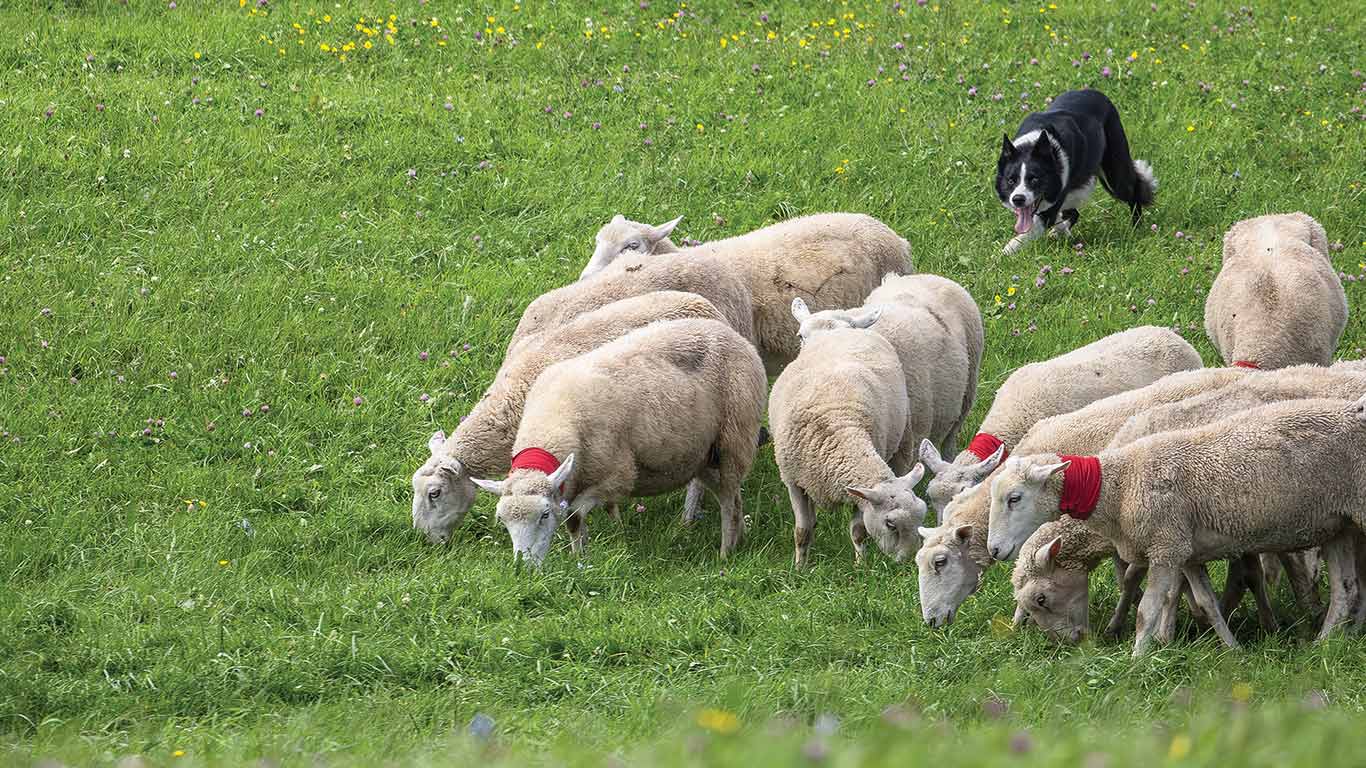
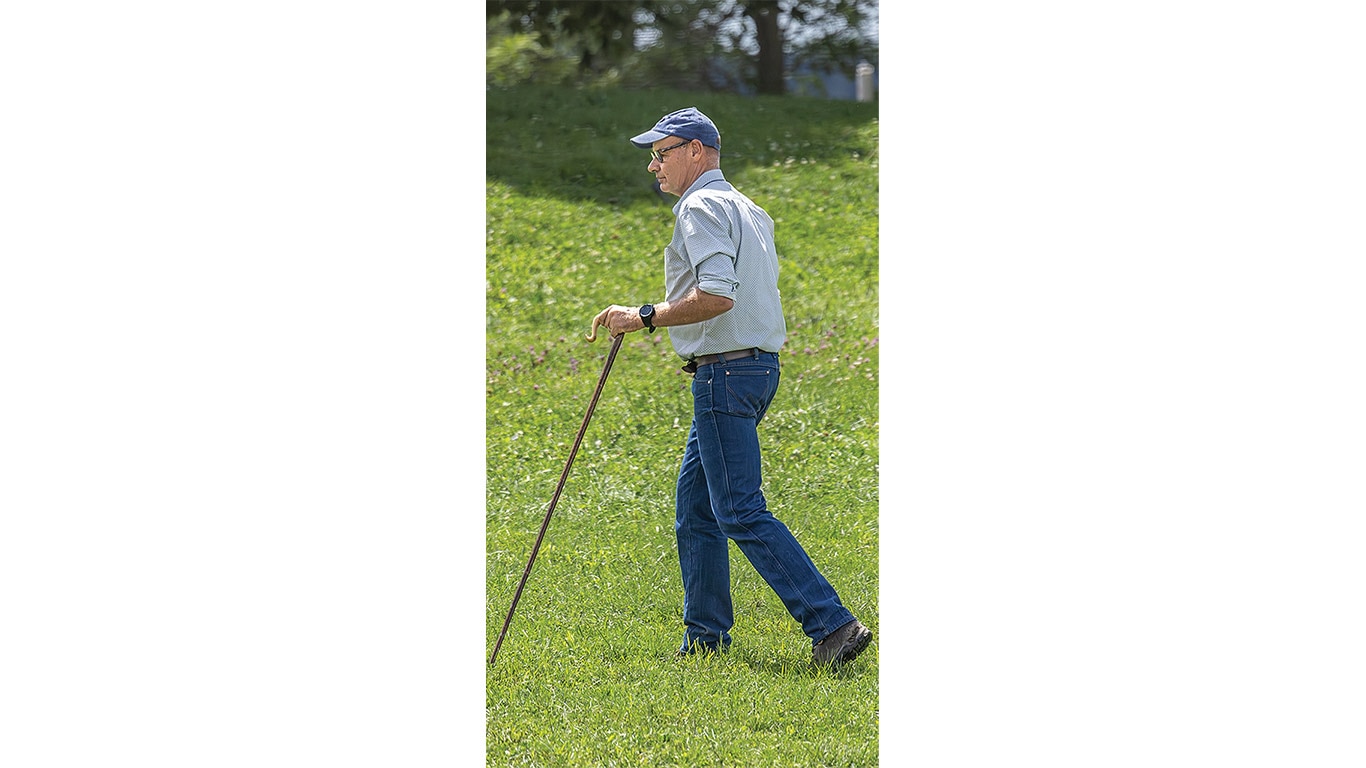
Above. In an International Double Gather sheep dog trial the dog has to separate the five sheep wearing collars from the 15 that aren't and herd them into a pen.
Good from great. That kind of instinct, Milliken adds, is what separates good dogs from great ones. "It's 50% genetics and 50% training. The best dogs are like dancers—they step left when you step left, they feel the rhythm of the flock."
"Teaching the dog to go left and right and stop though is the simple part of what we do," Basson says. "The hard part is for you as a handler to develop sheep sense. You can't learn this from a book. You must spend a lot of time with sheep to develop the muscle memory to predict what the sheep are going to do."
Basson fell in love with sheep and working with stock dogs while working on a family friend's farm in South Africa as a boy. After graduating from agriculture school he managed sheep farms in South Africa for about 20 years. Since they had a lot of sheep, and didn't want to rely on labor, it was an automatic decision to use dogs to handle them.
One day, one of the founding members of the South African Sheep Dog Society mentioned sheep dog trials to him and really encouraged him to get into it, Basson says. He quickly became enamored with the sport, and has been entering competitions for 32 years.
Basson along with his wife, daughters, and 11 dogs moved to the United States in 2014. He built a thriving stock dog training business, Elfa Dogs that offers both in-person clinics and now online courses. He still competes in 12 to 15 trials a year, including the prestigious Soldier Hollow, Meeker, and Kingston events. Yet despite decades of trying, he's still chasing the perfect run.
"That's the beauty of stock dog trialing and training dogs is it's never done," Basson says. "It's an ongoing process. It's no different than being a golfer trying to have the perfect game; you're always working to improve. And for me that's sort of the attraction. You can stand there and tell yourself, ‘I think my dog can do that.' That's the challenge. But at the end of the day you're not competing against other handlers—you're up against the sheep." ‡
Read More

EDUCATION, SPECIALTY/NICHE
Prairie Remnants
Nokota horses, staging a comeback.

AGRICULTURE
John Deere Honored as One of 2025 World's Most Ethical Companies®
John Deere recognized on this prestigious list for the 18th time.