 A John Deere Publication
Nokota horses are curious. The semi-feral herd willingly approach visitors and linger, providing a unique chance to observe horse behavior and herd dynamics from within. Clinic attendees often find the experience spiritual.
Education, Specialty/Niche December 01, 2025
Prairie Remnants
Nokota horses, staging a comeback.
Story and Photos by Martha Mintz
Perched on a bluff overlooking the rolling North Dakota prairie it's easy to imagine yourself transported to another time. The rising sun casts long beams making the grass shimmer as the rising breeze clears the morning dew.
On the next rise, a 60-head band of mares and foals with blocky frames and manes whipped into knotted twists take notice. Unbelievably, the semi-feral blue roans, bays, greys, and blacks gallop over to offer an inquisitive welcome.
Soon they're itching, stretching, even laying down—completely at ease having folded their two-legged visitors into the herd.
"There's something 'other' about them," says Judy Onufer, Nokota Horse Conservancy® board member. "They move toward you. They're very naturally curious."
This band is part of the 112-head conservancy herd comprising a significant portion of the fewer than 800 Nokota® horses in known existence. The conservancy aims to build on these numbers and raise awareness about the unique and rare breed.
Nokota horses have an interesting and debated history. They hail from Theodore Roosevelt National Park (TRNP). Fencing of the park in the late 1940s-1950s entrapped wild horses in the rugged Little Missouri badlands.
"The genetics of the isolated bands coalesced, creating a phenotype that matches documented descriptions of the horses of the Lakota people with some ranch horse influence," says Shawna Lichtenwalner, board member and the Nokota breed registrar.
Hundreds of horses surrendered by Hunkpapa Lakota leader Sitting Bull were auctioned in the region. Though difficult to prove definitively, the conservancy considers it likely Nokota horses are linked to those bloodlines.
The name 'Nokota' was coined by brothers Frank and Leo Kuntz. The North Dakota horsemen competed in cross-country horse racing. They started acquiring horses from the isolated TRNP herd in the 1980s. The bands were occasionally rounded up and auctioned for population control.
"They recognized the horses had a unique look from traditional mustangs," Lichtenwalner says. The Kuntzes prized their hardiness, endurance, and smooth natural gait and thought they deserved preserving. So did others.
In 1999, the Nokota Horse Conservancy was organized. The conservancy maintains a breeding herd near Linton, North Dakota, and is working to research, refine, and build the breed.
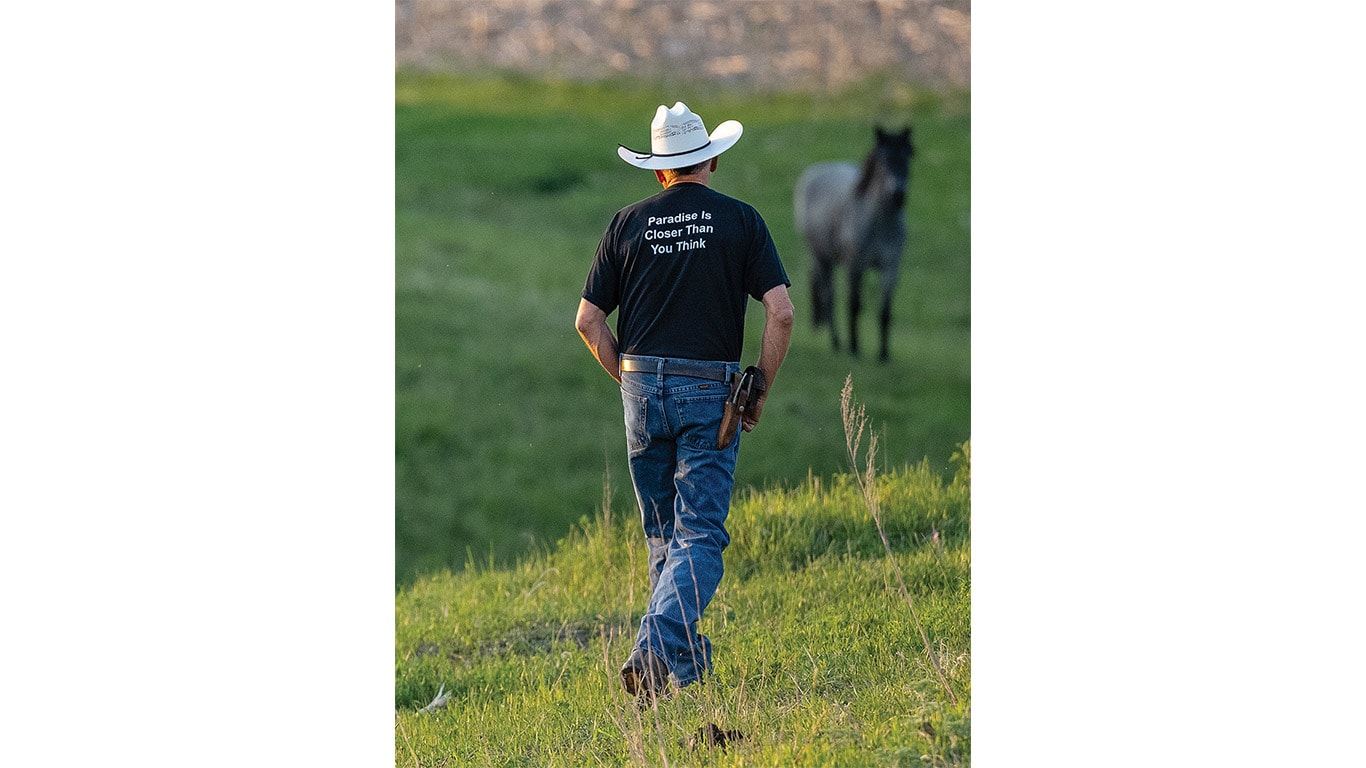
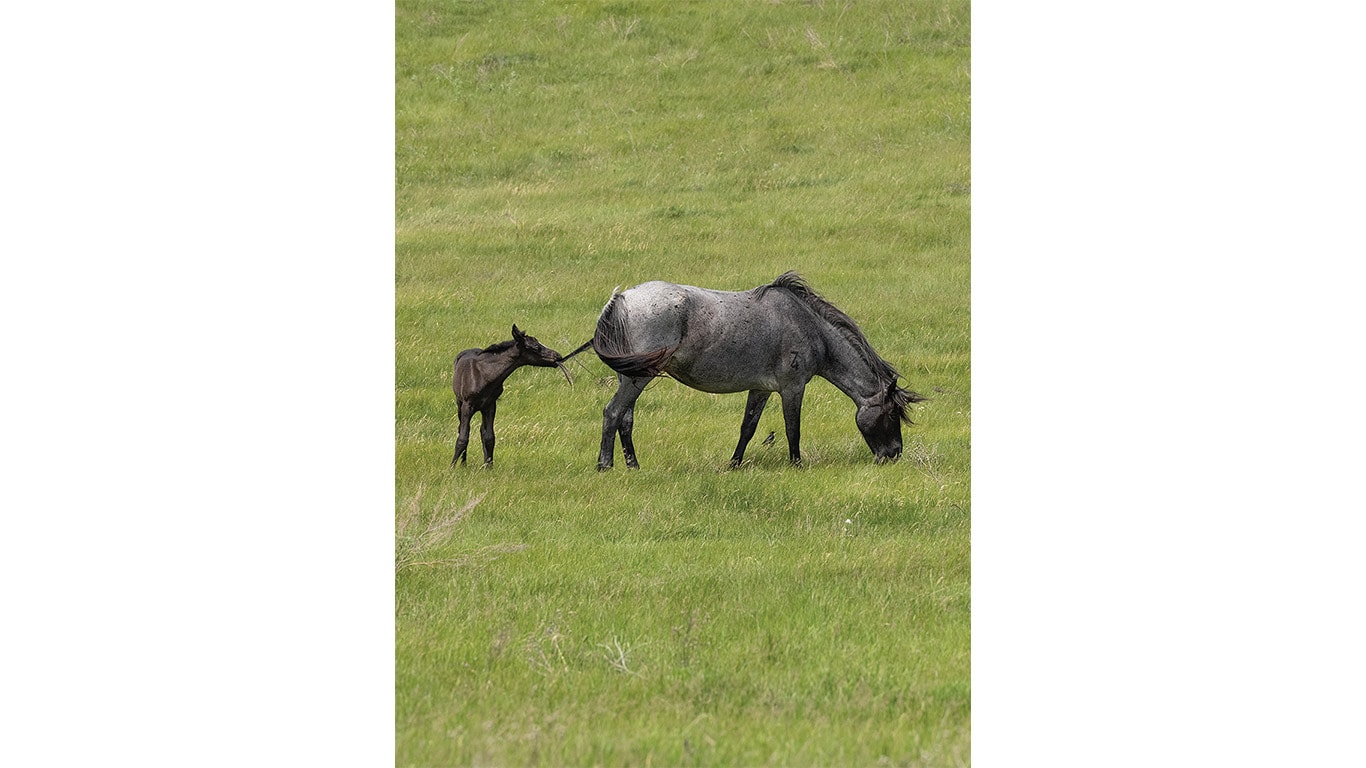
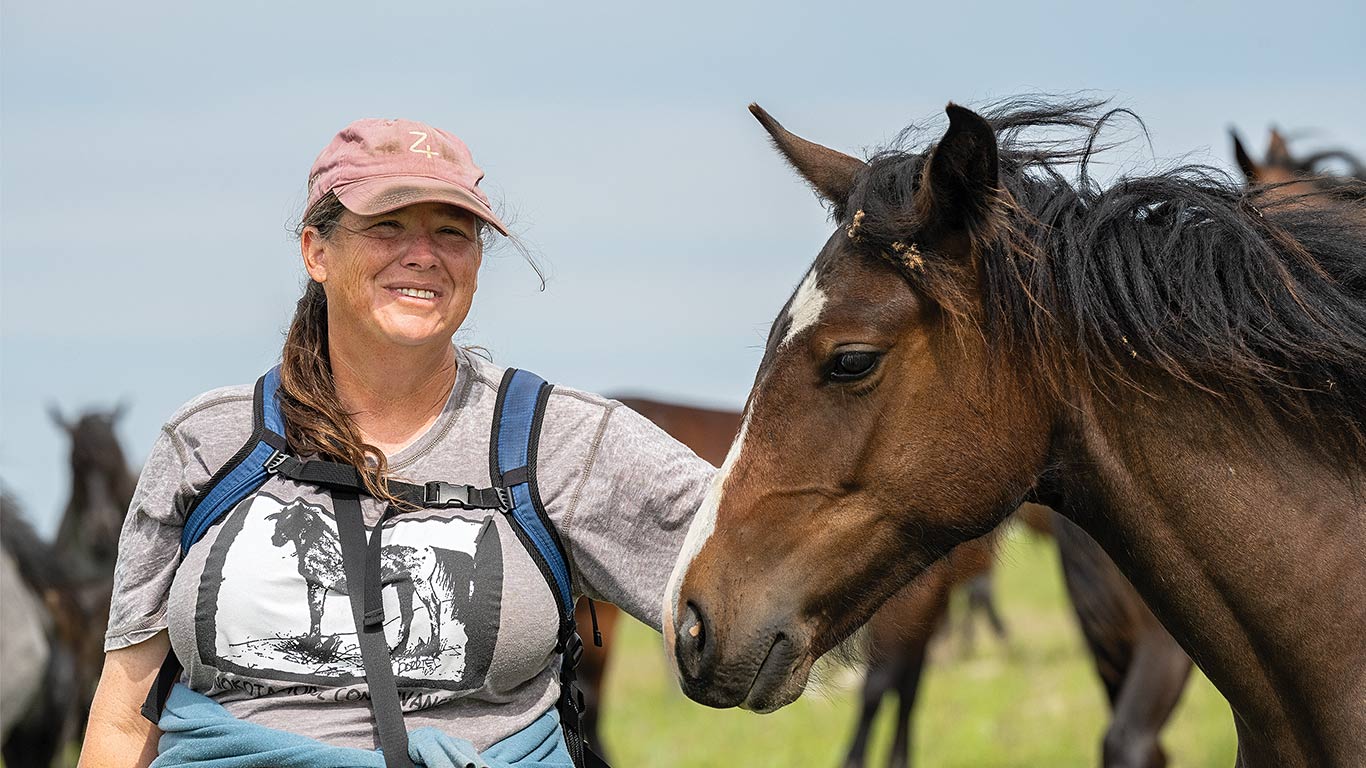
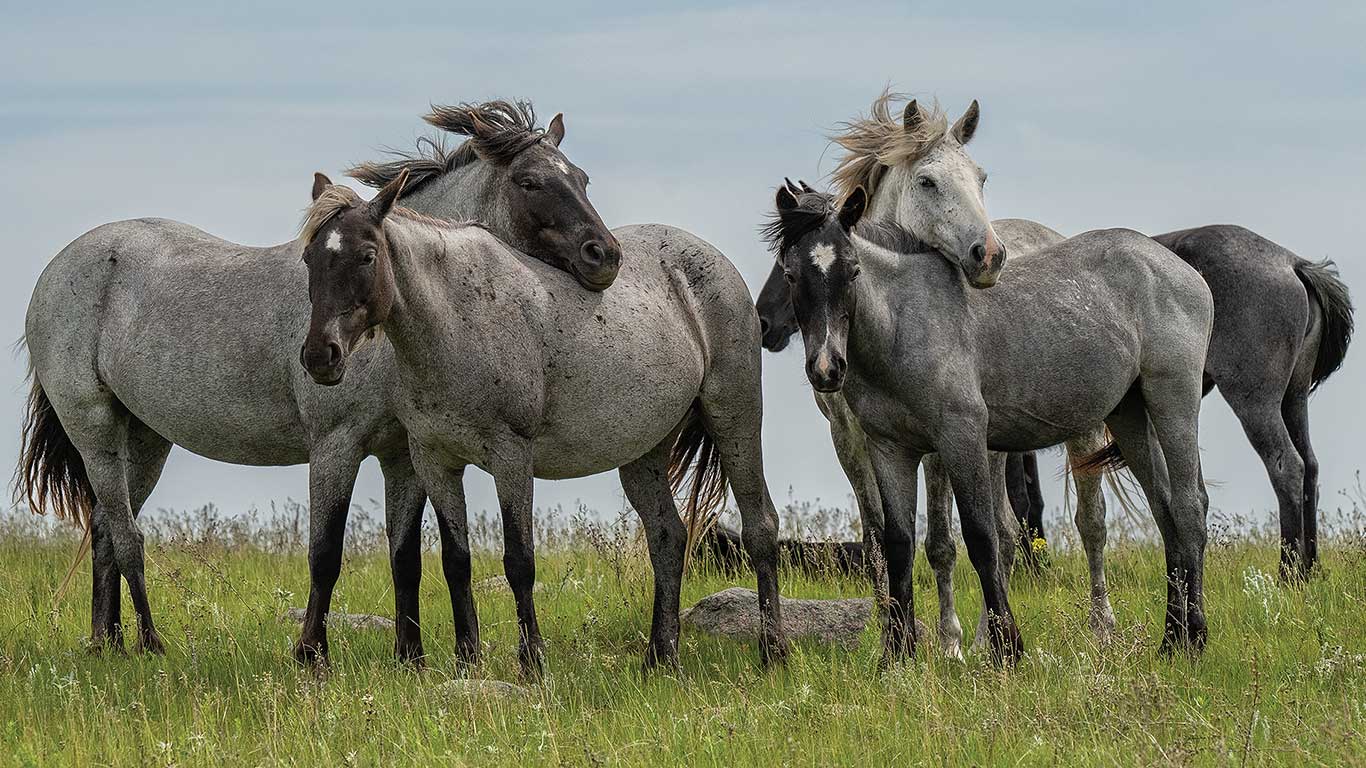
Above. Herd manager Paul Silbernagel checks on the bachelor band. A 2025 foal seeks his mother's attention in a move that's not without risk. As registrar, Shawna Lichtenwalner catalogs the herd and helps guide breeding decisions. Blue roan is a desirable, but somewhat uncommon horse color that occurs regularly in Nokotas.
Building base. One challenge has been classifying Nokota as a breed. A genomic analysis by Cornell University using DNA from 96 horses determined Nokota genetics cluster tightly.
"They're now scientifically classified as a breed, not just an experiment by the Kuntz brothers," Onufer says.
Genetic analysis revealed other interesting tidbits. The conservancy herd is not chronically inbred and the genetic studies will help keep it that way.
"We're able to make much more informed breeding decisions now," Lichtenwalner says. "We used to do a lot of guessing."
The conservancy herd is boarded on herd manager Paul Silbernagel's ranch. He's focused on improving breed up, rotating herds through high-caloric crop residue including corn and sunflowers. They've started running two bands to better control crosses and cover more cycles.
The goal is a base of 150 horses.
"We want enough foals to build the herd while still offering some for sale," Onufer says. To be successful, she explains, Nokotas need to be out in the world and active in breeding programs.
Clinics at the conservancy help forge connections. Attendees interact with the herd in their environment and even do basic training like first touch and halter.
"To be out here with the feral herds in the landscape and environment that forged them...there's just absolutely nothing like it," Lichtenwalner says. ‡
Read More

EDUCATION, SPECIALTY/NICHE
True Soap
An age-old process matches our modern sentiments.

EDUCATION, SPECIALTY/NICHE
Sheep Dog Man
In stock dog trials, your competition is the sheep.