 A John Deere Publication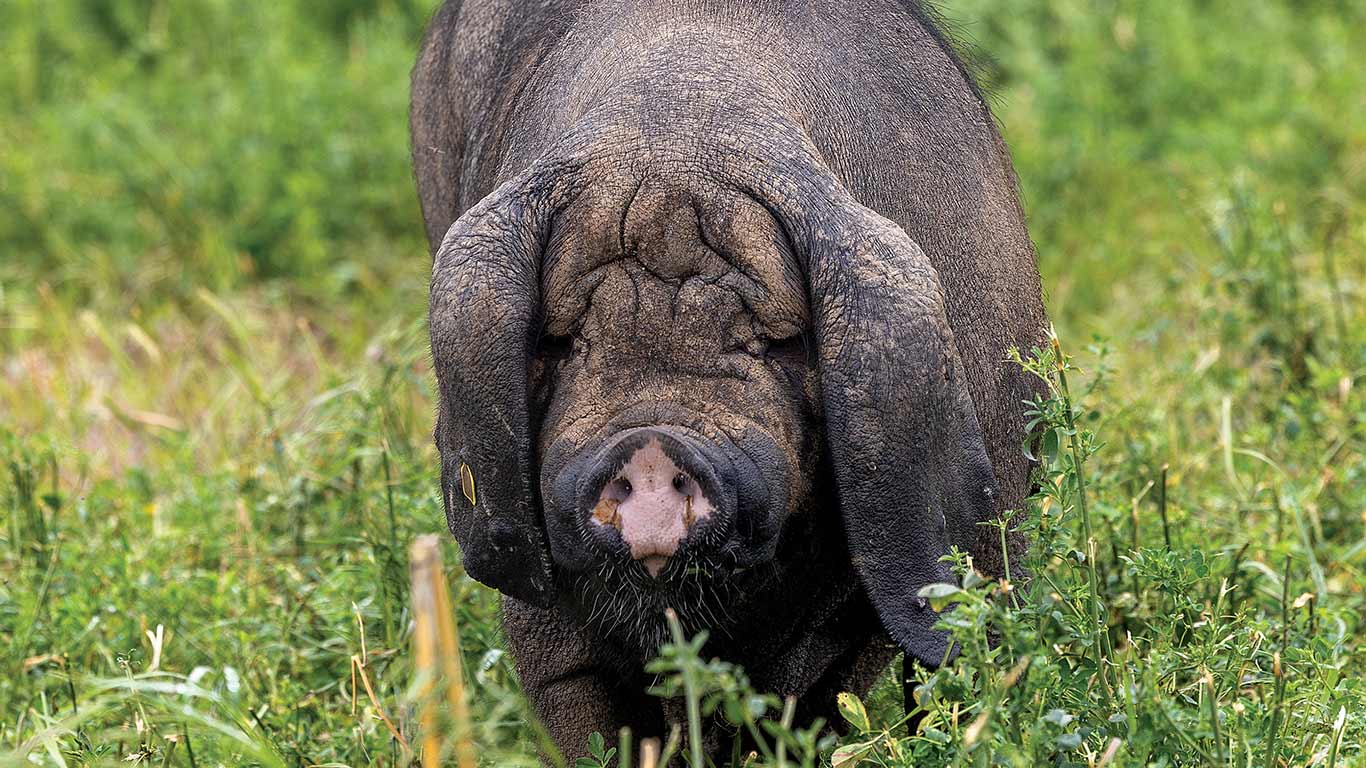
Meishan pigs are the main breed on Odd Bird Farm near Weston, Missouri. Known for their ability to graze, large litter sizes, and excellent meat quality, Jonathan Kemmerer has become one of the nation’s premier Meishan seedstock providers. His herd includes about a dozen sows; he sells feeder pigs nationwide and pork locally.
Agriculture, Farm Operation December 01, 2025
Pork on Pasture
Story and Photos by Bill Spiegel
A brief rain has already swept through on the morning Jonathan Kemmerer sets fence posts in anticipation of opening up new pasture where his herd of heritage pigs can graze.
He uses an old post pounder to drive t-posts into the perimeter of paddock that includes clover, alfalfa, native grass, and cover crops.
A half-dozen Meishan sows linger nearby, undeterred by the rhythmic clang of metal on metal. They grunt, graze, and chew, content in these loess-covered hills in Platte County, Missouri.
When the fence is completed, Kemmerer turns a herd of sows and piglets onto the forage. He grazes them at a rate of roughly one acre per 10 pigs, timing grazing so that the animals eat tender plants.
Hogs graze differently than cattle, he says.
"Cattle are mowers, but pigs are plows. If they run out of food, they start rooting," he explains. "But if you give them more space, they can find what they want and aren't as inclined to root."
Rural roots. Jonathan's grandparents, Robert and Patricia Kemmerer, were respected farmers in Jewell, Kansas. Robert managed the family's dryland grain farm and raised pigs and beef cattle. Patricia was a Master Gardener, well known for her green thumb. Arrangements from her flower gardens earned top prizes at the county fair and local harvest festivals; the family garden yielded enough to keep their six children well fed. As they became older and started families of their own, the bounty fed that generation, too.
"I remember being six years old or so and asking my mom, 'what's wrong with this bacon?'" Jonathan recalls. "She told me that we had run out of bacon from the farm and had to get it from the grocery store."
Jonathan grew up in Overland Park, Kansas, where his father worked in agri-business. College took Jonathan to Nashville, Tennessee, where he studied music and French. A gifted woodwind instrumentalist, he played and recorded music while in school, before studying abroad in Normandy for a year.
"That's where I first discovered heritage breeds, and a form of agriculture that is both traditional and geared towards making higher quality food," he explains.
Small farms are the norm there, and people shop at farmers' markets. He learned about terroir: how the local climate, soil, and topography influence taste and character of food.
When Jonathan moved back to Kansas City from Europe in 2012, he became passionate about local food. He studied to be a sommelier, became interested in economics, took a class on sustainable agriculture at a nearby community college, and supplemented that with a healthy curiosity for how quality food is produced.


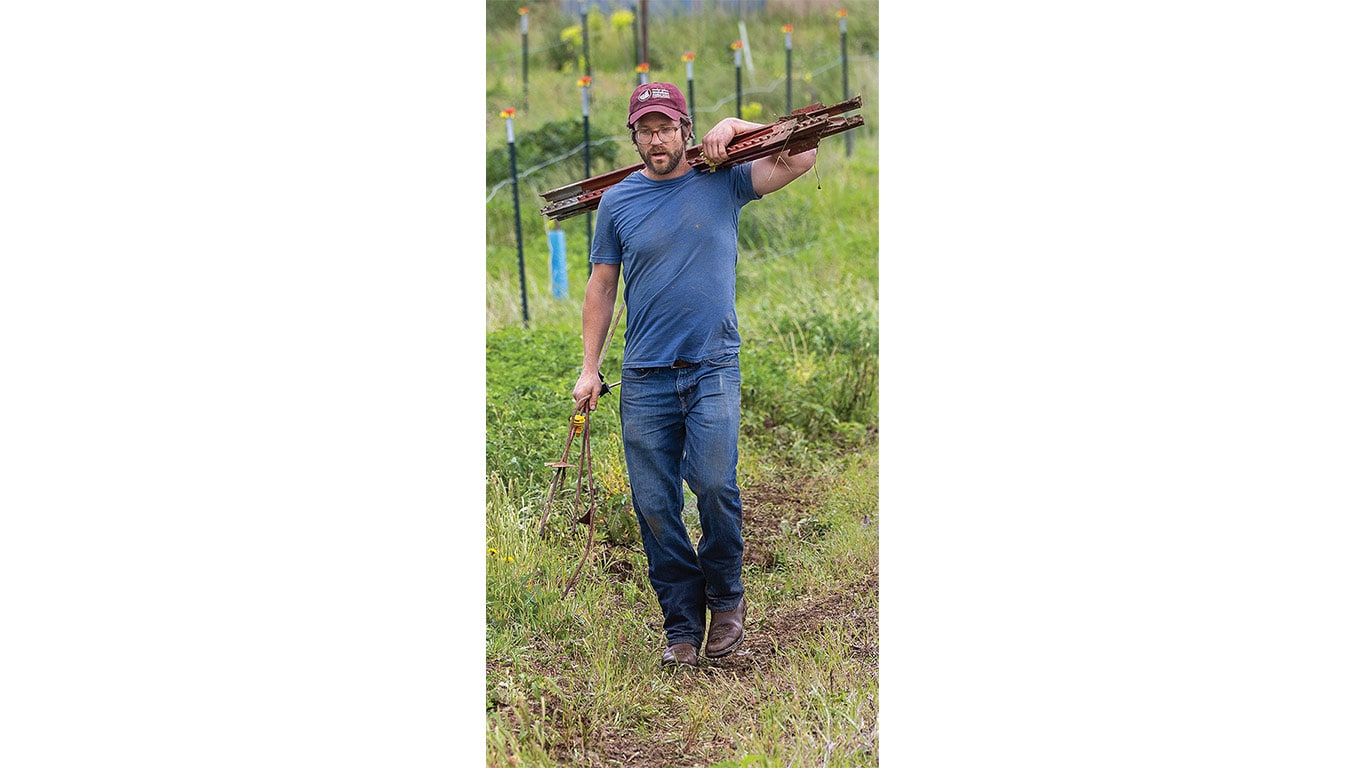
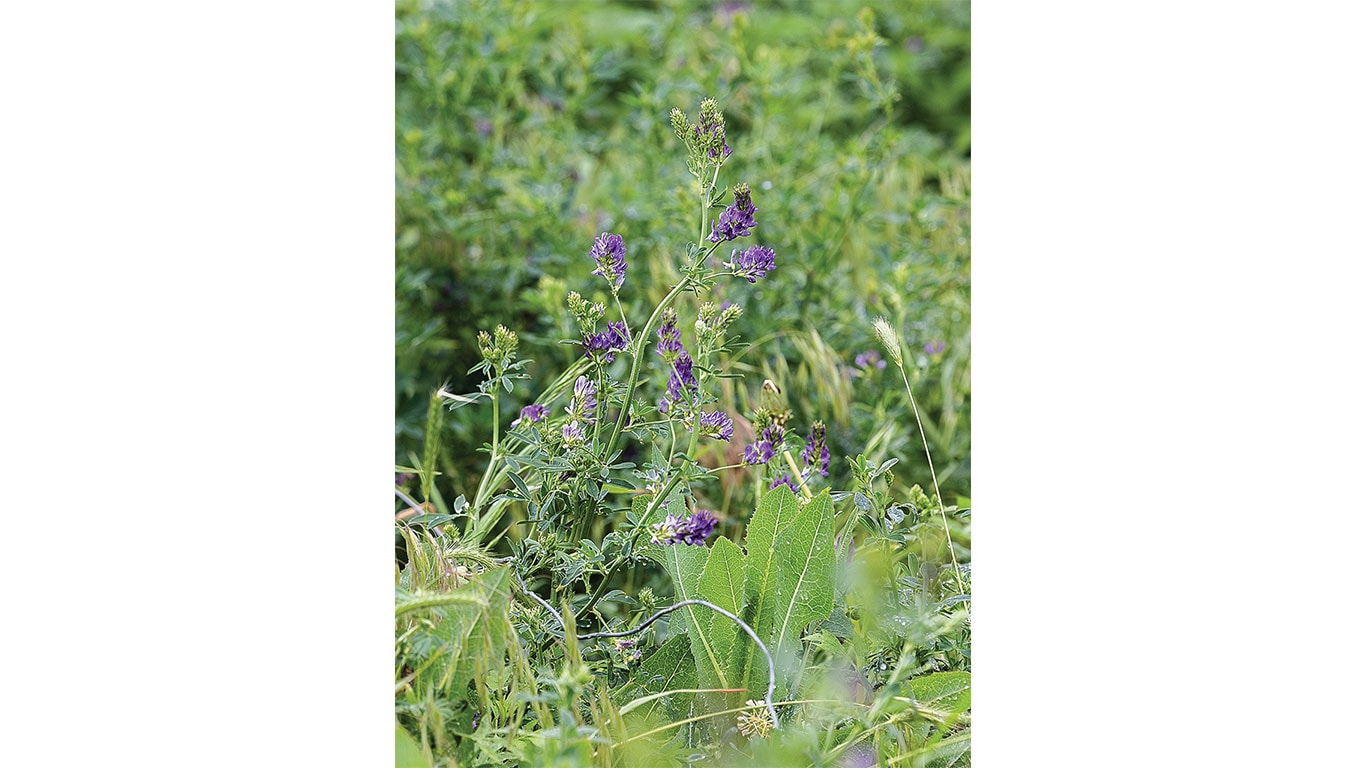
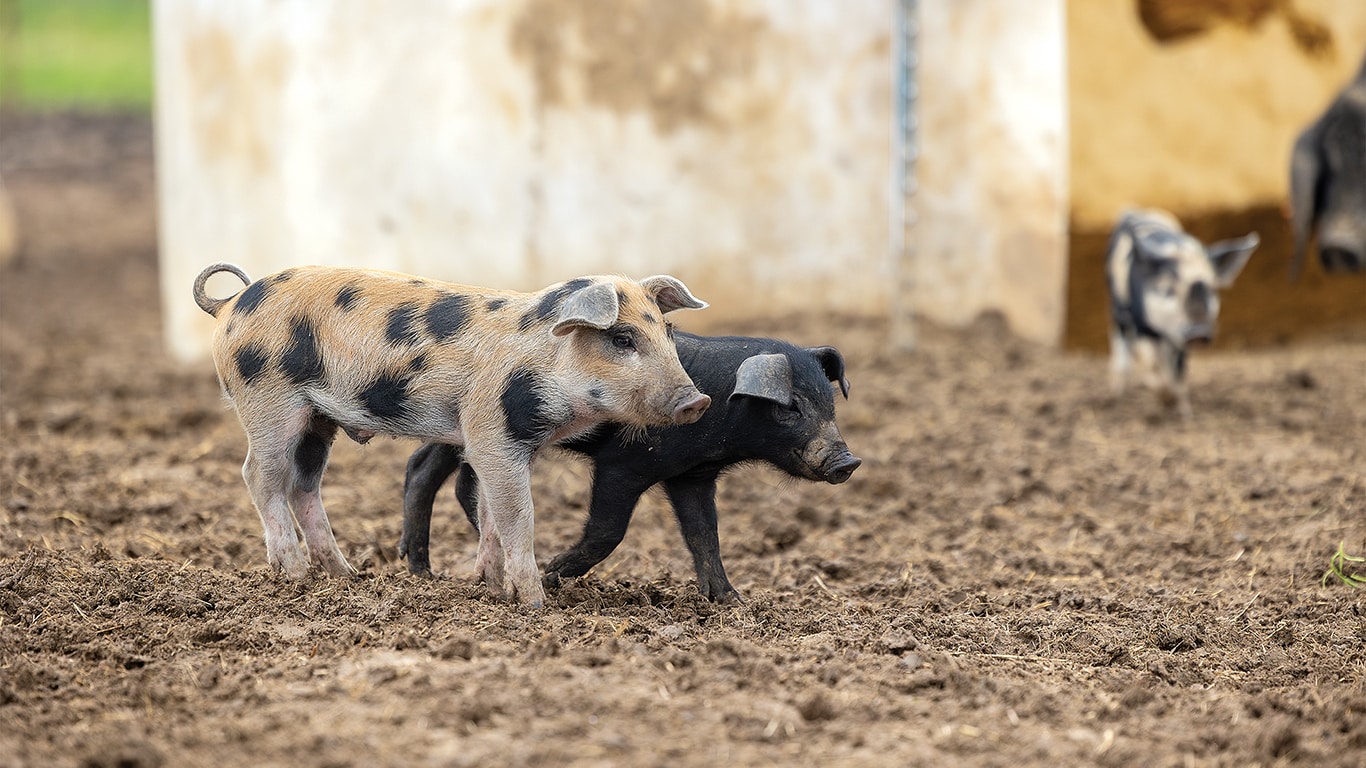
Above. Jonathan Kemmerer's heritage harkens back to his ancestors' rural Kansas family farm. His home library is filled with resources dating back years. Electric fence and t-posts are cheaper than steel and concrete, he reasons. Alfalfa is one of the crops in his grazing mix. Meishan sows have 15-20 pigs per litter.
Odd Bird Farm. In 2017, he bought the 22 acres near Weston, which he dubbed "Odd Bird Farm," because of his unconventional approach to farming. The notion of a farm to table movement in the Kansas City metropolitan area, combined with what he remembered on his grandparents' farm, was always in the back of his mind.
"That concept of food having a sense of place, reminded me of food that was special to me as a child, and why it was special to me," he says.
He settled on raising pigs; specifically, Meishan.
The Meishan breed, native to China and once favored by researchers in America, had become nearly extinct in the U.S. He has helped revive the breed, which he considers an ideal pig for homesteaders.
Meishan sows have 15-20 piglets per litter. Between litter size and feed efficiency, feed costs tend to be much lower than traditional swine herds.
In China, Meishans feed on garden scraps; their owners use their manure as compost.
"They have a larger digestive system and are able to digest more fiber than a conventional pig," he says.
Top-quality pork. Meishans are an ideal homesteader pig, but Jonathan thinks there's great potential in a three-way cross. "I'm doing that with another heritage breed called the Red Wattle and then crossing them with an old line Duroc that produces really high-quality meat," he explains.
The farm's income is derived from selling feeder pigs and breeding stock to Meishan producers across the nation. He sells meat each week at the Overland Park Farmers' Market and offers direct meat sales.
Growing pigs on pasture is less expensive than in a barn, and it makes sense: the grasses and forbs the pigs eat are virtually free, and steel posts and hog panels are cheaper than steel and concrete buildings. It takes longer to fatten out pigs on forages, "…but since I can supply a lot of their feed without paying for it, it doesn't matter if they're growing as quick," he points out.
Kemmerer aims to plant a few hundred trees in the next couple of years, species like mulberry, bur oak, persimmon, and hazelnut. Pigs can thrive on the fruit and nut from those trees, he reasons.
He's planning for the future, but enjoying each day.
"Part of this is just fun and interesting. But it is such a valuable lifestyle to me," he says. "I just get so much out of it." ‡
Read More

AGRICULTURE, LIVESTOCK/POULTRY
Firewood Basics
How to get the most from your wood-cutting efforts.