 A John Deere Publication
The last gather had poignant moments. When a range cow approached Nancy looking to be hand fed, she admits she lost her composure a bit.
Agriculture, Livestock/Poultry December 01, 2025
On Their Terms
Selling the cow herd a mark of success, not failure.
Story and Photos by Martha Mintz
Validation was one of an array of strong feelings washing over Jeff Okerman as he, his wife Nancy, and father-in-law David Branger watched 90 of their prime 3-year-old cows move through the ring at Miles City Livestock Commission. It was the first lot of their 475-head herd dispersal.
Seats around them were filled with friends, family, and neighbors there to support and celebrate. The sale wasn't driven by duress. It was a carefully planned strategic business move. A well-earned soft retirement.
"When it became obvious our kids weren't coming back to ranch, we started discussing what to do," Nancy says. Talk went on for years. Urgency built as they felt themselves incrementally getting a little older and moving a little slower.
They had three enterprises: the ranch, farming, and a commercial cow herd. Something had to go and it wasn't going to be the land.
"Once you sell a ranch in Montana, you'll never have another," Jeff says. That left the cows.
They knew cattle prices peaked in roughly 10-year cycles. The next time prices went high, which they soon did, they put their plan into action. A year was spent planning with advisors. They kept the herd well fed and in top shape for the February sale.
Yearling heifers were retained. They had the feed resources to further develop them and it would spread income. They will be sold as bred heifers, officially closing a chapter for the Okermans.
"People always talk about selling when prices get high, but rarely do. We realized if we didn't act it would be another 10 years before we had the chance," Nancy says. "We had to be honest with ourselves about if we could still be doing a good job with the cattle on our own at 80."
They bought their place south of Miles City in 1992. It was a permanent home for the 200-head herd they'd built on leased ground. There was room to graze and grow on the 33 sections.
It was advertised as having a 400-head carrying capacity. It wasn't quite up to that. The rough gumbo buttes and highly erodible cheatgrass-infested acres had been heavily used.
"We worked for the last 30 years to develop water and a deferred rotational grazing system. Today I think we could run 400 cows year in and year out and even weather at least one dry year without making too many changes," Okerman says.
The herd also transformed. They selected cows that thrived in their environment, carefully managing genetics and health.
"These are blue-collar cows. They're not perfect, but they're solid," Jeff said, icicles twinkling on his mustache as he, Nancy, and their friends loaded the herd one windy, -21°F February day.
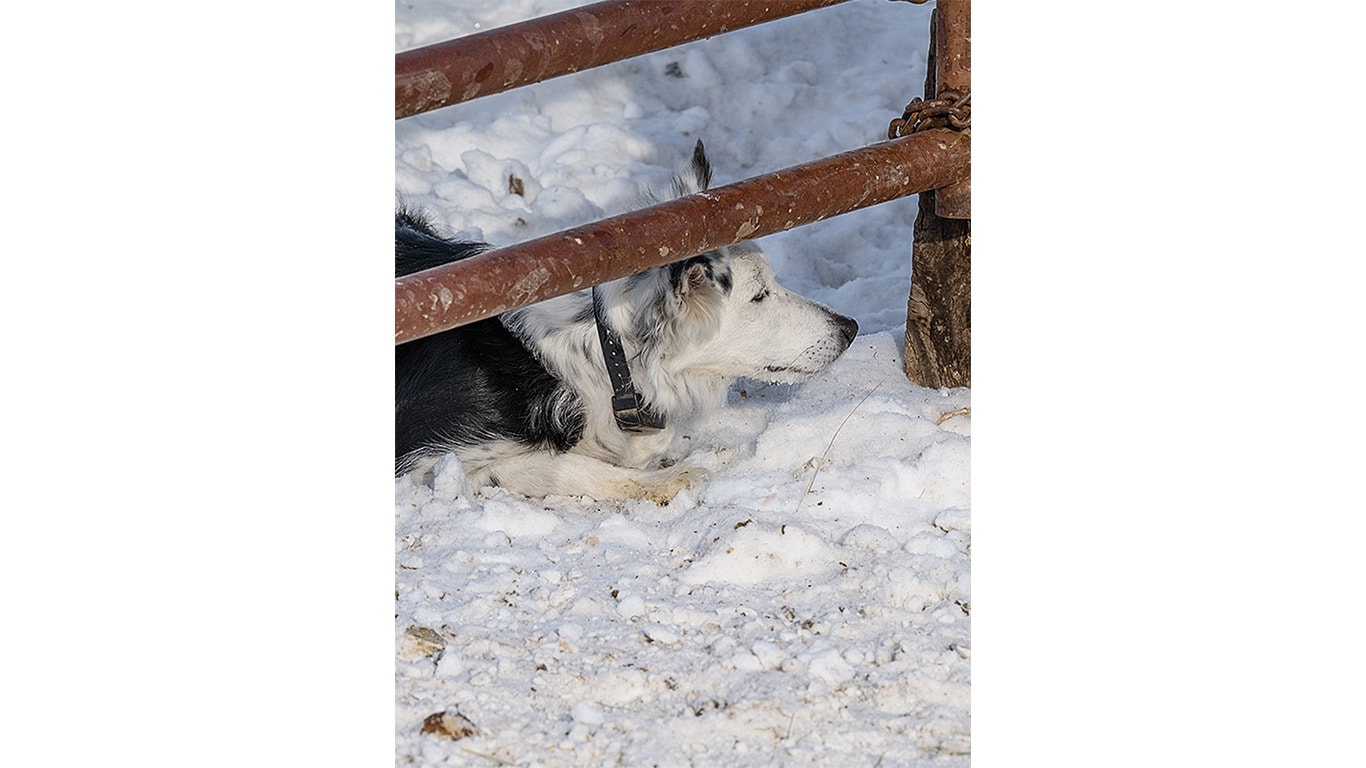
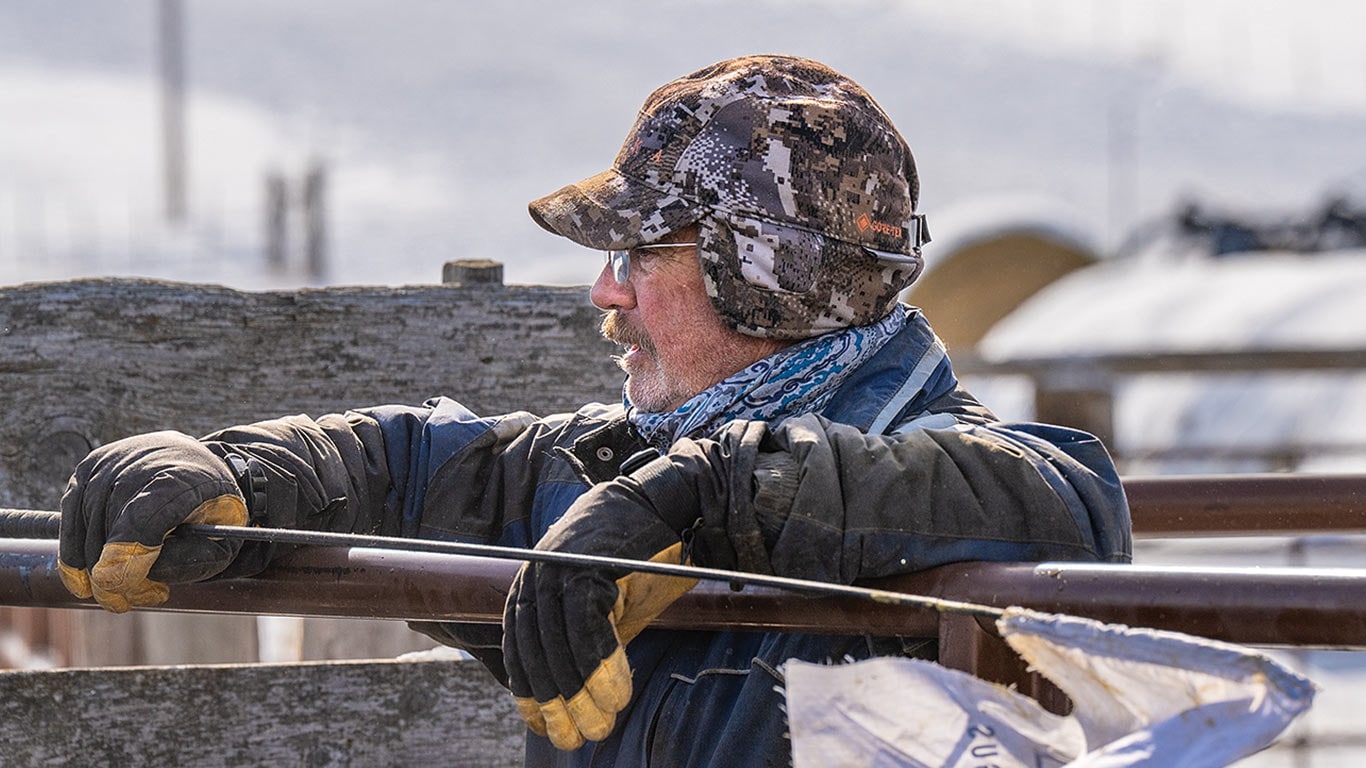
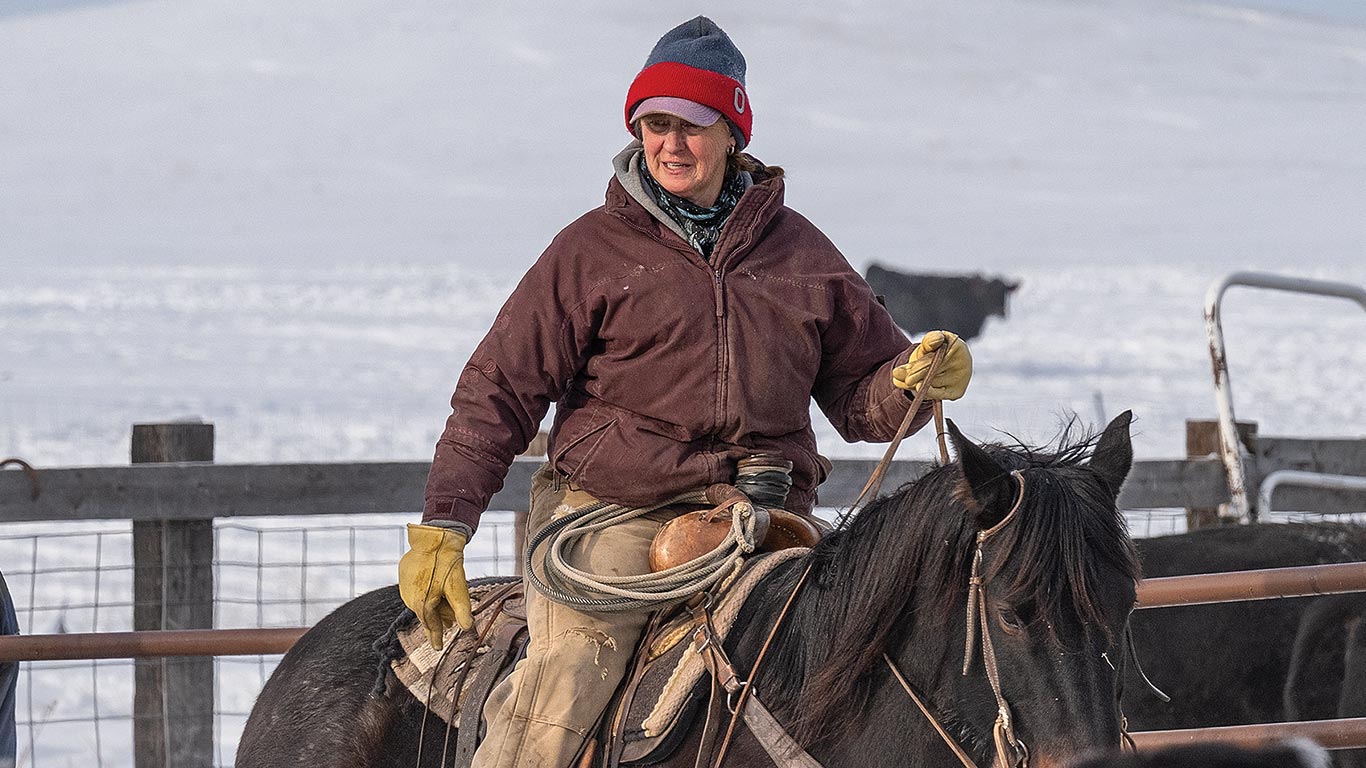
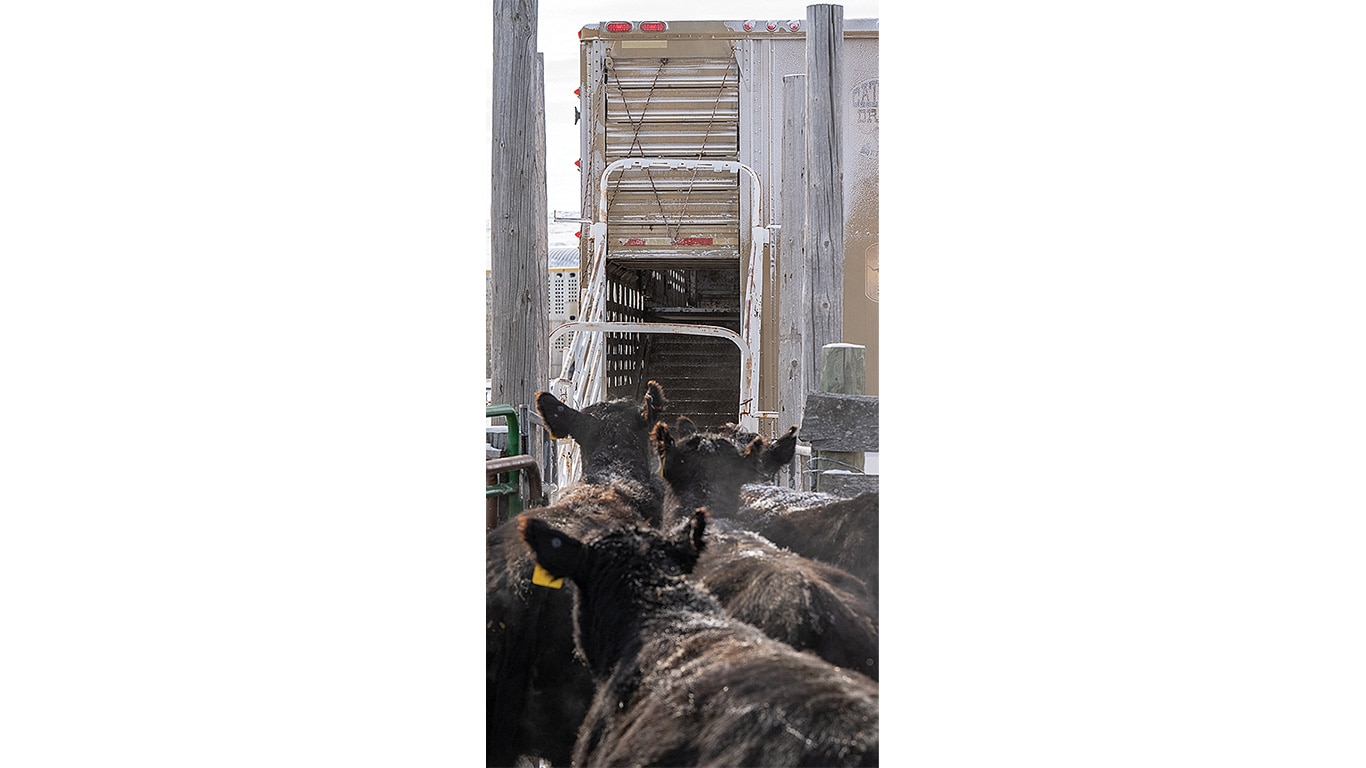
Above. Extreme temperatures complicated the sale. Worried about their cows, the Okermans offered to pay the feed bill to keep them in place after the sale until the weather broke.
The sale. Despite the lingering and brutal Montana cold snap, the uniform group of 3-year-olds was a hot commodity on sale day. They brought $3,985 each—a facility record for commercial cattle and possible state record.
"I was able to relax a little after the first bunch," Nancy says.
More of the same followed. The balance of their mature herd was auctioned off in age-based lots. The uniformity of the groups was a point of pride for the family, a testament to what they had built.
"We were sold out in less than 30 minutes. Every winning bidder took every single cow in each cut with no sorting," Okerman says.
Selling a herd is often read as failure in the industry. For the Okermans, it was a high point.
The stress of ever-looming failure in the form of hail, grasshoppers, and markets was wiped away. In the months since they've found new purpose.
They visit their grandkids in Colorado more regularly. During calving season, Jeff was in Mexico, making his dream of catching a tarpon a reality.
"I had some pangs of survivor guilt, but they seemed to go away with a margarita," he says.
Time and money became available to make ranch improvements, like developing water and repairing roads. The work will benefit the young family leasing their land, creating opportunity for their kids to continue in the industry. The Okermans have found it all to be very rewarding.
"In agriculture, it's hard to judge success because you're so close to failing all the time. We've all had our backs against the wall at one time or another and been forced to make hard decisions. To be able to sell our cows on our terms means a lot to us," he says. Their business was a success. ‡
Read More

AGRICULTURE, EDUCATION
High-Altitude Rice and Tofu
Farmers feed local food fans tofu and rice...in the Alps.

AGRICULTURE, LIVESTOCK/POULTRY
Flock Forward
Holiday traditions build up a turkey farm worth passing down.