 A John Deere Publication
Healthy wheat leaves are akin to lungs: they are essential in the plant's respiratory process, turning sunlight into sugars that produce wheat kernels.
Agriculture, Education December 01, 2025
Keep it Clean
Wheat leaf health is vital.
Story and Photos by Bill Spiegel
For years, winter wheat was the kind of crop that farmers tended to plant and kind of…well, forgot about until harvest.
In 1962, Dow® AgroSciences introduced mancozeb, a fungicide including maneb and metiram, to manage powdery mildew, some rust, and leaf spot.
The thinking back then was that wheat leaf tissue is akin to a pair of lungs in a human. It is through the leaves that the plant respirates. It's where photosynthesis occurs, and the healthier that leaf tissue, the more productive the wheat plants will be.
Sixty years later. The industry has come a long way from mancozeb. But so have wheat diseases, says Kelsey Andersen Onofre, assistant professor for wheat and forage crops at Kansas State University. From stripe, leaf, and stem rust to wheat streak mosaic virus (WSMV), triticum mosaic virus (TMV) and High Plains virus (HPV), and assorted spots, scabs, and smuts, there are plenty of ways for wheat producers to lose yield from disease.
Wheat breeders have worked wonders developing varieties that combine yield, grain quality, and disease resistance, but fungicides are still a solid management tool, Andersen Onofre says.
K-State research shows using fungicides on disease-susceptible varieties in years of high disease risk, has a 90% win rate. Varieties with built-in disease resistance show yield response 60% of the time. When disease risk is low, the response is 25% and 5%, respectively.
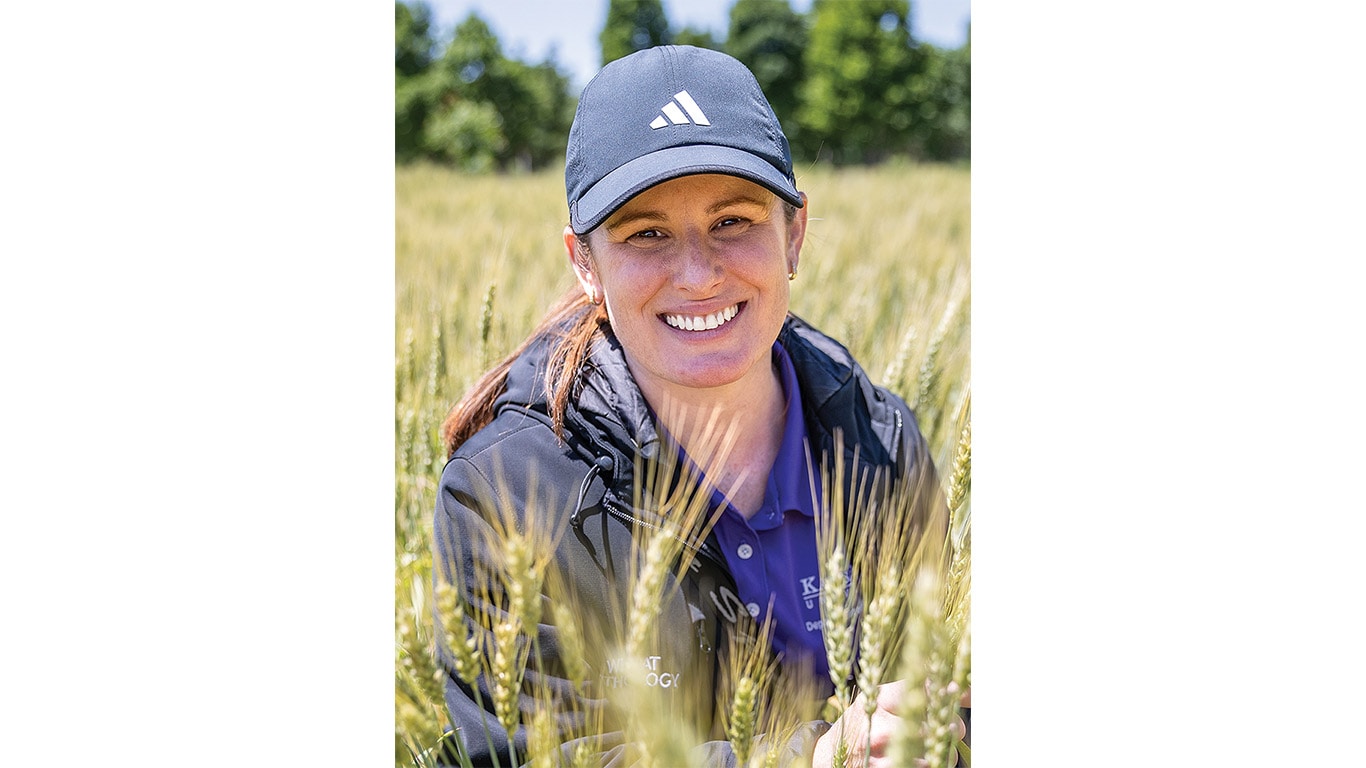
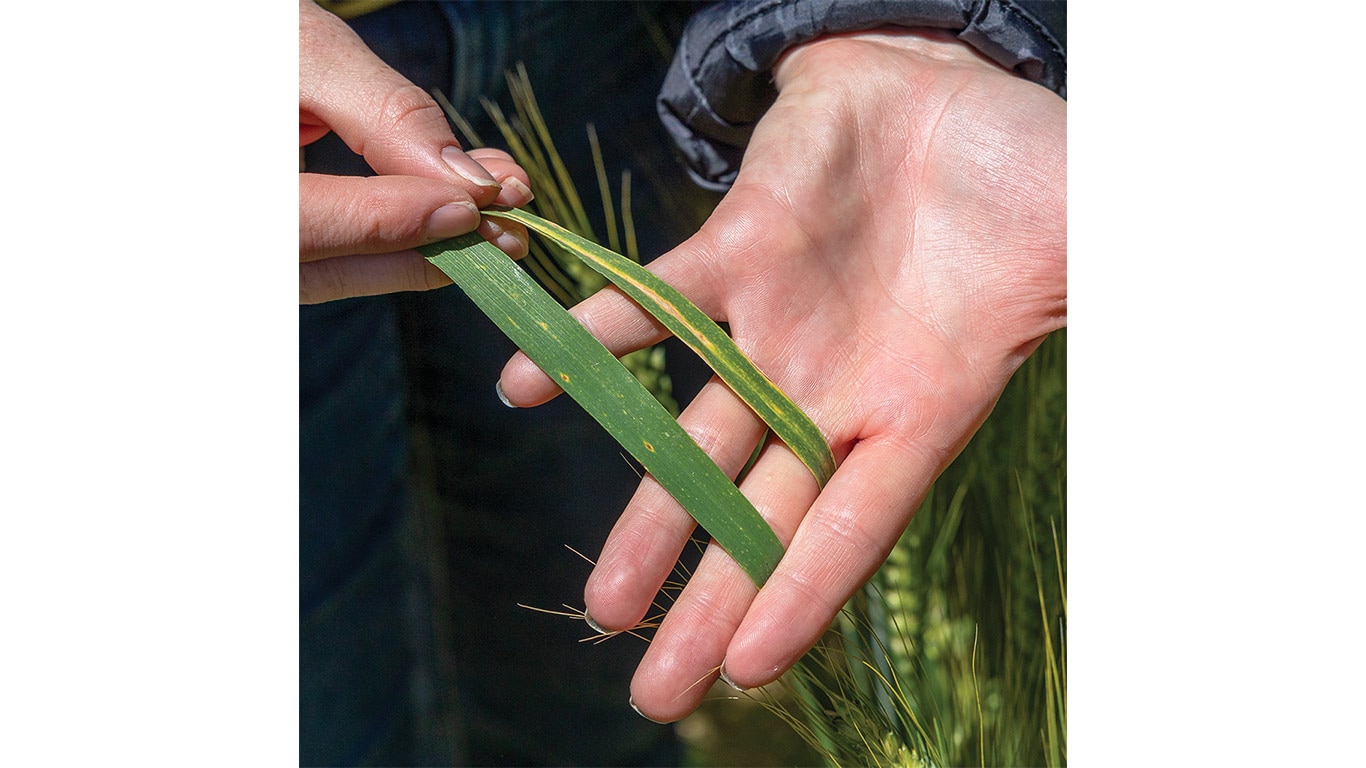
Above. Choosing disease-resistant wheat varieties and/or adding fungicide to prevent disease is critical to ensure plant health, says K-State plant pathologist Kelsey Andersen Onofre.
Rusts, scabs, and smuts. Most wheat diseases can be managed with timely fungicide applications; the windows are at spring greenup, flag leaf emergence, and flowering. And there are lots of choices for wheat producers to make in terms of fungicide timing and product, Andersen Onofre points out. Each has its pros and cons, she adds.
"The early application is attractive because you can potentially mix this with your spring herbicide application, and it can be pretty inexpensive," Andersen Onofre explains.
From 2020 to 2024, stripe rust hurt winter wheat yields to varying degrees, thanks to race changes within the disease that made it more aggressive.
The university's research shows a single application at greenup offers a 7 bushel-per-acre yield gain over untreated acres on varieties susceptible to stripe rust in years where stripe rust pressure threatens, she says. When adding a fungicide application at flag leaf to the early application, the yield difference compared to zero fungicide was 17 bushels per acre.
"The good news is flexibility. If you know the risk of stripe rust is high, and you have to get the application on at flag leaf, you would probably be okay," she says. The dual application would be best, however.
In the case of fusarium head blight, commonly called head scab, growers must be ready to treat at the final application window, which is when the crop is flowering. According to Andersen Onofre, head scab is most likely when wheat is planted into corn stubble right after corn harvest, plus when farmers plant susceptible varieties and when weather conditions favor scab development.
"If you have scab risk, there is a very small window right at flowering to make a fungicide application. When we see symptoms, it is too late," she explains.
The important thing is mode of action. Wheat growers have an option of three: strobilurin, triazole, and mixed mode of action, which combines them. Strobilurins provide protection against mildews, blotches, and rusts, while most triazoles will suppress head scab.
Growers should study labels and university trials when choosing which fungicides to use.
What about WSMV? Until 2025, stripe rust was the disease Andersen Onofre worried about the most. But the 2025 crop was hammered by WSMV, a virus vectored by the wheat curl mite, which thrives on volunteer wheat between wheat harvest and wheat planting. The only practices that can thwart WSMV are controlling volunteer wheat in the summer and fall, and choosing wheat varieties that resist the disease, she explains.
"This year we had one of the warmest falls on record [fall of 2024], and mite populations stayed active. If it had gotten cold in October, the mite populations may have gotten cut off," Andersen Onofre says. "We got really unlucky with weather." ‡
Read More

AGRICULTURE, EDUCATION
High-Altitude Rice and Tofu
Farmers feed local food fans tofu and rice...in the Alps.