 A John Deere Publication
Introducing fresh, farmstead tofu to Swiss consumers has involved a lot of recipes and cooking advice, as well as highlighting its difference from mass-market tofu. Says maker Katrin Portmann, "It's like a fresh cheese."
Agriculture, Education December 01, 2025
High-Altitude Rice and Tofu
Farmers feed local food fans tofu and rice...in the Alps.
Story and Photos by Steve Werblow
Eating local in Switzerland immediately brings to mind cheesy fondue or a thick rösti of shredded potatoes. But a local tofu-and-rice bowl? That seems more like a dish from Japan.
Not anymore, thanks to farmers experimenting with new crops and consumers eager to buy local.
Diversified. At Biohof Trimstein in the western Swiss highlands, Katrin Portmann and Hannes Moser make 220 to 440 pounds of tofu per week from local soybeans in their repurposed dairy barn. Their organic operation includes strawberries, vegetables, eggs, broilers, hogs, agritourism, forestry, and more.
Diversification, organic labels, and a strong animal welfare story help the couple eke out a living on just 35 acres of farmland and 25 acres of forest, notes Portmann—a size she says is "not enough to live, but too much to die."
Farmers around Trimstein started growing soybeans about 30 years ago, when the crop gained popularity as a feed and a nitrogen fixer. Edible varieties came into the mix to supply some larger tofu producers, says Portmann.
After learning about tofu production on another Swiss farm, Portmann checked with her egg and produce customers to see if they would buy tofu from her, too.
"I knew the global market is going into this direction—less meat and more substitution of meat with plant proteins—but in the market I could reach, I had to find out, 'is it real?'" she recalls.
Turns out it is.
The couple bought equipment from Taiwan to soak, grind, and coagulate soybeans, and had a local machinist build them a gentle press. Then they introduced their fresh tofu to the local market.
"What was very important at the beginning was to explain to the customers how to cook with tofu," Portmann says. "Very often we add spices because Swiss people are not used to eating tofu."
Today, she and Moser supply farmstead tofu to about 30 shops and 5 restaurants. They also sell some of their tofu—and a soft-textured, fiber-rich byproduct called okara—beside other Biohof Trimstein products in refrigerated vending machines in their tiny, 24/7 farm store.
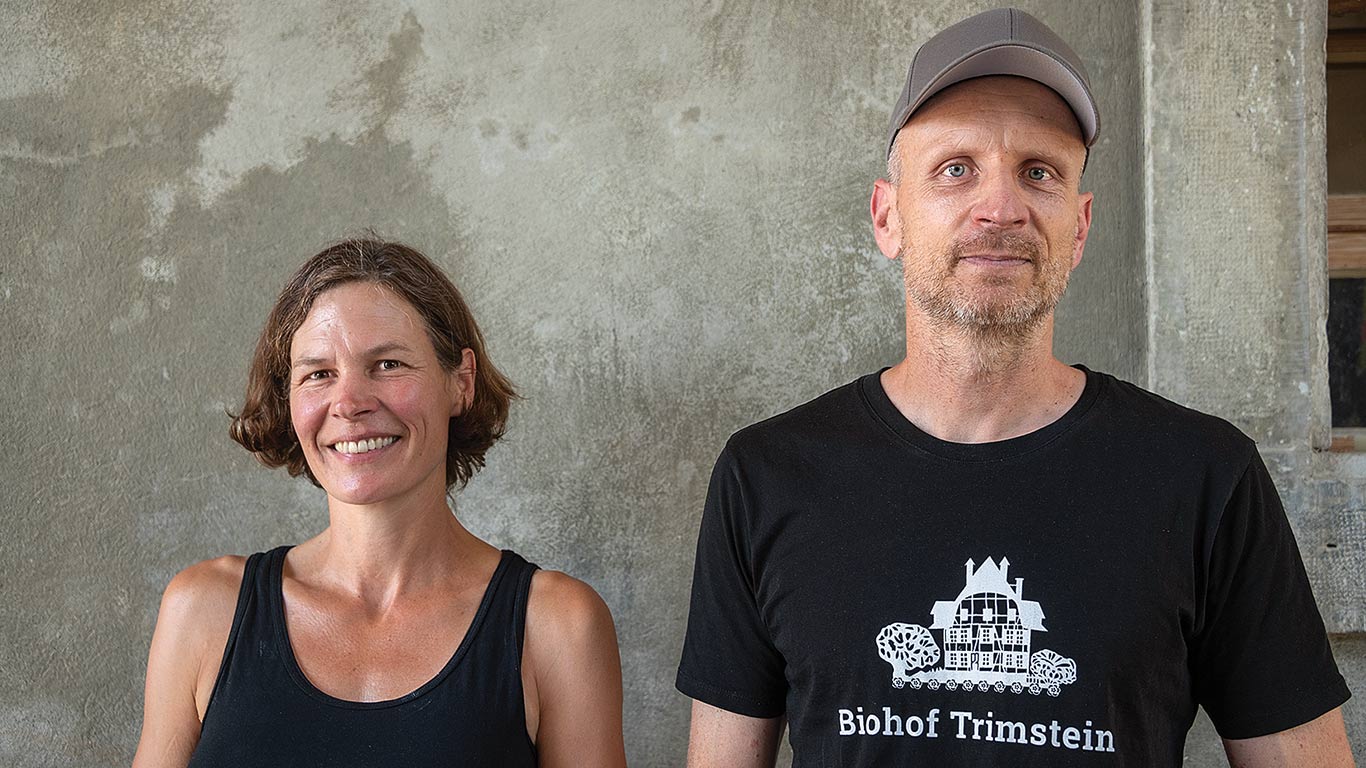
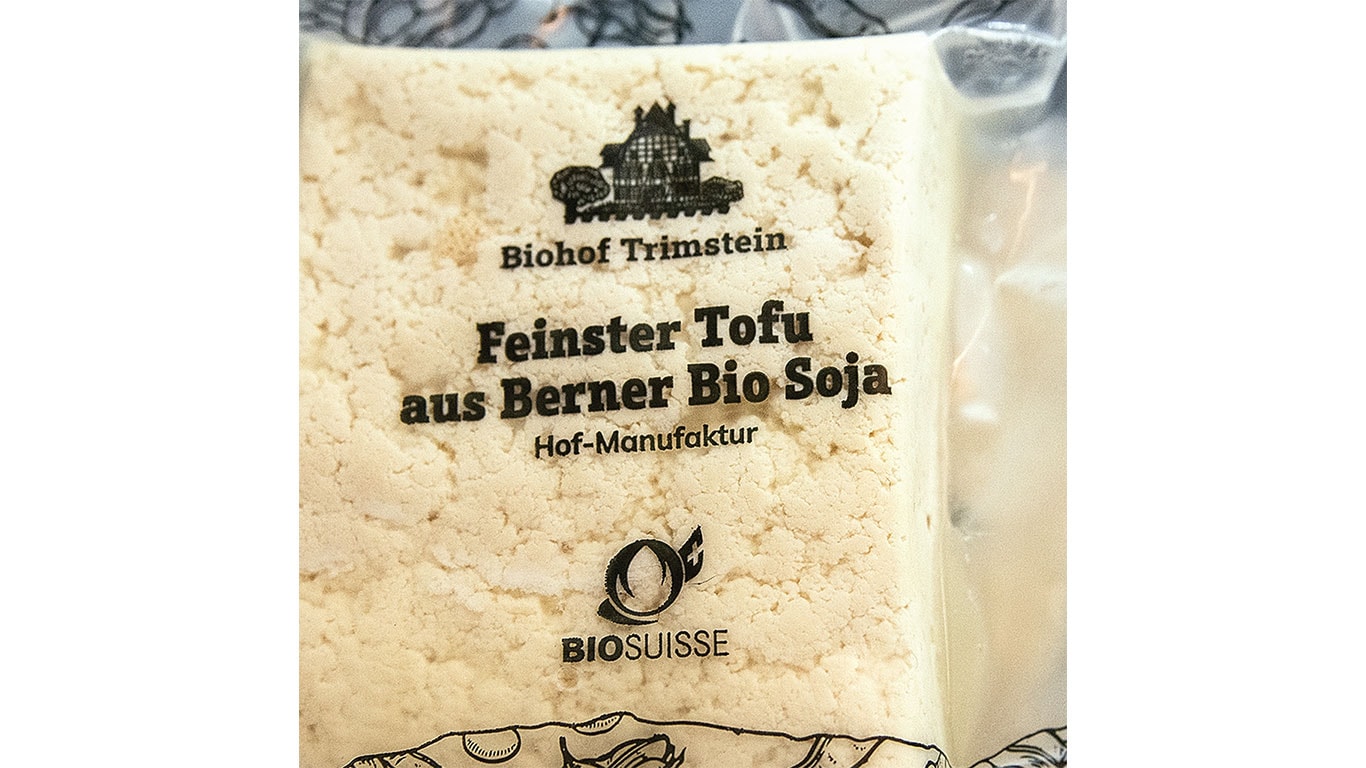
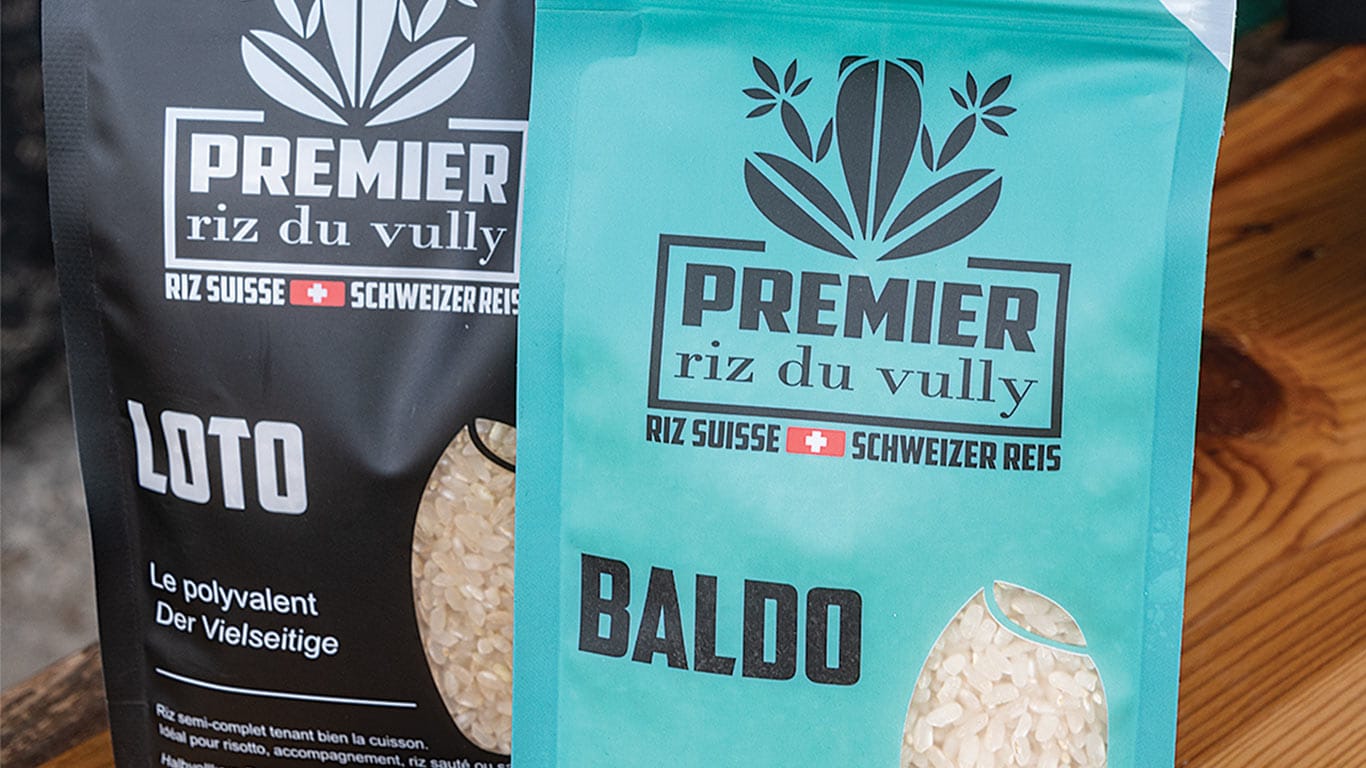
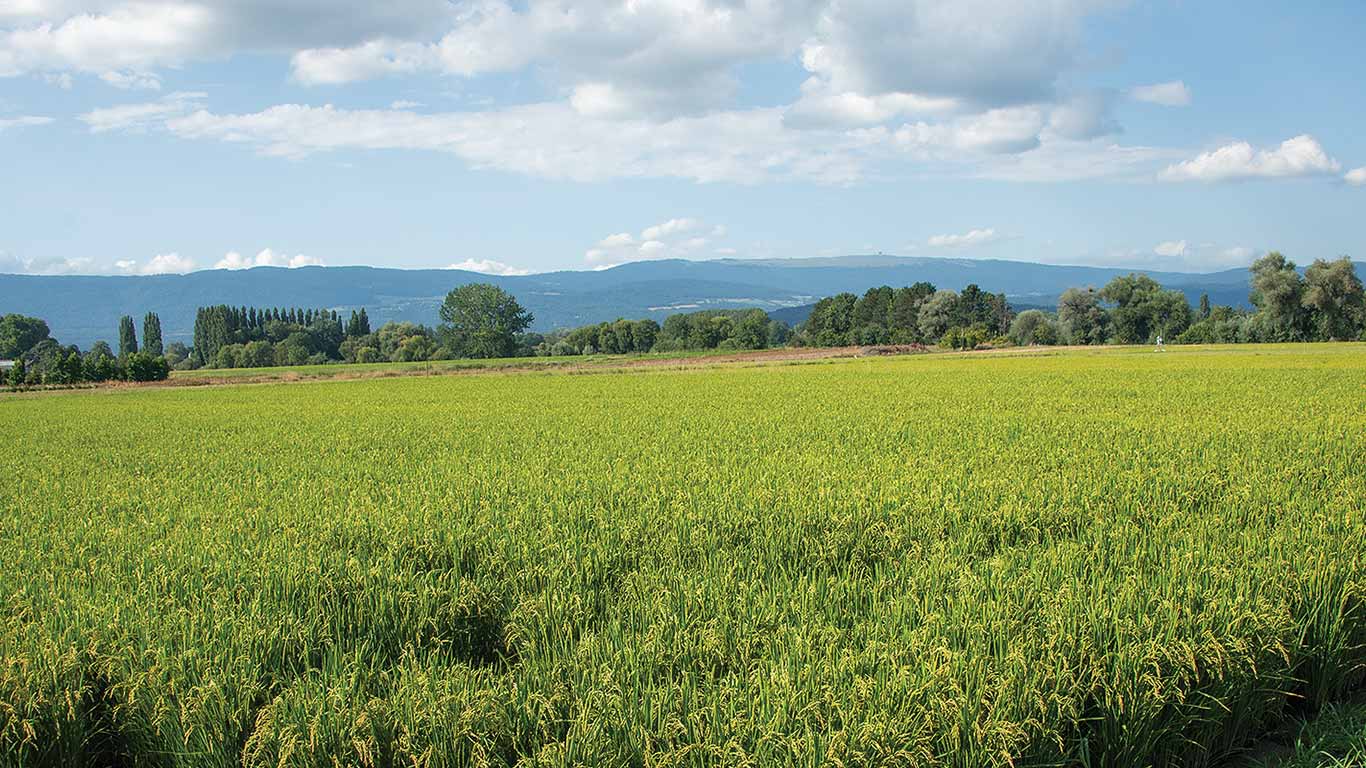
Above. Fresh, farmstead tofu from local soybeans helped Katrin Portmann and Hannes Moser diversify their farm. The Guillod family's rice paddies are a rare sight north of the Swiss Alps; their premium rice sells out quickly.
Level. A short drive west, Leandre and Maxime Guillod's rice paddies buzz with dragonflies in a broad plain that is celebrated as the heart of Switzerland's vegetable industry. The Guillod family had specialized in a winter green called lamb's lettuce—also called corn salad—but changing conditions made the crop unreliable.
The brothers had also invested in precision land leveling equipment to start a contracting business serving vegetable growers improving their drainage systems. The machinery was also perfect for planing the family's clay and peat soils to create rice paddies.
Rice was a win-win for the Guillods and the government. The Guillods were looking for a profitable crop, and the Swiss government was requiring farmers to create habitat and promote biodiversity. As it turned out, rice fields in the former swamplands quickly bustle with insects, amphibians, and birds.
At 46 degrees North latitude, aligned with Minneapolis, the season at Guillod's farm near Vully is too short for the un-flooded rice grown by farmers in Switzerland's far southern Ticino region. However, flooded rice works.
"Water plays a role as a heat buffer," explains Leandre Guillod. "When we plant in June, the nights are still cold. But there is a lot of water, so it will heat very quickly and keep the rice plant warm at night so it will grow faster and flower early enough so that the cycle can be finished and the grain can be harvested."
The brothers focus on Italian varieties suited for risotto, a main dish. Using their rice in a main course rather than a side dish takes some of the bite out of the extra cost: about $1 per portion. They also half-mill the rice to yield a "blonde" grain with more vitamins and fiber than white rice.
"We don't only sell a product, we sell the story that goes with it," says Guillod. "And the story is about fair price for a Swiss farmer, it's about the promotion of biodiversity, it's about innovation. It's about family farming." ‡
Read More


AGRICULTURE, LIVESTOCK/POULTRY
On Their Terms
Selling the cow herd a mark of success, not failure.