 A John Deere Publication
Ty Welborn, the next generation to run Roth Turkey Farms in Forrest, Ill., can easily read the birds' behavior and stress levels by sight. He says the bluer their heads are, the calmer and more comfortable they are.
Agriculture, Livestock/Poultry December 01, 2025
Flock Forward
Holiday traditions build up a turkey farm worth passing down.
Story and Photos by Katie Knapp
For the past few weeks, Ken Roth and his grandson Ty Welborn—and the rest of their family—have been busy strutting their stuff. They took truckloads of 19-week-old turkeys to the processor daily, hauled a refrigerated truck back full of chilled birds weekly, and greeted customers inside the farm office in between.
"I think we average 1,200 birds to the processor a day leading up to Thanksgiving," Ty says.
"People come to the farm to get them from quite a ways away," Ken says amazed, even after serving the Thanksgiving fresh market for 25 years now.
They have carved out a niche raising about 20,000 toms and 20,000 hens annually for a variety of markets rather than compete with larger, integrated operations.
"We're really a pretty small operation," Ken says.
The National Turkey Federation reports more than 210 million turkeys are raised annually across 2,500 farms, which averages to 84,000 birds per farm.
But they didn't set out to have a multi-generation turkey farm.
Ken's father started with chickens—specifically 10,000 pullets a year—on their central Illinois farm in the 1960s.
In 1970, they built a new flat-deck pullet cage house and started raising chickens from day-old up to 16 weeks to be finished at layer farms.
By 1977 when integrators were becoming more prevalent, the Roths could no longer compete at their small size. The chicken barns sat empty for more than 10 years after that, while they focused on crop farming and running their grain storage and handling equipment business.
Then a feed company bought the hatchery down the road in 1987 and switched to turkeys.
Ken quickly retrofitted their 15,000-square-foot barns to open floor plans, and by March 1988 they were in the turkey business.
They started with year-round tom production for a processor that made deli meat. Today, half of what they raise is processed through West Liberty co-op in Iowa, a 3-hour drive from their farm outside Forrest, Ill. The other half is whole birds for Thanksgiving.
"In 2000 we started in the fresh market for Thanksgiving," Ken says. "We've done about 20,000 hens now for the past few years, double what we started with." He says the demand keeps growing, both locally and out of state.
"We even send a few thousand live hens to be processed Halal in Michigan every year," Ken adds.
But perhaps their most meaningful Thanksgiving partnership is with the Midwest Food Bank.
Since 2012 they have raised turkeys specifically for families in need—starting with 1,200 birds and now up to 1,600 annually.
Ken helped deliver turkeys in New York City a couple years ago. "To see our turkeys go to churches and food banks for families who otherwise couldn't afford a special holiday meal was quite the experience."
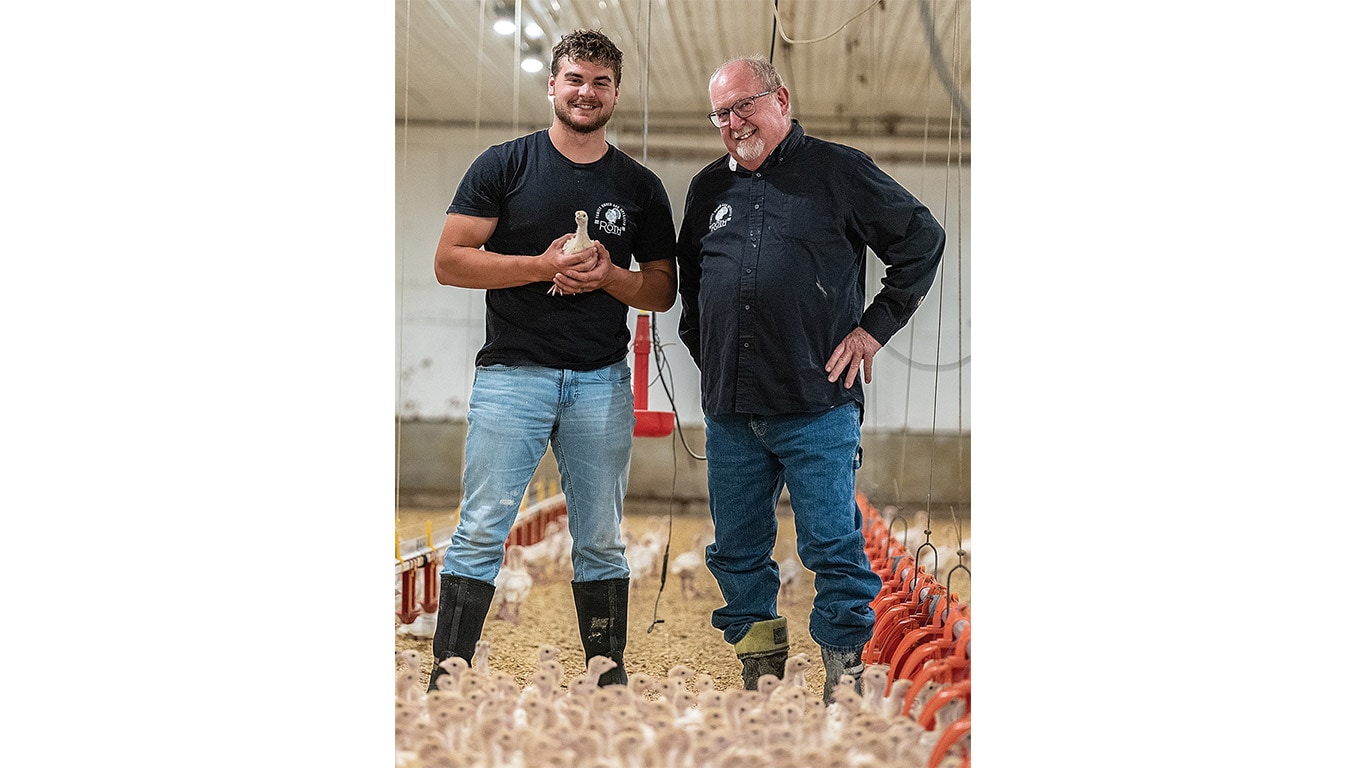
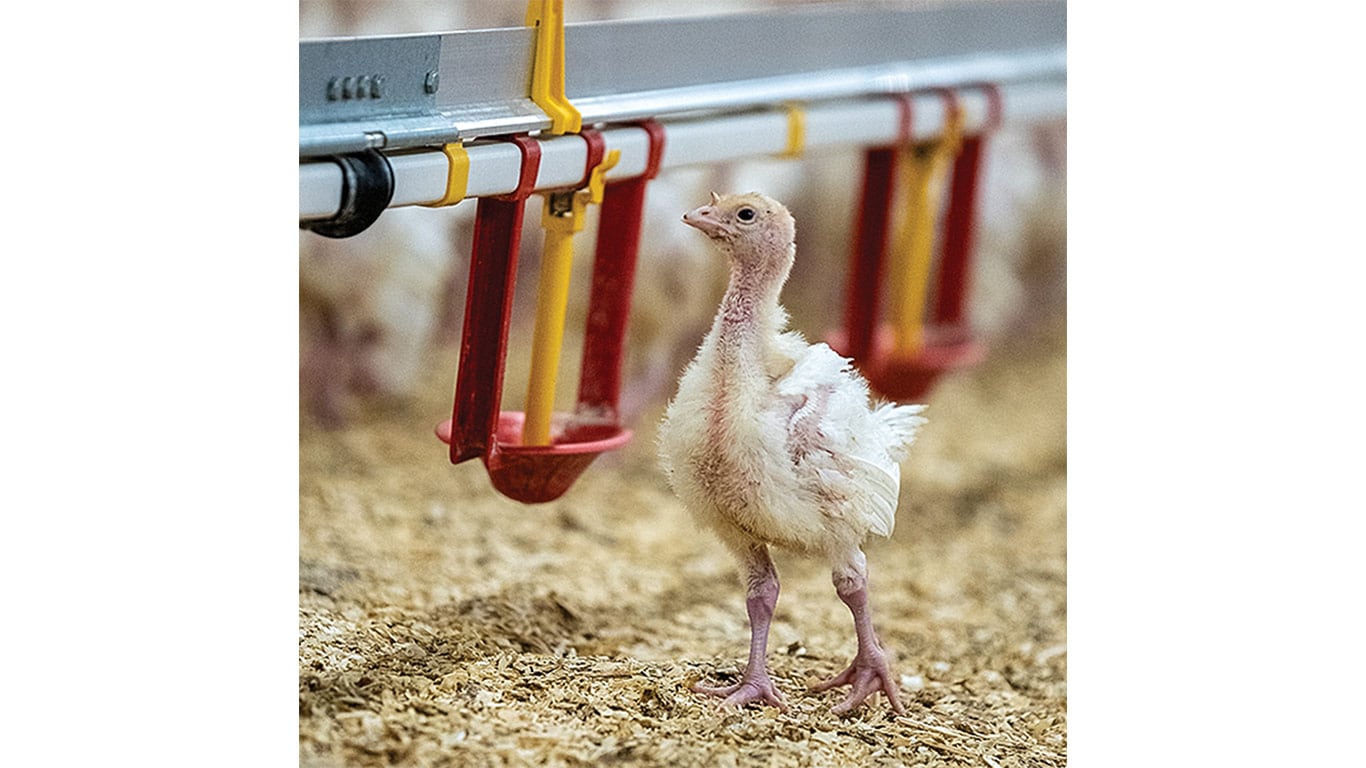
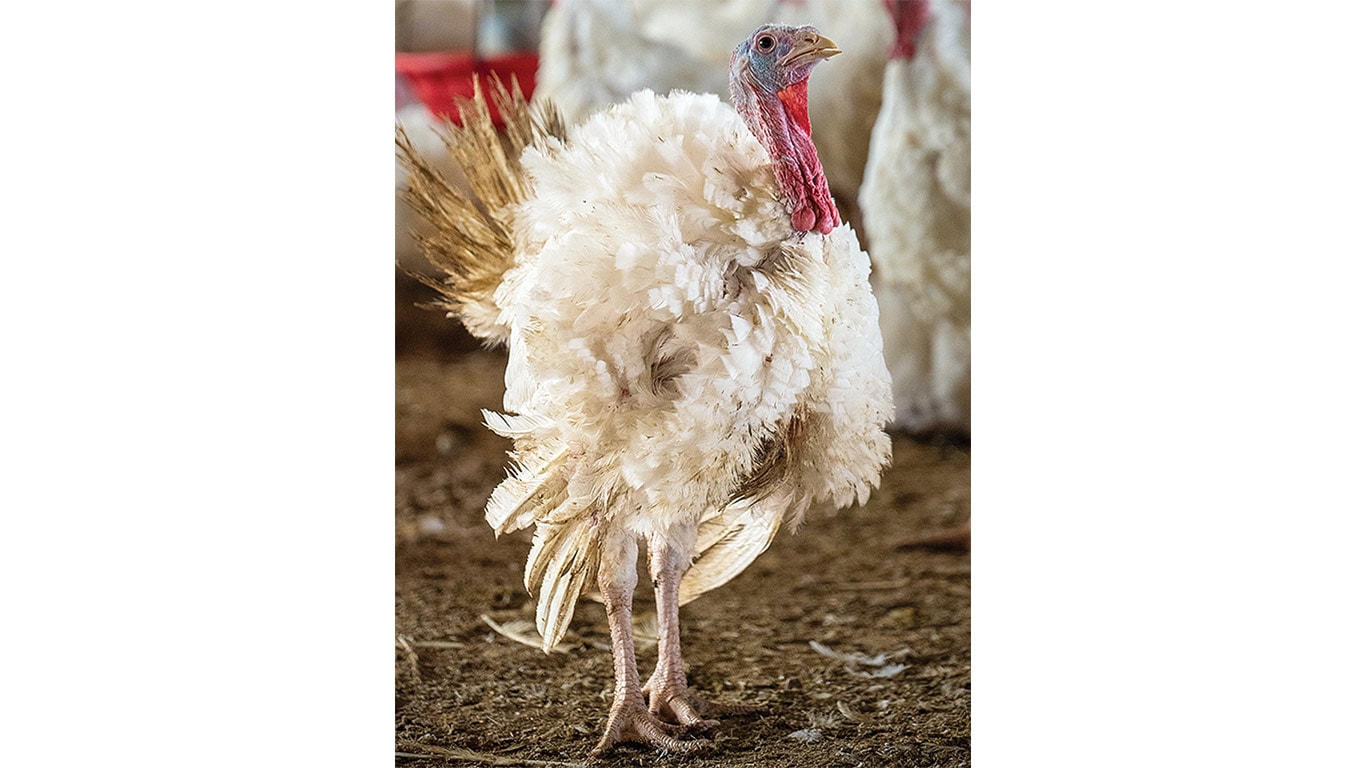
Above. Ken Roth and his grandson Ty Welborn raise turkeys for multiple markets. They start with day-old Nicholas or Hybrid poults. Nineteen weeks later the birds are ready for market: toms at about 50 lbs. and hens at about 30 lbs.
Next chapter. Now in his late 60s, Ken is about the same age his dad was when they transitioned the farm. "I think I have about five more years before I want to completely turn the turkey business over to Ty," he says.
Ty, who has already begun leading the daily operations, is in his early 20s though—a whole generation younger than Ken was when he took the reins.
The pressure and uncertainty held in that gap is real and even "intimidating," as Ty admits.
"It definitely does feel like a lot. When we've got seven barns full, and you're trying to get all the chores done, make sure you're not letting anything slip over there because you focus more over here, it's a lot," Ty says.
"There's fear there, for sure," Ken says, "but why isn't he capable? He is very capable. And he has developed an eye for reading the birds."
Ty has lived on the farm where the main barns are since he was 9 years old. "Back then he was about the same size as the turkeys were on load-out day," Ken remembers. "And he still prefers to be in the barns."
Ken began transferring ownership shares to Ty this summer and will continue to for the next few years. But for now, they both are going to rest for a while before the next flock starts strutting around the barns. ‡
Read More

AGRICULTURE, LIVESTOCK/POULTRY
On Their Terms
Selling the cow herd a mark of success, not failure.

EDUCATION, SPECIALTY/NICHE
True Soap
An age-old process matches our modern sentiments.