






Our Company

 Home Our Company Products &
Equipment
 Services &
Support
 Attractions,
Events & Gifts
 Worldwide Careers 
Global Citizenship>Core Values>Integrity
Company Information
Investor Relations
Press Center
Global Citizenship
Core Values
Integrity
Quality
Commitment
Innovation
Student Center
Careers
Integrity

Product Safety and Integrity
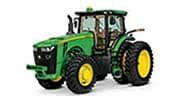
John Deere 7020 tractor with ROPS
The rollover protective structure, like the one shown on this 7020 tractor, became a safety feature on most tractors after John Deere shared the patent with its competitors in 1966.
Integrity of relationships with the company's customers, and even its competitors' customers influenced Deere's decision to share valuable safety patents. In the early part of the 20th century, all tractors were manufactured without cabs. In cases of a rollover accident, farmers were sometimes pinned under the tractor and crushed by its weight. Seeking to reduce these injuries, John Deere engineers developed a new feature that they called a ROPS (rollover protective structure).

Coupled with a seatbelt, the ROPS offered protection if a tractor rolled. After testing, John Deere engineers knew that their design would make farming significantly safer. They immediately sought a patent for their invention.

The ROPS would have remained Deere's property if it weren't for the company’s belief in doing the right thing for the agricultural community. As a result, in 1966, Deere shared the ROPS' patent with its competitors, so that it could save lives of farmers everywhere, regardless of the brand of tractor they operated.

This wasn't a one-time occurrence. Deere shared additional patented safety innovations with competitors in 1972 (PowerGard™ shielding for PTO drive lines), 1982 (hinged PTO master shield), and 1984 (bypass-start override valve).


Copyright © 1996-2008 Deere & Company.
All Rights Reserved.
About Our Site | Privacy | Legal