



Forestry

 Forestry
Home
 Products &
Equipment
 Services &
Support
 Parts Finance
Solutions
 Where
to Buy
 Info
Center
 Videos 
Feature Stories
About Our Company
Calendar of Events
Contact Us
View Current Ads
Feature Stories
Stories from the Woods
Press Releases/News
Forestry Equipment Review
In-the-Forest
Equipment Image Gallery
Stories from the Woods

Getting Ready for Winter

John Deere Getting Ready for Winter

Before the snow flies and the wind brings a breathtaking chill, there’s something to be said for preparedness. John Deere forest machines are built tough to handle sub-zero winters very well, but there are still a few maintenance tasks to do in order to prolong the life of the machine in extreme temperatures and get the most out of your working hours.

Brandt Tractor is John Deere’s largest independently owned forestry equipment dealer in the world, and they have a dealership up in Prince George, British Columbia, where a warm day in winter is still below freezing. They recommend several procedures to their customers to prepare for the cold winter season.

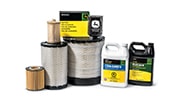
To start with, regular maintenance should include changing the engine oil about every 250 hours. As the temperature starts to descend in the fall, it’s time to switch to an oil that is more suitable for cold weather. Brandt recommends going to a lighter engine oil, such as a 530 rather than a 1540. Its also time to switch over to winter fuel, which will help to prevent freeze-up. Summer fuel will gel when it gets too cold, and then the machine won’t start. Check antifreeze levels and make sure they’re topped up, as well as all other lubricants.

Some machines are equipped with an engine block heater as well as a preheater, which is a diesel-fired coolant heater that will run the coolant and pre-warm the engine up. It’s a good idea to run the preheater for a little while throughout the year during regular scheduled maintenance, just to keep it in shape.

John Deere Getting Ready for Winter

For better traction on snow and ice, many customers will add ice lugs (also called corks) to their tracked machines. These pieces of steel, about an inch and a half tall by about four inches wide, are welded on to every other pad. These lugs will prevent the machine from skidding on slippery surfaces. For wheeled machines, chains are necessary. Eco-tracks are available on harvesters and forwarders, which will improve traction. Skidders will run chains year round because of mud, snow and ice, but in the winter chains are also useful on loaders, graders, and backhoes.

Brandt also reminds you to check your cooling system, your heaters, cab air filters for good circulation and so on before it gets very cold. Consult the operator’s manual for a complete list of all systems to check and tasks that should be completed, as well as your local service representative. Know your machine well, and you’ll be better prepared for each season.

You don’t want to be caught in the snow on a cold winter’s day with a problem that could have been avoided. Take care of your machine. If good preventative maintenance is practiced year round, getting ready for the winter will be a breeze.


Back to Stories from the Woods


  PrintPrint   
Copyright © 1996-2009 Deere & Company.
All Rights Reserved.
About Our Site | Privacy | Legal